
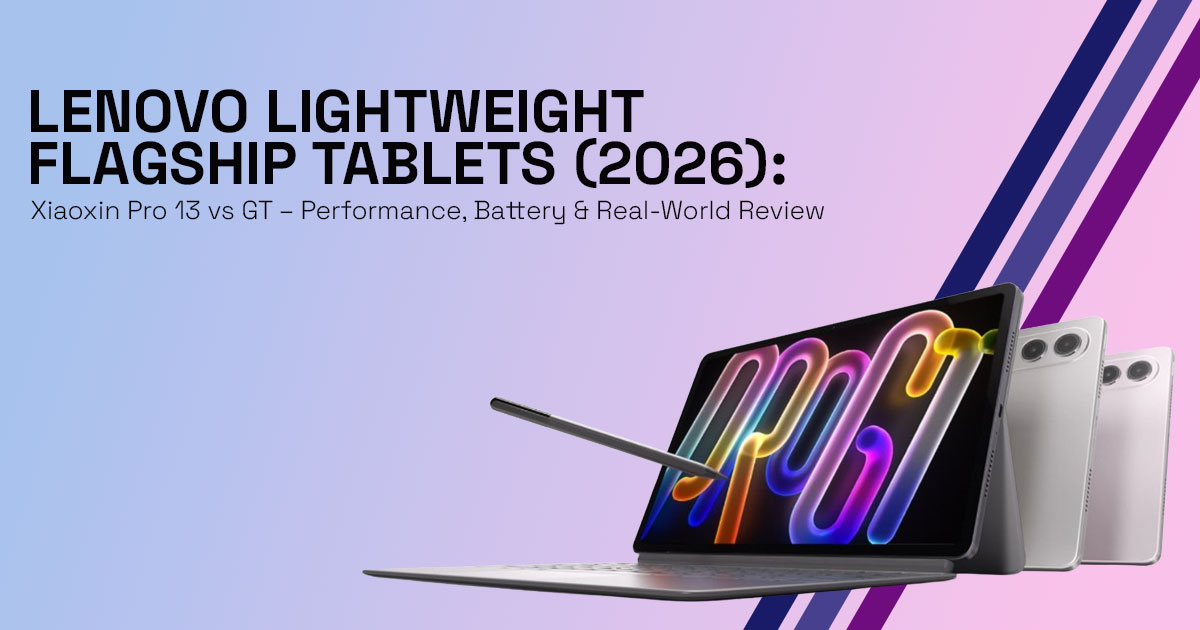
Lenovo lightweight premium tablets come with strong specs—Snapdragon-powered chips, 144Hz refresh rate display, big batteries, and responsive stylus support. On paper, they look powerful.
But what most buyers really want to know is simple: do these tablets actually deliver a smooth, reliable experience in daily use? This guide answers that directly—covering performance, usability, and long-term value so you can decide if these Lenovo tablets launched in 2026 fit your routine, whether you’re studying, streaming, or working on the go.
Click here to buy from Amazon
1. Introduction
If you’re looking at the new Lenovo flagship tablets, you’re probably trying to figure out one thing:
Are they worth buying, or are they just another spec-heavy Android tablet?
That’s a fair concern. Many tablets today come with powerful chips found in flagship Android tablets, slim designs, and high refresh rate displays—but after a few days of use, issues like app compatibility, average multitasking, or inconsistent battery life start to show.
These Lenovo tablets launched in 2026 aim to fix that by combining strong hardware with a lightweight build that’s easy to carry and use for long hours. They’re built for people who want balance—something that can handle notes, media, and light work without the bulk of a laptop.
We’ve worked with hardware and software for years, testing how devices actually perform over time. Our goal is to help you find the best product in every category—budget, performance, reliability, and long-term usage.
If you’re a student managing classes and notes, someone who needs a tablet for everyday browsing and streaming, or a casual creator using stylus tools, our recommendations are based on extensive research, component analysis, real-world usability, and industry expertise. We focus on how these tablets perform over time, not just how they look on paper.
Why this review matters
Specs alone don’t tell the full story.
What matters is how these tablets feel when you actually use them—switching between apps, writing with a stylus, or using them for hours without frustration.
This guide answers the questions most buyers actually have:
- Does Snapdragon-powered tablet performance feel smooth in daily tasks?
- Is the stylus support actually useful or just a feature on paper?
- Can these tablets handle multitasking without slowing down?
- And most importantly—are these the right tablets for your needs?
2. Technical Specifications at a Glance
Here’s a clear comparison of the Lenovo tablet specifications and features, so you can quickly understand what each model offers without digging through details.
| Feature | Standard Model (Xiaoxin Pro 13 equivalent) | GT Model (Xiaoxin Pro GT13 equivalent) |
| Processor | Snapdragon 8s Gen 4 | Snapdragon 8 Elite |
| Display | 13-inch 3.5K (3504×2190) LCD, 144Hz refresh rate, 800 nits peak, Dolby Vision, 99% DCI-P3 | Same |
| Battery / Charging | 10,200 mAh / 45W | 12,000 mAh / 68W |
| Weight / Thickness | 581 g / 6.2 mm | 610 g / 6.32 mm |
| RAM / Storage | Up to 12 GB LPDDR5X / Up to 512 GB UFS 4.0 | Same |
| Stylus Support | Optional Pro stylus (1 ms latency, 8,192 pressure levels) | Same |
| Extras | Quad JBL speakers, Wi-Fi 7, latest Android with AI note tools (may vary by region), optional keyboard | Same + faster charging |
| Price (approx.) | $335–$400 (China launch pricing; global pricing may vary) | $435–$500 (China launch pricing; global pricing may vary) |
Both models focus on staying slim while delivering strong performance, making them solid choices if you’re considering a lightweight Lenovo tablet with stylus support.
3. Why This Review Is Essential
Most reviews stop at listing specs or showing benchmark scores. That helps, but it doesn’t answer what most people actually care about.
How does the tablet feel after a week of using it?
In today’s Snapdragon 8 Gen series tablets, performance is already strong across many devices.
The difference now comes down to:
- Battery consistency during long sessions
- Smoothness of Android tablet multitasking features
- App optimization and overall Android tablet user experience
That’s where you start to notice the difference—some tablets feel smooth, others start to show limits.
This guide focuses on what actually matters when you start using the tablet, not just the numbers on paper.
4. What You Will Learn from This Review
This guide is structured to help you make a clear decision, not just understand specs.
Here’s what you’ll learn:
- How Snapdragon-powered tablet performance holds up in regular use
- Whether the stylus support is reliable for note-taking or creative work
- A simple way to evaluate tablets based on real value, not just specs
- Which users benefit most from these Lenovo Android flagship tablets
- Where Android tablet multitasking features still lag behind iPad or Samsung You’ll also see where these tablets fall short, depending on your use.
If you’re trying to choose a tablet that actually fits your routine—and not just looks good on paper—this breakdown will give you the clarity you need before making a decision.
5. Lightweight Flagship Tablets Trend: Why Lenovo Android Tablets Are Gaining Popularity
Hybrid work changed how people use devices. You move between desk, café, and travel. A laptop feels bulky after a while. A phone feels too small for reading or editing.
That’s where Lenovo lightweight flagship tablets fit in.
They stay under 620 grams, slip into a backpack, and still handle split-screen multitasking, note-taking, and streaming. The bigger shift is not just hardware anymore.
- Android tablet software optimization is improving
- Accessories like stylus and keyboard connect faster
- Longer software updates improve security and usability
This is why lightweight Android tablets with flagship chips are getting attention.
Key takeaway: Focus on the full experience—performance, software, and usability, not just specs.
6. Lenovo Lightweight Flagship Tablets Comparison: Standard vs GT Model
If you’re choosing between the two, here’s the simple breakdown:
- Standard Model
Built for everyday use. You get strong battery life, balanced performance, and better pricing. Ideal as a Lenovo Android tablet for students and productivity.
- GT Model
Designed for heavier workloads. It packs a flagship Snapdragon chip and larger battery, making it better for gaming, multitasking, and longer sessions.
Both models share:
- 13-inch high refresh rate display (144Hz)
- Stylus support for note-taking and drawing Decision tip:
Pick based on how much performance you need vs how much you want to spend.
Click here to buy from Amazon
7. Tablet Value Triangle: How to Choose the Best Lenovo Tablet for Your Needs
Think of tablet buying as a balance between three things:
- Performance → Chip, RAM, cooling
- Ecosystem → Apps, updates, accessories
- Portability → Weight, battery comfort, ease of carry Most tablets do two well and compromise on one.
These Lenovo lightweight fiagship tablet specs and features focus on:
- Strong performance
- Excellent portability
The trade-off?
Android’s ecosystem is improving, but still catching up.
- Match your daily use with this triangle before buying—it helps you avoid second guessing later.
8. Lenovo Tablet Performance Review: Are These Lightweight Tablets Good for Multitasking?
The Snapdragon 8s Gen 4 handles:
- 4K streaming
- Photo editing
- Multiple tabs without lag
The GT version adds extra headroom for:
- High-end gaming
- AI-powered note summaries
- Heavier multitasking
Gaming runs at high frame rates, though the back warms slightly during long sessions. So, are lightweight tablets powerful for multitasking?
- Yes, for everyday productivity and casual use
- Not a full replacement for desktop-level workflows
Reality check: Hardware is strong, but Android tablet multitasking features still shape the real experience.
9. Lenovo High Refresh Rate Tablet Display: 13-inch 144Hz Screen Experience
On paper, the display looks solid. In daily use, it feels even better.
- 13-inch LCD panel
- 144Hz refresh rate for smooth scrolling
- Dolby Vision for richer colors
- 800 nits brightness for indoor clarity
Where it stands:
- Great for PDF reading, online classes, and streaming
- Works fine in bright rooms, but direct sunlight needs shade
Compared to OLED:
- Blacks are not as deep
- Whites look cleaner
- Lower flicker helps during long screen sessions
10. Lenovo Tablet Stylus Experience: Best Android Tablet for Note-Taking?
The stylus is where these tablets stand out.
- 1 ms latency
- 8,192 pressure levels
- Smooth handwriting and sketch response
It works well for:
- Lecture notes
- PDF annotations
- Quick sketches
- Light Canva design work
Compared to rivals:
- Slightly behind Apple Pencil and S Pen precision
- Much more affordable and accessible
Use case win: For students and casual creators, this is one of the best Android tablets with a stylus for note-taking.
11. Lenovo Tablet Pros and Cons: Real-World Strengths and Limitations
Strengths
- Ultra-lightweight design for daily carry
- Strong value for premium Lenovo tablet specifications and features
- Reliable Lenovo tablet battery life in real usage
- Smooth high refresh rate display experience Limitations
- Some Android apps still don’t scale perfectly on larger screens
- Shorter update cycle than Apple
- Smaller accessory ecosystem
12. Lenovo vs iPad vs Samsung Tablets: Which One Should You Choose?
| Aspect | Lenovo Lightweight Flagship Tablets | iPad (13-inch Models) | Samsung Galaxy Tab |
| Performance | Strong raw power | Highly optimized | Balanced |
| App Ecosystem | Improving | Best in class | Very good |
| Stylus | Responsive, affordable | Industry-leading | Excellent |
| Portability | Best (under 610g) | Very good | Good |
| Value | High for price | Expensive | Mid-range balance |
In Lenovo tablet vs Samsung Galaxy Tab comparison and Lenovo vs iPad Air comparison, Lenovo stands out in:
- Weight
- Price-to-performance ratio
13. Who Should Buy Lenovo Lightweight Flagship Tablets?
Best for
- Students needing a Lenovo tablet with stylus for note-taking
- Users streaming content on a Lenovo Android tablet for movies
- Casual creators using apps like Canva
Skip if
- You need professional-grade design precision
- Your workflow depends on heavy multitasking
- You are fully invested in Apple ecosystem
14. Real-Life Use Cases: Lenovo Tablet for Students, Creators, and Gamers
- Student Use: Take notes, watch lectures, read The battery lasts all day, and the light build makes it easy to carry.
- Content Creator: Good for quick edits and social graphics. For heavy projects, a laptop still makes sense.
- Gaming: The GT model handles modern games The larger battery supports longer sessions.
15. Common Lenovo Tablet Buying Mistakes to Avoid
- Choosing only based on benchmark scores
- Expecting all apps to match iPad-level optimization
- Ignoring cost of stylus and keyboard accessories
16. Lenovo Tablet Software Updates, Resale Value, and Accessories
- Expected around 3 Android updates, based on Lenovo’s recent update cycle, along with security patches
- Stylus replacements and accessories are available online
- Resale value holds well early on
Accessory options are improving, but still not as wide as Apple or Samsung.
Click here to buy from Amazon
17. Lenovo Tablet Buying Checklist: What to Check Before You Buy
Before buying, ask:
- Is this a laptop replacement or a secondary device?
- Will you use the stylus daily for notes or drawing?
- Are you okay with Android tablet app limitations?
If you answer yes to at least two, these Lenovo lightweight flagship tablets are a solid choice. If you want, I can turn this into a featured snippet + AI Overview optimized intro + FAQ section to boost ranking further.
18. Lenovo Tablet FAQ: Student Use, Performance, Battery Life, and Software Support
If you’re comparing Lenovo lightweight flagship tablets, these quick answers cover what most buyers want to know—student use, laptop replacement limits, stylus quality, battery life, and long-term updates. This helps you decide faster without digging through specs.
Q. Are Lenovo tablets good for students?
- Yes—lightweight design, long battery life, and stylus support make a Lenovo Android tablet for students and productivity ideal for notes, classes, and reading.
Q. Can Lenovo tablets replace a laptop for work or study?
- Not fully—they work well as a companion device, but Lenovo tablets as a laptop replacement struggle with heavy software and desktop workflows.
Q. Is the Lenovo tablet stylus good for note-taking and drawing?
- Yes—low latency and smooth input make it great for notes and sketches, though pro artists may prefer higher-end options.
Q. Are Lenovo tablets better than iPads or Samsung tablets?
- They offer better value and lighter build, but iPads still lead in app ecosystem and long-term software support.
Q. How long does the battery last on Lenovo lightweight tablets?
- Around 15–16 hours of mixed use, making Lenovo tablet battery life for students and travel reliable for full-day usage.
Q. Do Lenovo tablets support keyboard accessories for productivity?
- Yes—magnetic keyboard support turns it into a portable productivity setup for typing, browsing, and light work.
Q. How many years of software updates do Lenovo tablets get?
- Expected around 3 Android updates, based on Lenovo’s recent update cycle, offering Lenovo tablet software support through the next few years.
19. Final Insight: Lenovo Lightweight Flagship Tablets—What Actually Matters Before You Buy
The hardware story is already sorted. In this Lenovo flagship tablet display and performance review, you get fast chips, sharp 13-inch displays, and slim, lightweight builds that are easy to carry all day.
What really decides your experience now is how well everything fits into your routine.
If your day involves note-taking, streaming, light editing, and multitasking, these tablets handle it without friction. But if you expect full desktop-level workflows, that’s where limits show up.
Keep it simple—match your needs with performance, portability, and ecosystem, and the right choice becomes clear.
A quick update on availability:
Both the Xiaoxin Pro 13 (Standard) and Xiaoxin Pro GT 13 launched in China on March 18, 2026, alongside the Legion Y700 (Gen 5). Open sales started on March 21, 2026, so global listings are still catching up.
- Amazon Worldwide: Lenovo lightweight flagship tablets
- Amazon India: Lenovo lightweight flagship tablets
Before you pick one, think about how you’ll actually use it day to day. That’s what separates a good buy from something that just looks good on paper.
If you’re still unsure, drop your use case—study, content work, gaming, or travel. I’ll help you ffgure out which model ffts better, especially around battery life and stylus feel.
***Disclaimer***
This blog post reflects our own research, testing, and personal opinions. It should not be taken as the official position of any brand, manufacturer, or company mentioned here. While we aim to keep information accurate and up to date, product details, pricing, and availability can change. We recommend double-checking important details before making a purchase.
Some links in this article may be affiliate links. If you choose to buy through these links, we may earn a small commission at no extra cost to you. This helps support our work and allows us to keep publishing in-depth, unbiased reviews. Our recommendations are never influenced by affiliate partnerships.
Comments shared by readers reflect their own views and not ours. We are not responsible for outcomes resulting from the use of information on this site. Please seek professional advice where appropriate.
All product names, logos, and brands mentioned are the property of their respective owners. These names are used for identification and informational purposes only and do not imply endorsement.