
1. Introduction
For many students, the real struggle with a laptop isn’t speed on day one. It’s what happens a few months later—battery life slipping, apps feeling clunky, and prices that feel hard to justify for basic daily work. Most students just want a reliable, affordable laptop for education that handles notes, research, online classes, and light creative tasks without friction or stress.
Buy on Amazon worldwide | Buy on Amazon India
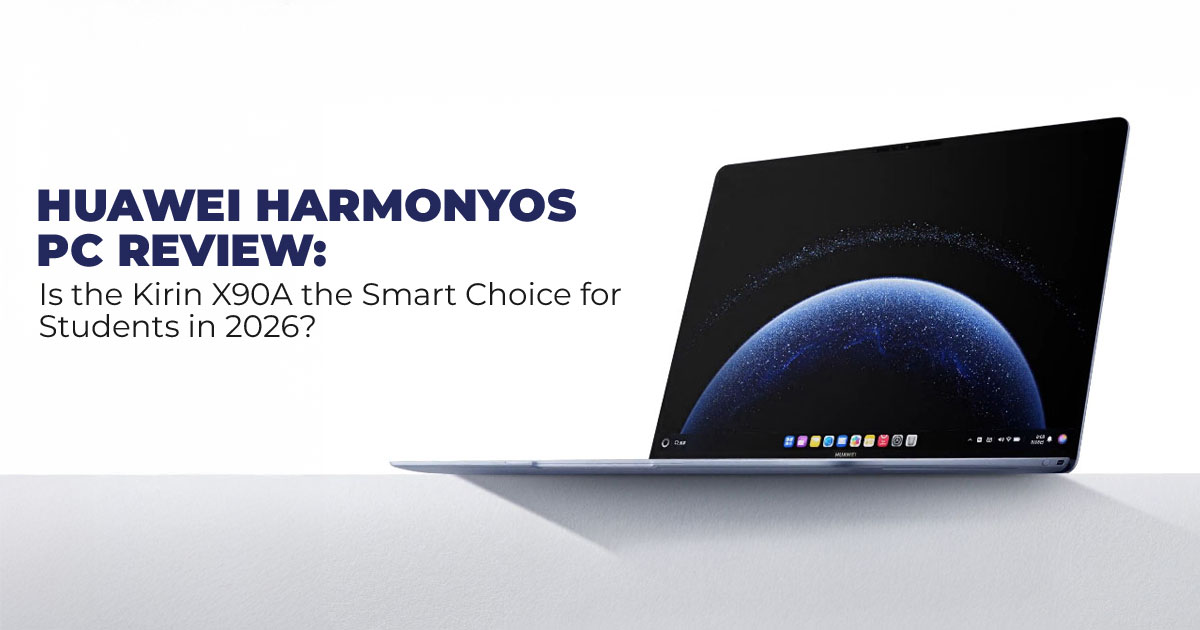
That’s where the Huawei HarmonyOS PC, expected to arrive under the MateBook D Series for Students, enters the picture. Instead of competing head-on with premium laptops, it focuses on what actually matters to its audience: balanced performance, reasonable pricing, and seamless device connectivity. Powered by the Kirin X90A chipset, this laptop is designed for real-world student use—not heavy gaming or workstation-level loads, but consistent everyday productivity.
What makes this category interesting is the shift away from isolated devices. A HarmonyOS- powered PC is built to work smoothly with phones and tablets, reducing the small daily hassles students deal with—file transfers, notifications, and switching between screens. That ecosystem- first approach offers a practical alternative to traditional laptops that often feel disconnected from the rest of your digital life.
This is exactly why user reviews matter. Specs can tell you what a laptop should do, but reviews show how it performs in lectures, hostels, libraries, and long study sessions. They reveal battery behavior, software stability, and whether the system still feels smooth after regular use. This article looks at those real-world insights to help you decide if this Affordable Huawei PC for Education actually fits student needs.
As technology experts with over 20 years of experience in hardware and application research and development, we deeply analyze each product based on real-world performance, durability, and value for money. Our goal is to help you find the best product in every category—budget, performance, reliability, and long-term usage. For students, parents buying laptops for education, and budget-focused users, our recommendations are based on extensive research, component analysis, real-world usability, and industry expertise.
In this post, we’ll explain how the Huawei HarmonyOS PC fits into the student laptop market, what buyers are actually saying about it, and how it compares to more familiar options. And if you’re searching for a practical laptop that works with your daily routine instead of fighting it, this perspective is worth your time.
1.1 Technical Specifications at a Glance
To start off, here’s a fast look at the main details pulled from reliable spots. This table lays out the basics so you can skim it quickly.
| Feature | Details |
| Processor | Kirin X90A (8-core/16-thread setup: 4×1.80GHz performance cores, 6×1.85GHz efficiency cores, 6×2.07GHz balanced cores) |
| GPU | Maleoon 910B GPU (geared for basic graphics and video handling) |
| Operating System | HarmonyOS (version for PCs with cross-device tools) |
| Price Range | 3,000–4,000 Yuan (about $420–$560 USD) |
| Target Use Cases | Handling multiple tasks, watching videos, and making simple edits for students and casual users |
| Ecosystem Integration | Works smoothly with phones like the Pura 90 Series and tablets |
2. Why This Review Is Essential
A lot of tech write-ups talk up fancy features that don’t always help in day-to-day stuff. We’ve spotted holes in other info, like how the chip’s details play into battery during marathon study times, or if changing systems messes with your routine. This piece plugs those by focusing on real tips instead of buzz. It guides you on whether this Huawei PC for Students fits your setup, especially if you’re after Cost-Effective Student PC options as prices climb.
3. What You Will Learn from This Review
We’ll unpack how it performs in common spots, stack it against typical picks, and tackle questions like software support and access worldwide. Look for advice on stretching battery life, linking with other gear, and checking the cost against what it does. At the end, you’ll get a straightforward view of how it suits student routines or similar ones.
4. The Shift in the Laptop Landscape for Students and Budget Users
Laptop buying habits are changing. Students and everyday users no longer look only at speed or brand names—they care about how well devices work together, how long batteries last, and whether the price makes sense for daily academic use. This section explains why that shift matters and where HarmonyOS PCs fit in.
4.1 Beyond Windows and macOS: Why HarmonyOS PCs Are Gaining Attention
For years, choosing a laptop meant picking between Windows and macOS. That choice worked— but it also locked users into separate devices that rarely talked to each other well. The Huawei HarmonyOS PC changes that thinking by focusing on connected computing, where your laptop, phone, and tablet work as one setup instead of isolated tools.
Imagine starting a note on your phone and continuing it on your laptop without cables, emails, or uploads. That everyday convenience is the real hook. Expected to launch under the MateBook D Series, this system runs on the Kirin X90A processor, built for stable daily performance rather than headline-grabbing specs.
For students and budget-focused buyers, this matters. You get fast startup times, smooth app switching, and fewer distractions when juggling assignments, online classes, and research.
Instead of paying more for power you won’t use, this approach puts money toward usability and efficiency—the things that actually reduce stress when deadlines pile up.
- Summary: The HarmonyOS PC for students shifts laptops toward connected, budget- friendly computing that simplifies daily academic work.
5. Kirin X90A Processor Performance: Real-World Speed vs Power Efficiency
This section explains what the Kirin X90A chipset is designed to do and who it’s really for.
The Kirin X90A doesn’t chase peak benchmark charts. Its focus is consistent multitasking and lower power draw, which suits student workloads far better than raw speed. With an 8-core, 16- thread design, tasks are spread across performance, efficiency, and balanced cores. In simple terms, you can keep multiple browser tabs open, edit documents, join video classes, and run background apps without slowdowns.
Benchmark results back this up. In Geekbench 6, the chip scores around 11,640 in multi-core at 30W, placing it above Apple’s Apple M2 (around 10,064) and close to Intel’s Intel Core i7- 13700H (around 12,203). Single-core performance sits closer to older but proven chips like the M1-class range, which is still plenty for everyday tasks.
On the graphics side, the Maleoon 910B GPU handles HD video playback, UI animations, and basic creative work comfortably. Casual games and light editing run fine, though this isn’t meant for demanding 3D gaming. Thermal efficiency keeps heat under control during long study sessions, which helps the laptop last 7–8 hours on mixed use—a strong result for all-day classes.
Key Takeaways:
- Reliable multitasking performance for school and online learning
- Better battery efficiency during light and moderate workloads
- Maleoon GPU suits media, study tools, and light creative tasks
For anyone shopping for e-learning devices or an ARM-based student laptop, this chip prioritizes endurance and stability over short bursts of speed.
5.1 What Is the Kirin X90 Chip? (ARM-Based PC Processor Explained)
Many users search “What is the Kirin X90 chip?” when comparing modern laptops. The answer is simple: it’s Huawei’s in-house ARM-based processor designed specifically for PCs. The X90A variant is tuned for laptops, balancing performance with power efficiency instead of pushing extreme clock speeds.
Because it’s built on ARM architecture, it consumes less power than many traditional x86 processors. That makes it appealing for buyers interested in ARM-based PC chips, fan-efficient designs, and longer battery life for study or office work.
6. HarmonyOS on PC Features: Where the User Experience Feels Different
This section focuses on how HarmonyOS on PC changes daily usage compared to Windows laptops.
HarmonyOS feels cleaner and more direct. Boot times come in under 10 seconds, and the interface avoids clutter, which helps users stay focused during long study sessions. File access, system settings, and app switching feel straightforward rather than layered.
App compatibility is still evolving. Built-in apps handle browsing, notes, and basic productivity well. Microsoft Office works through web versions or cloud-based mobile apps, while Adobe tools are available through partners, though full desktop suites may take time to mature. For users checking HarmonyOS PC specs or ecosystem readiness, this is the main adjustment to consider.
The strongest feature is multi-device connectivity. Pairing the laptop with a Huawei phone or tablet enables screen mirroring, instant file sharing, and drag-and-drop workflows. Pull a photo from your tablet and edit it on the laptop in seconds. That level of multi-device synergy is where HarmonyOS stands apart.
For anyone researching Huawei HarmonyOS PC features, expect faster startup, better battery optimization, and built-in AI tools that help with note summaries and task organization.
- Summary: HarmonyOS delivers speed, simplicity, and deep device integration, with some reliance on cloud apps for professional software.
6.1 Benefits of HarmonyOS for Student Laptops
A common search query is “Beneffts of HarmonyOS for student laptops.” The value shows up in daily use:
- Shorter boot times, so classes start without delays
- Easy file sharing across phone, tablet, and PC
- AI-assisted tools for summarizing notes and managing study tasks
For student-focused Huawei devices, the goal is clear: less time fixing tech issues, more time finishing work.
7. The Student Perspective: Why 3,000–4,000 Yuan Matters
Priced at $420–$560, it sits in the mid-range, offering better materials and features than entry- level models. It beats many Windows setups on price while holding its own for school.
Figure on an aluminum frame for toughness, about 1.3kg to tote around. Ports cover USB-C charging and HDMI for shows. Tools like AI notes grab lecture key points automatically, and eye modes ease long stares.
For online learning, it tunes video and meshes with class apps, making it handy over costlier ones. If you’re eyeing the Affordable HarmonyOS Notebook for Youth, this fits.
Key Takeaways:
- Entry to a linked system without big spend.
- Easy to carry with student tools.
- Stands out in education use.
7.1 Huawei PC Price 3000 Yuan
Searches for “Huawei PC Price 3000 Yuan” highlight the low end. At that, you get basics for notes and web, scaling up for more storage or RAM.
Buy on Amazon worldwide | Buy on Amazon India
8. Comparative Analysis: HarmonyOS PC Market Positioning Explained
Specs alone don’t tell you where a laptop truly fits. This section compares the Huawei HarmonyOS PC with Kirin X90A against the options most buyers actually consider—budget Windows laptops, mid-range tablets, and even Huawei’s own chip variants. The goal is simple: help readers understand what they gain and what they trade off.
8.1 HarmonyOS PC vs Budget Windows Laptops (Student & Education Segment)
Most students searching for an affordable laptop end up choosing between a Windows machine and something newer like HarmonyOS. This comparison focuses on everyday academic use, not spec-sheet bragging rights.
| Aspect | HarmonyOS PC with Kirin X90A | Budget Windows Laptop (e.g., Lenovo IdeaPad) |
| Processor Efficiency | Balanced performance, optimized for 7–8 hours battery life | Intel/AMD chips often drain faster in light workloads |
| Ecosystem Integration | Strong phone & tablet connectivity | Mostly tied to Microsoft services |
| App Support | Native apps + cloud-based tools; still expanding | Full desktop apps, but often heavier and cluttered |
| Price Range | $420–$560 | $400–$600 |
| Real-World Performance | Smooth multitasking and streaming | Comparable speed, but tends to run warmer under load |
What this means:
For students who value battery life, clean software, and cross-device workflows, the HarmonyOS PC for education offers a calmer experience. Windows laptops still win on legacy app compatibility, but often at the cost of heat, noise, and background clutter.
8.2 HarmonyOS PC vs Tablet: Is This a “Tablet Killer”?
Many buyers debate whether to buy a tablet or a lightweight laptop for study. This comparison looks at where the HarmonyOS PC fits against similarly priced tablets used by students.
| Aspect | HarmonyOS PC | Similarly Priced Tablet (e.g., iPad Air) |
| Productivity | Built-in keyboard, split windows, proper multitasking | Touch-first; keyboard sold separately |
| Battery Life | 7–8 hours in laptop form | 10+ hours, but limited
multitasking |
| Device Connectivity | Seamless file sharing across
devices |
Strong within one ecosystem |
| Cost | $420–$560 (keyboard included) | $500+ with accessories |
| Best Use Case | Typing essays, research, and
editing anywhere |
Media, reading, light tasks |
Bottom line:
Tablets still shine for media consumption. But for writing assignments, side-by-side research, and online classes, a HarmonyOS student laptop is simply more practical without needing extra accessories.
8.3 Kirin X90 vs Kirin X90A: Which One Fits Your Needs?
Chip names can confuse buyers. This subsection clears up the difference for readers searching
“Compare Kirin X90 vs X90A.”
-
- Kirin X90A:
- 8-core configuration
- Tuned for efficiency and battery life
- Designed for standard student and education models
- Kirin X90:
- 10-core configuration
- Higher performance ceiling
- Used in premium or higher-end variants
- Kirin X90A:
What to choose:
For most students and everyday users, the Kirin X90A processor makes more sense. It handles academic workloads smoothly while keeping heat and power use low. The full X90 only matters if you need extra performance headroom for heavier tasks.
Key Takeaway from the Comparison
The Huawei HarmonyOS PC with Kirin X90A sits in a unique spot:
- More productive than a tablet
- Cleaner and more efficient than many budget Windows laptops
- Better suited for students, education buyers, and light productivity users who value battery life, simplicity, and device integration over raw power
9. Clearing Common Doubts About Huawei HarmonyOS PCs
Before buying a new platform, most readers look for clear answers—not marketing talk. This section addresses the most common HarmonyOS PC questions people search for, based on real buyer intent. The goal is to explain how HarmonyOS works on laptops, what it can and can’t do today, and whether it makes sense for students and everyday users.
Q. What is HarmonyOS on PC?
- HarmonyOS on PC is Huawei’s custom-built operating system designed specifically for laptops. It focuses on fast boot times, smooth performance, and deep cross-device connectivity with phones and tablets. Unlike Windows, which supports a wide mix of hardware and legacy software, HarmonyOS is tuned for Huawei’s own ecosystem to keep things efficient and simple.
Q. Can HarmonyOS run Windows apps?
- Windows apps do not run natively on HarmonyOS PCs. However, most students’ and productivity needs are covered through web-based apps, cloud services, and mobile app versions. Huawei is expanding compatibility tools, but buyers should expect a cloud-first workflow for now.
Q. Is HarmonyOS based on Android or Linux?
- HarmonyOS is a standalone operating system, not a modified version of Android or desktop Linux. It shares some architectural ideas but is built from the ground up to support multi-device collaboration, low power usage, and consistent performance across screens.
Q. How does the Kirin X90A compare to the Apple M1?
- In raw peak performance, the Kirin X90A processor trails Apple’s Apple M1. In everyday use— web browsing, document editing, online classes—it holds up well due to power efficiency and tight HarmonyOS integration. For students, the difference shows more in workflow than speed charts.
Q. When will HarmonyOS PCs be available globally?
- HarmonyOS PC availability began in China and is expected to expand gradually. Global rollout depends on region-specific software support and partnerships. Buyers should check local availability and official announcements before planning a purchase.
Q. What is the new Huawei PC release date?
- The new Huawei PC release timeline aligns closely with the launch cycle of the Huawei Pura 90 Series, which has already debuted as of early 2026. Laptop releases typically follow shortly after major ecosystem launches.
10. Buying Advice: Who Should Wait for the Huawei HarmonyOS PC Launch?
Not every laptop launch is meant for every buyer. This section helps readers decide whether to wait, who this device is best for, and who should look elsewhere, based on real usage needs and purchase intent.
If you’re a student, a college learner, or someone handling office work, online classes, research, and everyday productivity, waiting for this launch makes sense. The Huawei HarmonyOS PC, expected under the MateBook D Series, is built for smooth daily use, long battery life, and strong device connectivity—especially if you already use Huawei education products like phones or tablets. In that setup, the experience feels simple and efficient.
It’s also a good fit for users who like trying new platforms and value clean software over legacy features. If your work depends mostly on browsers, documents, video calls, and cloud tools, this laptop checks the right boxes without pushing the price too high.
On the other hand, this is not the right choice if your needs include heavy gaming, professional video editing, advanced 3D work, or Windows-only software. In those cases, a traditional Windows laptop with dedicated graphics will serve you better.
If you’re planning to buy a Huawei MateBook D laptop, the key question is ecosystem fit. If Huawei devices already play a role in your daily routine, the value goes up quickly. If not, the benefits may feel less obvious.
10.1 Best Affordable HarmonyOS Laptop for Students and Budget Buyers
Many readers searching this topic are close to a purchase decision. This subsection addresses the common query “Best affordable HarmonyOS laptop” with clear guidance.
For buyers looking for the best affordable HarmonyOS laptop, this model stands out for students, young users, and first-time ARM PC buyers. Its competitive pricing, efficient Kirin X90A processor, and student-focused features make it one of the most practical entry points into the HarmonyOS PC ecosystem.
If your priority is value for money, battery life, and cross-device convenience, this laptop is likely to be among the top options when it launches. It may not replace high-end Windows machines, but for education and everyday productivity, it offers a balanced and sensible choice.
Buy on Amazon worldwide | Buy on Amazon India
11. Frequently Asked Questions (FAQ) – Huawei HarmonyOS PC with Kirin X90A
These FAQs address the most common buyer and search-driven questions about the Huawei HarmonyOS PC, based on what students, parents, and budget buyers typically look for before making a purchase.
Q. When is the expected Huawei HarmonyOS PC release date?
- The Huawei HarmonyOS PC release timeline aligns with the Huawei Pura 90 Series, with availability beginning in early 2026.
Q. Will HarmonyOS PC run Microsoft Office?
- Yes, Microsoft Office on HarmonyOS PC works through web-based and mobile cloud versions. Full native desktop support is still developing.
Q. Can the HarmonyOS PC be used outside China?
- Global availability of HarmonyOS PCs is expected to expand, but HarmonyOS Next app support may vary by region. Users should confirm app availability locally before buying.
Q. How does HarmonyOS PC battery life compare to budget laptops?
- The HarmonyOS PC battery life averages 7–8 hours on mixed use, which often exceeds similarly priced Windows laptops due to the efficient Kirin X90A chipset.
Q. Is the Kirin X90A GPU good for gaming?
- The Maleoon 910B GPU supports light gaming, video playback, and casual creative tasks. It is not designed for heavy or AAA gaming.
Q. What are the Kirin X90A specs?
- Kirin X90A specifications include an 8-core ARM-based CPU, Maleoon 910B GPU, and a design optimized for daily productivity and power efficiency.
Q. Is this a good student e-learning laptop?
- Yes. As a student e-learning PC, it offers AI note tools, fast boot times, and cross-device integration, which support study-focused workflows.
Q. Where can I purchase a Kirin X90A device?
- Kirin X90A laptops are available through official Huawei stores and authorized retailers, depending on regional rollout.
Q. Is this an affordable Huawei notebook for students?
- Yes. Priced under 4,000 Yuan, it ranks among the most affordable Huawei notebooks for education and everyday productivity.
Quick Summary for Buyers
If you’re searching for a budget-friendly student laptop, an ARM-based PC, or a Huawei HarmonyOS notebook, this device offers strong value—especially for users who benefit from Huawei’s connected ecosystem.
12. Conclusion: Affordable Innovation That Actually Makes Sense
The Kirin X90A isn’t about chasing the highest numbers. It’s about making smart trade-offs. For students and everyday users, that matters more than raw power. You get efficient performance, longer battery life, and a clean, connected experience without paying for features you’ll never use.
The real strength of the Huawei HarmonyOS PC lies in how everything works together. Notes move easily between devices. Apps open fast. The system stays cool and steady through long study hours. For young users, first-time laptop buyers, and anyone watching their budget, this feels like practical innovation, not stripped-down hardware.
If you already use Huawei phones or tablets, the value goes up even more. The ecosystem ties save time, reduce friction, and make daily work feel lighter. That’s where this laptop quietly stands out.
Buying Note (Important)
The Huawei HarmonyOS PC with Kirin X90A is still rolling out by region. Amazon purchase links for this exact model will be added after the official global launch.
In the meantime, here are similar and alternative laptops you can check on Amazon if you need to buy right now:
Amazon Worldwide – Alternatives
- Lenovo IdeaPad Slim – Budget-friendly Windows option
- ASUS Vivobook 15 – Good balance of price and performance
- Apple MacBook Air M1 – Higher price, strong ARM efficiency Available on Amazon US
Amazon India – Alternatives
Available on Amazon India
If you’re planning to buy a Huawei MateBook D once HarmonyOS PCs expand globally, this model is worth waiting for—especially if battery life, student productivity, and ecosystem convenience matter more than heavy gaming or pro-grade editing.
Thinking of switching platforms? Have questions about HarmonyOS, ARM laptops, or student tech choices? Drop a comment below. We’re here to help—and to keep the conversation grounded in gear that actually works for real life.
***Disclaimer***
This blog post contains unique insights and personal opinions. As such, it should not be interpreted as the official stance of any companies, manufacturers, or other entities we mention or with whom we are affiliated. While we strive for accuracy, information is subject to change. Always verify details independently before making decisions based on our content.
Comments reflect the opinions of their respective authors and not those of our team. We are not liable for any consequences resulting from the use of the information provided. Please seek professional advice where necessary.
Note: All product names, logos, and brands mentioned are the property of their respective owners. Any company, product, or service names used in our articles are for identification and educational purposes only. The use of these names, logos, and brands does not imply endorsement.