
1. Introduction
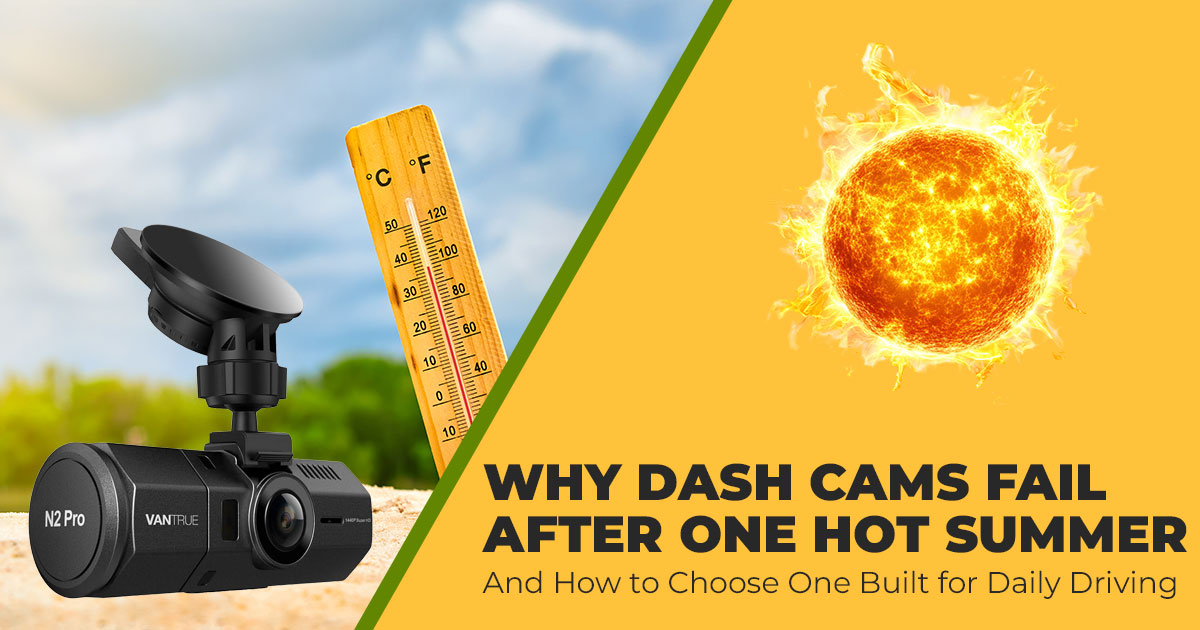
Shopping for a dash cam often starts with resolution numbers or price tags. But for anyone who drives every day, the real test shows up much later. It happens after months of heat, vibration, and nonstop recording. The question isn’t how sharp the video looks on day one. It’s whether the camera still records properly after sitting in a hot car all afternoon. And whether the footage stays usable instead of turning into corrupted files.
A daily-use dash cam has to survive constant stress. Heat builds up when a car is parked outdoors. Roads add vibration. Memory cards rewrite files again and again. An occasional-use dash cam can get by with lighter components because it isn’t pushed the same way. That difference matters when the camera is expected to work every single day, which is where Vantrue Dash Cams are designed to stand apart.
This guide explains how to tell the difference before buying. It focuses on the signs that point to dash cam long-term reliability, especially for drivers dealing with hot weather, outdoor parking, and daily commutes, and how those factors apply when choosing a Vantrue dash cam.
Click here to buy from Official Vantrue Dash Cam Store
1.1 What this guide covers
- How heat shortens dash cam lifespan and which design choices reduce failure
- Clear differences between parts built for daily use and those meant for lighter driving
- Features that offer real protection for everyday driving and parked vehicles
- Simple checks to spot a reliable dash cam for daily driving before spending money
1.2 Why this matters right now
Many buyers expect a dash cam to last for years. Instead, problems often appear after one hot season. Footage goes missing. The camera shuts down without warning. Files stop saving. Inside a parked car, temperatures can climb high enough to damage weak components. Choosing a heat-resistant dash cam—a core focus in Vantrue Dash Cams—helps avoid these issues later.
This breakdown focuses on dash cam durability in real conditions, not lab specs. The goal is to help drivers choose a camera that fits how they actually use their car, not just what looks good on a product page.
1.3 Why do daily-use dash cams handle life differently
Most dash cams record fine at the start. The gap between models becomes clear after weeks of daily driving, rough roads, and long hours parked under the sun. A dash cam for everyday use faces constant write cycles, shifting temperatures, and vibration. Cameras built for occasional trips do not face the same pressure, which is why Vantrue emphasizes components built for endurance across its daily-use lineup.
For drivers who commute daily, park outdoors, or live in warm regions, small build choices decide whether a camera lasts for years or fails within months.
1.4 How this guide approaches the problem
As technology experts with over 20 years of experience in hardware and application research and development, we evaluate products based on real-world performance, durability, and value for money. The aim is to help readers find the right option for their needs—whether that means budget, performance, reliability, or long-term use.
This guide is written for daily drivers, commuters, and anyone who relies on their vehicle every day. Our conclusions are based on component analysis, real usage patterns, long-term behavior, and industry experience, with specific attention to how Vantrue Dash Cams perform under daily stress.
1.5 The perspective most buyers miss
Resolution and price are easy to compare. Endurance is not. What matters more is how a dash cam handles heat, storage wear, and constant power cycles over time. This guide highlights those practical signs so readers can choose a camera that keeps working long after the first few weeks.
And that’s why this matters. A dash cam—especially one from Vantrue—should earn trust through consistency, not just look good on a spec sheet.
2. Build Quality and Heat Tolerance: The Foundation of Long-Term Dash Cam Reliability
A dash cam’s real durability shows up long after installation. Build quality and heat tolerance decide whether it keeps recording clean footage or slowly fails under daily stress. For drivers who park outdoors, commute daily, or live in warm regions, these factors matter more than resolution numbers.
2.1 How Heat Affects Dash Cam Performance in Real Parking Conditions
Anyone who has opened a car door after a few hours in the sun knows how intense the heat gets. Inside temperatures can reach 65–75°C, even on days that feel moderate outside. The windshield area—where most dash cams are mounted—takes the brunt of it.
Standard electronics struggle here. Over time, heat leads to random reboots, missing clips, or the camera shutting down without warning. These dash cam overheating issues often start quietly and worsen with each hot season.
A heat-resistant dash cam uses components rated to handle those conditions. The result is stable recording even after hours in direct sunlight, which is essential for daily use and vehicles parked outdoors.
2.2 Power Source and Heat Tolerance: Supercapacitor vs Battery Dash Cams
The power source is one of the clearest indicators of how well a dash cam handles heat.
Supercapacitor dash cams use capacitors for backup power instead of lithium batteries. They don’t store long-term power, but they handle heat far better and protect files during shutdown. They charge quickly, shut down cleanly to protect files, and tolerate extreme temperatures better than battery models. This makes them ideal for dash cams for hot climates and dash cams for Indian summers.
Lithium-ion or LiPo battery dash cams can work for short, occasional drives. But heat accelerates wear. Capacity drops, batteries swell, and sudden failures become more likely. This is a common reason dash cams stop working after one season.
For drivers who rely on their camera daily, supercapacitors offer real long-term reliability.
Supercapacitor vs Lithium Battery Dash Cam Comparison
| Aspect | Supercapacitor Dash
Cam |
Lithium-Ion / LiPo
Battery Dash Cam |
Who Benefits Most |
| Temperature Range | -40°C to 85°C typical | 0°C to 60°C typical | Daily drivers in hot or cold regions |
| Heat
Degradation |
No swelling or
capacity loss |
Fast capacity loss,
swelling risk |
Cars parked outdoors |
| Lifespan in Daily Use | 5+ years under constant heat | 1–2 years before issues | Long-term commuters |
| Shutdown
Behavior |
Clean power-off, file
protection |
Risk of sudden failure | Anyone needing
reliable footage |
| Charge Cycles | Hundreds of
thousands |
Limited cycles | Continuous recording
setups |
| Safety in Heat | No leak or fire risk | Swelling or leakage risk | Families, fleet vehicles |
| Size and
Weight |
Slightly larger | More compact | Occasional users |
| Cost | Higher upfront | Lower upfront | Long-term value vs short-term savings |
Best fft for supercapacitor dash cams:
Daily commuters, rideshare drivers, cars parked outdoors, and anyone wanting set-and-forget dash cam reliability.
Best fft for battery-based models:
Weekend drivers, secondary vehicles, and cooler climates with short trips.
2.3 Dash Cam Housing and Materials: More Than Appearance
Strong dash cam build quality goes beyond design. Heat-resistant plastic prevents warping and cracking. Tight internal construction keeps lenses aligned and parts stable on rough roads.
Low-quality housings loosen over time, leading to rattling noise, blurred footage, or lens misalignment. A solid casing protects internal components and preserves image quality through repeated heat cycles and vibration.
3. Operational Reliability: Can a Dash Cam Truly Run Without Attention?
A reliable dash cam for daily driving should work automatically. The less interaction required, the better it fits real-world use.
3.1 Hardwiring vs Plug-In Power: Choosing the Right Setup for Parking Mode
A hardwired dash cam connects directly to the vehicle’s fuse box. It powers on with the ignition and supports parking mode recording without draining the car battery when paired with voltage protection.
Plug-in dash cams using the cigarette lighter are easy to install, but they lack true parking protection and often require manual plugging in every drive.
For anyone needing a dash cam with parking mode that actually protects a parked car, hardwiring is the practical option, especially in public or shared parking areas.
3.2 Memory Card Support: A Major Cause of Dash Cam Footage Failure
Dash cams constantly overwrite footage. Standard microSD cards wear out quickly under this load, causing errors and corrupted clips.
Look for support for high endurance dash cam memory cards, typically U3 rated or labeled specifically for endurance. These cards handle continuous recording far better than standard storage.
A proper loop recording system should overwrite smoothly, lock incident clips, and never stop recording without notice.
4. Long-Term Reliability Signals That Predict Dash Cam Lifespan
Some reliability clues are easy to miss but strongly affect how long a dash cam lasts.
4.1 Mounting Systems That Stay Secure Over Time
Adhesive or magnetic mounts hold firm through heat cycles and road vibration. Suction cups
often loosen in summer heat, dropping the camera or shifting the angle.
A stable mount keeps footage steady and reduces vibration blur, which matters for license plate clarity.
4.2 Chipset and Firmware Stability Under Heat
Higher-quality chipsets maintain performance during heat exposure. This prevents dropped frames, audio sync problems, and recording gaps during long drives or extended parking mode use.
Stable firmware reduces long-term glitches and unexpected behavior.
4.3 Warranty Length as a Signal of Manufacturer Confidence
Warranty coverage often reflects expected lifespan. Longer warranties usually indicate confidence in dash cam durability. For daily use dash cams, warranties of two to three years are common among well-built models.
Click here to buy from Official Vantrue Dash Cam Store
5. Features That Matter Most for Everyday Drivers
Once build quality and heat handling are sorted, daily usability decides whether a dash cam earns its place on the windshield. These features shape how well a camera protects a car during routine driving and long hours of parking. For daily drivers, they aren’t optional.
5.1 Real Parking Mode Protection That Works When You’re Away
Parking mode matters most when the engine is off. A proper setup watches for motion or impacts and records automatically while the car is parked.
To work the way it should, parking mode needs hardwiring and low-voltage protection. That combination allows the camera to stay active without draining the car battery.
This matters in real life. Cars parked outdoors or in shared spaces face risks like hit-and-runs, door dings, and vandalism. Battery-only or plug-in dash cams often stop recording too soon or fail when heat builds up. A fully hardwired setup keeps watch when the driver isn’t around.
For everyday vehicles, parking mode only makes sense when it can run quietly and reliably in the background.
5.2 Resolution and Image Quality That Hold Up on Real Roads
Resolution is not just about sharp video on a product page. It’s about what stays visible when conditions are poor.
Cameras recording at 2K or 4K with HDR or WDR handle glare, tunnels, and night driving better than basic 1080p models. License plates remain readable at a distance or speed, which is often what matters most after an incident.
Daily driving includes changing light, traffic, and weather. Image quality that stays usable across those conditions does more than higher numbers on a spec list.
5.3 App Connectivity for Quick Access When Time Matters
After a close call, drivers don’t want to remove memory cards on the roadside. App connectivity solves that.
Wi-Fi or Bluetooth apps allow quick access to clips on a phone. Footage can be reviewed, saved, or shared without tools or cables. This makes a difference during busy commutes or stressful moments when time and attention are limited.
A dash cam that lets drivers get footage fast becomes part of daily driving. One that doesn’t often gets ignored until it’s too late.
6. Daily Use vs Occasional Use Dash Cams: A Practical Comparison
Not every dash cam is built for the same role. Some are designed for constant exposure and long hours. Others work fine when used once in a while. The difference shows up over time.
| Feature | Daily Use Dash Cam | Occasional Use Dash Cam |
| Power Source | Supercapacitor | Lithium battery |
| Heat Tolerance | Handles parked heat | Risk increases in warm climates |
| Mount Type | Adhesive or magnetic | Suction cup |
| Memory Support | High endurance cards | Standard cards |
| Parking Mode | Full hardwired motion or time- lapse | None or short battery mode |
| Installation | Hardwired with voltage cutoff
protection |
Cigarette lighter plug |
| Best For | Daily commutes, outdoor
parking, and hot weather |
Weekend trips, garage-kept cars |
How to use this comparison
If a car is driven every day, parked outdoors, or exposed to heat, a daily-use dash cam reduces long-term issues. If the vehicle is used occasionally and stored in a garage, a simpler setup may be enough.
Matching the camera to how the car is used is the easiest way to avoid early failures, missing footage, and unreliable performance later.
And that’s the point. A dash cam should fit daily life, not ask for extra attention to keep working.
7. Common Concerns Before Buying a Daily-Use Dash Cam
Before choosing a daily-use dash cam, most drivers have the same questions—about heat, lifespan, and whether certain features are actually worth paying for. This section answers those concerns in plain terms, based on real driving conditions like hot weather, outdoor parking, and daily commuting, so readers can make a confident decision without guesswork.
Q. Do dash cams overheat in cars?
- Yes, many dash cams do overheat, especially battery-based dash cams left parked in direct sun. Interior car temperatures rise fast, and heat stresses internal parts. Heat-resistant dash cams with supercapacitors handle this far better and keep recording reliably after hours of parked heat.
Q. Why do dash cams fail in heat?
- Heat breaks down batteries and standard memory cards first. Over time, lithium batteries swell, lose capacity, or fail suddenly. Standard microSD cards wear out, leading to file corruption and missing clips. These are the most common reasons dash cams stop working in hot climates.
Q. How long do dash cams last with daily use?
- Quality daily-use dash cams with supercapacitors often last 4–6 years. Models built around battery power may need replacement after 1–3 years, especially in warm conditions or cars parked outdoors.
Q. Is a supercapacitor dash cam worth it?
- Yes, for daily drivers or warm climates, it usually is. A supercapacitor dash cam costs more upfront but offers better heat tolerance, longer lifespan, and more reliable footage, which reduces replacements over time.
Q. Do I need a parking mode dash cam?
- If your car is parked in public places often, yes. A dash cam with parking mode records hits, movement, or vandalism while the car is off. This is especially useful for outdoor parking, apartment complexes, and busy streets.
Q. What makes a dash cam reliable for daily driving?
- Reliable dash cams share a few core traits: heat-tolerant components, supercapacitor power, a solid mounting system, and support for high endurance memory cards. Together, these features allow set-and-forget reliability in real daily use.
Click here to buy from Official Vantrue Dash Cam Store
8. Frequently Asked Questions About Daily Use Dash Cams
These are the most common questions drivers ask when choosing a daily-use dash cam, especially for hot weather, outdoor parking, and everyday commuting. Each answer focuses on real-world use, not marketing claims, to help readers quickly find what applies to their driving habits.
Q. What is parking mode in dash cams?
- Parking mode keeps the dash cam recording or monitoring for motion or impacts while the car is off. It helps capture parking lot incidents, hit-and-runs, and vandalism, which are common for cars parked outdoors or in public spaces. Proper parking mode usually requires hardwiring and voltage protection.
Q. Which dash cam lasts the longest?
- Dash cams built with supercapacitor power last the longest in daily use. These models are designed for continuous recording, high temperatures, and long-term operation. Some premium Li-ion dash cams perform decently if well-designed.
Q. How do you choose a dash cam for daily driving?
- For daily driving, prioritize heat resistance first. Look for supercapacitor power, hardwiring support, solid mounting, and compatibility with high endurance memory cards. These features reduce failures and keep recording consistently over time.
Q. Dash cam not recording all the time—why does this happen?
- This usually points to heat damage, a worn-out memory card, or a weak power design. Standard cards fail under constant rewriting, and battery-based dash cams struggle in heat. Reliable dash cams are built to avoid these issues through better components.
Q. What is the best dash cam for hot weather or Indian summers?
- The best dash cam for hot weather uses proven heat-tolerant components and supercapacitor power. This setup is essential for Indian summers, especially for cars parked outdoors, where interior temperatures stay high for hours.
9. Final Thoughts: Choose Based on How You Actually Drive
At this point, the choice should feel clearer. Dash cams aren’t all built for the same job, and treating them that way is how people end up disappointed a year later.
If most of your driving looks like daily city traffic, long commutes, or cars parked outdoors in the heat, durability matters more than flashy features. Heat resistance, stable power design, and solid construction aren’t nice extras. They’re what keep a dash cam recording quietly, day after day, without you checking on it.
That’s where Vantrue dash cams make sense. Models built around supercapacitor power are designed for real-world use—high cabin temperatures, constant recording, and long-term reliability. They cost more upfront than basic battery models, but they also avoid the most common failures we see after one or two summers.
Choose this if:
- You drive almost every day
- Your car is parked outdoors or in hot weather
- You want a set-it-and-forget-it dash cam that keeps working
Skip this if:
- The car is rarely used
- It stays in a garage
- You’re fine replacing the camera every couple of years
For most daily drivers, we’d rather spend a bit more once than deal with corrupted footage or a dead camera later.
How We’d Pick for Daily Drivers
- Daily city driving or highway commutes → Vantrue N4 Pro for full multi-angle
- High-use work vehicles or rideshare → Vantrue N2 Pro for interior + road
- Budget-minded daily users → Vantrue Element 1 keeps it simple and
- Parking in crowded public areas → Vantrue E360 gives wide panoramic
If you’re still unsure, think back to the last hot summer or long commute. If a dash cam failed, then it would have failed when you needed it most. Choosing one built for daily use removes that doubt.
Have you run a dash cam through tough summers? Had one quietly stop recording? Share what you’ve seen or ask a question below. We’re happy to help narrow it down so you buy once—and buy right.
Quick Verdict
If you drive daily or park in the heat, pick a supercapacitor-based Vantrue dash cam. It’s the safer long-term choice.
If your use is light and conditions are mild, a simpler model may be enough—but know the trade-off.
***Disclaimer***
This blog post reflects our own research, testing, and personal opinions. It should not be taken as the official position of any brand, manufacturer, or company mentioned here. While we aim to keep information accurate and up to date, product details, pricing, and availability can change. We recommend double-checking important details before making a purchase.
Some links in this article may be affiliate links. If you choose to buy through these links, we may earn a small commission at no extra cost to you. This helps support our work and allows us to keep publishing in-depth, unbiased reviews. Our recommendations are never influenced by affiliate partnerships.
Comments shared by readers reflect their own views and not ours. We are not responsible for outcomes resulting from the use of information on this site. Please seek professional advice where appropriate.
All product names, logos, and brands mentioned are the property of their respective owners. These names are used for identification and informational purposes only and do not imply endorsement.