
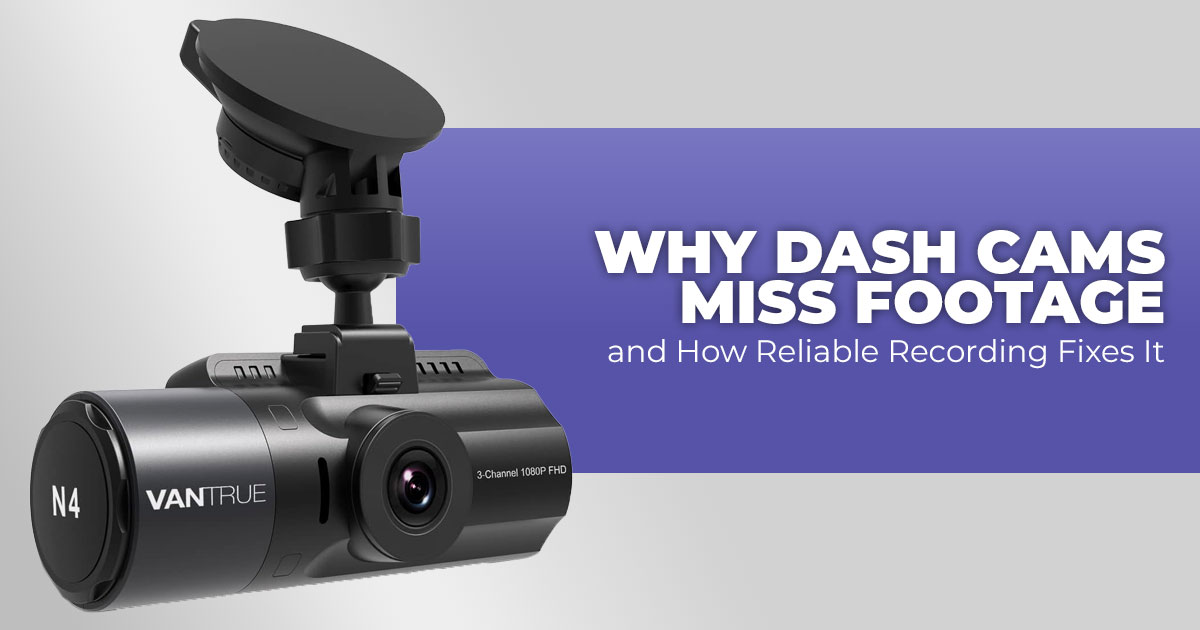
Most dash cams record, but not all of them record reliably. Heat, poor file protection, and recording gaps can erase the exact moment you need for insurance evidence. This guide explains the real difference between basic dash cam recording and reliable dash cam recording, so you know what actually keeps footage safe—and how to choose the best reliable dash cam that won’t fail when it matters.
Click here to buy from Official Vantrue Dash Cam Store
1. Introduction: Why Reliable Recording Matters for Everyday Drivers
A surprising number of drivers only realize their dash cam failed after an accident—when the video has blank spots, corrupted files, or clips that simply won’t play. Everything looked fine while driving. The camera was on. The screen was lit. But when it’s time to show proof for insurance evidence, the footage is gone.
And that moment sticks with people.
This is where the real difference shows up between dash cam recording failure and true reliable dash cam recording. One just rolls video. The other makes sure the footage is there, intact, and usable when stress is high, and answers matter.
Dash cams are now part of everyday driving life—for daily commuters, ride-share drivers, families who need a dash cam for insurance evidence, and anyone spending long hours on highways. But stories of dash cam missed footage, dash cam stopped recording, or dash cam footage missing keep coming up for the same reasons: heat damage, weak file protection, and gaps in loop recording.
As technology experts with over 20 years of experience in hardware and application research and development, we analyze each product based on real-world performance, durability, and value for money. Our goal is simple: help you find the best product in every category—budget, performance, reliability, and long-term usage.
For commuters, highway drivers, ride-share professionals, and families who depend on footage for peace of mind, our recommendations are based on extensive research, component analysis, real-world usability, and industry expertise.
This guide explains why dash cams fail, what causes dash cam recording failure, and how dash cam reliability solves those problems. You’ll walk away knowing how to choose a dash cam you can rely on, not just one that looks good on paper.
And that’s why it matters.
For readers already comparing options or planning a purchase, it helps to start with official sources. Vantrue offers a full range of dash cams designed for real driving conditions, along with matching accessories. Their US and India stores list current models, supported add-ons like mounts and hardwire kits, and compatible memory cards, making it easier to choose the right setup from the start.
2. What Reliable Recording Actually Means in Everyday Terms
Most dash cams can record video while you drive. That’s the easy part.
Reliable dash cam recording goes further—it protects your footage through heat, bumps, power loss, and constant daily use.
In everyday terms, reliable recording comes down to three things:
- Handling high temperatures without shutting down or corrupting files
- Locking important clips so accident footage doesn’t get overwritten
- Recording continuously without pauses, freezes, or missing moments
When these work together, you get a dash cam for legal evidence you can actually use—not one that leaves you guessing.
Features like supercapacitor dash cam power, G-Sensor file lock, and seamless loop recording matter more than flashy specs. They prevent recording gaps in dash cams, reduce dash cam SD card errors, and protect event files during real accidents.
And once you’ve seen how often basic cameras fail under pressure, the difference between a cheap dash cam vs reliable dash cam becomes clear.
Reliable recording isn’t about more video. It’s about making sure the video survives.
3. Why Dash Cam Heat Resistance Is a Real Reliability Issue
Many drivers search for “why dash cams overheat” or “dash cam failed to record accident footage in summer” only after footage goes missing. The cause is often overlooked. A parked car traps heat. On warm days, interior temperatures can climb past 140°F, placing constant strain on internal components.
Dash cams that are not built for heat struggle under these conditions.
Over time, this leads to problems such as:
- Sudden camera shutdowns
- Dash cam corrupted files
- Faster wear on internal components
For drivers in warmer regions, those who park outdoors, or anyone relying on a dash cam for long parking hours, heat often decides whether dash cam reliability holds up. Without proper dash cam heat resistance, recording cannot be trusted long-term.
3.1 Battery vs Supercapacitor Dash Cam: Why Power Design Matters
Many lower-cost models depend on lithium batteries to save files when the car turns off. Heat weakens these batteries. Over time, they swell, lose capacity, or fail. This explains many reported lithium battery dash cam problems.
A supercapacitor dash cam uses a different approach. It provides short, stable power bursts instead of storing energy like a battery. That stability allows the camera to finish saving video safely, even during sudden power loss.
That leads to a common question: Is a supercapacitor better than a battery dash cam?
For dash cam heat resistance, file safety, and long-term use, the answer is yes. Supercapacitors lower the risk of dash cam power failure and help preserve footage under stress.
Dash cams designed with reliability in mind usually fall into three categories:
- Single-channel models for everyday driving
- Multi-channel systems with stronger dash cam thermal protection for extended parking
- Heavy-duty builds for extreme weather and constant operation
These options support drivers looking for a dash cam for a hot climate, a dash cam for daily commuters, or a dash cam for highway driving.
4. Dash Cam File Locking: Why Important Footage Gets Overwritten
Loop recording keeps storage from filling up by replacing older files with new ones. This works until an incident happens near the end of the memory card. Without protection, crucial moments disappear.
It’s a frequent cause of dash cam missed footage, and many drivers only realize it after trying to retrieve a clip.
4.1 How the G-Sensor File Lock Works in Real Driving Conditions
A properly tuned G-sensor file lock detects sudden braking or impact and moves that clip into a protected folder. Sensitivity matters. If it’s too high, normal road bumps trigger locks. If it’s too low, real incidents go unprotected.
Reliable models also include a manual emergency video lock button, allowing drivers to secure footage when something feels wrong, even if no impact is detected. Locked clips are stored as protected event files, safe from loop overwriting.
This often explains “why my dash cam recorded but did not save video.” The recording existed, but without file locking, it was erased.
5. Seamless Loop Recording and the Problem of Missing Seconds
Some dash cams pause briefly while closing one file and starting another. Those pauses can erase the exact second an accident occurs. This results in recording gaps in dash cams or reports of dash cams not saving videos.
Models built with stronger processors support seamless loop recording, where files roll over without interruption. This becomes important for anyone searching for the best dash cam that does not miss recordings or the best dash cam for continuous recording.
A few seconds may seem minor, but those seconds often hold the clearest context of an incident.
Click here to buy from Official Vantrue Dash Cam Store
6. Dash Cam SD Card Errors and Silent Recording Failures
Dash cams write data constantly. Heat, vibration, and nonstop overwriting wear down memory cards quickly. Standard cards often fail quietly, leading to dash cam SD card errors or dash cam footage missing without warning.
Reliable systems reduce this risk by:
- Supporting endurance SD card for dash cam
- Showing alerts when errors appear
- Reminding users to format cards regularly
Formatting every few weeks helps avoid sudden dash cam stopped recording issues and keeps recording stable over time.
7. Standard Dash Cam vs Reliable Dash Cam: What the Differences Mean in Practice
| Feature | Standard Dash Cams | Reliable Dash Cams |
| Power Backup | Lithium battery | Supercapacitor dash cam |
| Heat Handling | Shutdown risk in warm
conditions |
Strong dash cam heat resistance |
| File Protection | Basic or none | Tuned G-sensor file lock + manual option |
| Recording
Continuity |
Possible gaps | Seamless loop recording |
| Error Alerts | Silent failures | Clear warnings for dash cam SD
card errors |
| Real-World Result | Risk of dash cam missed footage | Dependable dash cam for legal evidence |
8. Who Needs Reliable Dash Cam Recording the Most
A dash cam you can rely on is not just for edge cases. Many drivers face conditions where basic recording is not enough, and missing footage creates real problems.
Daily commuters who park outdoors often leave their vehicles in direct sunlight for hours. Without strong dash cam heat resistance, recordings fail long before an accident happens. Drivers who spend time on highway driving and long trips need continuous recording without gaps, where a few missing seconds can change how an incident is understood.
Ride-share drivers depend on footage regularly, not occasionally. For them, dash cam reliability means clear proof during disputes, not just video files that may or may not exist.
Families looking for a dependable dash cam for insurance evidence want footage that is usable during stressful moments, not something that needs explaining or guessing.
For these drivers, a dash cam that always records properly isn’t about features. It’s about confidence. When something happens, the footage is there, intact, and ready.
9. How to Choose a Reliable Dash Cam: A Practical Buyer Checklist
Many drivers search “how to choose a reliable dash cam” after experiencing a dash cam recording failure. Others are comparing models and asking what separates a basic camera from a dash cam built for reliability.
A dependable choice comes down to a few clear checks:
- Dash cam with supercapacitor power for heat stability and safe file saving
- Accurate dash cam file locking, including a manual emergency lock
- Seamless loop recording to prevent missed seconds and hidden gaps
- Alerts for dash cam SD card errors and format reminders
- Support for high-endurance SD cards designed for constant writing
- Built-in dash cam overwrite protection for accident footage
These elements work together to prevent dash cam missed footage, reduce silent failures, and keep recordings usable over time.
A reliable dash cam worth buying costs more than entry-level options, but it avoids the frustration of discovering missing footage when it matters most. For drivers who rely on video for clarity, safety, or claims, reliability is not an upgrade. It’s the baseline.
Once the reliability basics are clear, choosing from official listings reduces guesswork. Vantrue’s US and India stores group dash cams by use case and support accessories built for long-term use, including hardwire kits and endurance memory card options.
For US readers, seasonal promotions—such as the Valentine’s Day Sale—can also make it easier to step up to a more reliable setup without cutting corners.
10. Clearing Common Doubts About Dash Cam Reliability
These are the questions drivers usually ask after facing dash cam recording failure, missing clips, or footage that won’t play. The answers below explain the real causes and how reliable dash cam recording solves them, using plain language and real-world logic.
Q. Why do dash cams fail in hot weather?
- Heat builds up fast inside parked cars and stresses internal components. In many models, this leads to shutdowns, corrupted dash cam files, and battery damage. Without proper dash cam heat resistance, recording becomes unreliable over time.
Q. Is a supercapacitor better than a battery dash cam?
- Yes. A supercapacitor dash cam handles heat far better than lithium batteries. It provides stable power to save files safely, even during sudden shutdowns, which improves long-term dash cam reliability.
Q. How does a G-sensor protect dash cam footage?
- A G-sensor file lock detects sudden impacts or hard braking and automatically locks that video. This prevents accident clips from being overwritten during loop recording, keeping the dash cam usable.
Q. What causes gaps in dash cam recordings?
- Recording gaps usually come from slow processors that pause between files. Dash cams with seamless loop recording avoid this problem by saving video continuously without missing seconds.
Q. Why did my dash cam not record the accident?
- Common causes include heat shutdowns, power loss, or the absence of dash cam file locking. Models built for reliable dash cam recording are designed to prevent these failures.
Q. How can I prevent dash cam missed clips?
- Choose a camera with strong processing power, dash cam overwrite protection, proper file locking, and alerts for dash cam SD card errors. These features work together to keep footage intact.
Click here to buy from Official Vantrue Dash Cam Store
11. Frequently Asked Questions About Reliable Dash Cam Recording
These questions come up often from drivers comparing options or dealing with dash cam recording failure. The answers below focus on real-world use, not specs, so readers know what actually works day to day.
Q. Will any SD card work in a dash cam?
- No. Dash cams write data constantly, which wears out regular cards quickly. An endurance SD card for a dash cam is designed for continuous recording and helps prevent dash cam SD card errors and missing footage.
Q. Can heat damage a dash cam permanently?
- Yes. Prolonged heat can damage internal components, especially in models that rely on lithium batteries. A supercapacitor dash cam handles heat better and usually lasts longer in hot climates.
Q. Do all dash cams lock files during accidents?
- Most dash cams include sensors, but effectiveness varies. A properly tuned G-sensor file lock is needed to reliably protect accident clips from being overwritten during loop recording.
Q. What causes dash cam footage loss?
- The most common reasons are heat-related shutdowns, weak or missing file locking, and memory card failures. These issues appear more often in a cheap dash cam vs reliable dash cam comparison.
Q. How often should I format my dash cam SD card?
- Formatting every 2–4 weeks helps reduce file errors and prevents silent failures that lead to dash cam footage missing or sudden recording stops.
Q. What is the best dash cam for hot weather?
- Look for a dash cam with heat protection, supercapacitor power, seamless loop recording, and clear alerts for card or recording issues. These features support long-term dash cam reliability in warm conditions.
12. Final Thoughts: Focus on Reliability Over Flashy Specs
Recording video is easy. Reliable dash cam recording takes real planning. Heat inside parked cars, sudden impacts, and nonstop daily use all test a camera in ways spec sheets never show. When those pressures are accounted for, the footage is there when it’s needed—for insurance evidence, safety questions, or simple peace of mind.
Specs may catch attention, but they don’t help if the camera shuts down, skips key seconds, or saves files that fail to open. A dash cam built around heat resistance, file protection, and continuous recording reduces those risks and builds trust over time. That reliability separates a camera that looks good from one that actually helps.
For readers who want to buy from offfcial sources, Vantrue offers a full lineup designed for real driving conditions:
- Dash Cams – US Store | India Store
- Accessories – US & India: Mounts, hardwire kits, and memory card options are available through both stores
US readers can also check current offers, including the Valentine’s Day Sale, here: Click here to explore the deals.
If past experiences include dash cam missed footage, or if this is a ffrst purchase, choosing reliability ffrst makes the difference. Questions and real-world stories are always welcome in the comments.
We’re here to help.
***Disclaimer***
This blog post reflects our own research, testing, and personal opinions. It should not be taken as the official position of any brand, manufacturer, or company mentioned here. While we aim to keep information accurate and up to date, product details, pricing, and availability can change. We recommend double-checking important details before making a purchase.
Some links in this article may be affiliate links. If you choose to buy through these links, we may earn a small commission at no extra cost to you. This helps support our work and allows us to keep publishing in-depth, unbiased reviews. Our recommendations are never influenced by affiliate partnerships.
Comments shared by readers reflect their own views and not ours. We are not responsible for outcomes resulting from the use of information on this site. Please seek professional advice where appropriate.
All product names, logos, and brands mentioned are the property of their respective owners. These names are used for identification and informational purposes only and do not imply endorsement.