
1. Introduction
A lot of people buy premium thin and light laptops expecting them to make work easier. Months later, the same people complain about sore shoulders from daily commuting, fans spinning during video calls, or battery life that fades before the day ends. These issues rarely show up on spec sheets, but they decide whether a laptop feels right or becomes a daily irritation.
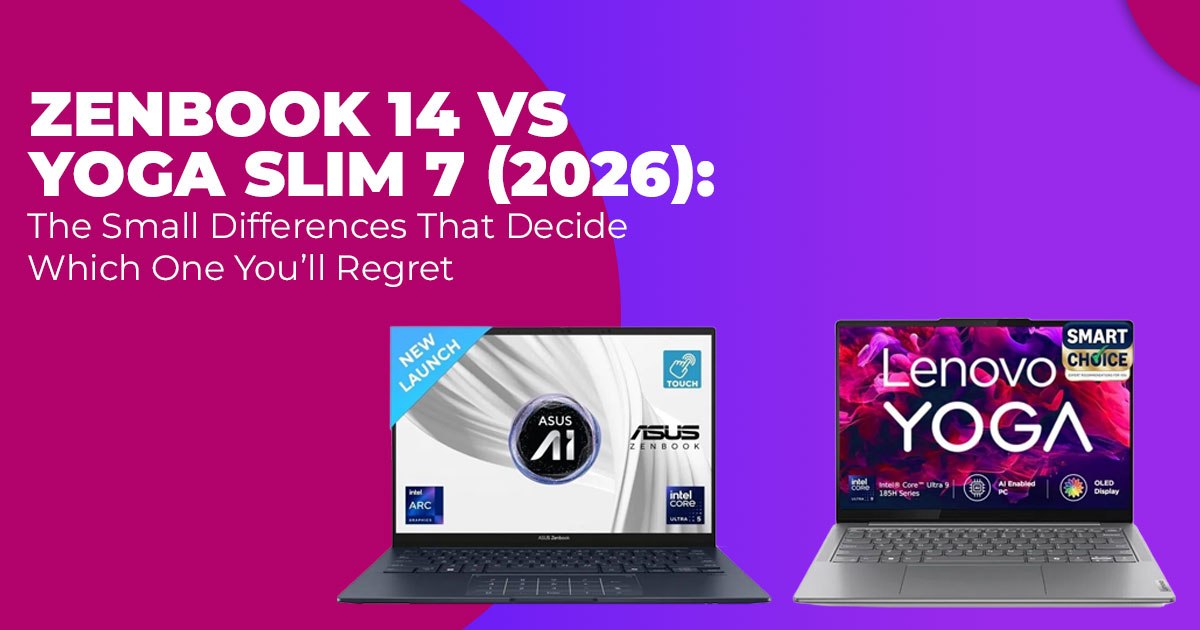
That’s why this Zenbook 14 vs Yoga Slim 7 comparison exists.
Both the ASUS Zenbook 14 and the Lenovo Yoga Slim 7 are popular 14-inch laptops for 2026. They look refined, perform well for everyday work, and offer sharp OLED displays. On paper, they seem evenly matched. In real life, small differences in weight, keyboard feel, thermals, and battery behavior shape the experience far more than most buyers expect.
As technology experts with over 20 years of experience in hardware and application research and development, we analyze each product based on real-world performance, durability, and value for money. Our goal is to help people find the best product for their needs—whether the priority is budget, performance, reliability, or long-term use. This guide is written for professionals, students, creatives, and frequent travelers who want a laptop that fits daily routines, not marketing promises. Our recommendations are grounded in hands-on testing, component analysis, long-term usage patterns, and industry expertise.
Here’s the key point many reviews miss: the best laptop is the one that feels easy to live with every day. And that’s what this comparison focuses on—commuting, remote work, long typing sessions, and light creative tasks in the real world.
Quick Summary
- Both laptops are strong choices in the thin and light laptop comparison space
- Zenbook 14 favors ultra-light designs and strong battery endurance
- Yoga Slim 7 leans toward balanced thermals, typing comfort, and stability
- The better choice depends on how the laptop will be used over the next 3–5 years
You can check the latest pricing and available variants here:
1.1 What category do these laptops belong to
Modern ultrabooks are built for people who work from many places, not just a desk.
This category focuses on:
- Easy portability without sacrificing everyday speed
- Reliable laptop battery life comparison results across real tasks
- Displays that stay comfortable during long screen time
- Quiet operation and controlled heat
The ASUS Zenbook 14 and Lenovo Yoga Slim 7 represent what this category looks like in 2026, especially with efficient processors and OLED screens becoming standard.
1.2 Why real user experience matters more than specs
Specs explain what a laptop is capable of. User experience shows what it delivers after weeks of use.
Real-world feedback reveals:
- Whether the keyboard stays comfortable during long work sessions
- How warm the laptop gets during meetings or creative work
- How battery life holds up after updates and daily charging
- Whether the weight becomes noticeable after months of travel
This guide blends hands-on testing, user feedback, and long-term ownership insights to provide a clear, real-world laptop review, not a checklist of numbers.
2. Technical specifications at a glance (2026 models)
| Feature | ASUS Zenbook 14 (2026 OLED) | Lenovo Yoga Slim 7i Aura Edition (Gen 10) |
| Display | 14-inch OLED, up to 3K, 120Hz, touch options | 14–14.5-inch OLED, up to 2.8K, 90–120Hz, touch |
| Processor | Intel Core Ultra Series 2/3 or AMD Ryzen AI | Intel Core Ultra (Lunar Lake / Aura editions) |
| RAM / Storage | Up to 32GB LPDDR5X / 1TB SSD | Up to 32GB / 1TB SSD |
| Weight | ~0.98–1.2 kg | ~1.1–1.3 kg |
| Battery | 70–75Wh, real-world 14–20+ hours | 70Wh, real-world 15–21 hours |
| Ports | 2× Thunderbolt 4, HDMI 2.1, USB- A | 2× Thunderbolt 4, HDMI (version varies by configuration), USB-A |
| Starting Price (US) | ~$1,100–$1,600 | ~$1,000–$1,500 |
| Starting Price (India) | ~₹95,000–₹1,40,000 | ~₹90,000–₹1,30,000 |
Specs give context. They don’t make the decision on their own.
2.1 Why this comparison matters in 2026
Search interest in premium laptop comparison keeps growing because modern laptops are harder to separate than ever. Efficient chips, AI features, and OLED displays have narrowed performance gaps.
Some configurations of the Zenbook 14 and Yoga Slim 7 qualify as Copilot+ PCs, with built-in NPUs that help with tasks like background blur and noise reduction. But most buyers don’t regret missing AI features.
They regret laptops that:
- Feel warm during long video calls
- Add strain when carried daily
- Fall short of real-world battery expectations
This comparison focuses on everyday productivity laptop use—office work, light photo editing, media consumption, and travel—so buyers can choose the best laptop for productivity or best laptop for students 2026 with confidence.
3. What does this comparison help you decide
By the end of this guide, readers will know:
- Which laptop suits everyday productivity needs better
- The real trade-offs in Zenbook 14 vs Yoga Slim 7 performance, battery life, and build quality
- Which model fits students, professionals, creatives, or remote workers
- How each holds up for long-term laptop performance over 4–5 years
- Which offers stronger value in the US and India The goal is a clear decision, not a rushed one.
4. Who this comparison is for—and who should skip it
This guide ffts readers who:
- Are close to buying either the Zenbook 14 or the Yoga Slim 7
- Want a thin and light laptop that works well for daily work and travel
- Plan to keep the laptop for three to five years
This guide is not a good fft if:
- Gaming performance is a priority
- Work involves heavy video rendering or 3D workloads
- The budget is under $800 or ₹70,000
For the right reader, this comparison is meant to remove doubt and help choose a laptop that still feels right long after the purchase.
5. The Real Decision Behind the Zenbook 14 vs Yoga Slim 7
This decision isn’t about which laptop wins on paper. It’s about which one fits daily life better.
A lighter laptop matters if it’s carried to college, meetings, or cafés every day. Strong battery life matters during travel or in places where power cuts still happen. Display brightness and color accuracy matter if the laptop is used for light photo editing or media consumption after work.
That’s the difference many buyers miss. Specs don’t decide satisfaction. Daily comfort does.
6. Define Your Needs Before Comparing These Two Laptops
Before choosing between the ASUS Zenbook 14 and the Lenovo Yoga Slim 7, it helps to pause and get clear on priorities.
Start with what the laptop will handle most days:
- Office documents, spreadsheets, and email
- Web browsing with many tabs open
- Video calls and online meetings
- Multitasking across apps
Then decide what matters more:
- Performance vs battery life
- Portability vs speaker quality
- Screen quality for movies and editing
This clarity turns a confusing premium laptop comparison into a straightforward choice.
7. Build Quality and Everyday Comfort
A laptop can look premium and still become tiring to use over time. Everyday comfort comes from small, practical details that only stand out after weeks of regular use—carrying it daily, typing for hours, and working in different environments.
7.1 ASUS Zenbook 14: Lightweight and Travel-Friendly
Most ASUS Zenbook 14 models in 2026 weigh under one kilogram, which makes a real difference after months of daily commuting. The lighter weight reduces strain on shoulders and backpacks, especially for students and professionals who carry their laptops all day.
The metal chassis feels solid and well-finished without feeling delicate. It holds up well to everyday knocks and movement, which adds confidence during travel.
Typing comfort is one of the Zenbook’s strengths. The keyboard offers balanced key travel and consistent backlighting, making long writing sessions easier on the hands. The large trackpad responds accurately to gestures, and the built-in virtual number pad proves useful for spreadsheets and data-heavy work.
7.2 Lenovo Yoga Slim 7: Solid and Desk-Focused
The Lenovo Yoga Slim 7 feels rigid with very little flex in the body. While it is slightly heavier, it remains easy to carry and feels well-balanced in a bag.
The keyboard layout feels crisp and well-spaced, which suits fast typing and short bursts of work. The trackpad stays smooth and predictable, making navigation feel consistent across different tasks.
This design gives the Yoga Slim 7 a stable, planted feel that works well for desk-based work or longer sessions in one place.
7.3 Which Feels Better Over Time
For people who type for long hours or travel often, the Zenbook 14 usually feels easier to live with due to its lighter weight and softer typing experience. For those who spend more time working at a desk and prefer a firmer, more grounded feel, the Yoga Slim 7 feels sturdy and confident.
Both laptops are well-built. The difference lies in how they fit into daily routines rather than overall quality.
8. Real-World Performance for Everyday Work
Both laptops handle everyday productivity without trouble. Office apps open quickly, dozens of browser tabs stay responsive, and video calls remain stable.
Newer processors focus on efficiency, which keeps heat and fan noise under control during long work sessions. The Zenbook 14 often feels quicker in short, everyday actions. The Yoga Slim 7 can pull ahead in some sustained multi-core tasks.
For most people doing office work, browsing, and light creative tasks, these differences rarely change the experience. Neither laptop struggles in warm conditions.
9. Display Quality in Daily Use
Both laptops use OLED displays, which bring deep blacks and strong contrast. That matters during long reading sessions and media use.
The Zenbook 14 display often reaches higher brightness and uses smoother refresh rates. Scrolling feels easier on the eyes, and outdoor visibility improves near windows or in bright rooms.
The Yoga Slim 7 display delivers accurate colors and slightly larger screens on some models. Colors stay consistent, which helps when editing photos or watching videos.
For long sessions of reading or streaming, the Zenbook 14’s smoother motion stands out. For color-sensitive work, both displays perform well.
10. Battery Life: What Holds Up After a Full Day
Battery life only matters if it survives real routines, not just lab tests. What counts is how long the laptop lasts through work, meetings, and travel without constantly hunting for a charger.
10.1 Everyday Mixed Use
In normal daily use—documents, web browsing, email, video calls, and some streaming—the Zenbook 14 typically delivers 14 to 18 hours on a full charge. The Yoga Slim 7 often lasts longer, reaching 16 to 21 hours under similar conditions.
This difference becomes noticeable on long workdays, especially when moving between locations.
10.2 Video Playback and Media Use
For watching videos or streaming content, both laptops perform well. Each can run well past 12 hours on a single charge, which is more than enough for flights, train rides, or extended downtime without access to power.
10.3 Fast Charging Convenience
Both laptops support fast charging. In most cases, a short charging break brings the battery close to 60 percent in under an hour. This makes it easy to top up during short stops or between meetings.
10.4 Which Battery Experience Feels Better
The Yoga Slim 7 usually lasts longer on a single charge, which helps during long travel days or back-to-back meetings. The Zenbook 14 still offers battery life that most people can depend on for a full day of work without carrying a charger.
Both perform well. The difference shows up when battery endurance is the top priority rather than a supporting feature.
11. Audio Quality and Laptop Microphone Quality for Calls: Media and Meeting Performance
Sound quality affects daily experience more than most buyers expect, especially for laptops for media consumption and frequent video calls.
11.1 Speaker Quality Comparison
The Lenovo Yoga Slim 7 speakers deliver louder and fuller sound, which helps during music playback, movie watching, and small presentations. The audio has better depth, making it feel less flat at higher volumes.
The Zenbook 14 speakers sound clear and balanced, but they don’t get as loud or full as the Lenovo.
For users who stream often or present without external speakers, the Yoga Slim 7 audio quality has a clear edge.
11.2 Laptop Microphone Quality for Calls
Both laptops offer strong microphone quality for calls. Background noise reduction works well during online meetings, making voices sound clean even in busy environments.
For professionals attending daily meetings or students joining online classes, both devices handle calls reliably.
- Bottom line: Choose the Yoga Slim 7 for stronger For calls, both perform at a high level.
12. Ports and Connectivity Comparison: Thunderbolt 4, HDMI, and USB Compatibility
Connectivity affects how easily a laptop fits into existing setups. Fewer adapters mean fewer frustrations.
Both laptops offer:
- Thunderbolt 4 ports for fast data transfer and charging
- HDMI ports for connecting to monitors or projectors
- USB-A ports for older accessories
- Modern wireless connectivity for stable internet and device pairing
This makes both strong choices in a laptop ports comparison. Most users will not need extra adapters for common office or home setups.
For buyers who connect external displays, storage drives, or presentation equipment, both models cover everyday needs well.
- Key takeaway: Neither laptop forces major compromises in
13. Storage and Memory Configuration: Long-Term Laptop Usability
Storage and memory determine how well a laptop performs after two or three years.
13.1 Recommended Configuration for Longevity
For buyers planning to keep their laptop for four to five years, choosing 32GB RAM and 1TB SSD
configurations offers stronger long-term value.
Both laptops use soldered memory in most models, which means no RAM upgrades later. Storage may also be limited depending on the model. That makes choosing the right configuration at purchase important.
13.2 Why SSD Speed and RAM Matter
Higher RAM improves multitasking and prevents slowdowns when many apps run together. Fast SSDs maintain system responsiveness over time. This directly affects:
- Laptop longevity 4 to 5 years
- SSD speed impact on laptop performance
- Long-term productivity without lag
When configured properly, both laptops stay responsive for years.
- Important: Buying the right specs now matters more than planning upgrades
14. ASUS Zenbook 14 vs Lenovo Yoga Slim 7 Side-by-Side Comparison Snapshot
This quick comparison highlights where each model stands out.
| Aspect | ASUS Zenbook 14 Strengths | Lenovo Yoga Slim 7 Strengths |
| Weight and Portability | Often lighter (around 1 kg models) | Still portable, slightly heavier |
| Display Smoothness and Brightness | Higher refresh rate, brighter screen | Larger display options |
| Keyboard and Trackpad | Virtual number pad, refined typing feel | Snappy keys, stable feedback |
| Battery Endurance | Strong all-day battery | Often lasts 2–3 hours longer |
| Speaker Quality | Clear audio | Louder, fuller sound |
| Value in the US and
India |
Premium features justify the
price |
Often better street pricing |
Quick Buying Guide
- Choose the ASUS Zenbook 14 for maximum portability and lighter carry.
- Choose the Lenovo Yoga Slim 7 for longer battery endurance and stronger speakers.
Both remain strong options in a thin and light laptop comparison, and the final decision depends on which strengths align with daily use.
15. Which Laptop Should You Choose? (Clear Use-Case Verdicts)
By this point, the real question is simple: Which one fits your life better?
Both laptops are strong. The right choice depends on what matters most once the laptop leaves the desk and becomes part of your routine.
15.1 Choose the ASUS Zenbook 14 if you are a student
If you carry your laptop across campus every day, weight matters more than most people expect. The ASUS Zenbook 14 is lighter in many configurations, and that difference adds up over months.
The smoother display also helps during long reading sessions, scrolling through research, or reviewing lecture notes.
Choose this if:
- You walk or commute daily with your laptop
- You type long assignments
- You want a lighter bag and less shoulder strain
Skip this if:
- You care more about squeezing every extra hour from the battery
For most students, the Zenbook feels easier to live with.
15.2 For creative work and light photo editing: slight edge to ASUS
Both laptops handle light photo editing and content work well. OLED panels on both look sharp and color-rich.
The Zenbook’s smoother refresh rate makes timeline scrolling and visual work feel more fluid. It’s not a dramatic difference, but it’s noticeable if editing is part of your routine.
The Yoga Slim 7 still performs well, especially during longer sessions where battery endurance matters.
Choose ASUS if display fluidity matters.
Choose Lenovo if battery during creative sessions matters more.
15.3 Choose the Lenovo Yoga Slim 7 for travel and remote work
If you work from airports, trains, cafés, or shared offices, battery life becomes the deciding factor.
The Lenovo Yoga Slim 7 often lasts longer on a single charge. Those extra hours matter during long travel days or back-to-back meetings.
Choose this if:
- You work unplugged for long stretches
- You attend frequent meetings
- You want stronger speakers for presentations
The Zenbook still performs well. But if endurance is the top priority, Lenovo makes more sense.
15.4 Best for everyday productivity
For general office work, browsing, streaming, and calls, both laptops perform at a high level. This is where personal preference takes over:
- Want a lighter carry and a smoother display? Choose the Zenbook 14.
- Want longer battery and fuller speakers? Choose the Yoga Slim 7.
At this point, the choice should feel clearer. If it doesn’t, the deciding factor is simple: think about what annoyed you in your last laptop. Pick the one that solves that problem.
16. Will It Last? Long-Term Ownership and Reliability
Most buyers want to know: Will this still feel fast in four or five years?
With proper configuration and normal care, both laptops are built to last that long.
- Performance over time: Choose higher RAM and storage upfront. These models use soldered components, which means upgrades are Buying the right configuration now avoids regret later.
- Battery health: After about three years, most laptop batteries retain around 80 percent capacity. That’s standard across brands. Charging habits matter more than brand differences.
- Service and support: In India, Lenovo’s service network reaches more In the United States, both brands offer reliable support.
- Resale value: Well-maintained premium models from both brands hold reasonable resale value, especially higher-spec versions.
There are no major red flags here. The key is choosing the right configuration from the start.
17. Price and Value: Where Your Money Goes
Price differences can shape the final decision.
The Lenovo Yoga Slim 7 is often priced lower for similar specifications. That makes it attractive for buyers focused on value.
The ASUS Zenbook 14 usually costs more, but that premium supports lighter designs and smoother displays.
Here’s how to think about it:
- If budget is tight and battery life matters most, Lenovo gives stronger value for money.
- If portability and display experience matter daily, the ASUS premium feels justified.
If that helps clarify your direction, the next step is simple—compare current pricing and available configurations in your region:
When considering the total cost of ownership, ask:
- Will this laptop reduce daily friction?
- Will it last the full 4–5 years?
- Will I wish I chose the lighter one? Or the longer-lasting one? That answer matters more than the price difference alone.
Final Verdict (Quick Decision Summary)
- Choose the ASUS Zenbook 14 if you want lighter weight, smoother display, and better daily carry comfort.
- Choose Lenovo Yoga Slim 7 if you want longer battery life and stronger speakers. Both are strong The better choice depends on what will matter to you every day. If still unsure, default to this rule:
- Travel often?
- Carry it everywhere and type for hours? That should make the decision feel straightforward. Summary
- Students and frequent commuters → ASUS Zenbook 14
- Remote workers needing longer unplugged sessions → Lenovo Yoga Slim 7
- Creative users → Slight edge to ASUS for smoother display
- Budget-focused buyers → Lenovo often costs less
Either way, you’re choosing between two well-built premium laptops. The right answer is the one that solves your daily problem—not the one with the longer spec sheet.
18. Clearing Common Doubts: Zenbook 14 vs Yoga Slim 7 (Quick Answers Before You Decide)
Before making a final choice, most buyers search for quick, direct answers. These are the common doubts people look up—especially around battery life comparison, travel weight, keyboard comfort, and overheating issues. Here are clear answers in short form so you can decide without second-guessing.
Q. Zenbook 14 vs Yoga Slim 7 battery life: which lasts longer in real use?
- In a real-world laptop battery life comparison, the Lenovo Yoga Slim 7 usually lasts two to three hours longer in mixed use like browsing, documents, and streaming. If all-day unplugged work is your priority, Lenovo has the edge.
Q. Which laptop is lighter for travel and daily carry?
- The ASUS Zenbook 14 is lighter, especially the ultra-light models around one kilogram. If you commute daily or travel often, the weight difference becomes noticeable over time.
Q. Which has the better keyboard for long typing sessions?
- Both are comfortable, but many users prefer the Zenbook 14 keyboard for its key travel and softer typing feel. Still, keyboard comfort is personal. If possible, try both in-store before deciding.
Q. Do the Zenbook 14 or Yoga Slim 7 overheat during normal use?
- No. For everyday productivity, video calls, and light creative tasks, both manage heat well. Overheating is rare unless pushed with sustained heavy workloads.
19. Frequently Asked Questions: Zenbook 14 vs Yoga Slim 7 (Fast, Practical Answers)
These are the questions buyers usually search for right before making a decision. The answers below focus on long-term usability, performance, and value.
Q. Will the Zenbook 14 or Yoga Slim 7 feel fast in 4–5 years?
- Yes—especially if you choose 32GB RAM. More memory improves multitasking and supports long-term use. For buyers thinking about future-proof laptop RAM impact on performance, higher RAM makes a real difference.
Q. Can storage or RAM be upgraded later?
- No. In most models, both RAM and storage are soldered. That means upgrades are limited or not possible. Choose the right configuration upfront to avoid regret later.
Q. Which laptop runs cooler during daily work?
- Both remain quiet and stable during normal tasks like browsing, documents, and calls. The ASUS Zenbook 14 often runs slightly cooler under light workloads, but the difference is small.
Q. Is an OLED display worth it for display quality?
- Yes. OLED improves color depth, contrast, and black levels. For movies, editing, and reading, the difference is noticeable. Using dark themes and standard brightness levels helps reduce long-term burn-in risk.
Q. Zenbook 14 vs Yoga Slim 7: which is better for students?
- The Zenbook 14 is better for portability and daily carry. The Yoga Slim 7 is better if battery life during long classes matters more than weight.
Q. Is the Zenbook 14 worth it in 2026?
- Yes—if lighter weight and smoother display quality are priorities. If battery endurance and lower pricing matter more, the Yoga Slim 7 may offer stronger value.
20. Final Take: Make the Call with Confidence
At this point, the choice should feel clearer.
If lighter weight, smoother scrolling, and easier daily carry matter most, the ASUS Zenbook 14 is the better fit.
If longer battery life and stronger speakers matter more, the Lenovo Yoga Slim 7 makes more sense.
Both are well-built premium ultrabooks with strong battery life and OLED displays. The better option is the one that solves your everyday friction.
If you’re ready to move forward, compare current pricing and available conffgurations here:
Before checking out, take one last look at the RAM and storage configuration. Since upgrades are limited, choosing the right specs now will matter later.
Still unsure between the two variants? Share your use case—workload, travel habits, and budget, and we’ll help narrow it down.
***Disclaimer***
This blog post reflects our own research, testing, and personal opinions. It should not be taken as the official position of any brand, manufacturer, or company mentioned here. While we aim to keep information accurate and up to date, product details, pricing, and availability can change. We recommend double-checking important details before making a purchase.
Some links in this article may be affiliate links. If you choose to buy through these links, we may earn a small commission at no extra cost to you. This helps support our work and allows us to keep publishing in-depth, unbiased reviews. Our recommendations are never influenced by affiliate partnerships.
Comments shared by readers reflect their own views and not ours. We are not responsible for outcomes resulting from the use of information on this site. Please seek professional advice where appropriate.
All product names, logos, and brands mentioned are the property of their respective owners. These names are used for identification and informational purposes only and do not imply endorsement.