
1. Introduction
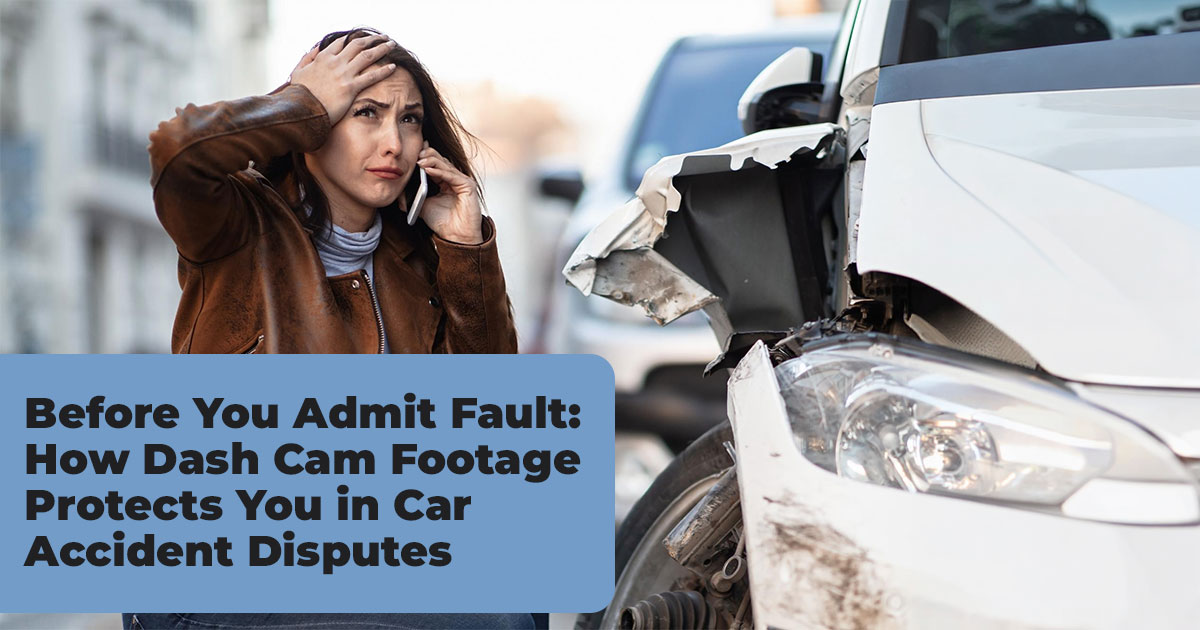
In many accident cases, drivers admit fault within the first minute — before the full picture is clear. That quick apology can follow them into an insurance dispute, affect car accident liability, and increase premiums.
Stress changes how events are remembered. But dash cam footage does not rely on memory. It records what actually happened. In situations where blame is unclear, dash cam evidence becomes objective accident evidence that replaces assumptions with facts.
A dash cam for accidents is no longer a tech accessory. It is a protection tool. It supports car accident liability proof, strengthens insurance claims with a dash cam, and enables faster video- based claim resolution. When disputes arise over rear-end collision evidence, lane change accident liability, or red light accident proof, recorded footage often settles the argument within minutes.
As technology experts with over 20 years of experience in hardware and application research and development, we deeply analyze each product based on real-world performance, durability, and value for money. Our goal is to help readers find the best product in every category— budget, performance, reliability, and long-term usage.
For daily commuters, highway drivers, urban motorists dealing with tight parking, and professionals who depend on rideshare liability protection, our recommendations are based on extensive research, component analysis, real-world usability, and industry expertise.
Customer feedback plays a major role in our evaluation process. Reviews reveal whether a parking mode dash cam actually captures a hit and run video recording, whether a 4K dash cam clearly records plates at night, and whether features like GPS timestamp dash cam tracking hold up during a real claim. Technical specifications matter, but long-term performance matters more.
This review explains how dash cam footage helps insurance claims, what features make evidence reliable, and how to choose a reliable dash cam for city driving or highway travel. The goal is simple: reduce false blame and protect drivers when the facts matter most.
If you’re already considering upgrading your setup, you can explore current models directly from the offfcial sources:
Quick Summary
- Dash cam footage protects drivers when memory fails under stress.
- It provides unbiased accident witness documentation for insurance claims.
- Key features such as 4K resolution dash cam, HDR night recording, G-sensor detection, and loop recording feature determine whether footage is usable.
- Real-world reviews reveal long-term reliability beyond marketing claims.
- The right dash cam can prevent false liability and protect insurance rates.
2. Technical Specifications at a Glance
Choosing a dash cam should focus on evidence quality, not branding. If footage cannot clearly show timing, signals, or vehicle position, it cannot support accident fault determination.
The following speciffcations directly affect whether footage stands up during an insurance claim video submission or legal review:
| Feature | Why It Matters | Recommended Standard |
|
Resolution |
Captures fine detail for rear-end
collision evidence and red light accident proof |
Minimum 2K, preferably 4K dash cam |
| Frame Rate | Preserves motion clarity for
reviewing speed and distance |
30–60 FPS |
| Field of View | Expands coverage for lane change accident liability and side impacts | 140–170° wide-angle dash cam |
| Night Vision | Maintains clarity in low light | HDR night recording or Wide
Dynamic Range |
| Storage | Prevents critical files from being
overwritten |
128GB+ with a loop recording
feature |
| GPS Integration | Adds time and location data for
GPS timestamp accuracy |
Built-in GPS |
| Parking Mode | Protects the vehicle when
unattended |
Motion detection dash cam or
impact-triggered system |
These features support accident reconstruction, strengthen vehicle collision recording, and improve the reliability of submitted evidence.
3. Why This Review Is Essential
The market for a dash cam for accidents continues to grow, but not every device delivers usable proof. Marketing claims often focus on resolution numbers, while overlooking reliability, heat resistance, and storage stability.
In real cases, brake check scam footage has shifted blame away from innocent drivers. Clear intersection accident disputes have been resolved because of visible signal timing. At the same time, some claims have failed because footage was edited or overwritten before submission.
Understanding how video-based claim resolution works prevents costly mistakes. Reliable dash cam evidence can deter crash-for-cash scams, counter exaggerated damage claims, and protect against false accusations.
This review focuses on real-world applications. It addresses how dash cam footage helps insurance claims, how to preserve files properly, and how to avoid losing critical proof during stressful moments.
4. What You Will Learn from This Review
This guide provides practical knowledge for everyday drivers:
- How dash cam footage clarifies responsibility in disputed accidents
- How to document rear-end collision evidence correctly
- What supports valid lane change accident liability claims
- How to prepare footage for insurance claim video submission
- Why parking mode dash cam protection matters in urban areas
- How features like G-sensor detection and emergency locking prevent file loss
Drivers will understand how to strengthen accident fault determination, reduce delays, and protect themselves from rising premiums caused by incorrect liability decisions.
5. The Moment After Impact: Guilt, Panic, and Quick Apologies
Immediately after a collision, emotion often overrides logic. Many drivers apologize out of shock, even when responsibility is unclear. That reaction can influence how events are reported.
However, dash cam footage provides neutral accident evidence that shows speed, distance, signals, and timing without distortion. In multiple documented cases, drivers believed they caused a crash until unbiased accident witness recordings revealed sudden braking or unsafe merging by the other party.
Clear vehicle collision recording can overturn assumptions and support claims that prove the accident was not my fault. When memory becomes unreliable, recorded evidence becomes the deciding factor.
And in accident disputes, the deciding factor determines everything — from liability to long-term insurance impact.
6. Why Car Accident Liability Gets Misjudged at the Scene — and How Dash Cam Evidence Fixes It
One of the most common searches after a crash is: “How does insurance determine fault?”
The answer is simple in theory but messy in practice. Fault is assigned based on statements, damage patterns, traffic laws, and supporting evidence. The problem is that most of this information is collected when people are shaken and confused.
At the scene:
- Drivers assume the rear vehicle is always responsible in a tail-end
- People apologize to reduce
- Key details — like sudden braking or unsafe merging — go
Without accident dispute video evidence, the case often becomes a statement-versus-statement situation. Important context disappears. And once a version of events enters the claim file, it becomes difficult to correct.
Insurance companies increasingly rely on dash cam footage because it provides measurable data — distance, timing, speed consistency, signal use. That kind of objective accident evidence reduces guesswork and improves accident fault determination.
When footage exists, adjusters focus on facts instead of assumptions. And that shift can mean the difference between shared liability and full responsibility.
7. Real Accident Scenarios Where Dash Cam Footage Changed Liability
Search trends show strong interest in:
- “How to prove you are not at fault in a car accident.”
- “Brake check scam footage proof.”
- “Red light accidentevidence. ”
- “Parking lot hit and run caught on dash cam.”
Below are real-world patterns where recorded evidence reversed initial blame.
7.1 Rear-End Collision: Can Brake Check Footage Prove You’re Not at Fault?
Rear-end collisions are often assumed to be the trailing driver’s fault. But that assumption ignores staged crashes.
In a typical brake check scam, the lead vehicle brakes without traffic reason. The goal is to trigger impact and file a claim. Without proof, the rear driver absorbs the damage and higher premiums.
This is where brake check scam footage changes the outcome.
Clear rear-end collision evidence shows:
- No obstruction ahead
- Sudden, unnecessary deceleration
- Inconsistent speed patterns before impact
Adjusters analyze frame timing, following distance, and braking behavior. When footage confirms intentional stopping, liability shifts.
For daily commuters facing dense traffic, a 3-channel dash cam captures front, rear, and interior context. Highway drivers benefit from a 4-channel dash cam that records wider angles. Drivers wanting minimal distraction often choose a compact 4K dash cam focused on sharp front recording.
- Key takeaway: In staged crashes, recorded timing and road conditions matter more than assumptions.
7.2 Lane Change Accident Liability: Who Actually Cut Whom Off?
Another high-intent question: “Who is at fault in a lane change accident?”
Lane merges create fast-moving disputes. One driver claims unsafe merging. The other claims aggressive acceleration blocked the merge.
Without evidence, it becomes opinion-based.
A front and rear dash cam for cars shows:
- Turn signal usage
- Speed consistency
- Vehicle positioning before contact
Rear-angle footage is critical. It reveals whether the trailing vehicle closed the gap intentionally. In many cases, insurers assign shared fault once timing is reviewed.
City drivers benefit from a front and interior recording dash cam that documents driver behavior. Long-distance drivers prefer a front and rear dash cam for highway merges. Those wanting full documentation choose a multi-channel dash cam to eliminate blind spots.
What strengthens your case:
- Clear timestamps
- Wide-angle coverage
- Visible lane markings
This level of vehicle collision recording prevents exaggerated claims and protects against inflated damage narratives.
7.3 Red Light Accident Disputes: Can Dash Cam Footage Prove Signal Timing?
Search query: “Can dash cam footage prove I had the green light?”
Intersection accidents often involve conflicting statements. Both drivers claim right-of-way. Memory under stress is unreliable.
An intersection accident recording, reviewed frame by frame, shows:
- Signal color at entry
- Vehicle speed
- Cross-traffic movement
Features such as High Dynamic Range reduce glare from sunlight or headlights. A GPS timestamp dash cam adds location and time precision, which supports legal review.
Urban drivers benefit from a dual 2.5K dash cam with enhanced clarity. Busy intersections may require a multi-angle dash cam to capture cross traffic and turning lanes.
In these cases, the strongest evidence includes:
- Clear light visibility
- Lane positioning
- Impact timing
Signal disputes rarely survive detailed video review.
7.4 Parking Lot Hit-and-Run: How Parking Mode Dash Cams Capture Proof
A frequent concern: “Can a dash cam catch a hit and run while parked?”
Parking lots lack witnesses. Without footage, claims are often denied.
A parking mode dash cam operates even when the engine is off. It activates through motion detection dash cam triggers, or impact sensors.
Two primary recording types exist:
| Mode Type | Trigger | Battery Use | Best Use Case |
| Motion Detection | Movement near
the vehicle |
Controlled draw | Busy parking areas |
| Impact-Triggered | Physical contact | Event-based | Long unattended parking |
When a parking lot hit-and-run is captured on a dash cam, the camera can capture:
- License plate details
- Vehicle color and direction
- Time of contact
This transforms a denied claim into a supported one.
For urban drivers who park daily in crowded areas, reliable parking protection is essential. Without it, proving responsibility becomes nearly impossible.
8. How Dash Cam Footage Improves Insurance Claims and Liability Decisions
Searches for insurance claims with dash cam keep rising for one reason: drivers want faster, fairer outcomes.
Clear dash cam footage reduces reliance on conflicting statements. It supports accurate accident fault determination, shortens investigations, and strengthens video-based claim resolution.
Adjusters review timing, lane position, braking distance, and signal use — all visible through reliable vehicle collision recording.
8.1 Does Dash Cam Footage Override Verbal Admission of Fault?
In many cases, yes. Courts and insurers often prioritize neutral accident evidence over emotional statements made under stress. Strong driver exoneration evidence can shift liability when spoken apologies do not reflect actual fault.
8.2 Crash-for-Cash Scam Prevention and Staged Accident Detection
Clear brake check scam footage helps expose intentional sudden stops. Strong objective accident evidence discourages fraud and protects drivers from inflated claims and rising premiums.
9. Is Dash Cam Footage Admissible in Court? What Makes It Legally Strong
Most courts accept dash cam evidence if it is original and unedited.
To strengthen admissibility:
- Use a 4K resolution dash cam for clear detail
- Enable HDR night recording for low-light accuracy
- Activate G-sensor detection and emergency file locking
- Preserve original GPS timestamp dash cam data Raw files carry more weight than edited clips.
10. How to Submit Dash Cam Footage to Insurance
High-intent query: How to submit dash cam footage to insurance
After a crash:
- Lock the file immediately to prevent overwrite.
- Back up the original clip.
- Submit raw footage during insurance claim video submission.
Because of the loop recording feature, unlocked files may be erased when storage fills. Quick action protects critical evidence.
11. Best Dash Cam for Accident Proof Based on Driving Style
Choosing the best dash cam for insurance claims depends on how and where you drive.
- Dash cam for daily commuting: Compact 4K dash cam for traffic disputes
- Dash cam for highway accidents: Wide-angle with GPS and rear coverage
- Best dash cam for Uber drivers: Dash cam with interior camera for passenger protection
- Dash cam with parking mode: Essential for urban parking risks
- Multi-channel dash cam: Ideal for full coverage and long-distance travel Matching features to real-world risk improves protection and long-term value.
If you’ve identiffed the setup that ffts your driving style, you can compare available models and conffgurations here:
Strong dash cam evidence does not just record accidents. It protects drivers from false blame and costly liability errors.
12. Frequently Asked Questions About Dash Cam Footage, Insurance Claims, and Legal Use
Before buying or relying on a camera, most drivers want clear answers. The questions below reflect common high-intent searches around dash cam footage, insurance claims with dash cam, and legal use. These short answers are designed to help you make practical decisions with confidence.
Q. Are dash cam videos legally admissible in court?
- In most regions, yes. Dash cam footage is generally admissible if it is original, unedited, and recorded in compliance with local privacy laws. Courts favor clear objective accident evidence, especially when it includes timestamp and location data.
Q. Does dash cam footage help insurance claims?
- Yes. Strong dash cam evidence supports faster accident fault determination and reduces disputes. Many insurers rely on clear video for video-based claim resolution, particularly in rear- end and intersection cases.
Q. Do dash cams reduce insurance premiums?
- Some providers offer discounts, but policies vary. While not guaranteed, having a dash cam for accidents can reduce claim disputes and help protect long-term rates.
Q. How long is dash cam footage stored before overwrite?
- It depends on storage size and resolution. With the standard loop recording feature, footage may overwrite within 1–3 hours of driving. Locking files using G-sensor detection prevents deletion of important clips.
Q. Do parking modes drain the car battery?
- Quality models include voltage protection. A reliable parking mode dash cam with motion or impact detection is designed to operate safely for extended periods without draining the battery.
Q. Is an interior recording dash cam necessary for non-rideshare drivers?
- Not always. For rideshare drivers, a dash cam with interior camera supports rideshare liability protection. For private drivers, it can still help document theft, vandalism, or in-cabin incidents, but it is optional.
13. Conclusion: Your Silent Protection When It Matters Most
Accidents create confusion. People react fast. Details get lost.
But dash cam footage keeps a clear record. It replaces assumptions with facts. It supports fair accident fault determination, strengthens insurance claims with dash cam, and protects drivers from unfair liability decisions.
Instead of relying on memory or pressure at the scene, you have objective accident evidence. That can mean fewer disputes, faster claim resolution, and protection against insurance fraud or staged setups.
For daily commuters, highway drivers, rideshare operators, and city drivers dealing with crowded parking, a reliable dash cam is not just about recording — it is about protecting your side of the story.
If you’re ready to choose a model that ffts your driving routine:
Invest in clear evidence today so you are not left defending yourself tomorrow. If you have questions about setup, features, or choosing the right model, reach out. Safer roads start with better documentation.
***Disclaimer***
This blog post reflects our own research, testing, and personal opinions. It should not be taken as the official position of any brand, manufacturer, or company mentioned here. While we aim to keep information accurate and up to date, product details, pricing, and availability can change. We recommend double-checking important details before making a purchase.
Some links in this article may be affiliate links. If you choose to buy through these links, we may earn a small commission at no extra cost to you. This helps support our work and allows us to keep publishing in-depth, unbiased reviews. Our recommendations are never influenced by affiliate partnerships.
Comments shared by readers reflect their own views and not ours. We are not responsible for outcomes resulting from the use of information on this site. Please seek professional advice where appropriate.
All product names, logos, and brands mentioned are the property of their respective owners. These names are used for identification and informational purposes only and do not imply endorsement.