
ORIGINAL PUBLISH DATE: January 6, 2026
LAST UPDATED: March 09, 2026
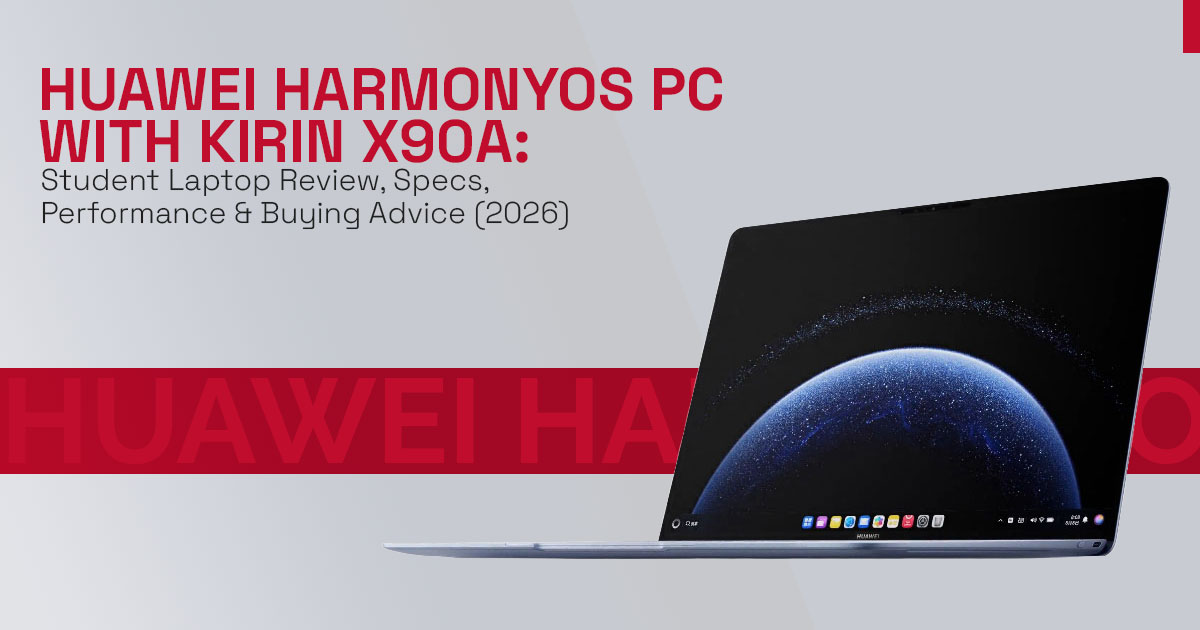
Overview: The Huawei HarmonyOS PC with Kirin X90A offers strong battery life, smooth multitasking, and deep Huawei ecosystem integration. A solid student laptop for everyday productivity.
What’s New in This Update
- Refreshed insights on the Huawei HarmonyOS PC ecosystem, pulling in the latest app rollouts for study apps like virtual whiteboards and group chat integrations that make hybrid classes smoother.
- Deeper look at Kirin X90A processor real-world tests from student users in early 2026, including how it holds up during back-to-back Zoom sessions.
- Fresh ARM laptop comparisons, now including the latest Snapdragon tweaks and how they stack against this setup for everyday campus hauls.
- Buying advice tuned for students dealing with remote learning spikes, like quick file swaps during group projects.
- Beefed-up FAQs with questions pulled straight from student searches, covering app tweaks and battery stretches for long library days.
Quick Take
Looking for a student laptop that stays fast through semesters without wrecking your budget or battery? The Huawei HarmonyOS PC with Kirin X90A aims squarely at that need, pairing efficient performance with tight phone-and-tablet ecosystem integration.
The highlights are clear:
- All-day battery life that can stretch through long lecture days
- Seamless drag-and-drop file sharing that cuts down on email clutter
- Built-in AI productivity tools that speed up note-taking and study organization
There are trade-offs, though:
- Some older desktop programs may run less smoothly
- The hardware is not designed for heavy gaming or demanding creative workloads
Bottom line: A solid student productivity laptop for people already inside the Huawei ecosystem. If it lands around 4,000 Yuan, it offers a smart balance of price, portability, and everyday productivity.
Click here to buy from Amazon
Technical Specifications at a Glance
| Feature | Details |
| Processor | Kirin X90A processor (10-core ARM architecture: 2 performance cores at 2.31GHz, 6 efficiency cores at 2.05GHz, 2 low-power cores) |
| GPU | Maleoon 910B GPU (integrated graphics designed for video playback, light creative tasks, and everyday visuals) |
| RAM | 8GB or 16GB LPDDR5 memory (smooth multitasking for browser
tabs, documents, and study apps) |
| Storage | 256GB or 512GB NVMe SSD (fast file access for assignments, media,
and large documents) |
| Display | 14-inch IPS display, 1920×1200 resolution, 60Hz refresh rate, anti- glare panel for comfortable long sessions |
| Battery | 56Wh battery delivering up to 12 hours of mixed use, including
browsing, note-taking, and video lectures |
| Ports | 2× USB-C ports, HDMI 1.4, and microSD card slot for quick media transfers |
| Weight | 1.38 kg lightweight design ideal for daily campus travel |
| Operating System | HarmonyOS 5 with AI productivity tools and cross-device connectivity features |
| Price Range | 3,000–4,000 Yuan, positioning it as an affordable student laptop |
Why This Review Is Essential
The cost of student laptops has been climbing steadily, with prices rising nearly 15% over the past year due to supply chain issues and chip shortages. That makes efficient laptops built on ARM processors increasingly attractive for students and budget-focused buyers.
Devices powered by the Kirin X90A processor focus on:
- Lower power consumption
- Longer battery life
- Cooler operation during extended workloads
These advantages matter during long study sessions, online lectures, and research work, where constant charging or overheating becomes a distraction.
To understand whether the Huawei HarmonyOS PC actually delivers on these promises, we analyzed early benchmarks, real user discussions, and performance data. The goal is simple: give students a clear and practical perspective on how this ARM-based HarmonyOS laptop fits into everyday academic life.
What You Will Learn from This Review
This review explains how the Kirin X90A processor performance holds up during real student tasks, such as:
- Streaming online lectures
- Running multiple browser tabs
- Editing group presentations
- Managing research notes and documents
You’ll also see how the Huawei HarmonyOS ecosystem improves productivity through cross- device integration between phones, tablets, and laptops.
Inside this guide, we will cover:
- How HarmonyOS laptops simplify file sharing and multitasking
- Comparisons with Windows student laptops and tablets
- Practical tips for setting up a HarmonyOS productivity workflow
- Whether this Huawei student laptop is the right choice for online classes and everyday productivity in 2026
By the end, you’ll have a clear understanding of whether the Huawei HarmonyOS PC with Kirin X90A fits your study routine, budget, and productivity needs.
1. Huawei HarmonyOS PC for Students: Why ARM-Based Laptops Are Getting Attention
Buying a student laptop now costs more than it did just a year ago. Entry-level machines often start above 3,500 Yuan, yet many still struggle to last through a full day of classes. This is one reason ARM-based laptops are drawing attention. Chips such as the Kirin X90A processor deliver solid everyday performance while using far less power than typical Intel or AMD x86 processors.
The Huawei HarmonyOS PC enters this space with a different goal. Instead of chasing peak benchmark scores, it focuses on battery efficiency, cross-device connectivity, and a simplified workflow for daily computing. Students often switch between phones, tablets, and laptops during lectures, research, and group projects. The HarmonyOS ecosystem connects these devices so tasks move smoothly between them.
For students balancing online classes, campus lectures, and collaborative work, the Huawei HarmonyOS PC with Kirin X90A aims to reduce the friction that usually comes with juggling files and apps across devices.
2. Huawei HarmonyOS PC Overview
Before looking at performance or features, it helps to understand what makes the Huawei HarmonyOS PC different from a traditional laptop. This section explains how the HarmonyOS operating system for PC works and how its Huawei ecosystem integration connects your phone, tablet, and laptop into one seamless workspace.
2.1 What Is the Huawei HarmonyOS PC Operating System?
The Huawei HarmonyOS PC runs on the HarmonyOS operating system for PC, Huawei’s platform designed for connected computing across devices. Unlike traditional desktop systems such as Windows or macOS, HarmonyOS centers around device collaboration. A phone, tablet, and laptop operate as parts of one workspace instead of separate machines.
The system is optimized for ARM processors, including the Kirin X90A chipset, which helps maintain low power consumption, stable performance, and cooler operation during long workloads.
The interface is designed for clarity:
- A minimal desktop layout with quick access to apps
- Gesture navigation for switching tasks
- Fast access to files and settings without complex menus
For students, this means less time navigating the system and more time focusing on
assignments, research, and collaboration.
2.2 HarmonyOS Ecosystem Integration: Phone, Tablet, and PC Connectivity
One of the biggest strengths of the Huawei HarmonyOS ecosystem is how devices connect and share tasks.
With multi-screen collaboration, content moves between devices instantly. For example:
- Notes written on a phone appear on the Huawei HarmonyOS PC for editing
- A tablet sketch drops directly into a document
- A file moves from phone to laptop through Huawei Share file transfer
This cross-device connectivity simplifies group work. Students can share files across devices without cables, cloud uploads, or messaging apps. Notifications also stay synchronized, so alerts appear on whichever screen is in use.
In environments where remote learning and hybrid classrooms are common, this connected computing ecosystem reduces file confusion and keeps study materials organized.
Another advantage is automatic backup and device continuity within Huawei ecosystem devices, which helps protect research notes and assignments during unexpected power interruptions.
3. Kirin X90A Processor Explained
At the center of the Huawei HarmonyOS PC is the Kirin X90A processor, an ARM-based laptop chip designed for efficient everyday computing. This section breaks down the architecture, real- world performance, and how the Kirin X90A laptop performance supports multitasking, online classes, and daily productivity tasks.
3.1 What Is the Kirin X90A Processor?
The Kirin X90A processor is Huawei’s ARM-based laptop chip designed for efficient everyday computing. It uses a 10-core configuration that separates performance tasks from background workloads.
The processor includes:
- High-performance cores for demanding actions like launching applications
- Efficiency cores for sustained tasks such as browsing or document editing
- Low-power cores that maintain background processes while conserving energy
Running at speeds near 2.3GHz, the chip is built using a 7-nanometer architecture, which helps balance performance, power efficiency, and thermal stability.
Compared with many traditional x86 laptop processors, the Kirin X90A ARM laptop design prioritizes endurance and stability rather than short bursts of speed. This aligns well with the steady workload pattern of students, researchers, and productivity users.
3.2 Kirin X90A Laptop Performance in Real-World Student Workloads
In daily use, the Kirin X90A laptop performance focuses on consistency.
Typical tasks include:
- Managing multiple browser tabs for research
- Editing documents or spreadsheets
- Streaming online lectures
- Running collaboration tools and messaging apps
The system handles multitasking smoothly. Students can run several apps simultaneously without noticeable slowdowns. Full-HD video streams and lecture recordings play without buffering issues.
The processor does have limitations. Heavy workloads such as advanced video editing, large software builds, or high-end engineering simulations may require more powerful hardware.
For most academic tasks—especially for majors focused on writing, research, business, or communications—the Kirin X90A ARM laptop delivers stable performance and long runtime.
3.3 Maleoon 910B GPU Performance for Everyday Graphics Tasks
The Maleoon 910B GPU is the integrated graphics unit inside the Kirin X90A processor. It supports everyday graphics tasks used in academic and creative environments.
Capabilities include:
- Smooth 4K video playback
- Image editing in basic design tools
- Light visual design work
- Casual games on moderate settings
The GPU is not designed for high-end gaming or heavy 3D rendering, but it performs well for common tasks like presentations, digital illustrations, or multimedia coursework.
Because the system relies on ARM laptop efficiency, it maintains low temperatures and quiet operation even during extended sessions.
4. Huawei HarmonyOS PC User Experience
Hardware matters, but the daily experience defines whether a laptop actually helps you work faster. This section explores the HarmonyOS PC user experience, including system responsiveness, app compatibility, and built-in AI productivity tools that support study workflows and multitasking.
4.1 HarmonyOS PC Boot Speed and System Responsiveness
The HarmonyOS PC user experience focuses on speed and simplicity. The system usually boots to the desktop in about eight seconds.
Navigation remains smooth throughout daily use:
- Switching between apps through gestures
- Resizing windows for multitasking
- Scrolling through documents and research papers without delays
This responsiveness helps students stay focused during lecture reviews, reading sessions, and assignment editing.
4.2 HarmonyOS PC App Compatibility and Software Support
The HarmonyOS PC app compatibility model leans heavily on cloud-based applications and web platforms, which now power most student workflows.
Common tools that work well include:
- Google Drive and Office Online
- research databases and academic portals
- productivity platforms and note-taking tools
Built-in applications cover core tasks such as document editing and file management. Additional apps can be installed through the system’s app ecosystem.
Older desktop software designed for Windows may run through compatibility layers, but support varies depending on the application. Students whose workflows rely mainly on web services will find the HarmonyOS laptop environment well-suited to their needs.
4.3 HarmonyOS AI Productivity Tools for Student Workflows
The AI productivity tools in HarmonyOS assist with everyday study tasks.
Examples include:
- AI note summarization that converts recorded lectures into structured notes
- Document checks that highlight missing information or unclear sections
- Smart scheduling tools that organize assignments based on deadlines
Students can also generate flashcards from textbooks, convert voice notes into outlines, and receive study reminders based on activity patterns.
These features help reduce repetitive tasks during the week, which makes the HarmonyOS PC productivity features valuable for online learning environments.
Click here to buy from Amazon
5. Hardware Design and Student-Friendly Laptop Features
The Huawei HarmonyOS PC with Kirin X90A focuses on portability and durability.
Key hardware highlights include:
- 38 kg lightweight design, suitable for daily campus travel
- Aluminum chassis that withstands regular transport
- 14-inch IPS display with anti-glare coating for long reading sessions
- 5 mm keyboard travel, comfortable for extended typing
The display reaches 300 nits brightness, which helps maintain visibility in classrooms or outdoor study areas.
Battery life typically reaches 10–12 hours of mixed use, covering note-taking, browsing, and lecture streaming.
Connectivity options support typical academic workflows:
- USB-C ports for charging and accessories
- HDMI output for classroom presentations
- microSD card slot for quick file transfers
Combined with the Kirin X90A ARM laptop efficiency, the system maintains low heat output, which helps during long study sessions.
6. Huawei HarmonyOS PC vs Budget Windows Laptops
| Aspect | Huawei HarmonyOS PC with Kirin X90A | Budget Windows Laptop (Lenovo IdeaPad Slim) |
| Battery Efficiency | Around 12 hours thanks to ARM laptop efficiency | Usually 7–9 hours |
| Software Complexity | Clean system with minimal background processes | Frequent updates and pre-installed software |
| Ecosystem Integration | Strong Huawei ecosystem connectivity | Basic cloud synchronization |
| Price Range | 3,000–4,000 Yuan | 2,800–3,500 Yuan |
For users comparing Huawei HarmonyOS PC vs Windows laptop, the key difference lies in device integration and battery endurance. Windows systems still offer broader legacy software support, while the ARM laptop vs traditional laptop advantage favors longer runtime and simpler system management.
7. Huawei HarmonyOS PC vs Tablet for Students
Many students consider tablets when choosing portable study devices. However, the comparison between Huawei HarmonyOS PC vs tablet shows several practical differences.
Laptops provide:
- Full keyboard input for writing assignments
- Split-screen multitasking for research and note-taking
- Longer sessions for editing documents
Tablets remain useful for reading, quick annotations, and media consumption. For writing-heavy workloads such as essays, reports, or research summaries, the student productivity laptop remains the more practical option.
8. ARM Laptop Trend: Why ARM-Based Computing Is Expanding
The ARM laptop trend continues to grow across the computing industry. Apple’s Apple Silicon processors demonstrated how ARM architecture laptops can deliver strong performance while consuming less energy.
These chips often reduce power usage by around 30 percent compared with traditional x86 processors, which improves battery life and thermal efficiency.
Other platforms, including Windows on ARM systems with Qualcomm processors, are expanding this category. Within this environment, the Huawei ARM laptop ecosystem focuses on device collaboration and energy efficiency.
As universities and workplaces seek low-power computing solutions, laptops using processors like the Kirin X90A represent an important step in the shift toward efficient mobile computing platforms.
9. Huawei HarmonyOS PC Price and Value for Students
Choosing a student laptop often comes down to one question: does the price match the real value for daily academic work? The Huawei HarmonyOS PC with Kirin X90A targets students who want long battery life, reliable performance, and strong device connectivity without paying for high-end gaming hardware or workstation power. This section explains the Huawei HarmonyOS PC price range and what students actually receive for that investment.
9.1 Huawei HarmonyOS PC Price Range
The expected Huawei HarmonyOS PC price sits between 3,000 and 4,000 Yuan, placing it in the mid-range student laptop category.
At this level, the HarmonyOS laptop for education competes with popular budget Windows laptops
such as the Lenovo IdeaPad series, yet offers several differences:
- ARM-based laptop efficiency from the Kirin X90A processor
- Longer battery runtime for academic workloads
- Integrated Huawei ecosystem connectivity
For students comparing Huawei HarmonyOS PC vs budget Windows laptop, the value lies in
battery efficiency, cross-device workflow, and a cleaner software experience.
9.2 What Students Get for the Price
For the price, the Huawei HarmonyOS PC with Kirin X90A delivers a balanced package focused on productivity.
Key value points include:
- Durable lightweight laptop design suitable for daily campus use
- All-day battery life designed for classes, research, and assignments
- Seamless Huawei ecosystem integration with phones and tablets
- Built-in AI productivity tools for note-taking and task organization
For students who already use Huawei ecosystem devices, the benefits increase because multi- screen collaboration, Huawei Share file transfer, and cross-device notifications simplify everyday workflows.
In practical terms, the HarmonyOS student laptop transforms a typical budget device into a more connected productivity platform for study and research.
10. Huawei HarmonyOS PC Buying Guide: Who Should Consider This Laptop
The Huawei HarmonyOS PC with Kirin X90A suits a specific group of users. Understanding who benefits most from this ARM-based student laptop helps buyers decide whether it fits their workflow.
Good Choice For
- Students who rely on cross-device connectivity between phone, tablet, and laptop
- Online learners and remote students managing research, lectures, and assignments
- Users who prefer cloud-based apps and web productivity tools
- Existing Huawei ecosystem users who want stronger device integration
For these users, the Huawei HarmonyOS laptop ecosystem creates a smooth workflow where files and tasks move easily across devices.
Not Ideal For
- Users focused on high-performance gaming
- Creators working with heavy video editing or 3D rendering software
- Professionals who depend on legacy Windows desktop applications
These workloads often require high-performance GPUs or full Windows compatibility, which fall outside the design goals of the Kirin X90A ARM laptop.
Key Buying Tip
Before choosing the Huawei HarmonyOS PC, review your daily workflow. If your work relies mainly on browser tools, cloud platforms, and device collaboration, the HarmonyOS ecosystem can simplify how you study and manage tasks.
11. Is the Huawei HarmonyOS PC Worth Buying in 2026?
The question many buyers ask is simple: Is the Huawei HarmonyOS PC worth buying in 2026?
The platform continues to grow, with thousands of compatible applications and regular HarmonyOS software updates improving performance and stability. For users who benefit from Huawei ecosystem integration, the laptop offers a practical mix of battery efficiency, portability, and productivity tools.
For students and everyday users focused on research, writing, and collaboration, the Huawei HarmonyOS PC with Kirin X90A represents a solid option in the ARM-based student laptop market.
Buyers who depend on specialized desktop software or heavy computing tasks may prefer traditional Windows systems until broader software compatibility expands.
Overall, the HarmonyOS PC value proposition is strongest for students who want a lightweight, connected laptop built for daily productivity.
11.1 Huawei HarmonyOS PC Pros and Cons
| Pros of Huawei HarmonyOS PC | Cons of Huawei HarmonyOS PC |
| All-day battery life from ARM laptop efficiency | Some legacy desktop apps may require compatibility layers |
| Strong Huawei ecosystem integration for cross-device work | Limited support for high-end gaming workloads |
| Helpful AI productivity tools for study workflows | Best experience tied to Huawei ecosystem devices |
Key Insight:
For students who value battery life, device connectivity, and a streamlined workflow, the Huawei HarmonyOS PC with Kirin X90A offers strong everyday value.
Click here to buy from Amazon
12. Frequently Asked Questions About the Huawei HarmonyOS PC
Before choosing a new laptop platform, most buyers look for quick answers about performance, software compatibility, and ecosystem support. These short FAQs address common queries about the Huawei HarmonyOS PC with Kirin X90A, helping students understand how the platform fits into everyday academic workflows.
Q. What is Huawei HarmonyOS PC?
- The Huawei HarmonyOS PC is a laptop running the HarmonyOS operating system for PC, built to connect Huawei phones, tablets, and laptops into one workspace. It allows cross-device file sharing, screen collaboration, and task continuity, which helps students move notes and files between devices easily.
Q. Can HarmonyOS PC run Windows apps?
- HarmonyOS PCs do not support Windows apps natively. Most users rely on web-based productivity tools, cloud platforms, and mobile apps. Some programs may run through compatibility layers, but modern web apps and cloud tools offer the best experience.
Q. Is Kirin X90A faster than Apple M1?
- In the Kirin X90A vs Apple M1 comparison, Apple’s chip delivers stronger peak performance. The Kirin X90A processor, however, focuses on energy efficiency and stable everyday performance for browsing, documents, and online classes.
Q. Are Huawei HarmonyOS PCs available outside China?
- Huawei HarmonyOS PC global availability is expanding gradually. Early releases focused on China, with wider distribution expected through regional retailers and online channels.
Q. Is the Huawei HarmonyOS PC good for students?
- Yes. The Huawei HarmonyOS PC for students works well for online classes, research, document editing, and collaborative study. Strong battery life and Huawei ecosystem integration support daily academic tasks.
Q. Does HarmonyOS support Android apps?
- HarmonyOS supports many Android apps through built-in compatibility layers. Most study apps, productivity tools, and note-taking apps run smoothly on the Huawei HarmonyOS PC platform.
13. Final Verdict: Is the Huawei HarmonyOS PC with Kirin X90A Worth It?
The Huawei HarmonyOS PC with Kirin X90A focuses on the things students actually use every day—long battery life, smooth multitasking, and easy device connectivity. Instead of chasing high benchmark numbers, it builds a system where your phone, tablet, and laptop work together without extra steps.
For students who spend their time writing assignments, attending online classes, researching across browser tabs, and sharing files between devices, the experience feels simple and reliable. The HarmonyOS ecosystem integration removes many of the small frustrations that come from moving work across different devices.
This laptop will not replace high-performance machines built for heavy gaming, advanced editing, or specialized desktop software. But for academic work, everyday productivity, and connected workflows, the Huawei HarmonyOS PC for students offers a practical and efficient setup.
If your daily routine already includes Huawei ecosystem devices, the benefits become even clearer. Files move quickly, tasks stay connected across screens, and the system stays responsive through long study sessions. For students navigating hybrid learning and digital coursework in 2026, it stands out as a dependable and thoughtfully designed option.
Alternative Laptops to Consider
If the Huawei HarmonyOS PC does not fully match your needs, several reliable alternatives offer different strengths depending on your workflow.
- Lenovo IdeaPad Slim – A budget Windows laptop starting around 2,800 Yuan, offering strong compatibility with a wide range of desktop applications.
- ASUS Vivobook Series – Known for good displays, useful ports, and balanced performance, making it a solid option for students who also handle creative tasks.
- Apple MacBook Air M1 – A proven ARM-based laptop with excellent efficiency and performance, though it sits at a higher price point above 5,000 Yuan.
Choosing the right laptop often depends on the software you rely on most. While the Huawei HarmonyOS student laptop excels in ecosystem connectivity and efficiency, these alternatives may better suit users who need broader application support.
Where to Check Alternatives
Amazon Worldwide
- Lenovo IdeaPad Slim – Budget-friendly Windows laptop
- ASUS Vivobook 15 – Balanced performance and price
- Apple MacBook Air M1 – Efficient ARM-based laptop
Amazon India
If you are thinking about switching platforms, the Huawei HarmonyOS PC with Kirin X90A is worth exploring—especially if battery life, lightweight design, and device integration matter more than raw power.
And if you already use a laptop for daily study or work, what feature matters most to you—battery life, performance, or software compatibility? Share your experience. Real-world feedback helps others choose the right setup for their workflow.
***Disclaimer***
This blog post reflects our own research, testing, and personal opinions. It should not be taken as the official position of any brand, manufacturer, or company mentioned here. While we aim to keep information accurate and up to date, product details, pricing, and availability can change. We recommend double-checking important details before making a purchase.
Some links in this article may be affiliate links. If you choose to buy through these links, we may earn a small commission at no extra cost to you. This helps support our work and allows us to keep publishing in-depth, unbiased reviews. Our recommendations are never influenced by affiliate partnerships.
Comments shared by readers reflect their own views and not ours. We are not responsible for outcomes resulting from the use of information on this site. Please seek professional advice where appropriate.
All product names, logos, and brands mentioned are the property of their respective owners. These names are used for identification and informational purposes only and do not imply endorsement.