
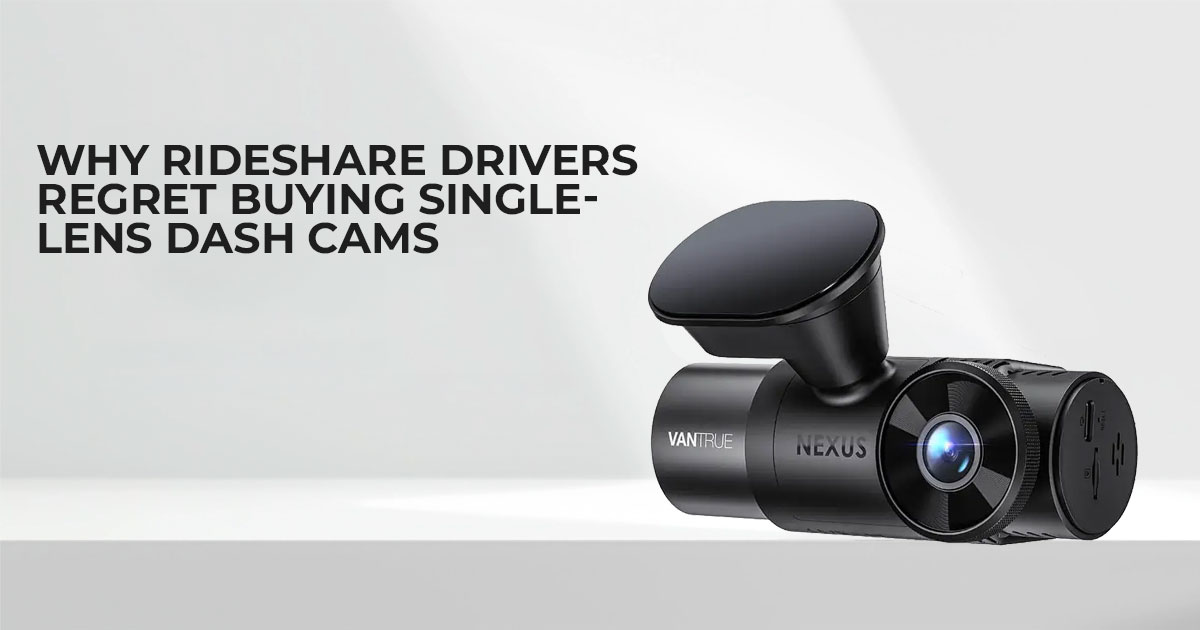
Introduction: The Problem Most Rideshare Drivers Don’t See Coming
One bad ride can undo weeks of hard work. A passenger files a false complaint. Someone damages the back seat. An insurance claim turns into a long argument with no clear proof. Many rideshare drivers reach that moment and realize their single-lens dash cam didn’t help at all.
Drivers working with Uber, Lyft, Ola, or local taxi services often begin with a front-only dash cam because it feels simple and affordable. It records the road, shows traffic conditions, and gives a sense of safety. At first, that feels like enough.
But then something happens inside the car. Or behind it. And the camera records none of it. That’s when regret sets in.
This guide explains why so many drivers wish they had chosen a dual-channel dash cam or three-channel dash cam from the beginning. We walk through real single-lens dash cam problems, explain why interior dash cam footage matters so much for dash cam for Uber drivers and dash cam for Lyft drivers, and show which Vantrue dash cam options offer real protection for everyday rideshare work.
Click to buy Vantrue Cam
A rideshare dash cam is not just about recording traffic accidents. It’s about protecting income, ratings, and the ability to stay active on the platform. Rideshare drivers deal with new passengers every day. That alone increases risk—disputes, false claims, interior damage, and staged accidents.
This is where multi-channel dash cam systems make a difference. A dual-channel dash cam records both the road and the cabin. A three-channel dash cam records the front, interior, and rear. These setups create a full picture of what happened instead of leaving gaps that raise questions.
And those gaps are where drivers lose cases.
Why Real User Reviews Matter More Than Specs
Most people shopping for the best dash cam for Uber drivers or the best dash cam for Lyft drivers focus on price or video resolution. Specs look good on paper, but they don’t show what happens during a passenger dispute or when an insurer asks for proof that doesn’t exist.
User reviews tell that story. They show how often interior camera for rideshare footage settles arguments, how rear camera footage helps in fraud cases, and why many drivers upgrade only after their first serious incident.
This review brings together real driver experiences to show what actually holds up in daily rideshare driving.
Why You Can Trust This Review
As technology experts with over 20 years of experience in hardware and application research and development, we analyze each product based on real-world performance, durability, and value for money. The goal is simple: help readers choose products that hold up over time, not just on day one.
For rideshare drivers, taxi drivers, and delivery drivers, these recommendations come from extensive research, component analysis, real-world usability, and industry experience. No marketing gloss. Just practical guidance based on how these devices perform on the road and inside the vehicle.
What You Will Learn From This Review
- Why a single-lens dash cam often fails when passenger disputes arise
- How interior dash cam and rear recording change the outcome of claims
- The difference between dual channel vs single channel dash cam in daily driving
- Which Vantrue dash cam models fit real rideshare safety needs
- Whether a three-channel dash cam is worth the added cost for most drivers
Why This Review Is Essential for Rideshare Drivers
New drivers often search for the best interior dash cam for rideshare or the best Vantrue dash cam for Uber, then choose the cheapest front-facing option. Many only discover the limits of a single-lens dash cam after a false passenger complaint, a refund dispute, or an insurance claim they cannot prove.
By that point, the damage is already done.
This review shares the lessons most drivers learn the hard way, so readers can choose the right dash cam for Uber drivers and the right dash cam for Lyft drivers before trouble shows up. And that’s what makes the difference.
Quick Summary
- Single-lens dash cams leave blind spots that hurt rideshare drivers
- Interior dash cam footage is key during passenger disputes
- Dual-channel and three-channel dash cams provide real protection
- Vantrue dash cam models offer dependable multi-channel options
- Spending a bit more early can prevent lost income and account risk later
Technical Specifications at a Glance
|
Model |
Channels |
Front Resolution | Interior Resolution | Rear Resolution | Key Features for Rideshare Drivers |
|
Vantrue N5 |
4- Channel |
4K |
1080p (2 cameras) |
1080p |
Near-360° coverage, strong night vision inside, voice control, heat-
resistant |
|
Vantrue N4 Pro |
3- Channel |
4K |
1080p |
1080p |
Excellent low-light performance, wide interior angle, and
reliable parking mode |
| Vantrue N4 | 3-
Channel |
4K |
1080p |
1080p |
Balanced all-around recording, clear cabin
footage even in dim light |
| Vantrue N2X | Dual- Channel |
2.5K |
1080p |
— |
Compact size, infrared for clear passenger view at
night |
| Vantrue N2 Pro | Dual- Channel |
1080p |
1080p |
— |
Proven reliability, sharp interior detail, easy
mounting |
| Vantrue E1 Pro | Single- Channel | 2.5K–4K | — | — | Small and discreet, good front recording, but no cabin or rear coverage |
1. The Hidden Risk of a Single-Lens Dash Cam for Rideshare Drivers
Most drivers choose a single-lens dash cam because it feels practical. It records the road, shows traffic conditions, and gives a sense of security. What often gets overlooked is where most rideshare problems actually start. Not on the road, but inside the car. This section explains why that gap matters more than many drivers expect.
1.1 A Common Rideshare Scenario Most Uber and Lyft Drivers Face
A ride ends without any tension. The passenger gets out. Everything feels normal. Then, a day or two later, a message appears in the app. There’s a complaint about behavior, cleanliness, or comfort. No accident. No road issue. The concern is entirely about what happened inside the vehicle.
Without interior dash cam footage, there is no way to show what really happened. Rideshare platforms focus on keeping passengers satisfied, so decisions often lean in their favor. Drivers are left dealing with warnings, lower ratings, or temporary restrictions.
This is where the limits of a single-lens dash cam become clear. It records the road well, but most dash cam passenger disputes are not about traffic at all.
1.2 Why Front-Only Dash Cam Problems Catch Drivers Off Guard
New rideshare drivers usually think about collisions ahead of the vehicle. That makes sense. What many don’t realize is how often problems begin in the back seat. A front-only dash cam offers no passenger behavior recording, no proof of seat damage, and no record of what was said during an argument.
By the time this becomes obvious, a dispute has already happened. That’s why single-lens dash cam problems feel sudden. The camera works as designed, but it doesn’t protect drivers when their account is on the line.
2. The Biggest Blind Spot: Missing Interior Dash Cam Coverage
Rideshare driving is as much about people as it is about driving. Every trip involves a new passenger, a new mood, and new risks. This section looks at why interior dash cam coverage has become one of the most important safeguards for rideshare drivers.
2.1 Why an Interior Camera for Rideshare Is So Important
Rideshare drivers spend hours each day with strangers in a confined space. Spilled drinks, raised voices, misunderstandings, and accusations are part of the job. These moments often happen quickly and without warning.
An interior dash cam records the cabin and provides driver protection footage when questions come up later. Clear video removes uncertainty and gives platforms and insurers a complete view of what happened during the ride.
2.2 What a Single-Lens Dash Cam Completely Misses
A front-only dash cam cannot capture:
- False complaints about driver conduct
- Vandalism or intentional messes in the cabin
- Disputes over forgotten belongings that turn into theft claims
- Heated exchanges that escalate
Without dash cam cabin recording, these situations become “he said, she said” cases. Many drivers lose income or face temporary deactivation simply because there is no cabin video evidence to support their side.
2.3 Why This Matters for Taxi Drivers and Delivery Drivers
These risks aren’t limited to rideshare platforms. Dash cams for taxi drivers and delivery drivers face similar challenges, especially during late-night shifts. Short stops, cash transactions, and passenger interactions increase exposure to disputes.
An interior dash cam for rideshare drivers and taxi work adds dash cam liability protection that a front-only camera cannot provide. It records what happens when the vehicle is stopped, parked, or being entered and exited.
3. Passenger Disputes Are Part of Everyday Rideshare Driving
Passenger disputes are not rare or unusual. They are part of daily rideshare work. This section explains why these situations happen so often and how the right dash cam for rideshare drivers changes the outcome.
3.1 Common Rideshare Passenger Disputes Drivers Encounter
Across Uber, Lyft, and Ola, drivers report the same types of issues. Passengers claim they were never picked up, argue about routes, or raise safety concerns after the ride ends.
These passenger disputes with rideshare drivers usually happen without any crash or traffic incident. Most of the time, the disagreement happens entirely inside the car.
3.2 How a Dash Cam for Uber Passenger Disputes Changes Outcomes
When drivers use multi-angle recording with interior dash cam footage, platforms can review the full situation instead of guessing. Clear video often shortens investigations and resolves claims faster.
Drivers using a dual-channel dash cam or three channel dash cam are far better protected than those relying on a single-lens dash cam that only shows the road ahead.
3.3 Dash Cam for Lyft False Complaints and Night Driving Risks
Many Lyft drivers only start searching for solutions after their first false report. In most cases, the recommendation is the same—use an interior dash cam for night rideshare driving, when disputes are more likely to happen.
Cabin footage shows tone, timing, and behavior. That context often determines whether a driver keeps earning or spends weeks appealing a decision.
4. Other Risks a Single-Lens Dash Cam Cannot Handle
Passenger disputes are only part of the problem. Many of the most expensive issues rideshare drivers face come from incidents that happen behind or beside the vehicle. This section explains where a single-lens dash cam falls short when accidents, fraud, and insurance claims are involved.
4.1 Rear-End Collisions and Staged Accident Scams
Rear-end collisions are common in city driving, and “cash-for-crash” schemes are becoming more frequent. In these situations, another driver may brake suddenly or back into a stopped vehicle on purpose.
A dash cam rear camera records what happens behind the car and provides staged accident evidence that a front-only camera cannot capture. Without rear footage, drivers often struggle to prove fault, even when they were not responsible.
4.2 Side Impact Accidents, Parking Damage, and Vandalism
Not all accidents happen straight ahead. Lane-change impacts, side swipes, and parking lot bumps are common during rideshare work. Damage can also occur while the driver is away from the vehicle.
A single-lens dash cam misses these events completely. Without multi-angle footage, drivers are left paying for repairs or dealing with disputes they cannot prove. Multi-angle recording adds visibility where front-only cameras offer none.
4.3 Why Dash Cam Insurance Evidence Needs Full Context
Insurance companies increasingly rely on dash cam insurance evidence to determine fault. Adjusters look for timing, vehicle position, and behavior from more than one angle.
When rear or interior footage is missing, even strong claims can weaken. Accident liability footage from multiple angles provides the context insurers expect and shortens claim reviews.
Click to buy Vantrue Cam
5. Dual Channel Dash Cam and Three Channel Dash Cam: Practical Protection for Rideshare Drivers
Once drivers experience the limits of a single-lens dash cam, the upgrade path becomes clear. This section explains how dual-channel dash cam and three-channel dash cam systems solve the problems discussed earlier.
5.1 What a Multi-Channel Dash Cam Actually Solves
A dual-channel dash cam adds interior dash cam coverage, which is the most important upgrade for most rideshare drivers. It protects against passenger disputes and false complaints.
A three-channel dash cam adds a rear camera, creating full coverage of front, cabin, and rear. This setup provides accident liability footage and reliable staged accident evidence, especially for drivers who spend long hours in traffic or on highways.
5.2 Dual Channel vs Single Channel Dash Cam: Clear Comparison
| Aspect | Single Channel (Front
Only) |
Dual Channel (Front +
Interior) |
Three Channel (Front
+ Interior + Rear) |
| Passenger
dispute protection |
None |
Strong |
Strong |
| Rear accident coverage | None | None | Full |
| Night riding
safety |
Limited | Excellent (with IR) | Excellent |
| Insurance claim
strength |
Basic | Good | Best |
| Best suited for | Short commutes | Most rideshare drivers | High-mileage or highway drivers |
This comparison shows why many drivers move away from single-lens dash cams after their first serious incident.
5.3 Is a Three-Channel Dash Cam Worth It for Most Drivers?
For city driving and short trips, the best dual-channel dash cam often provides enough protection. It covers the road and the cabin, where most disputes occur.
Drivers who spend more time on highways, in heavy traffic, or during peak hours often find that the best dash cam with interior and rear camera pays off quickly. The added coverage reduces uncertainty and strengthens insurance claims when something goes wrong.
6. The Right Vantrue Dash Cam Models for Rideshare Drivers
Choosing the right dash cam is less about features on paper and more about how well it protects you during real rides. This section connects common rideshare risks to specific Vantrue dash cam models that drivers rely on every day.
6.1 Full-Coverage Vantrue Dash Cam Options for Maximum Protection
Drivers who want full visibility usually look at Vantrue N5 and Vantrue N4 / N4 Pro models. These systems record the front, rear, and interior, creating a complete timeline of events.
The Vantrue N5 (4-channel dash cam) adds multiple interior angles, which helps when passengers move around or when disputes involve more than one person. The Vantrue N4 and N4 Pro (three-channel dash cam) focus on front, cabin, and rear coverage and are widely used by full-time drivers.
These models handle low-light conditions well, which matters for a dash cam for night rideshare driving, late pickups, and early morning trips when disputes are more likely.
6.2 Reliable Vantrue Dual Channel Dash Cam Choices for Cabin Protection
For drivers who mainly want protection against passenger disputes, Vantrue dual-channel dash cam models are often enough. The Vantrue N2 Pro and the newer Vantrue N2X focus on front + interior recording with strong infrared cabin coverage.
These are popular as the best interior dash cam for rideshare because they capture faces, voices, and behavior clearly, even in low light. When rear incidents are less common, these models strike a balance between coverage and cost.
6.3 Why Drivers Choose Vantrue Dash Cam for Rideshare Work
Many drivers stick with Vantrue dash cam systems because they are built for daily use. Clear footage, simple installation, heat resistance, and reliable parking mode make them practical for long shifts.
For professional driving, reliability matters more than extras. These cameras are designed to stay on, record consistently, and deliver usable footage when it is needed.
7. Price vs Real Protection for Rideshare Drivers
At first glance, price often drives the decision. A basic single-lens dash cam usually costs between $60 and $120. A solid dual-channel dash cam setup starts around $180 to $250. A dependable three-channel dash cam or 4-channel dash cam often falls between $300 and $450.
The difference looks large until something goes wrong. One avoided deactivation, one resolved dispute, or one approved insurance claim can often cover the cost gap. Many drivers say their multi-channel dash cam paid for itself within the first year through saved income and fewer disputes.
8. Real Experiences From Rideshare Drivers
Drivers share similar stories once they upgrade beyond a single-lens dash cam.
- One driver avoided a costly cleaning charge after interior dash cam footage showed the passenger caused the mess.
- Another driver secured a full insurance payout after a rear-end collision because rear camera footage showed what really happened.
- Several drivers reported avoiding deactivation after false behavior Backseat camera footage cleared them each time.
These experiences explain why many drivers say they wish they had chosen a dual-channel dash cam or three-channel dash cam sooner.
9. Clear Buying Checklist for Rideshare Drivers
Choosing the right dash cam shouldn’t feel overwhelming. Use this checklist to match your needs with the right Vantrue dash cam so you’re protected where it matters most.
9.1 What to Look For
- Interior coverage: Must-have for ride disputes, passenger behavior, and backseat incidents
- Rear camera: Important if you drive on highways, in heavy traffic, or on night shifts
- Low-light performance: Infrared or enhanced night recording helps on late trips
- Parking mode: Captures incidents when you’re stopped or out of the car
- Reliable build: Heat resistance and long-hour recording matter for daily drivers
- Easy installation: Less hassle means you’ll actually use it
9.2 Based on What You Need
- You face passenger complaints or disputes → Interior coverage should be priority
- You drive nights or long shifts → Interior + rear visibility are essential
- You work mostly in cities → Dual-channel dash cam gives solid protection
- You spend a lot of time on highways → Three-channel dash cam gives full context
10. Final Recommendation by Driver Type
Not all drivers have the same patterns or risks. Here’s a simple guide to what works best for different rideshare and pro driving scenarios.
10.1 City or Part-Time Drivers
- Typical day: Short trips, frequent stops
- Most relevant needs: Passenger disputes, interior visibility
- Best option: Dual-channel dash cam like Vantrue N2X
- Why: Covers road and cabin without paying extra for rear recording, you may not need
Click here to explore Vantrue N2X US | India
10.2 Full-Time Rideshare Drivers
- Typical day: High trip volume, nights, late pickups
- Most relevant needs: Disputes, rear incidents, insurance proof
- Best option: Three-channel dash cam like Vantrue N4S / N4 Pro
- Why: Adds rear coverage to interior and front recording, giving a fuller context
Click here to explore Vantrue N4S US | India
Click here to explore N4 Pro US | India
10.3 High-Mileage or Highway Drivers
- Typical day: Longer drives, freeway traffic, tight spaces
- Most relevant needs: Rear documentation, multi-angle protection
- Best option: Full 4-channel dash cam like Vantrue N5
- Why: Records front, interior, rear, and additional angles for maximum proof
- This is the best choice if you rely on rideshare income and want peace of mind
Click here to explore Vantrue N5 US | India
10.4 Taxi and Delivery Drivers
- Typical day: Short stops, item handoffs, many pickups
- Most relevant needs: Passenger behavior, accident documentation
- Best option: Dual-channel dash cam with strong interior IR
- Why: Interior footage reduces disputes and helps with insurance claims
Click here to explore Vantrue N2X US | India
11. Clearing Common Doubts About Rideshare Dash Cams
Before choosing a dash cam, most drivers pause at the same questions. These are not technical doubts—they are practical concerns about legality, protection, and whether the upgrade is really worth it. This short section clears up the most searched questions around rideshare dash cams, using real-world context that helps drivers make confident decisions.
Q. Do Uber drivers need interior dash cams?
- Yes. Most experienced drivers agree that an interior dash cam for Uber drivers is one of the best ways to protect against false complaints, behavior disputes, and rating issues. Since many problems happen inside the car, cabin footage often becomes the deciding factor in disputes.
Q. Are dash cams allowed for rideshare drivers?
- Yes. Uber, Lyft, and most rideshare platforms allow dash cams. Drivers must follow local audio and video recording laws and inform passengers, usually with a simple sticker. This makes using a dash cam for rideshare both legal and platform-compliant in most regions.
Q. How do dash cams help with passenger disputes?
- Dash cams provide clear cabin video evidence that shows exactly what happened during a ride. Instead of relying on one person’s version of events, platforms can review footage from a dual-channel dash cam or three channel dash cam, which often leads to faster and fairer outcomes.
Q. Why are single-lens dash cams not enough for rideshare driving?
- A single-lens dash cam only records the road ahead. It misses the cabin and rear of the vehicle, where many rideshare dash cam blind spots exist. This leaves drivers exposed during passenger disputes, vandalism claims, and rear-end or staged accidents.
12. Frequently Asked Questions About Rideshare Dash Cams
These are the questions rideshare drivers ask most often before buying a dash cam. The answers focus on real concerns—passenger reactions, protection value, night driving, and whether these cameras actually help drivers stay active on platforms like Uber and Lyft.
Q: Will passengers mind an interior dash cam?
A: Most passengers either don’t notice or don’t mind, especially when there’s a small notice sticker. Many drivers say passengers actually feel safer knowing there’s an interior dash cam recording the ride.
Q: What’s the best dash cam for Uber drivers?
A: Many drivers choose a Vantrue dash cam with an interior camera, such as the Vantrue N4 Pro or Vantrue N2X. These models provide clear front and cabin recording, which helps with passenger disputes and account protection.
Q: Is a dual-channel dash cam worth it for rideshare drivers?
A: Yes. A dual-channel dash cam is often the best upgrade for rideshare work because the interior dash cam resolves most dash cam for false passenger complaints. For many drivers, it’s the minimum setup that offers real protection.
Q: Do I need a rear camera for taxi or rideshare work?
A: A rear camera isn’t required, but it helps a lot. A dash cam rear camera adds protection during rear-end collisions, staged accidents, and parking incidents—situations a front-only camera cannot cover.
Q: Which Vantrue model works best for night rideshare driving?
A: The Vantrue N4 Pro and Vantrue N2X perform well at night thanks to strong infrared sensors. They are often recommended as the best interior dash cam for night rideshare driving, especially for late shifts.
Q: How easy is it to install a Vantrue dash cam?
A: Most Vantrue dash cam models can be installed in about 20–30 minutes using the included kits. Hardwiring is optional and mainly used for parking mode and extended monitoring.
Q: Can a dash cam help prevent driver deactivation?
A: Yes. Many drivers keep their accounts active because dash cam footage shows what really happened during a ride. Clear cabin and rear video often makes the difference during reviews.
13. Conclusion: Choose Protection That Actually Covers You
A single-lens dash cam may look like a smart way to save money, but for anyone earning through rideshare driving, its limits show up fast. When something goes wrong, the missing angles can lead to lost income, long appeals, and stress that could have been avoided. That’s where a dual-channel dash cam or a three-channel dash cam makes the difference. These setups capture what happens on the road, inside the car, and behind you—providing the driver protection footage for real rideshare work demands.
If you’ve ever faced a dispute where extra coverage would have helped, share your experience in the comments. We read everyone. And if you’re unsure which dash cam fits your car, driving hours, or route type, ask. We’re here to help you choose protection that actually works when it matters.
Click to buy Vantrue Cam
***Disclaimer***
This blog post reflects our own research, testing, and personal opinions. It should not be taken as the official position of any brand, manufacturer, or company mentioned here. While we aim to keep information accurate and up to date, product details, pricing, and availability can change. We recommend double-checking important details before making a purchase.
Some links in this article may be affiliate links. If you choose to buy through these links, we may earn a small commission at no extra cost to you. This helps support our work and allows us to keep publishing in-depth, unbiased reviews. Our recommendations are never influenced by affiliate partnerships.
Comments shared by readers reflect their own views and not ours. We are not responsible for outcomes resulting from the use of information on this site. Please seek professional advice where appropriate.
All product names, logos, and brands mentioned are the property of their respective owners. These names are used for identification and informational purposes only and do not imply endorsement.