
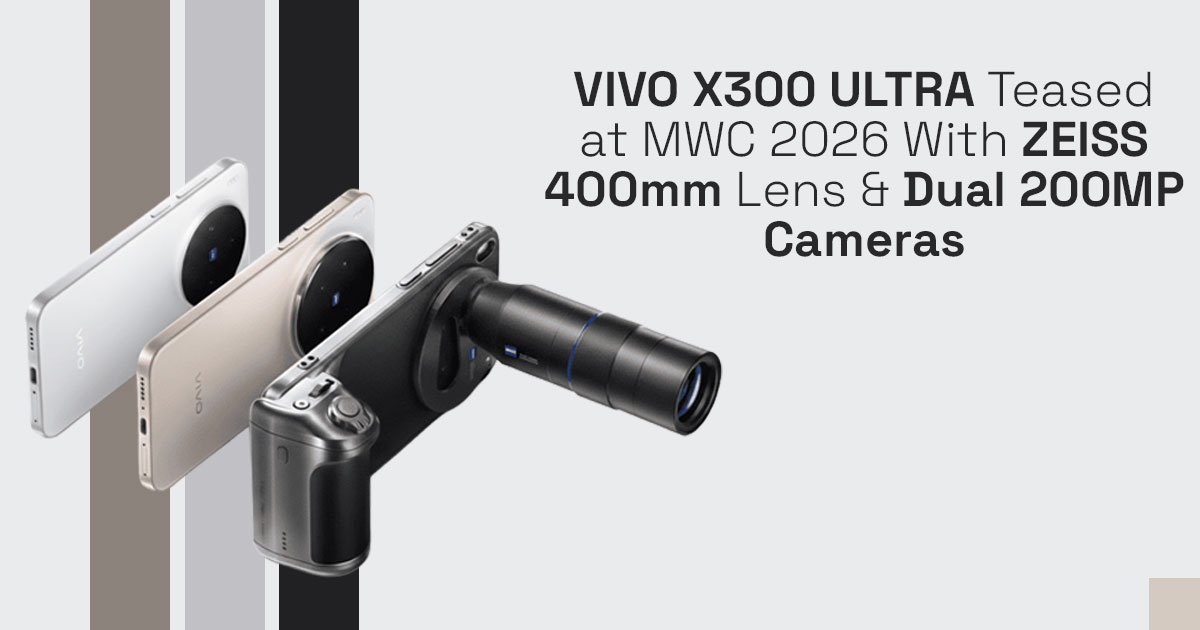
The mobile camera revolution just surged ahead at Mobile World Congress (MWC) 2026, where Vivo showcased its most ambitious flagship to date, the Vivo X300 Ultra. With a groundbreaking ZEISS 400mm telephoto lens, gimbal‑grade OIS and motion tracking, and a full 200MP photography system, this smartphone promises to redefine what’s possible with mobile imaging.
Whether you’re a professional photographer, tech enthusiast, or everyday user who loves high‑quality photos, the Vivo X300 Ultra looks poised to become the next big leap in smartphone photography. In this blog, we’ll unpack every major detail from the expo, break down the specs and innovative features, explore real‑world benefits, and answer the most common questions buyers are asking. Let’s dive in.
1. First Look: X300 Ultra at MWC 2026
At MWC 2026, Vivo showcased the X300 Ultra in a manner that turned heads worldwide. Instead of the usual standard flagship announcements focused on performance or design, Vivo placed camera capabilities at the forefront, introducing a flagship built around professional‑grade imaging tools. The centrepiece? A ZEISS‑calibrated 400mm telephoto lens system designed to bring optical zoom range to levels previously unimaginable on smartphones.
This bold move isn’t just hype. The X300 Ultra blends hardware ingenuity and software precision to deliver features with real impact, especially for shutterbugs who crave serious zoom without lugging around a DSLR.
2. ZEISS 400mm Lens & Telephoto Mastery
One standout highlight from the MWC was the ZEISS 400mm lens accessory part of the X300 Ultra’s modular imaging approach.
While most smartphones rely heavily on digital zoom, the X300 Ultra’s ZEISS 400mm lens brings true optical reach. This means you can bring distant subjects closer without sacrificing clarity, unlike the usual pixel‑stretching techniques most phones use.
Key Highlights of the ZEISS 400mm Teaser
- True Optical Reach: 400mm equivalent focal length, a first for smartphones.
- Optical Precision by ZEISS: Trusted optics brand known for delivering sharp, high‑contrast imaging.
- Real‑World Zoom Performance: Capture subjects like wildlife, architecture, or sports action with detail previously reserved for professional cameras.
Every aspect of this lens, from its optical elements to imaging algorithms, was teased as optimised for creative photography.
Whether you want to capture distant landscapes or tight portrait crops, this new level of optical reach adds a whole new dimension to smartphone photography.
3. Full 200MP Camera System
If there’s one number that grabbed attention at the event, it was 200MP. The Vivo X300 Ultra doesn’t just have one high‑resolution sensor; it features a full 200MP camera system.
Here’s what that means:
Dual 200MP Sensors
- 200MP Primary Camera: Built for ultimate detail, colour accuracy, and dynamic range.
- 200MP Telephoto Camera: Paired with the ZEISS optics, this transforms long‑range photography.
High‑resolution sensors like these allow the X300 Ultra to pull off impressive levels of detail by capturing more light and information per shot. Whether you’re shooting wide vistas or tight, detailed scenes, 200MP opens the door to creative crop flexibility and images that hold up even when zoomed or printed.
Why 200MP Matters
- Sharper Images: More megapixels mean more detail.
- Better Cropping Options: Crop after shooting without losing quality.
- Enhanced Digital Zoom: High‑res sensors improve digital zoom performance even before optical systems engage.
In short, the full 200MP setup represents a massive leap forward in computational photography, combining scale with smart software to produce photos that rival dedicated cameras.
4. Gimbal‑Grade OIS & Motion Tracking
Great zoom is only useful if your photos are stable, and that’s where the gimbal‑grade OIS (Optical Image Stabilization) comes in.
Most smartphone stabilisation systems smooth out minor shakes. But the X300 Ultra steps up with a stabilisation system that mimics the performance of handheld gimbals, delivering crisp shots even while zoomed in at long focal lengths.
Enhanced Motion Tracking
Adding to the stability is advanced motion tracking, letting the camera keep subjects in focus even if they move, perfect for:
- Action shots
- Sports photography
- Wildlife close‑ups
- Fast‑moving events
Together, gimbal‑grade OIS + motion tracking give this phone the kind of confidence once reserved for pro rigs and add‑ons.
Imagine walking with your phone, zooming into a distant bird or athlete, and getting a pin‑sharp image without external accessories. That’s the new bar Vivo is targeting.
5. Shutter & Zoom: More Than Just Specs
The combination of shutter responsiveness and zoom quality defines how instant and usable your camera feels in real life.
The X300 Ultra leverages fast sensor readout and smart shutter timing to reduce blur, especially when paired with the stabilization system. This ensures reliable performance whether you’re shooting bright daytime scenes or night photography.
Real Benefits of Shutter & Zoom Integration
- Low‑light performance: Faster shutter means sharper night photos with less noise.
- Detail retention at range: Whether 200MP wide or long‑range zoom, images stay crisp.
- Smooth video zoom: Dynamic zoom transitions in video with minimal jitter.
These enhancements create a camera experience that feels responsive and versatile, not sluggish when you really need it.
6. Cutting‑Edge Software & AI Imaging
Behind the hardware is powerful imaging software. Vivo’s computational photography delivers:
- AI-optimised scene detection
- Smart HDR and dynamic range optimization
- Noise reduction for high‑res captures
- Colour rendition tuned with ZEISS profiles
These software tools help make the most of the 200MP sensors, adjusting exposure, enhancing detail, and intelligently optimizing images to match the scene.
Together, they help make every shot look professional with minimal effort, a boost for both casual users and pros.
7. Performance, Display & Everyday Features
Of course, the Vivo X300 Ultra isn’t just about photography; it’s also a complete flagship device. MWC attendees noted other key features:
Expected Performance
- Top‑tier processor, likely Snapdragon‑series flagship hardware.
- Long‑lasting battery with fast charging.
- Optimised software experience based on the newest Android versions.
Display & Design
- High‑resolution AMOLED display for vibrant visuals.
- Sleek, premium build with ergonomic design.
- Durable construction with water and dust resistance.
While photography leads the narrative, Vivo hasn’t compromised on the core qualities most users expect in a flagship device.
8. Global Launch Confirmation
Unlike previous Ultra models that stayed within select markets, Vivo confirmed a global launch for the X300 Ultra.
This means:
- Wider availability worldwide
- Localisation for multiple regions
- Easier access for buyers everywhere
This global strategy signals that Vivo wants to compete at the highest tier, directly against other flagship smartphones from Samsung, Apple, and Google.
9. Pros & Cons at a Glance
Pros
- Revolutionary ZEISS‑collaborated 400mm telephoto lens
- Dual 200MP camera system
- Gimbal‑grade OIS + smart motion tracking
- Advanced shutter performance and AI imaging
- Full flagship performance and display
Potential Drawbacks
- Pricing may be premium
- Certain accessories (like a tele lens) may be sold separately
- Camera height and hardware complexity could increase the weight
10. Should You Buy the Vivo X300 Ultra?
If you’re someone who:
- Loves capturing photos that rival dedicated camera outputs
- Wants professional‑grade Zoom without extra equipment
- Is excited by phone photography innovation
- Appreciates cutting‑edge mobile performance
Then the Vivo X300 Ultra is shaping up to be one of the most compelling flagship smartphones yet.
Final Thoughts
The Vivo X300 Ultra is not just another flagship smartphone. It’s a camera innovation showcase, blending optical excellence, powerful hardware, and intelligent imaging, all rooted in real‑world creative use.
From the ZEISS 400mm telephoto lens to the full 200MP camera, plus advanced stabilization and motion tracking, this device is a dream for photographers who want pro‑level results without a pro camera.
Frequently Asked Questions (FAQs)
1. What makes the Vivo X300 Ultra’s camera different from other flagship phones?
The X300 Ultra combines a dual 200MP camera system, ZEISS 400mm optical telephoto lens, and gimbal‑grade OIS, offering zoom clarity and detail beyond most current smartphones.
2. Will the 400mm ZEISS lens be included with the phone?
Vivo teased the 400mm lens as a major highlight, but accessories like the telephoto extender may be sold separately, similar to professional camera add‑ons.
3. How does the gimbal‑grade OIS improve motion tracking?
Gimbal‑grade stabilisation mimics professional gimbal support, automatically smoothing out shakes and ensuring subjects stay in focus even at high zoom levels.
4. Can the X300 Ultra take good low‑light photos?
Yes, the combination of large 200MP sensors, smart shutter mechanics, and advanced AI imaging enhances low‑light photography beyond typical smartphone standards.
5. Is the Vivo X300 Ultra available worldwide?
Vivo confirmed a global launch for the X300 Ultra at MWC 2026, making it accessible in multiple regions outside China.
6. How does the X300 Ultra compare to competitors like the Galaxy S26 Ultra?
While exact benchmarks aren’t out yet, the X300 Ultra’s camera‑centric design, especially its optical zoom and sensor resolution, puts it ahead of many rivals in pure imaging capability.
***Disclaimer***
This blog post contains unique insights, opinions, and affiliate information. It should not be interpreted as the official stance of Vivo or any other companies, manufacturers, or entities mentioned. While we strive for accuracy, product specifications, pricing, availability, and features are subject to change. Always verify details with official sources before making any purchase or decision based on this content.
Comments, recommendations, and interpretations in this article reflect the opinions of the authors and not those of any affiliated organisations. We are not liable for any consequences arising from the use of information provided. Please seek professional guidance when necessary.
Note: All product names, logos, and brands mentioned are the property of their respective owners. Any company, product, or service names used in this article are for identification, educational, and informational purposes only. Use of these names, logos, and brands does not imply endorsement or affiliation.