
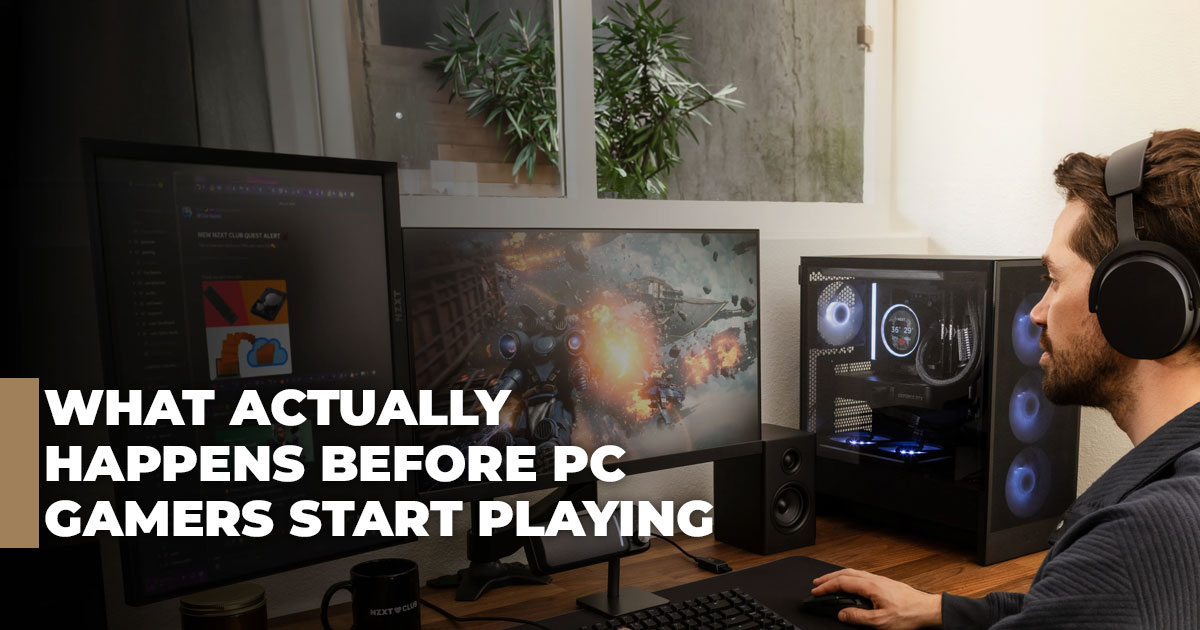
Most PC gamers waste time before the game even launches. The issue isn’t hardware, motivation, or discipline. It’s the small choices—settings, updates, launchers—that quietly take 20–40 minutes from every session. Fewer decisions before pressing Play lead to more actual gaming.
Click here to buy on Amazon
1. Introduction: Why This Matters for Everyday PC Gamers
Many PC gamers with limited time sit down expecting a short break and end up watching the clock instead. The system is ready. The game is installed. Yet PC gaming time waste creeps in before anything meaningful begins.
This doesn’t come from a lack of interest. It comes from habits that feel reasonable—adjusting graphics settings, checking benchmarks, or scanning one more forum thread. Each step feels small, but together they turn PC gaming from a chore into a familiar frustration.
This guide focuses on things PC gamers waste time on, why PC gaming optimization problems are so common, and how PC gaming distractions block enjoyment without being obvious. It’s written for busy PC gamers, adult PC gamers, working professionals, and parents who want their limited gaming time to matter.
As technology experts with over 20 years of experience in hardware and application research and development, we evaluate real-world performance, durability, and value—not theory. Our goal is to help readers make smarter choices across budget, performance, reliability, and long- term usage. These recommendations come from extensive research, component analysis, real- world usability, and industry expertise, with one clear aim: spend less time preparing and more time playing.
The key shift is simple. The solution isn’t stricter discipline. It’s removing unnecessary choices before pressing Play.
Key Takeaways
- Most planned gaming time slips away in the 20–40 minutes before launch
- Simple boundaries recover more playtime than new hardware or endless tweaking
- The fix isn’t more effort—it’s fewer small decisions
1.1 Why This Matters for Everyday PC Gamers
Many PC gamers with limited time reach a point where PC gaming is no longer fun, and that realization feels uncomfortable. What should be relaxing starts to feel like work. Instead of playing, time disappears into menus, settings, and second-guessing.
This hits casual PC gamers, parents playing late at night, and professionals fitting sessions into tight schedules. When time is short, PC gaming distractions have a bigger impact. A small delay can end the entire session.
This guide breaks down PC gaming habits ruining fun, explains the PC gaming backlog problem, and outlines simple PC gaming habits that help readers play games instead of tweaking.
2. The Invisible Problem Most PC Gamers Don’t Notice
Most sessions don’t fall apart during gameplay. They fall apart before the game launches.
A launcher opens. A game looks tempting. Then a pause—check settings, skim patch notes, compare frame rate results. A few minutes pass. Then more. Before long, the session ends without a single match, mission, or checkpoint reached.
This pattern affects PC gamers more than console players. Consoles limit friction. On PC, every launch brings choices—launchers, updates, mods, and community opinions. That constant input creates decision paralysis, and the brain drifts toward preparation instead of commitment.
This is how PC gaming procrastination shows up quietly. And it explains why cutting friction before launch is often enough to make gaming enjoyable again.
3. The Five Time Leaks Stealing Your Gaming Hours
These are the usual suspects. See which ones sound familiar.
| Time Leak | What It Looks Like | Why It Feels Necessary | Actual Cost |
|
Endless Setup Spiral |
Sliding graphics settings, testing frame rate, hunting “must-
have” mods |
“I just want it to look and run great.” |
30–90 minutes per new game |
| Upgrade Fantasy | Watching benchmarks, reading about the next
GPU |
“My setup isn’t quite good enough yet.” | Hours not spent playing in the current
library |
|
Game Choice Paralysis |
Scrolling multiple game launchers, sorting sales, and
reading reviews |
“Don’t want to waste time on the wrong game.” | Whole evenings lost without launching anything |
| Background Noise Habit | Checking Discord, Reddit, and patch
notes while loading |
“Just staying in the loop.” | Breaks focus and kills immersion |
| Optimization as
Procrastination |
Editing config files, trying overclocks, and
adding shaders |
“It’ll only take a second.” | Turns setup into the
evening’s main activity |
Each one starts small but adds up. Together, they’re why many PC gamers spend more time tweaking than playing.
- Summary: Good-enough settings almost always feel better than perfect ones you never actually use.
4. Why PC Gamers Waste Time More Than Console Players
PC gaming offers total control, and the community often celebrates mastering that control. That freedom is powerful—but it also makes PC gamers especially vulnerable to time waste.
Several factors combine to create friction before play even begins:
- Too many visible options: graphics settings, mods, multiple game launchers, overlays, and tuning tools compete for attention the moment a game
- Constant comparison culture: YouTube benchmarks, forum screenshots, and friends sharing higher frame rates or cleaner visuals make “good enough” feel
- Sunk cost thinking: After investing heavily in PC hardware upgrades, running a game on medium settings can feel like wasted
- Quiet performance worry: The fear that something may not run “right” creates hesitation before committing to play.
Together, these pressures turn PC gaming optimization into a hobby of its own. Tweaking offers fast feedback and visible progress. Playing a story-driven game or jumping into a competitive match takes patience and focus. When given the choice, the brain often chooses the safer, familiar loop of preparation.
This explains why PC gaming time waste happens even when motivation is high.
5. Psychological Roots of PC Gaming Procrastination
Under the surface, several common mental patterns drive PC gaming procrastination. Understanding them removes self-blame and helps explain why this cycle feels hard to break.
- Choice overload and decision paralysis: A large Steam library, multiple launchers, and endless settings make every choice feel The brain delays instead of deciding.
- Perfection paralysis: Many PC gamers wait for the “ideal” setup—perfect settings, perfect performance, perfect mood—before That moment rarely arrives.
- Sunk cost fallacy: After spending on an expensive rig, chasing marginal gains feels necessary, even when it replaces actual play.
- Cognitive overload and mental fatigue: After work, deciding which game to play and how to run it adds mental The brain seeks easier distractions instead.
- Habit formation loops: Tweaking and browsing deliver quick rewards. Gameplay rewards arrive Over time, the instant-reward habit wins.
These patterns explain why PC gaming feels like a chore for many adults. It isn’t laziness. It’s how the mind reacts to an environment full of tempting small choices.
6. A Simple Rule to Fix PC Gaming Time Waste Fast
One rule solves more problems than most upgrades:
Launch First, Adjust Later.
Start the game on default or recommended settings and play for 20–30 minutes. Change something only if it clearly affects enjoyment during play.
This works because:
- Modern PC game defaults are usually well-balanced.
- You experience the game before layering extra decisions.
- Once immersed, the urge to tweak often fades.
On ffrst launch, ignore:
- Individual shadow quality
- Ray tracing toggles
- Heavy mods
- Advanced performance tuning
Focus only on basics: resolution, refresh rate, and comfortable controls.
For busy PC gamers, this single habit often recovers hours every month without buying anything new.
7. How to Build Zero-Friction PC Gaming Habits
Long, uninterrupted gaming sessions are rare for most adults. The best habits protect short sessions and remove barriers before they appear.
Instead of relying on willpower, use simple limits.
Click here to buy on Amazon
7.1 One Main Game Rule for PC Gamers
Pick one primary game and pin it to your desktop or taskbar. When time opens up, that’s the default launch. No browsing, no second-guessing.
7.2 One Backup Game Rule for Short Sessions
Keep one quick-play game ready—a roguelike, relaxing builder, or short-match multiplayer title. If the main game feels heavy, switch without searching.
7.3 One Uninstall Rule to Reduce Decision Fatigue
If a game hasn’t been played in two months, uninstall it. A smaller library lowers mental clutter, reduces decision paralysis, and speeds up starts.
These boundaries dramatically shrink choices. When choices shrink, PC gaming productivity
improves, and play becomes automatic instead of effortful.
7.4 Why This Works for a Wide Range of Readers
This approach helps:
- PC gamers with limited time
- Adult PC gamers balancing work and family
- Casual PC gamers who are overwhelmed by large libraries
- Anyone who wants to play games instead of tweaking
By reducing friction before launch, gaming returns to what it’s meant to be: a break, not another task.
8. Smart PC Gaming Setup Without the Optimization Rabbit Hole
Some setup work is genuinely helpful. The key is doing it once, then leaving it alone. This is how PC gamers save time without sacrificing enjoyment.
Start with simple, durable choices:
- Choose a graphics preset (High or Ultra) and only step down one level if frame rate feels unstable during real gameplay.
- Set control bindings once per genre and reuse the same layout across similar games. Familiar controls reduce friction every session.
- Add lightweight quality-of-life mods only after several hours of vanilla play. This helps you understand what actually needs fixing.
- Pick one game launcher as your main hub and add everything else to Fewer launch points mean faster starts.
These boundaries prevent PC gaming micromanagement. When limits are clear, there’s less temptation to tweak, test, and second-guess.
9. When PC Gaming Optimization Actually Makes Sense
Tweaking isn’t always a waste of time. In the right situations, it serves a clear purpose.
Optimization is worth the effort when:
- Playing competitive PC games where stable performance and input response matter.
- Fixing real problems such as stuttering, crashes, or inconsistent frame pacing
- Adjusting for accessibility or physical comfort, including key remaps, text size, or color settings.
- Running older or lower-end hardware, where targeted changes unlock smooth, playable performance.
Outside these cases, heavy optimization rarely adds meaningful enjoyment. For most busy PC gamers, time spent playing delivers far more value than chasing marginal gains.
10. A 30-Minute PC Gaming Session Blueprint
Short sessions are common for adults. A simple structure protects them from drifting into setup loops.
Here’s a reliable flow for limited gaming time:
- Minutes 0–5: Sit down and launch your pinned main game or backup game. No browsing, no scrolling.
- Minutes 5–25: Play with Avoid switching windows unless something genuinely breaks.
- Minutes 25–30: Save progress, exit cleanly, and stop.
Twenty focused minutes of actual gameplay deliver more satisfaction than hours spent half- preparing and feeling rushed.
11. The Real Goal of PC Gaming
The goal isn’t max graphics settings. It isn’t a perfect benchmark. It isn’t clearing a massive gaming backlog.
The real goal of PC gaming is immersion—getting pulled into a world, feeling excitement or calm, and stepping away refreshed.
All the hardware, settings, and tools exist to support that experience. When they become the focus, enjoyment fades. When they stay in the background, gaming feels simple again.
That’s when PC gaming stops feeling like a chore and returns to what it should be: time well spent.
12. Common Questions PC Gamers Ask Before Playing
These are the questions PC gamers with limited time ask most often. Addressing them directly helps clear confusion, reduce frustration, and explain why PC gaming time waste is so common. Each answer is short, practical, and focused on helping you play more and tweak less, which is exactly what most readers are looking for.
Q. Why do PC gamers spend more time tweaking than playing?
- PC gaming offers deep control through graphics settings, mods, and tools. Tweaking gives fast feedback and visible progress, while gameplay rewards take longer to feel satisfying. That contrast pushes many PC gamers toward preparation instead of play.
Q. How to stop wasting time before starting a PC game?
- Use the Launch First, Adjust Later rule. Start the game on default or recommended settings, play for at least 20 minutes, and change only what clearly affects enjoyment. Limiting yourself to one or two pinned games also cuts PC gaming decision fatigue.
Q. Why does PC gaming feel like a chore sometimes?
- PC gaming feels like a chore when too many choices stack up at once. After a long workday, deciding which game to play, which launcher to open, and which settings to adjust adds mental load, turning relaxation into effort.
Q. How to enjoy PC games with limited time?
- Protect short sessions with clear boundaries. Focus on one main game, keep one backup game ready, and avoid browsing during play. Even 20 focused minutes of gameplay feels better than a longer session filled with setup.
Q. How to avoid PC gaming decision fatigue?
- Reduce visible options. Pin favorite games, uninstall unused titles, and set basic PC gaming settings once. Fewer choices make starting automatic and keep PC gaming productivity high.
Click here to buy on Amazon
13. Frequently Asked Questions About PC Gaming Habits and Time Waste
These questions come up again and again among PC gamers with limited time, especially busy adults, working professionals, and parents. The answers below focus on real-world behavior, not theory, and are written to help you play more and tweak less.
Q. Why is my Steam library huge, but I rarely play anything?
- Easy sales and low-cost purchases make buying games feel productive, while actually playing requires time and focus. Add choice overload, and the brain struggles to commit. A large Steam library often increases PC gaming decision fatigue instead of enjoyment.
Q. Is constantly tweaking settings a type of PC gaming procrastination?
- In many cases, yes. Adjusting graphics settings or testing performance gives instant feedback and a sense of control. Gameplay demands deeper focus and sometimes frustration, so tweaking becomes the easier option.
Q. Will lower graphics settings ruin the PC gaming experience?
- Almost never. For most games, stable frame rates on High settings feel smoother and more enjoyable than unstable Ultra settings. Consistency matters more than visual perfection for real play sessions.
Q. What are the best PC gaming habits for busy adults?
- Stick to one main game, keep one quick-play backup, maintain a clean game library, and follow a firm Launch First, Adjust Later rule. These habits reduce friction and protect short gaming sessions.
Q. How do I actually play more and tweak less on PC?
- Remove temptation. Pin your games, set basic defaults once, uninstall unused titles, and commit to 20 minutes of play before making any changes. Fewer options make starting easier and gaming more satisfying.
14. Final Reality Check
You don’t need a new graphics card, longer weekends, or superhuman discipline to enjoy PC gaming again. What you actually need is fewer small choices standing between you and Play.
Start tonight. Pin one or two games. Launch them on whatever settings already exist. Give yourself 20 minutes before changing anything. No tuning, no browsing, no second-guessing.
Most PC gamers are surprised by what happens next. The game feels perfectly fine, progress happens, and the session ends with satisfaction instead of frustration. That’s when PC gaming stops feeling like a chore and starts feeling like a break again.
If hardware really is holding you back—stutters, long load times, unreliable controls—small, practical upgrades can help. Not expensive parts. Not spec chasing. Just tools that reduce friction and let you play without interruptions.
We encourage readers to share what resonates most. What’s your biggest time leak? Which rule are you trying first? Questions about fitting gaming into a packed schedule are always welcome. Shared experiences help everyone get more actual playtime.
Fix the Most Common Friction First (Low Cost, High Impact)
Best for busy PC gamers, parents, and short gaming sessions
- Gaming Controller – reduces setup time and decision fatigue
- Amazon US: Click here to explore
- Amazon India: Click here to explore
- Wired Gaming Mouse – reliable, no charging, no latency questions
- Amazon US: Click here to explore
- Amazon India: Click here to explore
Improve Comfort and Focus (Mid Impact, Still Practical)
Best for adult PC gamers and working professionals
- Gaming Headset – clear audio without tweaking sound settings
- Amazon US: Click here to explore
- Amazon India: Click here to explore
- Mechanical Keyboard (Pre-built) – consistency without modding
- Amazon US: Click here to explore
- Amazon India: Click here to explore
Reduce Waiting, Not Frame Rates (High Value, Long-Term)
Best for PC gamers with limited time and large libraries
- NVMe SSD – faster game launches, fewer interruptions
- Amazon US: Click here to explore
- Amazon India: Click here to explore
- External SSD (Plug and Play) – zero setup, instant relief
- Amazon US: Click here to explore
- Amazon India: Click here to explore
Upgrade Only If Necessary (Last Step, Not First)
Best when performance issues actually block play
- Mid-Range Graphics Card – upgrade only after habits are fixed
- Amazon US: Click here to explore
- Amazon India: Click here to explore
Key Reminder
Hardware should remove friction, not create more decisions.
If an upgrade sends you back into research loops, it’s not helping your gaming time.
***Disclaimer***
This blog post reflects our own research, testing, and personal opinions. It should not be taken as the official position of any brand, manufacturer, or company mentioned here. While we aim to keep information accurate and up to date, product details, pricing, and availability can change. We recommend double-checking important details before making a purchase.
Some links in this article may be affiliate links. If you choose to buy through these links, we may earn a small commission at no extra cost to you. This helps support our work and allows us to keep publishing in-depth, unbiased reviews. Our recommendations are never influenced by affiliate partnerships.
Comments shared by readers reflect their own views and not ours. We are not responsible for outcomes resulting from the use of information on this site. Please seek professional advice where appropriate.
All product names, logos, and brands mentioned are the property of their respective owners. These names are used for identification and informational purposes only and do not imply endorsement.