
1. Introduction
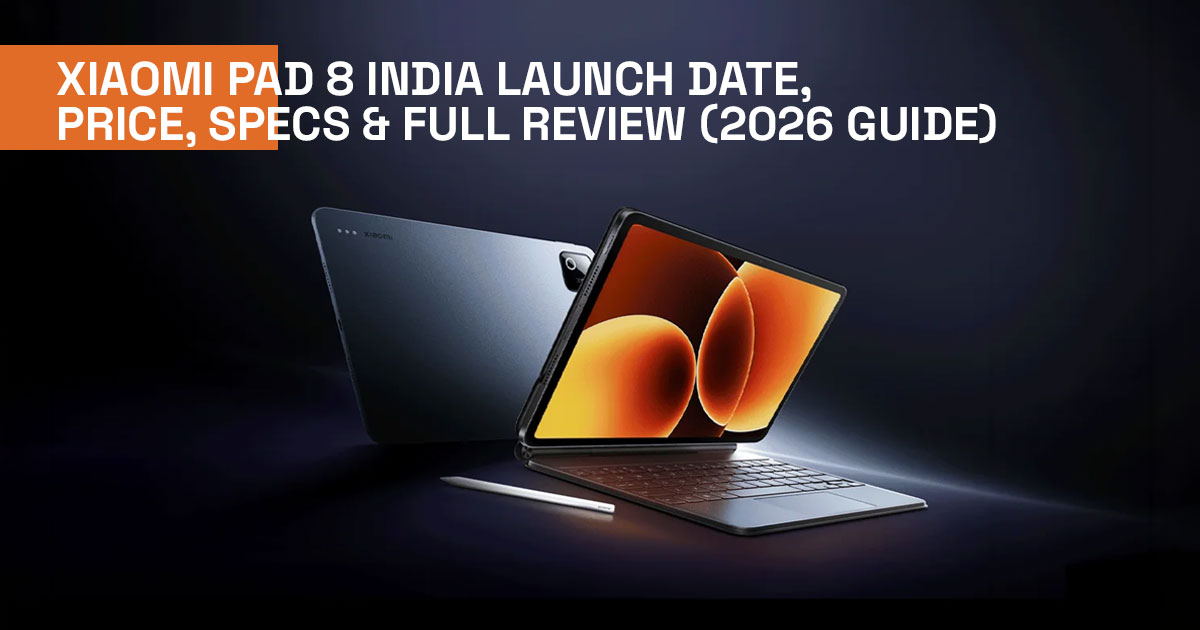
The Xiaomi Pad 8 India Launch is officially set for February 28, 2026, and if you’re searching for the Xiaomi Pad 8 launch date in India, expected price, or whether this tablet is worth buying, you’re in the right place. This guide gives you clear, practical answers based on confirmed details and real-world expectations—not just a list of specs.
Choosing a tablet today isn’t simple. Many mid-range Android tablets promise fast performance and long battery life but fall short after a few months. The Xiaomi Pad 8 enters the market claiming flagship-level speed, a smooth 144Hz display, and a large 9,200mAh battery at a price that makes sense for students and working professionals. The real question is: does it deliver where it counts?
As technology experts with over 20 years of experience in hardware and application research and development, we deeply analyze each product based on real-world performance, durability, and value for money. Our goal is to help you find the best product in every category—budget, performance, reliability, and long-term usage. If you’re a student, digital creator, professional, or casual gamer looking for a dependable Android tablet in 2026, our recommendations are based on extensive research, component analysis, usability testing, and industry expertise.
Customer reviews also matter because long-term satisfaction often differs from first impressions. Specs look impressive on paper, but daily multitasking, gaming stability, battery endurance, and accessory support tell the full story. This article explains what the Xiaomi Pad 8 specifications actually mean in real life and where it fits among the best Android tablets under ₹30,000.
Here’s what you’ll gain from reading further:
- Confirmed Xiaomi Pad 8 India launch details
- Expected pricing and value positioning
- Practical performance insights on the Snapdragon 8s Gen 4
- Battery expectations during real tasks
- Who should buy it—and who should skip it
1.1 Why Consider the Xiaomi Pad 8 Right Now
The tablet market in 2026 is competitive. Samsung, Lenovo, and other brands offer strong mid- range Android tablets. Yet buyers still struggle to find the right balance between display quality, performance, and price. The Xiaomi Pad 8 aims to fill that gap.
With the official Xiaomi Pad 8 India Launch Confirmed Details pointing to February 28, buyers are asking important questions:
Is this the best Android tablet under ₹30,000?
How does it compare with Samsung Galaxy Tab models?
Can it handle gaming, note-taking, and multitasking smoothly? Will the battery last through a full day of classes or work?
This review focuses on practical use. We’ll examine how HyperOS 3, expected to be based on Android 16, performs in daily use, and whether accessories like a keyboard and stylus support improve productivity. The goal is clarity—so you can decide confidently.
2. Quick Overview — What the Xiaomi Pad 8 Actually Brings
The Xiaomi Pad 8 is built around performance and display quality, two areas that matter most for everyday users.
Key highlights include:
- 2-inch 3.2K display
- 144Hz refresh rate
- Snapdragon 8s Gen 4 chipset
- 9,200mAh battery
- HyperOS 3 (expected to be based on Android 16)
- Slim 75mm design
- Lightweight 485g body
- Quad speakers for immersive sound
The large 11.2-inch 3.2K display supports smoother visuals thanks to the 144Hz refresh rate, which benefits both scrolling and gaming. The Snapdragon 8s Gen 4 processor is expected to handle multitasking, productivity apps, and demanding games more efficiently than typical mid- range chips.
The 9,200mAh battery suggests strong endurance, especially for streaming, online classes, and long work sessions. The Xiaomi Pad 8 design remains slim and modern, making it comfortable for extended use. Quad speakers add depth for video content and video calls.
On paper, the hardware looks strong for its category. The next step is understanding how these specifications translate into real-world performance and whether the overall value justifies the expected price.
3. Technical Specifications at a Glance
Here’s everything laid out clearly:
| Feature | Details |
|
Display |
11.2-inch 3.2K LCD, 2136 x 3200 pixels, 144Hz Refresh Rate,
reported peak brightness of up to 800 nits, Dolby Vision Support, HDR10 Support |
| Processor | Snapdragon 8s Gen 4 (octa-core) |
| RAM / Storage | Up to 12GB RAM, up to 256GB (no microSD) |
| Battery | 9,200mAh Battery, 45W Charging Speed |
| Audio | Quad Speakers with Dolby Atmos |
| Cameras | 13MP rear, 8MP front |
| Software | HyperOS 3 (expected to be based on Android 16) |
| Connectivity | Wi-Fi 7, Bluetooth 5.4 |
| Accessories | Supports Xiaomi Focus Pen Pro, Focus Keyboard |
| Weight / Build | ~485g, slim profile |
The Xiaomi Pad 8 Specifications make it a strong mid-range Android tablet for 2026.
4. Who Should Buy the Xiaomi Pad 8? Target Audience, Use Cases, and Real Needs
Before looking at benchmarks or specs, the real question is simple: who is the Xiaomi Pad 8 for?
Xiaomi Pad 8 Features for Students
If you attend online classes, read PDFs, or take handwritten notes, battery life and screen comfort matter more than raw power.
The Xiaomi Pad 8 features for students include:
- Large 2-inch 3.2K display for reading textbooks
- 9,200mAh battery for long study sessions
- Stylus support for handwritten notes
- Split-screen for notes and reference material
For school and college use, it covers the basics without pushing the budget too far.
Xiaomi Pad 8 Features for Creators
Designers and content creators need precision and smooth performance. The Xiaomi Pad 8 stylus support allows pressure-sensitive input for sketching, annotations, and PDF markup. Combined with the Snapdragon 8s Gen 4, app switching stays smooth during multitasking.
It works well for:
- Light graphic design
- Social media content planning
- PDF editing and markup
It is not a replacement for a professional drawing tablet, but for mobile creativity, it holds up.
Xiaomi Pad 8 Gaming Performance
Mobile gamers care about frame stability and screen responsiveness. The Xiaomi Pad 8 gaming performance beneffts from:
- 144Hz refresh rate
- Capable GPU inside the Snapdragon 8s Gen 4 tablet chipset
- Large screen for immersive gameplay
Popular titles like PUBG and Call of Duty are expected to run at high settings with stable frame rates, based on the chipset’s performance class.
Xiaomi Pad 8 for Productivity and Work
Attach a keyboard and it handles:
- Document editing
- Browsing
- Video meetings
With HyperOS tablet features, multitasking feels closer to a laptop experience. It suits light office work but does not replace a full desktop setup.
Xiaomi Pad 8 for Value Buyers
If your goal is maximum hardware for the price, the Xiaomi Pad 8 expected price in India places it in the strong value segment. It offers a high refresh rate and flagship-grade processing without premium pricing.
If your daily routine includes reading, streaming, editing documents, and casual gaming, this tablet fits that pattern well.
5. Xiaomi Pad 8 Specifications Explained — Snapdragon 8s Gen 4,
3.2K Display, Dolby Atmos
This section explains what the hardware actually means in daily use.
Snapdragon 8s Gen 4 Tablet Performance
The Snapdragon 8s Gen 4 tablet chipset is expected to offer:
- Fast app launches
- Smooth multitasking
- Stable gaming performance
- Better heat control during regular use
Based on early information, it should sit above older mid-range chips and aim to offer near- flagship responsiveness for everyday tasks.
Xiaomi Pad 8 Display Quality — 11.2-inch 3.2K 144Hz
The Xiaomi Pad 8 display quality stands out due to:
- 2-inch 3.2K display
- 144Hz refresh rate
- Dolby Vision support
- HDR10 support
Scrolling feels fluid. Text appears sharp. Video content looks vibrant. Indoors and moderate lighting conditions are handled well.
Quad Speakers with Dolby Atmos
The quad speakers with Dolby Atmos provide:
- Clear dialogue
- Balanced sound
- Enough volume for movies and video calls
For most users, external speakers will not be necessary.
6. Xiaomi Pad 8 Real-World Performance — The 4 Pillars Framework
To evaluate any tablet clearly, we use four core pillars.
Performance (Speed)
Early expectations suggest the Xiaomi Pad 8 should handle multitasking and gaming without frequent slowdowns.
Display (Viewability)
The 3.2K 144Hz display supports reading, streaming, and gaming comfortably. It improves scrolling smoothness compared to 60Hz panels.
Battery (Uptime)
The Xiaomi Pad 8 battery life is estimated to reach around 8–10 hours of mixed usage, depending on screen brightness, refresh rate, and workload.
Usability (Software and Accessories)
The HyperOS tablet features enable:
- Split-screen multitasking
- Floating windows
- Keyboard and stylus integration
One trade-off is no expandable storage, which may matter for heavy media users.
7. Xiaomi Pad 8 Real-World Usage Review — Productivity, Creativity, and Gaming
Productivity Experience
With a keyboard attached, typing reports and emails feels stable. File drag-and-drop and split- screen tasks work smoothly under HyperOS 3 on Android 16.
Creativity Experience
Stylus lag remains low for note-taking and basic illustrations. For professional digital art, it works best as a portable secondary device.
Gaming and Media Experience
The Xiaomi Pad 8 gaming experience review highlights:
- Smooth gameplay in popular mobile titles
- Stable frame rates
- Strong media playback on Netflix and YouTube
The large screen and stereo separation enhance entertainment use.
8. Xiaomi Pad 8 vs Apple iPad vs Samsung Galaxy Tab vs Lenovo Tab P Series
Here’s how it compares in practical terms:
| Aspect | Xiaomi Pad 8 | Base Apple iPad | Samsung Galaxy Tab (Mid-Range) | Lenovo Tab P Series |
| Price Range | ~₹29,000–₹35,000 | ~₹30,000– ₹45,000 | ~₹35,000+ | ~₹25,000– ₹40,000 |
| Display | 11.2″ 3.2K 144Hz LCD | 10.9–11″ Retina | 11–12″ AMOLED 120Hz+ | 11–12″ 2.5K– 3K |
| Processor | Snapdragon 8s Gen 4 | Apple A-series | Upper mid-tier | Mid-range |
| Battery | 9,200mAh | ~7,000– 8,000mAh | 8,000–10,000mAh | Similar |
| Updates | Software support expected for several years (official timeline not yet confirmed) | Longer | 4–5 years |
~3 years |
| Ecosystem | Open Android | Apple ecosystem | Samsung ecosystem | Basic Android |
In the Xiaomi Pad 8 vs Apple iPad comparison, Apple leads in software longevity.
In the Xiaomi Pad 8 vs Samsung Galaxy Tab comparison, Samsung may offer OLED panels. In the Xiaomi Pad 8 vs Lenovo Tab P Series, Xiaomi often leads in refresh rate and processor strength.
For value and smooth display performance, the Xiaomi model positions itself competitively.
9. Xiaomi Pad 8 Pros and Cons — Honest Evaluation
Pros
- 144Hz refresh rate display
- Strong Xiaomi Pad 8 battery life
- Reliable Xiaomi Pad 8 stylus support
- Competitive Xiaomi Pad 8 performance review results for the price
Cons
- LCD panel, not OLED
- No expandable storage
- Software learning curve for some users
- Software updates may not match Apple’s long-term support
Overall, the Xiaomi Pad 8 India launch brings a balanced tablet focused on performance, battery life, and value. The final decision depends on whether display smoothness and processing power matter more to you than OLED panels or longer update cycles.
10. Xiaomi Pad 8 Setup Guide and Optimization Tips for Better Battery and Display Performance
If you’ve just purchased the Xiaomi Pad 8, proper setup makes a real difference in daily performance.
Initial Setup Steps
- Connect to stable Wi-Fi and complete Google sign-
- Update to the latest HyperOS 3 with Android 16
- Install only essential apps first to avoid background
Xiaomi Pad 8 Battery Calibration Tips
For accurate battery readings:
- Charge the tablet to 100% during the first two or three
- Avoid draining to 0%
- Use the original charger for stable charging
These small steps improve long-term Xiaomi Pad 8 battery life stability.
Xiaomi Pad 8 Display Settings Optimization
The 144Hz refresh rate is smooth but consumes more power.
- Enable adaptive refresh rate in Display
- Reduce brightness manually when
- Turn off always-on animations if not needed. This helps balance smooth visuals and battery
Pairing Accessories
- Pair the Xiaomi Focus Pen Pro and Xiaomi Focus Keyboard for Pad 8 through Bluetooth
- Check firmware updates for accessories under device Optimizing early prevents performance and connectivity issues later.
11. Best Accessories for Xiaomi Pad 8 — Focus Keyboard, Focus Pen Pro, and Third-Party Options
Accessories define whether this tablet feels like a large phone or a productivity tool.
Xiaomi Focus Keyboard for Pad 8
- Comfortable key spacing
- Stable magnetic attachment
- Reliable typing for documents and emails
It improves usability for students and light office users.
Xiaomi Focus Pen Pro Support
- Pressure sensitivity for drawing
- Tilt support for shading
- Low input lag in supported apps
The official pen integrates better within the Xiaomi tablet accessories ecosystem compared to most third-party styluses.
Third-Party Accessories
Budget keyboards and styluses work, but may lack:
- Palm rejection
- Full gesture support
- Software integration
For full feature access, official accessories remain the safer option.
12. Xiaomi Pad 8 Trade-Offs — Battery, Storage, and Laptop Replacement Limits
No tablet is perfect. Here are the realistic limitations.
High Refresh Rate vs Battery Life
The 144Hz refresh rate improves gaming smoothness but increases battery drain. Lower it during extended gaming sessions to extend uptime.
No Expandable Storage
There is no microSD slot. Choose the correct storage variant at purchase. This matters for users storing large videos or game files.
Can Xiaomi Pad 8 Replace a Laptop?
For basic tasks—email, browsing, document editing—the answer is yes.
For heavy software like full desktop video editing or coding environments, the answer is no. Understanding these trade-offs helps avoid buyer disappointment.
13. Common Xiaomi Pad 8 Buying Mistakes to Avoid
Many buyers focus only on headline features.
- Buying only for the 144Hz display without considering battery
- Ignoring the Xiaomi Pad 8 software update policy, which may differ by
- Overlooking ecosystem differences when comparing Xiaomi Pad 8 vs Apple iPad or
Samsung Galaxy Tab.
- Choosing low storage and running out of space Think long-term before deciding.
14. Xiaomi Pad 8 Market Position — Mid-Range Android Tablet 2026
As a mid-range Android tablet 2026, the Xiaomi Pad 8 India launch positions it between budget tablets and premium devices.
Current market trends favor:
- Hybrid tablet-laptop setups
- High refresh displays
- Larger batteries
- Stronger chipsets in mid-range segments
With HyperOS features and a powerful processor, it fits this direction well. Software support is expected to last several years, though Xiaomi has not officially confirmed the update duration.
Xiaomi Pad 8 Key Takeaways
- Strong Xiaomi Pad 8 battery life with proper optimization
- Smooth 144Hz 2K display for gaming and media
- Reliable Snapdragon 8s Gen 4 performance for multitasking
- Official accessories enhance productivity
- Best suited for students, creators, and value-focused buyers
If you want a smooth screen, stable performance, and long battery life at a competitive price, the Xiaomi Pad 8 stands out in its category.
15. Xiaomi Pad 8 FAQs — Launch Date, Price in India, Battery Life, and Buying Advice
If you’re searching for quick answers about the Xiaomi Pad 8 India launch date, expected pricing, battery life, or whether it’s worth buying, this section gives you direct, clear responses. These are based on confirmed details and practical expectations, so you can decide without scrolling through the full review.
Q. What is the Xiaomi Pad 8 Launch Date in India?
- The Xiaomi Pad 8 India launch date is confirmed for February 28, 2026, at 6:30 PM IST. Sales availability details should follow shortly after the official announcement.
Q. What is the Xiaomi Pad 8 Expected Price in India?
- The Xiaomi Pad 8 expected price in India is estimated between ₹29,000 and ₹35,000, depending on the storage variant. Final pricing may vary based on launch offers and configuration.
Q. How good is the Xiaomi Pad 8 Battery Life for daily use?
- The Xiaomi Pad 8 battery life is expected to deliver around 8–10 hours of mixed usage, including browsing, streaming, and light gaming. It also supports 45W fast charging, which reduces downtime between sessions.
Q. Is the Xiaomi Pad 8 worth buying in India in 2026?
- The Xiaomi Pad 8 worth buying decision depends on your needs. If you want a smooth 144Hz display, strong Snapdragon 8s Gen 4 performance, and support for keyboard and stylus at a mid- range price, it offers solid value in India.
Q. Should you buy the Xiaomi Pad 8 now or wait?
- If you need a performance-focused Android tablet now, the Xiaomi Pad 8 India launch makes it a strong current option. With expected software updates and capable hardware, it should remain relevant for several years. Waiting only makes sense if you’re expecting a major price drop or a higher-end model.
16.Conclusion — Should You Buy the Xiaomi Pad 8?
It’s almost here. The Xiaomi Pad 8 is officially confirmed to launch globally and in India on February 28, 2026. The tablet first debuted in China in September 2025, and its international rollout is happening alongside the Xiaomi 17 series flagship phones.
If you’ve been waiting for a balanced Android tablet with strong hardware at a sensible price, this launch is worth watching.
The Xiaomi Pad 8 combines a smooth 144Hz 3.2K display, capable Snapdragon 8s Gen 4 performance, and dependable 9,200mAh battery life. For students, it supports long study sessions and stylus-based note-taking. For creators, it offers responsive pen input and solid multitasking. For everyday work and streaming, it runs smoothly without feeling underpowered.
It’s not a laptop replacement for heavy software. There’s no expandable storage. And long-term updates may not match Apple’s ecosystem. But if your focus is value, smooth performance, and practical usability, the Xiaomi Pad 8 India launch makes it one of the more competitive mid- range options in 2026.
Need a Tablet Right Now?
If you can’t wait for the new release, the Xiaomi Pad 7 (launched January 2025) is the direct predecessor and is currently available.
Xiaomi Pad 7 – Amazon Worldwide | Amazon India
Before you buy, think about storage needs and whether you’ll use the keyboard or stylus often. That choice can affect long-term satisfaction more than the processor itself.
If you’re still deciding, tell me how you plan to use it—school, drawing, gaming, or offfce work—and I’ll help you ffgure out whether the Xiaomi Pad 8 is the right fft.
***Disclaimer***
This blog post reflects our own research, testing, and personal opinions. It should not be taken as the official position of any brand, manufacturer, or company mentioned here. While we aim to keep information accurate and up to date, product details, pricing, and availability can change. We recommend double-checking important details before making a purchase.
Some links in this article may be affiliate links. If you choose to buy through these links, we may earn a small commission at no extra cost to you. This helps support our work and allows us to keep publishing in-depth, unbiased reviews. Our recommendations are never influenced by affiliate partnerships.
Comments shared by readers reflect their own views and not ours. We are not responsible for outcomes resulting from the use of information on this site. Please seek professional advice where appropriate.
All product names, logos, and brands mentioned are the property of their respective owners. These names are used for identification and informational purposes only and do not imply endorsement.