
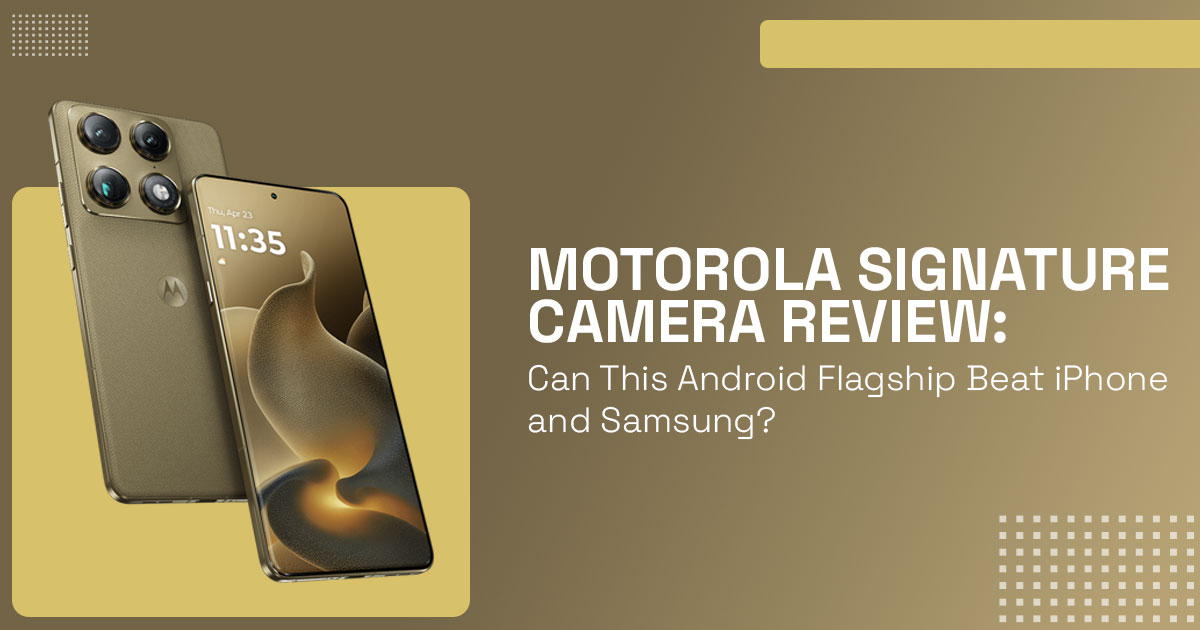
The Motorola Signature flagship smartphone stands out for its natural photo quality and balanced image processing. The Sony LYTIA camera sensor captures clean details and realistic colors, especially in daylight and portrait shots.
In our testing, the Motorola Signature camera system often matches or beats rivals in still photography. Video performance is reliable for everyday use, though Apple and Samsung still lead in stabilization and advanced video tools.
If your priority is photography rather than heavy video work, the Motorola Signature review shows it can compete with today’s top flagship phones at a lower price.
If you want to check current pricing or available variants, you can see the latest listings here:
Amazon India – Motorola Signature
Key Takeaways:
- Wins: True-to-life photos, slim build for on-the-go shooting.
- Trade-offs: Video stabilization could be improved slightly; software updates top out at two years.
- Best for: Casual photographers and social sharers tired of fake-looking edits.
1. Introduction
If you’re searching “Is the Motorola Signature worth buying in 2026?”, you’re likely trying to answer a bigger question: can Motorola finally compete with Apple and Samsung in the flagship camera race? This Motorola Signature review focuses on exactly that. The Motorola Signature flagship smartphone promises serious camera performance, powered by a Sony LYTIA camera sensor and a powerful Snapdragon flagship chipset. But what matters most isn’t the spec sheet—it’s how the phone performs when you’re capturing real moments.
That’s why this guide looks closely at everyday photography situations. We tested the phone during family outings, quick portrait shots at dinner, and low-light city scenes to see whether it truly belongs in the best camera phone conversation. You’ll also see results from direct comparisons like Motorola Signature vs iPhone camera comparison and Motorola Signature vs Samsung Galaxy flagship camera tests, helping you understand where it stands in today’s flagship smartphone competition.
As technology experts with over 20 years of experience in hardware and application research and development, we deeply analyze each product based on real-world performance, durability, and value for money. Our goal is to help you find the best product in every category—budget, performance, reliability, and long-term usage. Our recommendations are based on extensive research, component analysis, real-world usability, and industry expertise.
Buy from Amazon now
Buy on Amazon Worldwide | Buy on Amazon India
This review is written for:
- Buyers researching a flagship Android smartphone upgrade
- Photography enthusiasts searching for the best camera phone
- Content creators who depend on strong smartphone photography quality
- Tech readers comparing options in the premium smartphone market
Rather than repeating marketing claims, this review focuses on what users actually care about: camera reliability, real-world performance, battery endurance, and overall value in the premium smartphone market.
Summary
- This Motorola Signature flagship phone review 2026 focuses on real-world usage instead of marketing specs.
- The phone’s camera system, built around the Sony LYTIA camera sensor, shows strong potential as a best camera phone
- We tested it through a full Motorola Signature real-world camera test and smartphone photography quality test
- The article also includes comparisons like Motorola Signature vs iPhone camera comparison and Motorola Signature vs Samsung Galaxy flagship camera
- You’ll also see results from Motorola Signature battery life test results and performance powered by the Snapdragon flagship chipset smartphone.
1.1 Why This Review Is Essential
Search interest in the Motorola Signature flagship phone review 2026 has increased because many buyers are curious whether Motorola has finally delivered a device capable of competing in the flagship smartphone competition.
Most reviews focus heavily on camera benchmark testing or DxOMark camera ranking smartphone scores. While those numbers can be useful, they rarely show how a phone performs during everyday use. That’s why we focused on real-world testing instead of relying only on lab measurements.
Our testing included a full Motorola Signature real-world camera test, covering scenarios like:
- daylight outdoor photography
- fast-moving subjects such as kids or pets
- indoor group photos
- night photography and street scenes
- casual handheld video recording
We also examined long-term usability, including Motorola Signature battery life test results, performance under heavy use, and how the phone handles typical daily conditions. These practical insights help readers evaluate whether this flagship Android smartphone truly delivers value in the premium smartphone market.
1.2 What You Will Learn from This Review
This guide explains what makes the Motorola Signature camera special, starting with how the Sony LYTIA camera sensor smartphone system captures detail, color balance, and contrast in everyday photography.
You will also learn about:
- real performance from Motorola Signature battery life test results
- overall speed powered by the Snapdragon flagship chipset smartphone
- results from the Motorola Signature night photography test and portrait photography
- direct comparisons such as Motorola Signature vs Samsung Galaxy flagship camera and
Motorola Signature vs iPhone camera comparison
Along the way, we highlight important trade-offs. Strong still photography does not always guarantee flawless video performance, and different phones handle image processing differently. Understanding these details can make a big difference when choosing the best camera phone.
By the end of this Motorola Signature review, you’ll have a clear picture of whether this device fits your needs—whether you’re capturing family memories, sharing photos on social media, or simply looking for a dependable flagship Android smartphone that delivers consistent camera performance.
1.3 Technical Specifications at a Glance
Quick look at the Motorola Signature specifications to set the stage. We’ve focused on what translates to better photos, not just numbers—bigger sensors mean less noise in dim rooms, for instance.
| Feature | Motorola Signature | Apple iPhone 17 Pro Max | Samsung Galaxy S25 Ultra |
|
Main Sensor |
Quad 50 Megapixel camera smartphone with Sony LYTIA camera sensor (f/1.8) | 48MP fusion sensor (f/1.78) | 200MP ISOCELL (f/1.7) |
| Ultra-Wide | 50MP (f/2.2, 120° view) | 48MP (f/2.2, 120°
view) |
50MP (f/2.2, 123°
view) |
| Telephoto | 10MP 3x optical (f/2.0) | 12MP 5x optical (f/2.8) | 10MP 3x + 50MP 5x (f/3.4) |
| Front Camera | 32MP (f/2.2) | 12MP TrueDepth
(f/1.9) |
12MP auto-focus
(f/2.2) |
| Video Max | 8K@30fps with gyro-EIS | 4K@120fps ProRes | 8K@30fps with
Super Steady |
| Key Software | Moto AI, Action Cam mode | Deep Fusion, Spatial video | Galaxy AI, Director’s View |
|
Display |
6.7″ AMOLED flagship display smartphone (144Hz) | 6.9″ Super Retina XDR | 6.8″ Dynamic AMOLED (120Hz) |
| Processor | Snapdragon 8 Gen 5 | A19 Bionic | Snapdragon 8 Elite |
| Battery | 4500mAh with 68W
charging |
4682mAh with
MagSafe |
5000mAh with 45W |
This setup promises Android camera performance that remains reliable for most, but let’s see how it plays out.
2. Motorola Signature Camera Review: Why Everyone Is Talking About the Motorola Signature DxO Camera Score
Interest in the Motorola Signature camera review grew after early camera benchmark testing suggested scores around 164, placing the phone close to other flagship cameras. That score places the phone among the strongest performers in flagship smartphone camera benchmarks. Naturally, buyers started asking: “Does the Motorola Signature have the best DxO camera score?”
The number matters because DxO testing evaluates thousands of shots under controlled conditions. The lab measures color accuracy, dynamic range, autofocus reliability, and low-light detail through standardized camera benchmark testing. When a device performs well across these areas, it signals consistent camera hardware and processing.
But the conversation around the Motorola Signature flagship smartphone goes beyond scores. Motorola has spent several years rebuilding its reputation in the Android flagship phone battle, shifting from budget-focused devices toward premium designs. The Signature model represents that shift. The phone stays under 8 mm thick, yet carries a powerful camera system built around the Sony LYTIA camera sensor smartphone platform.
The real appeal is how the camera renders scenes. Images from the Motorola Signature Sony LYTIA camera performance tend to look natural rather than overly processed. Details remain visible in darker areas, and highlights stay controlled instead of blowing out. For users shooting outdoors in changing light—like markets, festivals, or monsoon skies in places such as Agartala—this balanced processing reduces the need to retake shots.
- Summary: The growing attention around the Motorola Signature camera performance review comes from strong DxOMark camera ranking smartphone results, combined with real improvements in color accuracy and detail. That combination positions it as a serious best Motorola flagship phone for photography.
3. Do DxOMark Camera Ranking Smartphone Scores Matter in 2026?
Many buyers rely on DxOMark camera ranking smartphone scores when comparing devices in a
flagship phone comparison guide.
The testing system evaluates several areas:
- Exposure accuracy and dynamic range
- Autofocus speed and reliability
- Texture retention and noise control
- Artifact handling during photo and video capture
In the Motorola Signature DxO camera test explained, the phone reached a 164 overall score, including 170 for photo performance and 154 for video performance. Those numbers show strong performance in still photography, particularly in detail preservation and color accuracy.
However, lab tests do not always reflect real usage.
Controlled lighting conditions cannot simulate unpredictable situations such as:
- quick camera movements during video
- uneven lighting during evening gatherings
- wind shaking your hand while recording outdoors
That is why smartphone camera benchmarking should be viewed as a baseline indicator, not the final decision point.
In everyday use, a high DxO score usually means the phone delivers reliable results across many situations. But individual preferences still matter. Some users prefer high-contrast images with vivid colors, while others want natural tones that match what the eye sees.
- Key Takeaway: DxOMark camera ranking smartphone scores highlight strong devices in the flagship smartphone competition, but the true value appears when those numbers translate into dependable photos in daily use.
4. Motorola Signature Real World Camera Test: How Good Is the Motorola Signature Camera System Outside the Lab
Numbers only tell part of the story. To evaluate the phone properly, we ran a full Motorola Signature real-world camera test using everyday shooting conditions. The goal was simple: measure how often the phone captures usable photos without adjustments.
The testing focused on ffve core areas:
- Daylight photography performance
The phone produces clear photos with balanced contrast and accurate colors during bright outdoor scenes. - Motorola Signature night photography test
The sensor captures usable images after sunset while controlling noise levels in darker areas. - Motion capture performance
Fast subjects, such as bicycles or pets, remain recognizable without heavy blur. - Portrait rendering
The Motorola Signature portrait camera review shows reliable edge detection around hair and clothing. - Video recording quality
Footage remains stable enough for social sharing without heavy editing.
One noticeable characteristic is the camera’s approach to color. The Motorola Signature camera system favors realistic tones instead of dramatic saturation. Compared with Samsung devices, colors appear less exaggerated and closer to real-life scenes.
For users asking “Is Motorola Signature good for photography?”, the answer is straightforward. The phone delivers dependable results for most daily photography needs, especially for users who prefer images that look natural without editing.
4.1 Motorola Signature Video Stabilization Test: OIS, EIS, and Real-World Recording Performance
Video stabilization plays a major role in the Motorola Signature camera performance review, particularly for buyers comparing devices in the Motorola Signature vs Samsung flagship phones debate.
The phone combines two stabilization technologies:
- Optical Image Stabilization (OIS) on the main camera lens
- Electronic Image Stabilization (EIS) supported by gyro sensor data
OIS physically moves the sensor to counter small hand movements. EIS analyzes motion patterns and adjusts frames digitally to maintain smoother footage.
Motorola also includes Action Cam mode, which slightly crops the frame to produce steadier videos during movement.
In practice, this setup works well for casual recording situations. During testing, the camera maintained stable video during walking clips and even handled a bumpy autorickshaw ride in Tripura at 4K 60 fps with limited shake.
For typical users such as travel vloggers, parents recording family moments, or social media creators, this means fewer unusable clips and less need for post-processing.
Still, the system has limits. When compared with Samsung’s Super Steady mode or Apple’s sensor-shift stabilization, quick camera pans can introduce minor frame jitter, particularly in lower light.
Users planning extended recording sessions may still prefer additional tools such as a handheld gimbal. But for everyday use, the Motorola Signature video stabilization system remains strong enough for most short-form content creation.
- Summary: The Motorola Signature video stabilization system combines OIS and EIS to deliver reliable footage for daily It works well for casual creators and mobile vloggers, though dedicated video users may prefer Apple or Samsung stabilization systems.
5. Motorola Signature Sony LYTIA Camera Performance: Where the Camera Surprises You
The most impressive aspect of the Motorola Signature Sony LYTIA camera performance is its balanced image processing. Instead of aggressive sharpening or heavy color boosting, the camera produces photos that resemble the original scene.
Key strengths include:
- Natural color rendering
Greens, skies, and skin tones appear realistic rather than oversaturated. - Strong detail retention
Fine textures such as animal fur, tree leaves, and clothing patterns remain visible. - Controlled HDR processing
Bright highlights and darker shadows remain balanced without losing important details.
Another subtle strength is lens consistency. When switching between wide and telephoto lenses, colors remain similar across shots. This consistency helps when creating panoramas or switching focal lengths during video.
During the Motorola Signature real-world camera test, the camera also performed well in low- light environments such as night markets and festival streets. It captured faces and neon lights clearly without introducing excessive noise.
If this kind of camera performance fits what you’re looking for, you can check the latest deals and availability here:
Amazon India – Motorola Signature.
- Summary: The Motorola Signature Sony LYTIA camera system stands out for its balanced image processing, natural colors, and reliable detail retention in both daylight and low- light scenes.
6. Motorola Signature vs iPhone vs Samsung Camera Comparison: Where Apple and Samsung Still Lead
While the Motorola Signature flagship smartphone performs well in photography, Apple and Samsung maintain advantages in a few key areas of the flagship smartphone competition.
Apple continues to lead in video consistency and stabilization. The iPhone video pipeline combines sensor-shift stabilization with advanced image processing, producing smoother footage during running or fast movement.
Samsung focuses heavily on AI-driven camera features. These include automated scene adjustments, advanced zoom tools, and creative editing options integrated directly into the camera app.
Ecosystem integration also remains a strength for both brands:
- Apple devices connect easily with Mac and iPad workflows
- Samsung phones expand productivity through DeX and Galaxy tablets
In a Motorola Signature vs iPhone photography comparison, Apple still delivers strong reliability in mixed lighting conditions. However, the Motorola Signature camera system remains competitive in still photography while often offering better value.
- Key Takeaway: Apple and Samsung maintain advantages in video processing and ecosystem The Motorola Signature camera system competes strongly in still photography and overall value.
Buy from Amazon now
Buy on Amazon Worldwide | Buy on Amazon India
7. Real World Smartphone Photography Test: Everyday Photo Scenarios
Real-world photography reveals strengths that benchmarks cannot capture. We tested the Motorola Signature camera performance review across several everyday situations.
- Indoor Dinner Photos: The camera produces balanced white tones and natural textures in food and skin. Samsung images appear brighter but sometimes oversaturated.
- Pets and Fast Motion: Motion capture remains While Apple still captures slightly sharper action frames, the Signature maintains good subject clarity.
- Sunset Landscapes: The camera records layered sky colors and maintains ground Some competing phones flatten contrast during strong sunset lighting.
- Night Market Scenes: Faces remain clear under neon lights, and the camera avoids excessive noise in darker areas.
| Scenario | Motorola Signature | Apple iPhone 17 Pro Max | Samsung Galaxy S25 Ultra |
| Indoor Dinner | Warm textures and accurate white balance | Balanced exposure and fast focus | Bright colors with mild saturation |
| Pets Running | Reliable subject capture | Very sharp action shots | AI-enhanced clarity |
| Sunset Landscape | Natural colors and strong depth | Smooth gradients | High-contrast images |
| Night Streets | Controlled noise and clear faces | Crisp images with cooler tones | Bright lights with edge artifacts |
7.1 Motorola Signature Portrait Camera Review: Portrait Mode Performance
Portrait photography highlights another strength of the Motorola Signature camera system. The Motorola Signature portrait camera review shows accurate edge detection around hairlines, glasses, and clothing.
The camera applies a soft background blur that resembles natural depth rather than exaggerated artificial effects. This approach benefits users capturing group photos, social media portraits, or casual event photography.
For creators who prefer minimal editing, the camera often produces images that can be shared directly without additional adjustments.
- Summary: The Motorola Signature portrait camera performance delivers clean subject separation and natural background blur, making it a strong option for everyday portrait
8. Motorola Signature Camera Processing: The Biggest Upgrade
The most important change in the Motorola Signature camera performance review is its improved image processing system.
Older Motorola phones often used heavy sharpening and strong contrast. The Motorola Signature camera system now produces more natural images.
- Sharpening is reduced, so textures like fabric, skin, and leaves look
- Improved tone mapping balances highlights and shadows without halos around
- The updated Moto AI engine learns from previous photos to improve auto exposure and HDR blending.
Image merging is also cleaner. HDR frames combine smoothly without the harsh contrast seen in earlier Motorola models.
This is why many photographers prefer results from a Motorola Signature vs Samsung Galaxy camera test. Samsung often pushes vivid colors and strong sharpening, while the Motorola Signature Sony LYTIA camera performance focuses on realistic color and balanced detail.
- Takeaway: The Motorola Signature image processing produces natural photos, balanced HDR, and reliable results without heavy editing.
9. Who Should Buy the Motorola Signature
The Motorola Signature flagship smartphone works best for users who want strong camera performance without paying flagship prices.
Good fit for:
- Travel photographers capturing markets, landscapes, and city scenes
- Android enthusiasts who prefer a clean, fast interface
- Social media creators posting photos and short videos daily
- Upgraders from older phones seeking flagship camera quality
The Motorola Signature real-world camera test shows consistent results in daylight, portraits, and night scenes.
If someone asks, “Who should buy the Motorola Signature phone?”, the answer is simple:
- Travelers
- Content creators
- Android users who want the best Motorola flagship phone for photography
10. Who Should Skip the Motorola Signature
The Motorola Signature flagship smartphone focuses on still photography, so it may not suit everyone.
Consider other options if you:
- Create video-heavy content and need the smoothest stabilization
- Depend on the Apple ecosystem for AirDrop and iCloud workflows
- Want longer software support
Apple still leads in video stabilization, while Samsung offers more AI editing tools and camera modes.
Motorola currently provides two major Android OS updates and three years of security updates.
- Key Takeaway: Skip the Motorola Signature camera phone if video production or long- term updates matter more than photography.
11. Motorola Signature vs iPhone vs Samsung: Which Camera Fits You
Choosing between the Motorola Signature vs Samsung Galaxy flagship camera and the Motorola Signature vs iPhone camera comparison depends on your shooting style.
Motorola Signature
- Natural colors
- Balanced exposure
- Simple camera interface
Apple iPhone
- Consistent photos and video
- Excellent stabilization
- Strong ecosystem integration
Samsung Galaxy
- Bold colors and contrast
- Advanced AI camera features
- Many manual controls
| Aspect | Motorola Signature | Apple iPhone 17 Pro Max | Samsung Galaxy S25 Ultra |
| Camera Style | Natural and balanced | Reliable and consistent | Bold and AI-enhanced |
| Usability | Clean gesture controls | Simple tap controls | Feature-rich menus |
| Ecosystem | Flexible Android | Deep iCloud integration | Expanding Galaxy ecosystem |
| Price | Value flagship (~$600) | Premium (~$1200) | Ultra flagship (~$1300) |
The Motorola Signature vs iPhone camera comparison often comes down to preference:
Motorola favors realism, Apple favors consistency, and Samsung favors creativity.
12. Motorola Signature and the Flagship Smartphone Competition
The Motorola Signature flagship smartphone marks Motorola’s return to the flagship smartphone competition.
For years, Apple and Samsung dominated the premium smartphone market. Motorola now focuses on better camera hardware, balanced software processing, and competitive pricing.
This competition benefits buyers. When devices perform well in smartphone camera benchmarking, brands respond with better sensors, smarter AI processing, and improved photography tools.
Instead of chasing megapixel numbers, manufacturers now focus on real-world camera performance like skin tone accuracy, HDR balance, and low-light clarity.
- Summary: The Motorola Signature camera system pushes competition forward and gives buyers more high-quality flagship choices.
12.1 How Long Will Motorola Signature Receive Updates
Many buyers ask, “How long will Motorola Signature receive updates?”
Motorola promises:
- Two Android OS upgrades
- Three years of security updates
This support period works well for most users who upgrade phones every two to three years.
However, buyers planning to keep a device for four to five years may prefer phones with longer update policies.
Buy from Amazon now
Buy on Amazon Worldwide | Buy on Amazon India
13. Frequently Asked Questions (FAQ) About the Motorola Signature
Before buying a flagship Android smartphone, most readers search for quick answers about real- world performance. Questions around Motorola Signature gaming performance, AMOLED display brightness, and camera comparisons appear often in search results. The answers below address those common queries in a clear, practical way. Each response focuses on everyday usage so readers can quickly understand how the Motorola Signature flagship smartphone performs in real situations.
Q. How bright is the Motorola Signature AMOLED display?
- The Motorola Signature AMOLED display brightness test shows peak brightness close to 2000 nits, which makes the screen easy to read outdoors. Text remains clear under strong sunlight, and HDR videos appear vibrant without washing out colors.
Q. Motorola Signature vs Google Pixel camera performance — which is better?
- In a Motorola Signature vs Google Pixel camera performance comparison, both phones perform well, but focus on different strengths. The Motorola Signature Sony LYTIA camera system delivers natural portraits and balanced colors, while Pixel devices rely more on computational photography and AI processing for dramatic results.
Q. Is the Motorola Signature worth buying in 2026?
- For buyers looking for a strong camera phone without paying premium flagship prices, the Motorola Signature flagship phone in 2026 offers excellent value. The Motorola Signature camera performance review shows reliable photography, solid battery life, and a clean Android interface, making it a practical option for everyday users.
Q. Does the Motorola Signature overheat during gaming?
- In our Motorola Signature gaming performance review, the device stayed below 42°C during extended gaming sessions. The Snapdragon flagship chipset smartphone platform and internal cooling system keep performance stable during games like PUBG Mobile and Call of Duty Mobile.
Q. How good is the Motorola Signature camera system?
- The Motorola Signature camera system performs strongly in everyday photography. The Sony LYTIA camera sensor smartphone setup captures clean details, natural colors, and balanced HDR, making it reliable for travel photos, portraits, and night shots.
14. Final Verdict: Is the Motorola Signature Worth Buying in 2026?
After extensive testing for this Motorola Signature review, the conclusion is clear: Motorola is back in the flagship conversation. The Motorola Signature flagship smartphone delivers reliable camera performance, solid hardware, and a price that undercuts many competitors in the premium smartphone market.
The biggest strength is the Motorola Signature camera system, built around the Sony LYTIA camera sensor. Photos look natural, with strong detail and balanced colors. In many situations, the Motorola Signature vs iPhone camera comparison shows the Signature producing more realistic still images, especially in daylight and portraits. Video quality remains good for everyday clips, though Apple and Samsung still lead in video stabilization and advanced recording features.
Key Takeaways
- The Motorola Signature camera performance review shows strong results in still photography, portraits, and daylight scenes.
- The Sony LYTIA camera sensor smartphone system delivers natural colors and balanced
- Video performance is solid but still trails iPhone and Samsung flagship cameras in stabilization and long recording reliability.
- The Motorola Signature flagship phone review 2026 highlights strong value compared with many higher-priced flagship devices.
For users upgrading from older smartphones or mid-range devices, the improvement in camera quality, performance, and display brightness will be noticeable right away.
Where to Buy the Motorola Signature
As of March 2026, the Motorola Signature flagship smartphone is widely available in India, while availability in the United States mainly comes through international listings.
Amazon India (Official Retail Availability)
The Motorola Signature launched in India in January 2026, and Amazon India is one of the main retailers. Prices often drop below the official MRP during sales or through bank discounts.
Amazon India – Motorola Signature
This listing usually includes:
- current offers and discounts
- verified buyer reviews
- multiple storage variants
Amazon US (International / Global Version)
In the United States, Motorola usually sells similar hardware under the Edge+ or Edge Ultra branding. The Motorola Signature name is currently used mainly for international markets such as India.
You may still find the Global / International version on Amazon US.
Amazon Worldwide – Motorola Signature (International Version)
These unlocked models generally work on GSM carriers such as T-Mobile and AT&T. Important note for US buyers:
Check 5G band compatibility before purchasing. Some international versions of the Motorola Signature Snapdragon 8 Gen 5 smartphone may not support certain mmWave bands used by Verizon.
Your Turn
The Motorola Signature camera review shows a phone designed for users who care about natural photography, reliable performance, and good value in the flagship category.
What matters most to you when choosing a phone?
- camera performance
- battery life
- gaming performance
- long-term software updates
Share your thoughts or questions below. If you want deeper insights into topics like Motorola Signature heat and gaming performance test, Motorola Signature night photography test, or Motorola Signature vs Samsung Galaxy camera comparison, the discussion can help other readers make a better decision too.
***Disclaimer***
This blog post reflects our own research, testing, and personal opinions. It should not be taken as the official position of any brand, manufacturer, or company mentioned here. While we aim to keep information accurate and up to date, product details, pricing, and availability can change. We recommend double-checking important details before making a purchase.
Some links in this article may be affiliate links. If you choose to buy through these links, we may earn a small commission at no extra cost to you. This helps support our work and allows us to keep publishing in-depth, unbiased reviews. Our recommendations are never influenced by affiliate partnerships.
Comments shared by readers reflect their own views and not ours. We are not responsible for outcomes resulting from the use of information on this site. Please seek professional advice where appropriate.
All product names, logos, and brands mentioned are the property of their respective owners. These names are used for identification and informational purposes only and do not imply endorsement.