
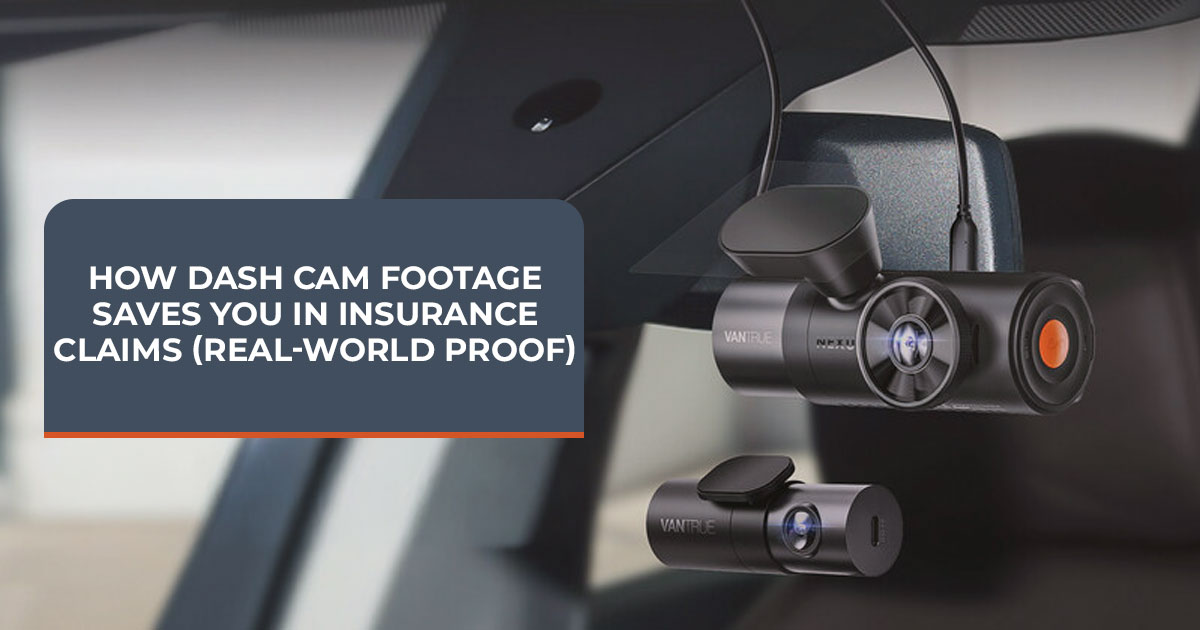
Dash cam footage can determine fault, payouts, and liability in real insurance claims. This guide shows how it works in everyday accidents, why reviews matter, and how drivers use dash cams to avoid disputes and protect themselves.
1. Introduction
You’re stopped in traffic. Someone hits you from behind. Simple, right?
But then the other driver tells their insurer you slammed the brakes for no reason. What should be an open-and-shut rear-end accident suddenly turns into weeks of emails, calls, and delays. Your insurance claim stalls. You worry about fault determination, higher premiums, or getting stuck paying for damage you didn’t cause.
This is exactly where dash cam footage earns its place.
A dash cam records what actually happened—speed changes, braking distance, traffic flow, and whether the driver behind was distracted. In real insurance cases, that video often becomes the deciding factor for insurance claim video evidence, liability, and payout decisions. Instead of one story against another, there’s clear dash cam evidence for insurance. And that shifts the balance fast.
Dash cams aren’t niche gear anymore. They’re practical tools for everyday drivers—commuters, parents doing school runs, rideshare drivers, and anyone who spends time on busy roads. When accidents happen, car accident dash cam footage can speed up settlements, reduce disputes, and protect you from false accident claims and insurance fraud. For drivers concerned about rising costs or unfair blame, having facts on video puts control back in your hands.
There’s another piece most people overlook: real-world feedback. Specs don’t tell you how a camera performs during a sudden impact, at night, or in bad weather. Customer reviews and real claim outcomes do. They show which cameras capture usable accident proof, which miss key details, and which hold up over time. That’s why reviews matter when choosing the best dash cam for insurance claims, not just the cheapest or newest model.
This article focuses on how dash cam insurance claims actually play out. You’ll see practical scenarios where dash cam footage changed fault decisions, protected drivers from false blame, and led to faster, fairer outcomes—so you know what to expect before you need it.
1.1 Why This Review Matters
Many people face car accidents without solid backup, leading to denied claims or higher premiums. We created this guide to explain how dash cam evidence for insurance fills that gap. It goes beyond basic tips, showing real benefits like saving time and money, especially for commuters, parents, or anyone sharing roads with unpredictable traffic.
As technology experts with over 20 years of experience in hardware and application research and development, we analyze each product based on real-world performance, durability, and value for money. Our goal is to help you find the right option—whether you care most about budget, performance, reliability, or long-term use. For daily drivers, families, and professionals who rely on their vehicles, our recommendations come from extensive research, component analysis, real-world usability, and industry expertise.
1.2 What You Will Learn Here
You’ll see how dash cams grab key details for claims, look at actual cases where footage made a difference, and get advice on using them right. We cover comparisons, best practices, risks, and picks suited for insurance claim video evidence. Question sections address common worries, like whether insurance accepts dash cam footage, to help you decide if this fits your needs.
2. Technical Specifications at a Glance
Here’s a quick look at what makes a dash cam reliable for insurance claims. These details matter for everyday users who want clear proof without fuss.
| Feature | Description | Why It Helps Drivers |
| Video
Resolution |
1080p up to 4K for front, often
1080p rear |
Sharp images catch plates and
signs, easing fault determination. |
|
Field of View |
140-170 degrees front, 120-160 rear or inside | Broad coverage shows lane shifts or nearby cars in the car accident
video proof. |
| Night Vision | Sensors for low light | Works for evening drives, common for many working folks. |
| GPS and Timestamp |
Tracks location and time |
Proves speed and, when in
timestamped accident footage, is key for disputes. |
| Storage and
Loop Recording |
Up to 512GB, auto overwrite |
Keeps important clips safe without manual effort. |
| Parking Mode | Detects motion when parked | Catches bumps in lots, useful for
dash cam hit and run insurance. |
In short, go for at least 1080p with GPS if you handle busy streets or park in public spots.
3. What Dash Cam Footage Actually Captures
Dash cams keep recording in a loop, saving bits around sudden stops or hits. This gives a complete view of events, helpful for people who drive a lot and need reliable records.
They pick up front and rear angles, inside views, location data, and sometimes sound. For someone filing a claim, this means insurers get exact timing and positions, making decisions simpler. Clear stamps show you’re serious about facts, building trust in the process.
Expanding on this, consider how a dash cam with GPS and a timestamp adds layers. GPS logs where you were, tying into maps for context, while timestamps sync with reports. This combo appeals to families or delivery drivers who cover miles and face varied risks.
4. Why Video Evidence Beats Other Proof
Reports from police or stories from witnesses often miss pieces or get twisted over time. Dash cam footage insurance changes that by showing real actions, like who skipped a yield or sped up.
Here’s a side-by-side:
| Evidence Type | Strengths | Weaknesses | Effect on Claims |
| Witness Accounts |
Add personal angles |
Can shift with memory | Lead to conflicts in
insurance dispute dash cams. |
| Police Reports | Come from the officials | Rely on later info | Support but lack full picture. |
| Dash Cam Footage | Shows events as they happen |
Needs a good setup |
Speeds dash cam claim settlement with clear
liability evidence. |
| Scene Photos | Highlight damage | Miss how it started | Back up, but don’t prove
order. |
The real win is neutrality—videos stand alone, helping avoid blame games. For audiences like new drivers or those in high-traffic areas, this means less stress and fairer outcomes in auto insurance accident proof.
5. Real-World Scenarios Where Dash Cam Footage Changed Insurance Outcomes
These are not edge cases. They’re everyday accidents where dash cam insurance claims went from disputed to resolved because video showed what reports and witness statements couldn’t.
5.1 Intersection Accidents: How Dash Cam Footage Proves Fault Clearly
Intersections are where blame gets messy fast. Two drivers enter. One says the light was green. The other says the same. Without proof, insurers often split fault or delay payouts.
In real cases, dash cam accident proof shows the signal state, timing, and vehicle position. When footage captures a red-light violation, insurers can make a clean fault determination. Claims move faster, payouts arrive sooner, and drivers avoid unnecessary deductibles or premium hikes.
This answers a common question directly: can dash cam footage prove fault?
Yes—especially in intersections where timing matters.
5.2 Hit-and-Run Insurance Claims: Identifying Vehicles With Dash Cam Evidence
Hit-and-run damage often leaves drivers paying out of pocket. Witnesses are rare, and police reports alone may not be enough.
Here, dash cam evidence in hit-and-run insurance cases makes a real difference. Footage can capture license plates, vehicle color, direction of travel, and even distinguishing marks. Insurers use this to track the responsible party or validate uninsured motorist claims.
For commuters and park-and-go drivers, this often means the difference between a denied claim and full coverage.
5.3 Avoiding False Blame With Dash Cam Footage Insurance Evidence
Some disputes start with false accusations—cutting off, unsafe lane changes, sudden braking. Without proof, these claims can stick.
Dash cam footage for insurance shows the full sequence before impact. When the video contradicts the other driver’s statement, insurers drop the allegation. This protects claim history, keeps records clean, and helps families avoid long-term premium increases.
This is why dash cam liability evidence matters even in minor crashes.
5.4 Disputes Over Damage Severity and Insurance Payout With Dash Cam Evidence
Insurers assess not just who caused the crash, but how severe it was. Without video, damage claims may be questioned or reduced.
Dash cam footage shows impact force, speed changes, and secondary collisions. This supports repair estimates and injury documentation. In real claims, video has helped justify higher payouts for vehicle damage and medical care.
This explains why insurance payout with dash cam evidence often reflects reality better than paperwork alone.
5.5 Truck and Commercial Vehicle Claims Using Dash Cam Video Evidence
Accidents involving trucks or commercial vehicles raise the stakes. Liability disputes are common, and investigations take longer.
In these cases, car accident dash cam footage can show unsafe following distance, sudden lane changes, or aggressive driving by larger vehicles. Clear video often leads to faster settlements and fewer legal complications—especially for highway drivers and professionals who spend long hours on the road.
These examples show real-world examples of dash cam insurance claims where video turned disputes into resolutions. For insurers, footage provides sequence, context, and timing—three things written reports lack.
6. Best Practices for Using Dash Cam Footage for Insurance Claims
To keep footage credible:
- Share original, unedited files with timestamps intact
- Organize clips by date and time
- Avoid trimming, adding overlays, or compressing files
- Back up footage immediately after an incident
For drivers asking how to submit dash cam footage to insurance, start by contacting your adjuster. Most insurers provide secure upload portals. Follow their instructions exactly to avoid rejection or delays.
Proper handling ensures your dash cam evidence for insurance claims holds weight.
7. When Dash Cam Footage Can Work Against You
Dash cams are neutral witnesses. They record everything—including mistakes.
Footage may show speeding, distracted driving, or unsafe behavior. Audio can capture conversations that don’t help your case. Because of this, insurers may use the same video to assign partial fault.
This answers another common concern: can insurance reject dash cam video?
Yes—if it’s altered, unclear, or legally non-compliant. Always follow local laws and keep originals untouched.
8. How Dash Cam Use Affects Insurance Beyond a Single Claim
Some insurers view dash cam usage as a positive safety signal. In certain regions or policies, this can lead to discounts or smoother claims handling.
Regular use also encourages better driving habits, reducing future incidents. Modern cameras integrate GPS, timestamps, and parking modes, making them far more useful than older models.
For drivers asking if dash cams lower insurance premiums, the answer depends on the insurer— but the broader dash camera insurance benefits include faster claims, clearer fault decisions, and fewer disputes over time.
Key takeaway
Dash cam footage doesn’t just record accidents—it protects drivers from false blame, strengthens insurance claims, and provides clarity when it matters most. Used correctly, it becomes one of the most practical tools an everyday driver can have.
9. Clearing Common Doubts About Dash Cam Footage and Insurance Claims
Before buying or relying on a dash cam, most drivers have the same questions. They want to know if the footage really helps, whether insurers trust it, and if there’s any risk in using it. This section answers those concerns in plain terms, based on how dash cam insurance claims actually work, so you can make informed decisions with fewer surprises.
Q. How does dash cam footage impact the outcome of an insurance claim?
- Dash cam footage gives insurers a clear, time-stamped view of what happened before, during, and after an accident. This helps with fault determination, reduces disputes, and often speeds up insurance claim approvals. In many real cases, dash cam evidence for insurance claims shortens settlement time because adjusters don’t have to rely only on statements or guesswork.
Q. Can a dash cam help lower my insurance premiums?
- Some insurers offer discounts or incentives for drivers who use dash cams, especially when the device supports insurance fraud prevention. While not every provider does this, many view dash cam usage as a sign of responsible driving. For drivers asking if dash cams lower insurance premiums, the best step is to check directly with your insurer and review your policy terms.
Q. Is dash cam footage admissible in court and accepted by insurance companies?
- In many regions, dash cam footage is admissible in court and accepted by insurers, as long as it’s legally recorded and unedited. Original files with visible timestamps, GPS data, and clear video quality carry the most weight. This is why questions like is dash cam evidence reliable usually come down to setup, video clarity, and compliance with local laws.
Q. What if my dash cam footage shows that I was at fault?
- Dash cams record facts, not opinions. If the video shows you were at fault, it can limit your insurance payout or shift liability. However, it can also prevent exaggerated or false claims from the other party. For many drivers, this honesty still works in their favor by resolving claims faster and avoiding long disputes.
These answers cover the most common concerns drivers search for before relying on dash cam footage for insurance claims. When used correctly, a dash cam becomes a practical tool for clarity, fairness, and faster resolution—rather than a gamble.
10. Recommended Dash Cams for Evidence-Ready Insurance Support
Focus on clear views and coverage for the best dash cam for insurance claims.
| Model | Key Features | Suited For | Buy Now |
|
Nexus 2X |
Front/rear, strong low- light | Everyday commutes needing dual channel dash
cam insurance. |
|
| Element 3 3- Channel | Multi-angles, sharp res | Full coverage fans. | US | India |
| N2 Pro Dual 1080P |
Reliable dual feed |
Budget picks for the best
dual dash cam for insurance. |
|
|
E360 |
Top visuals, broad scope | Premium users want the
best dash cam with night vision for claims. |
|
| S1 Pro | Good mix of tools | Value seekers. | US | India |
These options suit drivers who are looking to buy a dash cam for insurance purposes.
11. FAQs
These FAQs are designed to answer high-intent search queries clearly while helping readers decide whether dash cam footage for insurance claims fits their driving needs.
Q. Can dash cam footage be used in court?
- Yes. Dash cam footage can be used in court if it’s legally recorded, unedited, and includes clear timestamps. Courts and insurers treat it as motor vehicle accident documentation.
Q. Do all insurers accept dash cam evidence?
- Most insurers accept dash cam evidence for insurance claims, but policies differ. Always confirm with your provider before submitting footage.
Q. Will a dash cam always lower my insurance premium?
- Not always. Some insurers offer discounts, others don’t. A dash cam for car insurance proof helps more with claim outcomes than guaranteed premium reductions.
Q. Is dash cam audio helpful or harmful?
- Audio can add context, but privacy laws vary. Video alone usually carries more weight than sound in insurance claim investigations.
Q. How do dash cams help insurance claims?
- They provide clear video evidence that shows timing, movement, and impact—far more reliable than written statements alone.
Q. Is a dash cam worth it for car insurance?
- For frequent drivers, yes. Many cases show that dash cam footage saved my insurance claim by preventing delays and false blame.
Q. Should I install a dash cam for insurance protection?
- If you drive in high-traffic areas or worry about the other driver lying about an accident, a dash cam helps counter false accident claim proof.
Q. Will dash cam footage help my claim?
- Often, yes. Insurers generally trust video evidence more than eyewitness accounts.
Q. Can insurance claims be denied without proof?
- Yes. An insurance claim denied without proof is common. Dash cam footage helps prevent that.
Q. Can dash cam footage change accident fault decisions?
- Absolutely. Dash cam footage changing accident fault is one of the most common real-world outcomes.
Q. Can dash cam footage be used to deny false claims?
- Yes. Dash cam footage used to deny false claims is a major reason insurers value video evidence.
Q. Do lawyers recommend dash cams?
- Many do. Lawyers often recommend dash cams for road incident recording and faster liability resolution.
12. Conclusion
Traffic is heavier, accidents are more frequent, and insurance claims are no longer straightforward. In this environment, a dash cam isn’t about recording scenic drives—it’s about protecting yourself when the story gets questioned. Clear dash cam footage turns confusion into facts, shortens claim timelines, and helps avoid paying for mistakes that weren’t yours. For many drivers, that means fewer disputes, fairer outcomes, and real savings over time.
If you’re thinking about setting one up, a reliable option like the Vantrue Nexus 2X offers the kind of clear, timestamped video insurers actually trust. It’s built for everyday driving, not just edge cases.
And if you already use a dash cam, we’d love to hear from you. Share your experience, ask questions, or talk through setup tips in the comments. Real stories help other drivers make better decisions— and that’s how everyone beneffts.
***Disclaimer***
This blog post contains unique insights and personal opinions. As such, it should not be interpreted as the official stance of any companies, manufacturers, or other entities we mention or with whom we are affiliated. While we strive for accuracy, information is subject to change. Always verify details independently before making decisions based on our content.
Comments reflect the opinions of their respective authors and not those of our team. We are not liable for any consequences resulting from the use of the information provided. Please seek professional advice where necessary.
Note: All product names, logos, and brands mentioned are the property of their respective owners. Any company, product, or service names used in our articles are for identification and educational purposes only. The use of these names, logos, and brands does not imply endorsement.