
Overview
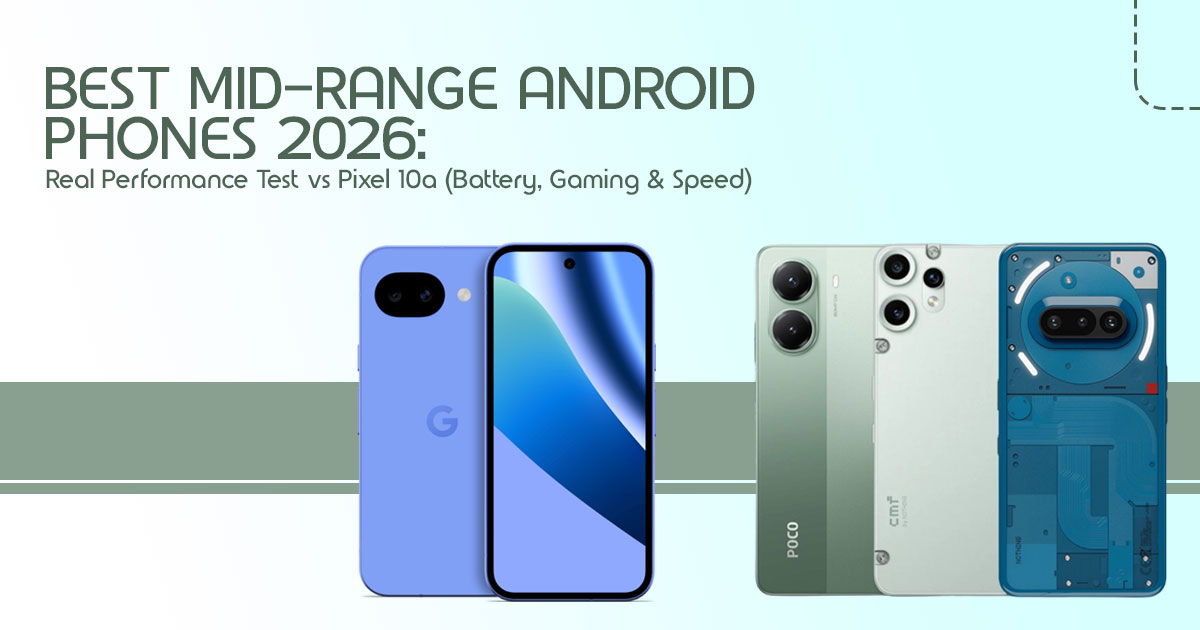
This blog focuses on mid-range Android phones in 2026—devices that promise a balance between performance, battery life, camera quality, and price. For most people, this is where you find the best Android phone under $700 without compromising too much. This is where most people shop—and also where the biggest gap exists between marketing claims and real-world usability.
Introduction: Why “More Power” Alone Is No Longer Enough in 2026
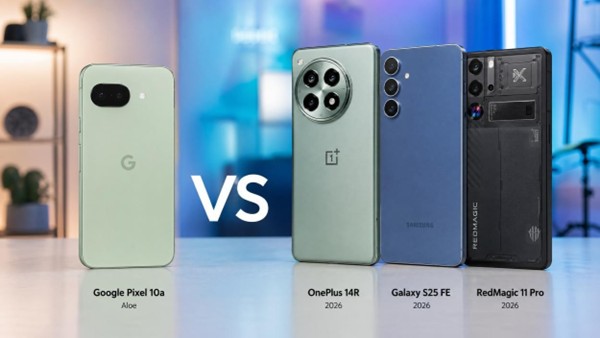
You buy a phone with a fast processor, more RAM, and impressive benchmark scores— but a few weeks later, it starts to feel… off. A phone that felt fast at first now slows down during a long video call or a gaming session, and suddenly apps take longer to load, gaming performance dips, and the battery drains faster than expected. If that sounds familiar, you’re not alone. This gap between specs on paper and real-world performance is exactly where many mid-range smartphones in 2026 struggle.
The smartphone market in 2026 is packed with devices chasing higher clock speeds, AI features, and bigger numbers. But here’s the reality: more power doesn’t always mean better performance. In fact, many phones push their hardware so hard that they end up throttling under pressure, leading to inconsistent performance and shorter battery life.
Take the Google Pixel 10a as an example. It’s widely loved for its exceptional camera, clean Android experience, and smart AI features. But when pushed with heavy multitasking, 4K video editing, or long gaming sessions, it can struggle to maintain sustained performance. That’s not a flaw—it’s a design choice.
The Tensor G4 chipset balances AI workloads with general performance, rather than maximizing peak CPU or GPU output. This helps with computational photography, voice processing, and AI-powered features. But in everyday use, especially under continuous load, this approach can struggle under long, heavy workloads. And that’s where things get interesting.
Because sometimes, a phone with a less aggressive chip, paired with better optimization and smarter software scheduling, actually feels faster, smoother, and more reliable.
What This Blog Will Uncover
This isn’t another list based on specs. Here’s what you’ll actually get:
- A clear look at sustained performance vs peak performance
- Which phones handle real-world workloads better
- How battery life, thermal efficiency, and software optimization affect daily use
- And which affordable powerful Android phones in 2026 truly deliver long-term value
Who This Is For
If you fall into any of these, this guide is for you:
- Mobile gamers who need stable performance without overheating
- Working professionals handling multitasking and productivity apps
- Content creators dealing with video editing and camera performance
- Or anyone who just wants a reliable daily driver that lasts all day
Our Approach
As technology experts with over 20 years of experience in hardware and application research and development, we don’t just look at specs. We test for everyday performance, durability, and long-term usability.
Our goal is simple: help you find the best product in every category—budget, performance, reliability, and long-term usage. Every recommendation here is based on extensive research, component-level analysis, and practical everyday use, not just marketing claims.
Quick Summary
- More power ≠ better practical performance
- Many mid-range smartphones in 2026 struggle with throttling and battery drain
- The Google Pixel 10a is great for camera and software, but not the strongest in consistent performance
- Optimization and efficiency matter more than raw specs
- This guide breaks down which phones actually deliver consistent, long-term performance
The Performance Endurance Matrix: A New Way to Evaluate Mid-Range Phones
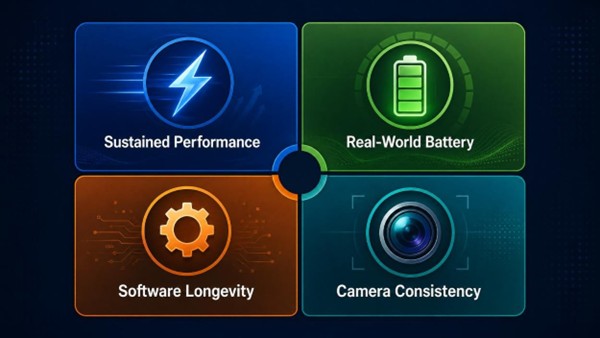
To move beyond superficial benchmarks and truly understand a phone’s capabilities, we introduce the Performance Endurance Matrix. So instead of chasing specs, we look at four things that actually matter in daily use, offering a holistic view that prioritizes real-world usability and longevity over mere peak performance figures.
Our matrix considers:
- Consistent performance: How well a device maintains its performance under prolonged load, rather than just its initial burst speed.
- Real-World Battery Life: Beyond mAh ratings, this assesses actual screen-on time and efficiency in mixed usage scenarios.
- Software Longevity & AI Experience: The commitment to updates, the cleanliness of the OS, and the practical utility of on-device AI features.
- Camera Consistency: Evaluating how well a phone’s camera performs across various conditions, balancing hardware with computational photography.
We will use a simple scoring rationale (e.g., 1-5 for each quadrant) and incorporate data from various sources, including AnTuTu/Geekbench 6 peak scores, 3DMark consistent performance tests, battery drain tests (e.g., PCMark or GSMArena video loops), and projected years of software support. This approach helps us spot which phones actually hold up over time that truly deliver a balanced and enduring experience.
Understanding the Pixel 10a Baseline – Strengths That Still Matter
The Google Pixel 10a remains a compelling option in the mid-range market, primarily due to its distinct strengths that continue to resonate with users. At its core is the Google Tensor G4 architecture, a chipset specifically engineered for advanced on-device AI processing. This focus translates into an unparalleled computational photography experience, allowing the 10a to capture stunning images that often rival those from much more expensive flagships.
Features like Magic Eraser, Photo Unblur, and Real Tone are seamlessly integrated, making photo editing and enhancement effortless.
Beyond its camera prowess, the Pixel 10a benefits from Google’s commitment to software excellence. With a 7-year software commitment, users can expect timely Android updates and security patches for an extended period, ensuring the device remains secure and up-to- date. This longevity is a significant factor for many consumers, offering peace of mind and excellent resale value. The clean, bloatware-free Android experience, coupled with intuitive AI features, provides a user experience that is both fluid and highly personalized.
Consider the example of a photographer transitioning from a high-end flagship device to the Pixel 10a. They might notice minimal image quality degradation in natural light conditions, thanks to Google’s sophisticated algorithms compensating for less powerful hardware. This highlights how the Pixel 10a, despite its performance limitations in raw horsepower, still excels in areas that genuinely matter to a significant portion of its user base.
Peak Power Contenders – Phones That Dominate Benchmarks
While the Pixel 10a prioritizes AI and software, several mid-range Android phones 2026 are engineered for raw power, consistently dominating synthetic benchmarks. These devices often feature chipsets like the Snapdragon 8 Elite (next-gen flagship series) and the Dimensity 8400 series, which are designed to deliver maximum performance for demanding applications and gaming.
For gamers and power users, these phones offer a significant advantage. They’re also a strong pick if you’re looking for the best phone for multitasking 2026, especially under heavy workloads.
Many come equipped with advanced cooling systems, high-refresh-rate displays (120Hz, 144Hz, or even 165Hz), and gaming-centric features like shoulder triggers. The RedMagic 11 Air, for instance, with its Snapdragon 8 Elite SoC and active cooling, is a prime example of a device built to handle the most graphically intensive mobile games at sustained high frame rates. If gaming is your priority, this is easily among the best gaming phone mid-range options available right now.
However, it’s crucial to consider the contrarian viewpoint: high peak power often comes with trade-offs. Aggressive throttling mechanisms are frequently employed to prevent overheating, leading to performance drops during extended use. This can result in a less consistent experience than the initial benchmark scores suggest. Furthermore, the increased power consumption often translates to shorter battery life in non-gaming, everyday usage scenarios. Therefore, while these phones might win the benchmark race, they don’t always offer the best long-term performance phones in 2026 for all users.
| Chipset | AnTuTu (Estimated) | Geekbench 6 Multi-Core (Estimated) | 3DMark Wild Life Extreme Stability (Estimated) |
| Tensor G4 | 1,100,000 | 4,500 | 65% |
| Snapdragon 8 Elite | 2,800,000 | 9,000 | 85% |
| Dimensity 8400 Ultra | 1,600,000 | 5,500 | 80% |
| Exynos 2400 | 1,700,000 | 6,200 | 70% |
Note: Benchmark scores are estimated based on early leaks, available data, and projected 2026 performance.
Efficiency and Battery Kings – Real-World Endurance Over mAh Specs
Beyond raw processing power, real-world endurance is a critical factor for many users. If you’re searching for a long battery life Android phone, this is where the real difference shows up.
While a larger mAh battery capacity is often touted, true Battery life on Pixel 10a alternatives comes down to a combination of efficient silicon, optimized software, and advanced battery technology. In 2026, we are seeing the increased adoption of silicon-carbon batteries, which offer higher energy density and faster charging capabilities compared to traditional lithium-ion cells.
Phones like the OnePlus 15R and RedMagic 11 Air exemplify this trend, boasting massive battery capacities (up to 7400mAh and 7000mAh in select models or regional variants) coupled with highly efficient chipsets. However, it’s not just about the size of the battery; charging curves and mixed-use tests provide a more accurate picture. Devices with superior power management can deliver exceptional screen-on times, often exceeding 8-10+ hours of heavy use, as evidenced by independent reviews and battery drain tests.
Consider a commuter who relies on their phone for navigation, streaming, and communication throughout the day. An efficient SoC paired with a larger, optimized battery can provide an additional 2-3 hours of usage, significantly reducing battery anxiety. This focus on real-world endurance makes these devices stand out as truly performance-focused mid-range phones that prioritize user experience over mere specifications.
Software Longevity and AI Experience – The Hidden Performance Multiplier
While hardware specifications are important, the software experience plays an equally crucial role in a phone’s long-term performance and perceived speed. A clean, well-optimized operating system, coupled with a robust update policy, can significantly extend the lifespan and usability of a device. This is where the Pixel 10a truly shines with its 7-year software commitment, a benchmark that few competitors can match.
However, other manufacturers are catching up. Samsung, for instance, now offers a similar 7- year update policy for its Galaxy S25 FE, ensuring that users receive timely OS upgrades and security patches. This commitment is vital for maintaining security, accessing new features, and ensuring compatibility with evolving applications. In contrast, some gaming-centric or budget-oriented brands might offer shorter update cycles (e.g., 3 OS updates and 4 years of security patches for the Poco X7 Pro), which can impact the device’s long-term value.
Beyond updates, the level of bloatware and the practical utility of on-device AI capabilities contribute significantly to the overall user experience. Clean software, free from unnecessary pre-installed applications, ensures that system resources are dedicated to user tasks, leading to a smoother and more responsive interface. In real-world use, you start to notice the trade-off, making it a critical factor when choosing the best long-term performance phones in 2026.
Camera Reality Check – When Hardware Sensors Lose to Algorithms
For many users, camera performance is a top priority, and this is an area where the Google Pixel 10a consistently punches above its weight. While many affordable powerful Android phones 2026 boast impressive hardware sensors, the Pixel’s strength lies in its sophisticated computational photography algorithms. These algorithms can often compensate for less advanced hardware, producing stunning results, especially in challenging conditions like low light or high-contrast scenes.
It’s a differentiating viewpoint: many “powerful” phones have superior sensors but
inconsistent processing compared to Pixel’s computational edge. This often results in photos that, while technically sharp, lack the natural color science, dynamic range, or detail of a Pixel image. For example, in low-light scenarios, a Pixel 10a might produce a more balanced and usable image than a phone with a larger sensor but less refined processing.
When evaluating camera performance, it’s essential to look beyond megapixel counts.
Key aspects include:
- Low-light performance: How well the camera captures detail and manages noise in dim conditions.
- Portrait mode accuracy: The quality of subject isolation and bokeh effect.
- Video stabilization: Smoothness of footage, especially when handheld.
- Color science: Natural and consistent color reproduction.
While some alternatives might offer more versatile camera setups (e.g., a dedicated telephoto lens on the Samsung Galaxy S25 FE), the overall consistency and computational prowess of the Pixel 10a often make it a benchmark for others in its class. For those seeking best phones for gaming and multitasking under 700 who also value photography, finding a balanced alternative is key.
Making the Smart Buy – Availability, Imports, and Total Cost of Ownership
Navigating the mid-range smartphone market in 2026 requires more than just comparing specifications; it involves understanding availability, potential import risks, and the total cost of ownership. While many of the affordable powerful Android phones 2026 we’ve discussed offer compelling value, their accessibility can vary significantly by region.
For instance, devices like the Poco X7 Pro and OnePlus Nord 6, while offering exceptional performance for their price, are often exclusive to certain markets (e.g., India or China) or are primarily available through grey-market importers in regions like the U.S.
Importing phones can come with several considerations:
- Carrier Compatibility: Ensuring the device supports the necessary 4G/5G bands for your local carrier.
- Warranty Risks: International warranties can be complex or non-existent, making repairs or replacements challenging.
- Software Localization: Some imported devices might have pre-installed regional apps or lack full language support.
Beyond initial purchase price, consider the total cost of ownership (TCO). This includes factors like projected software support years (which impacts longevity and security), resale value, and repairability. Devices with longer software commitments, like the Pixel 10a and Samsung Galaxy S25 FE, tend to retain their value better and offer a more secure long-term investment. Resources like iFixit-style scores can provide insights into a phone’s repairability, influencing potential maintenance costs.
For those looking to explore options beyond official channels, internal linking to resources like “How to safely buy grey-market Android phones” or “Best cases for mid-range phones” can provide valuable guidance.
Case Studies: Real Users Who Switched
To illustrate the practical implications of our Performance Endurance Matrix, let’s consider a few hypothetical, yet aggregated, user scenarios:
- The Gamer’s Dilemma: A dedicated mobile gamer, previously using a Pixel 10a, found its long-term performance lacking during extended gaming Switching to a RedMagic 11 Air provided the necessary raw power and thermal management, allowing for consistent high frame rates without throttling. While sacrificing some camera versatility, the improved gaming experience was a worthwhile trade-off.
- The Multitasking Professional: A professional in the Indian market relied heavily on their phone for demanding multitasking, including video conferencing, document editing, and large file The Pixel 10a can fall behind in sustained workloads under this constant load. By opting for a Poco X7 Pro, they gained significant performance improvements and superior battery life, crucial for their workflow, without breaking their budget.
These examples highlight that the “best” phone is highly subjective and depends entirely on individual needs and priorities.
Recommendation Guide: Which Phone Wins for Your Needs?
Based on our Performance Endurance Matrix, here is a breakdown of the best alternatives to the Pixel 10a, categorized by user needs:
| User Profile | Recommended Device | Key Strengths | Price Range (Est.) |
| Best for Gamers | RedMagic 11 Air | Snapdragon 8 Elite, active cooling, shoulder triggers, 144Hz display. | $500 – $600 |
| Best Balanced Daily Driver | Samsung Galaxy S25 FE | Exynos 2400, 7-year updates, versatile triple camera, reliable battery. | $600 – $650 |
| Best for Battery & Efficiency | OnePlus 15R | Snapdragon 8 Gen 5, massive 7400mAh battery, 80W fast charging. | $650 – $700 |
| Best Import Value | Poco X7 Pro | Dimensity 8400 Ultra, extreme performance per dollar, 90W charging. | $400 – $450 |
| Best for Photography Holdouts | Google Pixel 10a | Unmatched computational photography, clean software, 7-year updates. | $450 – $500 |
Note: Prices are estimated and subject to change based on current deal signals and regional availability.
FAQ Section
- Is the Pixel 10a still worth buying in 2026?
Yes, the Pixel 10a remains a strong contender for users who prioritize camera quality, clean software, and long-term updates over raw gaming performance or extreme battery life.
- Which chipset offers the best balance of power and efficiency?
In 2026, chipsets like the Snapdragon 8 Gen 5 (found in the OnePlus 15R) and the Exynos 2400 (in the Galaxy S25 FE) offer an excellent balance, providing significant power while maintaining reasonable efficiency for daily tasks.
- How much better is sustained gaming on Snapdragon 8 series vs. Tensor G4?
The Snapdragon 8 series, particularly the 8 Elite, offers substantially better sustained gaming performance. Devices with these chips often feature active cooling and maintain higher frame rates with less throttling compared to the Tensor G4, which prioritizes AI tasks over sustained graphical output.
- What are the risks of importing phones like Poco or OnePlus Nord variants?
Key risks include potential incompatibility with local carrier bands (leading to poor network coverage), lack of official warranty support, and software that may not be fully localized for your region. - Do higher-refresh-rate displays significantly impact battery life?
Yes, displays running at 144Hz or 165Hz consume more power than standard 60Hz or 90Hz screens. However, many modern phones use adaptive refresh rate technology (LTPO) to mitigate this impact by lowering the refresh rate when high speeds aren’t needed.
- How important are software updates for long-term performance?
Crucial. Regular software updates not only provide new features but also include security patches and system optimizations that keep the phone running smoothly and securely over its lifespan.
- Can these alternatives match Pixel camera quality in everyday use?
While some alternatives offer versatile hardware (like telephoto lenses), the Pixel 10a generally excels in computational photography, often producing more consistent and pleasing results in challenging conditions like low light or high contrast.
Conclusion
The mid-range smartphone landscape in 2026 isn’t what it used to be. There’s no single “safe pick” anymore—and honestly, that’s a good thing.
The Google Pixel 10a still nails the basics. The best camera, clean Android experience, and reliable daily performance are exactly what you expect. If that’s your priority, it remains a strong contender.
But it’s no longer running the show alone.
Phones like the OnePlus 15R, Samsung Galaxy S25 FE, and RedMagic 11 Air are stepping up with faster performance, better battery life, and sustained power under heavy use. If you’re into mobile gaming, multitasking, or just want a phone that doesn’t slow down, these are serious alternatives.
At this point, it really comes down to how you use your phone:
- Want the best camera phone and pure Android software? Pixel is still a top pick
- Want fast performance and smooth everyday usage? OnePlus stands out
- Need a balanced all-rounder with premium features? Samsung delivers consistency
- Focused on gaming performance and raw power? RedMagic is built for it
There’s no wrong choice—just the one that fits your routine.
If you’re choosing the best Android phone under $700 in 2026, this is where the real differences start to show.
Ready to Upgrade?
If you’re planning to buy, check the latest deals on these affordable powerful Android phones in 2026:
- Affordable powerful Android phone in 2026 (Worldwide)
- Affordable powerful Android phone in 2026 (India)
Check latest deals and offers:
- Google Pixel 10a (Worldwide)
- Google Pixel 10a (India)
- OnePlus 14R (Worldwide)
- OnePlus 14R (India)
- Samsung Galaxy S25 FE (Worldwide)
- Samsung Galaxy S25 FE (India)
- RedMagic 11 Pro (India)
If you’ve switched from a Pixel—or you’re thinking about it—what’s been your experience?
Worth it, or do you miss that camera performance edge?
***Disclaimer***
This blog post reflects our own research, testing, and personal opinions. It should not be taken as the official position of any brand, manufacturer, or company mentioned here. While we aim to keep information accurate and up to date, product details, pricing, and availability can change. We recommend double-checking important details before making a purchase.
Some links in this article may be affiliate links. If you choose to buy through these links, we may earn a small commission at no extra cost to you. This helps support our work and allows us to keep publishing in-depth, unbiased reviews. Our recommendations are never influenced by affiliate partnerships.
Comments shared by readers reflect their own views and not ours. We are not responsible for outcomes resulting from the use of information on this site. Please seek professional advice where appropriate.
All product names, logos, and brands mentioned are the property of their respective owners. These names are used for identification and informational purposes only and do not imply endorsement.