
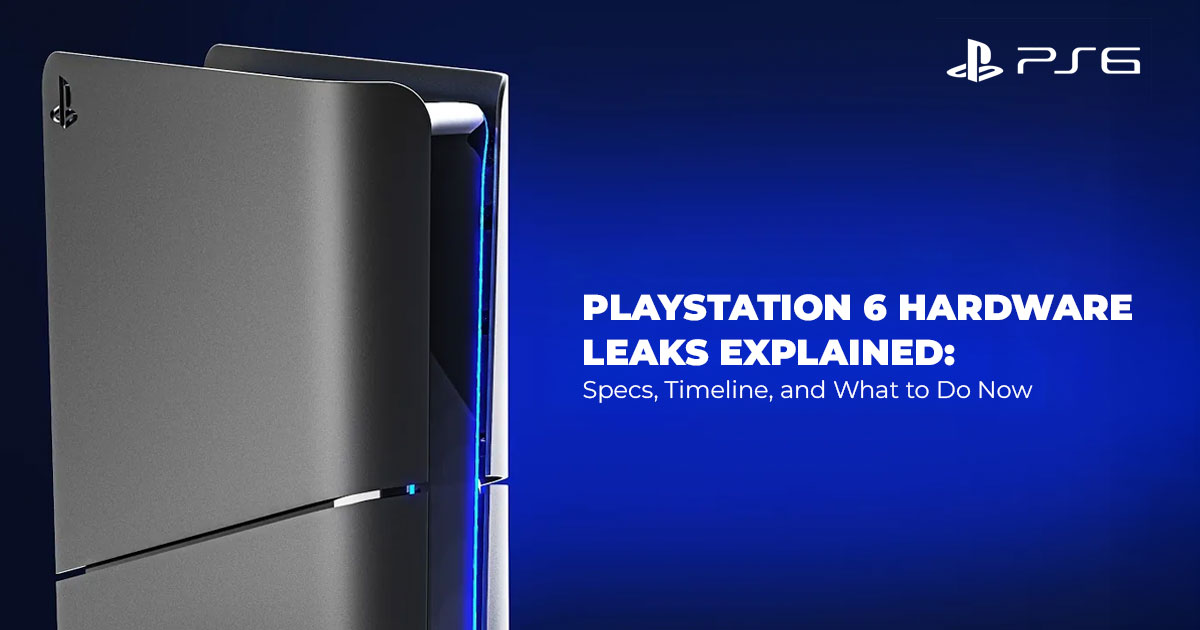
- PlayStation 6 specs are reportedly finalized, and PS6 chip production has begun
- This signals real progress toward launch, not early speculation
- We explain performance impact, upgrade value, and long-term relevance
Written for parents, everyday gamers, and users who care about reliability and smooth gameplay
Buy from Amazon now
Buy on Amazon Worldwide | Buy on Amazon India
1. Introduction
Most gamers don’t complain about graphics first—they complain when games stutter, lag, or take forever to load. That moment when performance breaks immersion is what pushes people to think about upgrading. And that’s why the PlayStation 6 already matters to so many users, even before an official launch date.
As of early 2026, multiple reports suggest that PlayStation 6 specifications are finalized and PS6 chip production has moved into early trial manufacturing. This stage is important because it shows Sony isn’t experimenting anymore—it’s building. For parents planning a future-proof console purchase, competitive gamers who care about stable 4K performance, and everyday players tired of frame drops in demanding titles, this is the point where real decisions begin.
People searching for PS6 specs, PS6 release timeline, or PlayStation 6 hardware aren’t looking for hype. They want clarity. They want to know whether the next console will actually fix today’s problems—slow loads, inconsistent frame rates, and systems that feel outdated too quickly.
This article explains what the current PlayStation 6 specs, production milestones, and hardware choices actually mean for everyday use—whether upgrading makes sense, what improvements are realistic, and what questions still don’t have clear answers. If you’re deciding whether to wait, upgrade, or stick with what you have, this breakdown is built for you.
That’s where informed analysis matters.
Our analysis is grounded in over 20 years of hands-on experience with hardware and software platforms. We focus on real-world performance, reliability, and long-term value—not just headline specs—so readers can make confident upgrade decisions.
Short on time? If your current PS5 is already struggling with newer games and you want a smooth experience today, the PlayStation 5 Pro is a practical upgrade you can buy right now— without waiting for the PS6.
- Amazon US: Buy PS5 Pro
- Amazon India: Buy PS5 Pro
2. Technical Specifications at a Glance
Leaks give a solid look at the PS6 specs, centered on an AMD “Orion” chip that’s all about balance: power without the heat or noise of high-end PCs.
Families get reliable performance for kids’ games; enthusiasts love the ray tracing jumps. Here’s how it lines up:
|
Feature |
PS5 |
PS5 Pro |
PS6 (PlayStation 6 hardware — rumored specifications) |
|
CPU |
8x Zen 2 @ 3.5GHz |
8x Zen 2 @ 3.85GHz |
Expected Zen 6-based design (core layout still
unconfirmed) |
|
GPU |
36 RDNA 2 CUs @ 2.23GHz (10 TFLOPS) |
60 RDNA 3/3.5 CUs (16-33 TFLOPS) |
Next-generation RDNA architecture (commonly referred to as RDNA 5 in
leaks) |
|
Memory |
16GB GDDR6 |
16GB GDDR6 + 2GB DDR5 |
Higher-capacity memory widely rumored to move beyond GDDR6 (often
cited as GDDR7) |
| Process Node | 7nm/6nm | 5nm/6nm | TSMC 3nm |
|
Storage |
825GB SSD |
2TB SSD |
Next-gen SSD
(expandable, faster loads) |
| Power Draw | 200W | 200-250W | ~160W (cooler, quieter
for long sessions) |
| Key Performance |
4K 60FPS |
4K 60FPS+ w/ PSSR |
4K 120FPS, 8K upscaled w/ AI, best console for
ray tracing |
These PlayStation 6 specifications mean lifelike shadows in games like future GTA or sports titles—huge for immersive play without PC hassles.
- Summary: PS6 crushes PS5 in efficiency and visuals—perfect for 4K gaming families or ray tracing fans.
3. Why This Review Is Essential
You hear “PS6 chip manufacturing starts” and think: Time to sell my PS5? Not so fast. With AI eating up RAM supplies, costs could climb, delaying your upgrade. We explain PlayStation 6 performance impacts for budget buyers (save on trades), parents (kid-friendly backward compat), and pros (stable 120FPS). In a world of $2,000 PCs and handhelds, the PS6 console keeps high- end gaming simple and shared.
4. What You Will Learn from This Review
- How PS6 hardware details boost everyday gaming.
- PlayStation 6 vs PS5—real upgrades for your library.
- PS6 release date risks from supply issues.
- Should I wait for PS6? Tailored advice.
- PlayStation 6 backward compatibility perks.
- PS6 expected price and buy-now tips
Key Takeaway: Get ahead on PlayStation 6 news to avoid regrets.
5. Quick Take: PlayStation 6 Specs, Release Timeline, and What Matters Most
- Widely reported: PlayStation 6 specs appear to be internally approved, with early chip production reportedly beginning around January 2026.
- Rumored: 34–40 TFLOPS, Zen 6 CPU, PlayStation 6 GPU with advanced ray tracing
- PS6 release timeline: Late 2027 or early 2028 (possible delay to 2029)
- Why people care: PS6 backward compatibility with PS5 and PS4, plus AI-assisted gaming features for sharper 4K and 8K output
For mobile readers: If your base PS5 struggles in newer games, the PS5 Pro makes sense now. If it runs fine, waiting for the PS6 console is smarter.
6. Why PlayStation 6 Matters in the Next Console Cycle
Sony consoles regularly cross 100 million sales per generation because they balance power with ease. PS4 made large open worlds normal. PS5 removed loading waits with fast SSDs.
The next-generation PlayStation console arrives during a major shift: handheld growth, PC gaming driven by AI hardware, and tighter component supply worldwide. Families want a system that works without tuning. Solo players want deeper immersion without frame drops.
Rising competition for RAM and advanced chips may affect PlayStation 6 cost, timing, and availability. These early hardware choices will shape how long the console stays competitive.
- Key takeaway: The PS6 gaming console is designed to deliver strong performance without adding complexity.
7. Confirmed PlayStation 6 Details: Hardware Specs and Chip Production Status
Sony PS6 development has passed a key checkpoint. PlayStation 6 hardware specs are approved, and early PS6 chip fabrication is underway.
This stage moves the project from planning to validation. Testing follows. Developer kits come next. Public reveals usually arrive later.
Past launches show a pattern: once silicon testing begins, consoles reach shelves in 18–24 months.
- Key takeaway: This is real progress, not early speculation.
Buy from Amazon now
Buy on Amazon Worldwide | Buy on Amazon India
8. Rumored PS6 Specs Explained
People searching for PS6 specs aren’t looking for raw numbers alone. They want to know how the PlayStation 6 CPU, PlayStation 6 GPU, memory, and storage choices affect real gameplay. This section explains the rumored PS6 specs in plain terms—how they improve frame stability, ray tracing, loading times, and long-term performance compared to PS5 and current consoles.
8.1 PlayStation 6 CPU and GPU Performance
- CPU: Expected Zen 6 cores improve stability in large worlds and AI-heavy games
- GPU: New RDNA architecture with stronger ray tracing support
This matters for strategy games, crowded cities, and action titles where frame drops break gameplay.
8.2 PS6 Performance Targets: 4K, 120 FPS, and Ray Tracing
- 4K at 120 FPS as a realistic target
- 8K output using AI upscaling
- Estimated 3× raster performance and up to 12× ray tracing gains
This makes the PlayStation 6 a strong candidate for the best console for ray tracing without heavy performance loss.
8.3 Memory, Storage, and I/O Improvements
- GDDR7 memory bandwidth for large worlds
- Faster SSD storage with near-instant loading
- Expandable storage for growing game libraries
Key takeaway: PlayStation 6 specs explained focus on smooth gameplay, not peak numbers.
9. Ray Tracing on PlayStation 6: A Simple Explanation
Ray tracing follows how light behaves in real life. Reflections move naturally. Shadows respond to objects. Light passes through leaves and windows as expected.
Earlier consoles used shortcuts. Reflections stayed flat. Shadows looked sharp and artificial.
With the PlayStation 6 GPU, ray tracing runs at full speed. No sudden slowdowns. No setting tweaks.
This beneffts all players:
- Racing fans see real reflections
- Sports games show accurate stadium lighting
- Horror games use shadows for tension
Key takeaway: Ray tracing becomes standard, not optional.
10. PlayStation 6 in Context: PS6 vs PS5 and PS6 vs PC
Comparisons help buyers decide whether to upgrade, wait, or stick with what they own. This section places the PlayStation 6 next to the PS5, next-generation Xbox, and gaming PCs, focusing on real-world performance, power efficiency, cost, and ease of use—so readers can quickly see where PS6 delivers the most value.
10.1 PS6 vs PS5: Real-World Gains
| Area | PS5 Everyday Use | PS6 Benefits |
| Raster Performance | 4K with dips | 3× smoother gameplay |
| Ray Tracing | Limited | 6–12× improvement |
| Noise & Power | Louder fans | Quieter, efficient design |
Your existing PS5 library benefits from better stability and visuals.
10.2 PlayStation 6 vs Xbox Next Generation vs Gaming PC
| Platform | TFLOPS | Ray Tracing | Estimated Cost |
| PS6 | 34–40 | High | $500–600 |
| Next Xbox | 40+ | Similar | $600+ |
| Gaming PC | 50+ | Best | $1,500+ |
PlayStation 6 vs gaming PC: Consoles remain simpler and cheaper for most households.
11. Beyond Specs: PlayStation 6 Features That Matter
- PS6 backward compatibility for PS5 and PS4
- AI upscaling improves older games
- Rumored handheld integration for travel play
These features protect your existing library and future purchases.
12. PS6 Release Timeline and Production Milestones
| Milestone | Expected Timing |
| Specs Approved | Late 2025 |
| PS6 chip production | Jan 2026 |
| Developer Kits | Mid-2026 |
| Mass Production | Mid-2027 |
| PS6 release date | Late 2027 or 2028 |
Supply pressure from AI hardware could delay the launch or raise the PS6 launch price.
13. What PlayStation 6 Architecture Means for Developers
Locked hardware lets studios focus on ray tracing, physics, and AI systems sooner. Shorter optimization cycles mean PS6-focused games arrive earlier in the generation.
14. What This Means for Gamers Right Now
- Base PS5 owners: PS5 Pro helps today
- PS5 Pro owners: Waiting makes sense
- Budget buyers: Plan for PlayStation 6 price later
- Families: Backward compatibility avoids rebuying games
Key takeaway: The PS5 Pro helps bridge the gap today, while the PS6 represents the next real leap forward.
15. Common PS6 Misconceptions
- “PS6 specs leaks are final” → Adjustments still happen
- “PS6 pre-orders soon” → Launch remains years away
15.1 Clearing Common Doubts About PlayStation 6
Before people decide whether to wait, upgrade, or ignore the noise, they usually want straight answers to a few practical questions. This section clears up the most searched PlayStation 6 questions—covering PS6 backward compatibility, PlayStation 6 price expectations, possible PS6 handheld rumors, and whether delays are realistic—so readers know what’s confirmed, what’s likely, and what still depends on supply and timing.
Q. Will PS6 play my PS5 games?
- Yes. Current reports point to full PS6 backward compatibility with PS5 and PS4 games. That means your existing library should work without patches or repurchases, making the PlayStation 6 console a safer long-term upgrade for families and collectors.
Q. What will the PlayStation 6 price be at launch?
- Most industry estimates place the PlayStation 6 price between $500 and $700, depending on storage options and global component costs. Factors like advanced memory and chip supply could push pricing toward the higher end, especially at launch.
Q. Is there a handheld PlayStation 6 model coming?
- A dockable PS6 handheld, often referred to by the rumored name “Canis,” has been discussed in leaks. If it materializes, it would likely stream or share games with the main PS6 system, rather than replace it.
Q. Could the PS6 release be delayed?
- A delay is possible. High demand for advanced RAM and AI-focused components across the tech industry could affect the PS6 release timeline, potentially shifting launch windows or impacting early availability rather than canceling plans outright.
Buy from Amazon now
Buy on Amazon Worldwide | Buy on Amazon India
16. FAQ — Quick Answers (Snippet-Friendly)
Q. Will PS6 support 8K gaming?
- Yes. The PlayStation 6 is expected to support 8K output using AI upscaling, delivering sharper visuals on large TVs rather than native 8K rendering.
Q. PS6 vs PS5 Pro — is it worth waiting?
- If you need better performance now, the PS5 Pro makes sense. If you want a bigger leap, the
PS6 offers major gains in ray tracing performance, stability, and long-term value.
Q. Will PS6 have full backward compatibility?
- Yes. PS6 backward compatibility should cover PS5 and PS4 games natively, with older generations likely available through cloud streaming.
Q. Could the PlayStation 6 cost more than expected?
- Possibly. Demand for AI-grade RAM and advanced chips may increase the PlayStation 6 price, especially during the launch period.
17. Conclusion — What We Know, What We Don’t, and How to Plan Ahead
Here’s where things stand. The signals around the PlayStation 6 are no longer vague. Reports indicate that PlayStation 6 specifications have reached internal approval stages, with early PS6 chip production reportedly underway. That puts Sony past the idea stage and firmly into execution. From a technology standpoint, this points to a console built for long-term relevance—strong ray tracing, stable performance, and backward compatibility that protects your game library.
What’s still unclear is just as important. The final PlayStation 6 price hasn’t been locked, and rumored additions like a dockable handheld remain unconfirmed. Component supply—especially advanced memory used across AI and gaming—could influence both cost and timing. Mid-2026 should be the window where many of these unknowns start to settle.
- Final key takeaway: The PS6 console is shaping up to be the most capable PlayStation yet. Whether it becomes the best PlayStation console ever will depend on pricing discipline and how smoothly Sony handles launch supply. Planning now gives you flexibility later.
If you’re looking for a reliable upgrade right now—without waiting years—the PlayStation 5 Pro is the most sensible step. It delivers smoother performance today while still fitting neatly into the PS6 transition.
- Amazon US: Buy PS5 Pro
- Amazon India: Buy PS5 Pro
If you’re exploring alternatives, high-end gaming PCs offer raw power at a higher cost, while current-gen consoles remain a value choice if performance needs are modest.
Thinking of upgrading, waiting, or switching platforms? Share your thoughts, your setup, or your upgrade story below. And if you need help deciding what fits your budget and play style, we’re here to help.
***Disclaimer***
This blog post contains unique insights and personal opinions. As such, it should not be interpreted as the official stance of any companies, manufacturers, or other entities we mention or with whom we are affiliated. While we strive for accuracy, information is subject to change. Always verify details independently before making decisions based on our content.
Comments reflect the opinions of their respective authors and not those of our team. We are not liable for any consequences resulting from the use of the information provided. Please seek professional advice where necessary.
Note: All product names, logos, and brands mentioned are the property of their respective owners. Any company, product, or service names used in our articles are for identification and educational purposes only. The use of these names, logos, and brands does not imply endorsement.