
Prices and availability checked 14 September 2026. All figures are in Indian rupees (₹) for the Indian market unless stated otherwise.
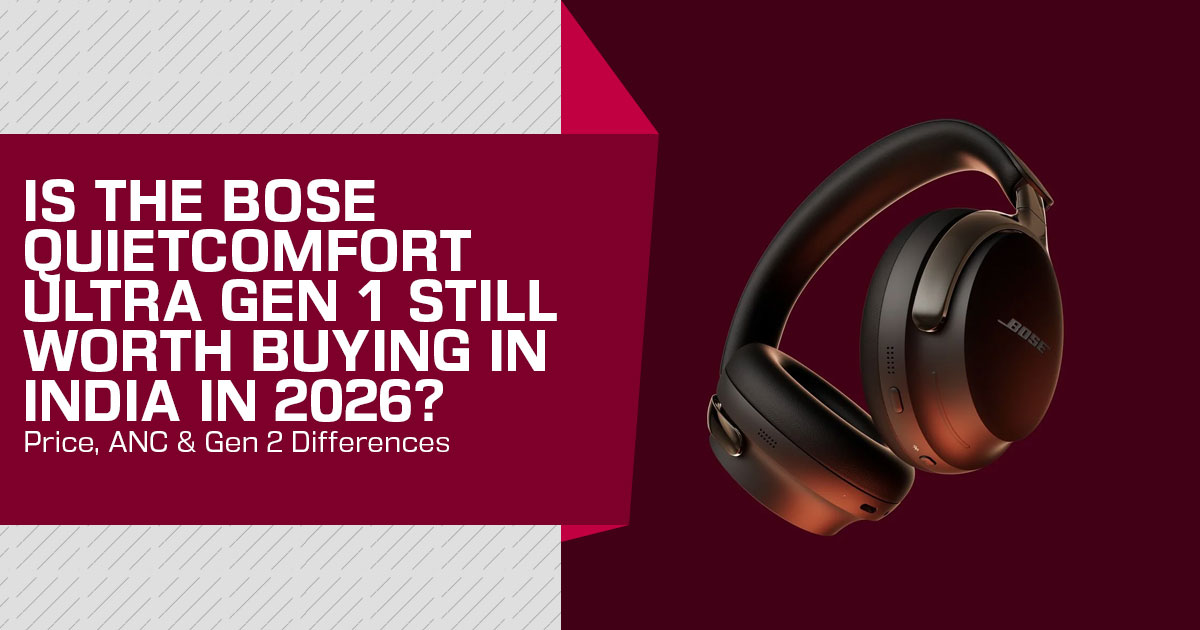
This Bose QuietComfort Ultra Headphones review covers the first-generation model, with the second-generation Bose QuietComfort Ultra Headphones used as the main point of comparison. The question is simple: now that Bose has released a newer version, does the first-generation model still make sense for an Indian buyer?
The question matters because of the price difference between the two generations. The first-generation Bose QuietComfort Ultra Headphones carry an MRP of ₹35,900. At the time of checking, the model was listed at ₹35,900 on Amazon.in, while the second-generation model was listed at ₹49,900. Recent price tracking shows the first generation has fallen to around ₹30,900 during earlier 2026 promotions, with even lower short-term prices recorded. That makes the timing of your purchase important: the first generation is easier to recommend when it is well below its MRP.
This review is aimed at Indian buyers considering the first-generation Bose QuietComfort Ultra, especially those who travel frequently, commute, work in noisy environments, take calls, listen to music for long periods, or want premium noise cancellation without overspending. It is also useful for anyone deciding whether to buy the first generation at its lower price or pay substantially more for the second generation.
As technology experts with over 20 years of experience in hardware and application research and development, we deeply analyze each product based on real-world performance, durability, and value for money. Our goal is to help you find the best product in every category—budget, performance, reliability, and long-term usage. Our recommendations are based on extensive research, component analysis, real-world usability, and industry expertise.
We have not bench-tested either generation ourselves. This is a research-led review of the first-generation model, supported by Bose’s official product documentation and support pages, published
third-party measurements, retailer and price-tracking data, and a broad reading of owner reports. We also examine the second-generation model where its changes, pricing, or features affect the value of buying the first generation. Where reviewers disagree, we say so rather than choosing the more flattering figure.
So, this is not a full two-generation review or a simple specification comparison. The first-generation Bose QuietComfort Ultra is the product being reviewed, while the second generation provides the context needed to answer the buying question: is it worth paying more for the newer model, or can the first generation give you nearly everything you need for considerably less?
A note on naming. Bose’s official product name is QuietComfort Ultra Headphones, and Bose reused that name for both generations. Retailer listings use longer titles — “Bose New QuietComfort Ultra Wireless Noise Cancelling Headphones” for the 2023 model and “New Bose QuietComfort Ultra Bluetooth Headphones (2nd Gen)” for the 2025 model. This article uses Bose’s form and states the generation wherever the distinction matters.
Bose QuietComfort Ultra Headphones: Product Overview
The QuietComfort Ultra Headphones are Bose’s flagship over-ear noise cancelling headphones, launched in late 2023 at $429 in the US. They replaced the Noise Cancelling Headphones 700 at the top of the range and introduced two features Bose had not previously shipped in an over-ear model: Bose Immersive Audio, the company’s spatial audio system, and CustomTune, which measures how each ear responds and adjusts the sound to compensate.
Three characteristics define the product:
- Adjustable active noise cancellation with Quiet, Aware, and Immersion listening modes
- Immersive Audio in Still and Motion variants, which processes stereo content so it appears to come from speakers in front of the listener rather than from inside the headphones
- Comfort, which is the attribute most consistently praised across the review sets we examined
It is worth stating what this product is not. It is not a sports product — Bose lists no ingress protection rating. It is not a tuning enthusiast’s product — the app offers a three-band EQ. And while it takes calls competently, published assessments generally place its microphone performance behind the Sony WH-1000XM6.
Two Generations, One Name: Bose QuietComfort Ultra Gen 1 vs Gen 2
Because Bose reused the name, listings for both generations appear side by side in India, often without identifying which is which. The comparison below uses Bose’s published figures and the spec sheets that track them.
| Attribute | 1st Gen (2023) | 2nd Gen (2025; India March 2026) |
|---|---|---|
| Battery Life with ANC On | Up to 24 hours | Up to 30 hours |
| Battery Life with Immersive Audio On | Up to 18 hours | Approximately 23 hours |
| Battery Life with ANC Off | Not offered | Up to 45 hours |
| Bluetooth | Bluetooth 5.3 | Bluetooth 5.4 |
| USB-C Audio | Not supported | Supported — 16-bit at 44.1 or 48kHz; current firmware also supports 24-bit/48kHz |
| Analogue Input | 2.5mm jack | 2.5mm jack |
| Immersive Audio Modes | Still, Motion | Still, Motion, and Cinema Mode |
| ANC Fully Off | Adjustable, but cannot be completely switched off | Yes — ANC can be completely disabled through the app |
| Quick Charge | 15 minutes provides approximately 2.5 hours of playback | 15 minutes provides approximately 3 hours of playback |
| Weight | Approximately 253g | Approximately 260g according to Bose; 265g in one independent measurement |
| India Price | MRP ₹35,900; recent listed prices have been lower | Listed at ₹49,900 on Amazon India |
How to tell them apart in a listing: the battery rating is the quickest indicator. 24 hours indicates the first generation; 30 hours indicates the second. Listings mentioning Cinema Mode or USB-C audio are describing the newer model.
At the current listed price of ₹35,900, the first generation is ₹14,000 cheaper than the second generation. For a buyer who mainly listens wirelessly, that makes the first generation the closer value. If you find it around ₹30,000 or below, the value case becomes stronger. The second generation’s additions — longer rated battery life, USB-C audio, Cinema Mode, and the ability to switch ANC fully off — are useful, but they matter most to buyers who will actually use those features.
Bose QuietComfort Ultra Headphones Specifications
Figures below are Bose’s published specifications for the first-generation model, with measured values noted where they differ.
| Specification | Details |
|---|---|
| Type | Over-ear, circumaural design with a folding mechanism |
| Battery Life | Up to 24 hours with ANC enabled; up to 18 hours with Immersive Audio |
| Charging | USB-C; approximately 3 hours for a full charge |
| Quick Charge | A 15-minute charge provides up to approximately 2.5 hours of listening |
| Bluetooth | Bluetooth 5.3 with multipoint connectivity for up to two devices |
| Bluetooth Codecs | SBC, AAC, and aptX Adaptive with Snapdragon Sound support |
| LDAC | Not supported |
| Wired Listening | 2.5mm analogue audio jack; USB-C audio playback is not supported |
| Listening Modes | Quiet, Aware, and Immersion, plus support for up to seven custom modes |
| Microphones | Beamforming microphone array designed for focused voice pickup |
| Dimensions | 195 × 139 × 50.8mm |
| Weight | Approximately 253g (around 252–254g measured) |
| Ingress Protection | No official IP rating |
| Battery Serviceability | Internal battery is not user-replaceable |
| Launch Colors | Black and White Smoke |
Sound Quality and Bose Immersive Audio
The Bose QuietComfort Ultra sound signature is warm and bass-forward with a mild V-shape — lifted low end, slightly restrained midrange, and smooth treble. Most reviewers describe it as good out of the box, and several note that it improves once the app’s EQ is used to pull the bass back.
Two things matter here for a buyer.
The three-band EQ limits how far you can adjust. Bose gives control over bass, midrange, and treble, and nothing more. Sony provides a multi-band EQ on the WH-1000XM6, and the difference is audible to anyone who likes to shape their own sound.
Bose Immersive Audio divides reviewers more than any other feature. It is Bose’s implementation of spatial audio — a processing layer that takes ordinary stereo content and makes it appear to come from speakers in front of the listener rather than from inside the headphones. Still mode anchors that image in space; Motion mode lets it follow head movement. Bose’s implementation works with any source, so streamed music receives the same treatment as locally stored files.
The disagreement is genuine rather than a matter of taste at the margins. Many reviewers call it one of the better spatial implementations available and describe it as expansive. Measurement-focused reviewers hear processing artefacts, phase shifts as the head moves, and a thinner presentation, and they leave it switched off. Our reading is that it is worth trying and pleasant on some recordings, but it is not a reason to buy these headphones, and it costs six hours of rated battery when active. Treat it as an optional mode.
CustomTune receives less attention and is arguably the more useful feature. During setup, the headphones play a tone and measure how each ear responds, then adjust the output to compensate. Because left and right ears can respond differently, this helps the headphones deliver a more consistent sound profile from one listener to another.
Noise Cancellation and Listening Modes
Active noise cancellation is where the QuietComfort Ultra earns its reputation, and it is the main reason the model appears in shortlists of noise cancelling headphones at this price. Across the review sets we examined, the ANC is consistently rated at or near the top of the category.
The comparison with the Sony WH-1000XM6 is closer than a simple winner-loser claim suggests. Independent tests put both near the top for noise cancellation, but the result varies with the test method and type of noise. SoundGuys measured very strong isolation from the Bose, while RTINGS currently gives the Sony a slight overall edge. In practical use, both are strong choices for offices, cafés, public transport, and flights, so fit and comfort can matter as much as small measurement differences.
Three listening modes are available:
- Quiet — maximum noise cancellation with standard stereo audio
- Aware — full transparency, with ActiveSense automatically damping sudden loud noises such as a passing train
- Immersion — maximum noise cancellation with Immersive Audio active
Levels are adjustable rather than binary, which helps if full cancellation produces the pressure sensation some owners report. One limitation: published reports indicate that on this first-generation model ANC can be lowered but not switched fully off. The second generation added the ability to disable it.
A minority of owners report a faint hiss in very quiet rooms and a pressure or popping sensation during sudden pressure changes. These reports are not universal, but they recur often enough to note.
Design, Comfort and Build Quality
Comfort is the QuietComfort Ultra’s strongest attribute, and it is the one most often cited by owners who chose it over the Sony. At about 253 g, with a moderate clamping force and deep earcups, the design suits long sessions. Reviewers who wear glasses generally report a good seal, though thick frames reduce isolation on any over-ear design.
The trade-off is material. The headphone is largely plastic, and opinion splits on whether that feels like sensible weight-saving or less premium than expected at this price. Long-term owner reports mention earpad wear and occasional creaking. The earcups are removable, and replacement cushions are available, which can help extend usable life.
There is no published IP rating, so do not treat these headphones as water- or sweat-resistant. They are not the right choice for training in wet conditions.
One control detail matters in daily use: operation combines a physical button with a capacitive volume strip on the earcup. Owners are divided — some find it precise, others fiddly, particularly the absence of a dedicated track-skip control.
Bose QuietComfort Ultra Battery Life and Charging
Bose QuietComfort Ultra battery life is rated at up to 24 hours with ANC on, falling to up to 18 hours with Immersive Audio active. A full charge takes about three hours, and 15 minutes on the cable returns roughly 2.5 hours of playback.
| Usage Pattern | Rated Figure |
|---|---|
| ANC on, standard stereo | Up to 24 hours |
| ANC on, Immersive Audio | Up to 18 hours |
| 15-minute quick charge | Up to 2.5 hours of playback |
| Full charge | Approximately 3 hours |
What this means for a buyer: 24 hours covers a full working week of commute-plus-office use and many long-haul flights. It is not enough to leave the charger behind on a week-long trip.
This is also the clearest gap against competitors. The Sennheiser MOMENTUM 4 Wireless is rated at 60 hours and the Sony WH-1000XM6 at 30 hours (40 hours with ANC off). For anyone without a charging routine, that gap will be noticeable.
Two further points. The battery is not user-replaceable, so long-term battery service becomes an ownership consideration. Several reviews also note that this generation does not support passive playback, meaning the headphones will not run over the analogue cable once the battery is flat; the second generation added USB-C audio and can be used while charging.
Connectivity, Codecs and Multipoint
The QuietComfort Ultra runs Bluetooth 5.3 with multipoint, staying connected to a laptop and a phone at once and handing over when a call arrives. For anyone working across two devices, multipoint is the most useful of the connectivity features here, and reviewers consistently describe its implementation as reliable.
Codec support is SBC, AAC, and aptX Adaptive through Qualcomm’s Snapdragon Sound:
- iPhone users get AAC, which is the highest-quality option iOS offers for Bluetooth audio
- Android users with a Snapdragon Sound handset get aptX Adaptive
- LDAC is not supported, so Sony holds an advantage for high-resolution wireless audio on Android
Google Fast Pair is supported for quicker Android setup. Bose had said at launch that LE Audio and the LC3 codec were planned for a future update, but the current first-generation firmware history does not list an LE Audio/LC3 release. Do not treat that promised update as a buying reason today.
Wired listening runs through a 2.5 mm analogue jack with an included 3.5 mm cable. Two limits apply: the microphones do not operate over the analogue cable, and there is no USB-C audio input on this generation. Buyers who want to plug into a laptop for lower-latency or lossless playback need the second generation.
Bose Music App, EQ and Software
The Bose Music app handles mode selection, EQ, firmware updates, shortcut configuration, and multipoint device management. It is generally described as clean and stable rather than overloaded.
Its limits are worth knowing before buying:
- Three-band EQ only (bass, midrange, treble), with no frequency labels
- Up to seven custom modes combining noise control and Immersive Audio settings
- Shortcut assignment for the action button
One software item is worth flagging on the second-generation model. Firmware 8.2.20, released in February 2026, changed the voice prompts and removed shortcuts for checking battery level and switching between paired Bluetooth devices. SoundGuys reported that Bose did not plan to restore the earlier controls. Later firmware added further features, including LE Audio beta support, but the episode is a useful reminder that software can change how a headphone behaves after purchase. This applies to the newer model, not the first generation reviewed here.
Call and Microphone Quality for Work From Home
The Bose QuietComfort Ultra Headphones use a beamform microphone array intended to separate voice from surrounding noise. Bose describes this as delivering clear voice pickup for calls and voice assistants.
Independent assessments land in a consistent place: call quality is good rather than class-leading. In quiet indoor environments — a home office or meeting room — callers report clear speech. In noisy environments, background sound bleeds through and voice quality drops.
For work from home use, that gives a practical recommendation. In a quiet room these headphones are well suited, and comfort over long shifts is a genuine strength. For calls taken from cafés, shared spaces, or while commuting, the Sony WH-1000XM6 handles voice better, and across the reviews we examined that difference is consistent rather than marginal.
Bose QuietComfort Ultra Pros and Cons
| What Works | What to Weigh Up |
|---|---|
| ✔ Noise cancellation is consistently rated at or near the top of the premium headphone category. | ✖ 24-hour battery life trails alternatives such as Sony at around 30 hours and Sennheiser at up to 60 hours. |
| ✔ Excellent long-session comfort, with fit and padding regarded among the strongest in its class. | ✖ The three-band EQ offers relatively limited sound customization for headphones in this price range. |
| ✔ Warm and engaging sound tuning works well across a broad range of music genres. | ✖ No LDAC support for higher-resolution Bluetooth audio on compatible Android devices. |
| ✔ Reliable Bluetooth multipoint connectivity supports two devices simultaneously. | ✖ This generation does not support USB-C audio input. |
| ✔ Aware Mode with ActiveSense dynamically handles sudden or unusually loud environmental sounds. | ✖ No official IP ingress-protection rating for water or dust resistance. |
| ✔ Immersive Audio can add a greater sense of scale and spaciousness to suitable recordings. | ✖ Immersive Audio is subjective and reduces rated battery life by approximately six hours. |
| ✔ CustomTune automatically adjusts audio performance to the listener’s individual ear characteristics. | ✖ The internal battery is not user-replaceable. |
| ✔ The headphones fold flat for easier travel, and replacement ear cushions are available. | ✖ Some owners report an ANC pressure sensation or faint background hiss, although individual experiences vary. |
Bose QuietComfort Ultra vs Sony WH-1000XM6 vs Sennheiser MOMENTUM 4 Wireless
All three are over-ear wireless ANC headphones sold in India. Prices below were checked on 14 September 2026 and are listed prices, not guaranteed offers.
| Feature | Bose QuietComfort Ultra (1st Gen) | Sony WH-1000XM6 | Sennheiser MOMENTUM 4 Wireless |
|---|---|---|---|
| India Price | MRP ₹35,900; ₹35,900 at the latest check, with recent Amazon promotions reaching ₹30,900 | ₹37,989 on Amazon.in; ₹39,990 through Sony and Croma; MRP ₹49,990 | ₹22,990–₹26,990 depending on colorway; MRP ₹34,990 |
| Battery Life (ANC On) | Up to 24 hours | Up to 30 hours; up to 40 hours with ANC off | Up to 60 hours |
| Bluetooth | Bluetooth 5.3 | Bluetooth 5.3 | Bluetooth 5.2 |
| Hi-Res Wireless Codec | aptX Adaptive | LDAC, LC3 | aptX, aptX Adaptive |
| USB-C Audio | No | No | Yes |
| EQ | Three-band EQ | Multi-band EQ | App-based EQ through Sennheiser Smart Control |
| Microphones | Beamforming microphone array | 12 microphones | Four digital beamforming microphones |
| Call Quality | Good overall, but can fall behind the Sony in noisy environments | Generally delivers particularly strong voice isolation in challenging environments | Good overall, with effective wind-noise suppression |
| Comfort | Frequently praised for long-session comfort | Good | Good |
| ANC Character | Strong active noise cancellation; measured results vary between independent tests | Strong active noise cancellation, with some independent testing measuring an advantage in certain conditions | Effective active noise cancellation, though independent measurements vary by test methodology |
| Ingress Protection | Not rated | Not rated | Not rated |
How to choose. Choose the Bose QuietComfort Ultra if quiet and long-session comfort are the priorities and listening is mostly wireless. Choose the Sony WH-1000XM6 if call quality, LDAC on Android, or a more neutral and tunable sound matters more. Choose the Sennheiser MOMENTUM 4 Wireless if battery life is the deciding factor — it currently undercuts both on price while offering 60 rated hours and USB-C audio.
Cheaper Alternatives to the Bose QuietComfort Ultra in India
For buyers whose budget sits below ₹30,000, these are the models worth shortlisting. Prices are listed in ₹ for India, checked 14 September 2026.
| Model | Listed Price | Why It Appears Here |
|---|---|---|
| Bose QuietComfort Headphones (Non-Ultra) | From ₹21,339 on Amazon.in | Delivers Bose’s signature ANC and long-wearing comfort at a lower price, without the Ultra model’s Immersive Audio feature. |
| Sony ULT Wear (WH-ULT900N) | Around ₹14,989 | Combines strong ANC and bass-focused sound at roughly half the price of the premium Bose Ultra model. |
| Sennheiser ACCENTUM Wireless | ₹12,990 (MRP ₹14,990) | Offers an official 50-hour battery rating along with SBC, AAC, aptX, and aptX HD codec support. |
| JBL Live 770NC | Around ₹11,999 | A feature-rich budget ANC alternative for buyers who want wireless noise cancellation without premium-tier pricing. |
| CMF Headphone Pro | ₹7,949, often available at a discount | Provides LDAC support, long rated battery life, and a 3.5mm wired connection at a substantially lower price. |
The honest summary: below about ₹15,000, you can still get good ANC and long battery life, but you generally give up some of the QuietComfort Ultra’s comfort, ANC refinement, or premium feel. For occasional use, that can be a sensible trade. For someone wearing headphones for many hours a day, the difference in comfort can matter.
Bose QuietComfort Ultra Price in India and Where to Buy
| Product | MRP | Listed Price in India | Notes |
|---|---|---|---|
| Bose QuietComfort Ultra, 1st Gen | ₹35,900 | ₹35,900 at the latest check; recent Amazon promotions dropped the price to ₹30,900. | Black color availability varies. The tracked 2026 low was approximately ₹22,817. |
| Bose QuietComfort Ultra, 2nd Gen | ₹49,900 | ₹49,900 on Amazon India | Launched in India in March 2026. |
Two things follow from that table. First, Bose QuietComfort Ultra price movement is substantial — tracked data for 2026 shows the first generation moving between roughly ₹22,817 and ₹35,900, so the price on any given day is worth checking against recent history before buying. Second, availability varies by colourway, so confirm the exact colour and seller before ordering.
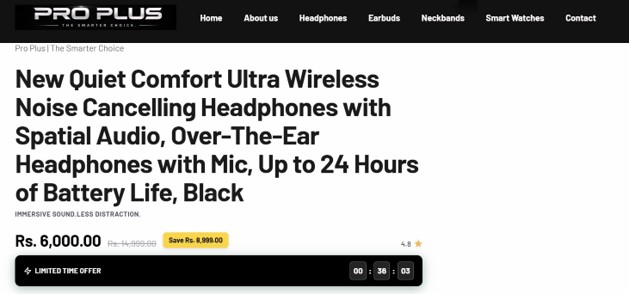
A note on unusually low prices. These headphones also appear on smaller Indian deal sites at figures well outside that range — the listing that prompted this guide shows them at ₹6,000. The lowest new-unit price we found in price-tracking data was ₹22,817. A gap that large does not by itself prove a listing is dishonest. Sellers clear stock, and refurbished, open-box, and imported units can trade below new retail. It does mean a buyer should treat such a listing as one that needs checking before payment.
How to Check if Bose QuietComfort Ultra Headphones Are Original
Counterfeit risk is a real concern when buying premium headphones through an unfamiliar seller, but search suggestions are not proof of how common counterfeits are. Bose’s own guidance says the safest route is to buy directly from Bose or an authorised dealer. If you are buying elsewhere, use the checks below to reduce the risk and protect yourself if the product is not as described.
- Match the serial number on the product and the A mismatch, or a missing serial number where one should be present, is a warning sign — but it is not proof of a counterfeit on its own.
- Pair the headphones with the official Bose app. A genuine unit should be recognised by name, show the correct model, and offer the expected firmware If the app does not recognise the product correctly, stop and verify it with Bose before assuming it is fake.
- Run a firmware update if one is Genuine hardware is supported through the Bose app, making this a useful check. A failed update can have other causes, so treat it as a warning sign rather than final proof.
- Confirm that CustomTune and Immersive Audio are If expected features are missing, verify the model, firmware, and Bose app before drawing a conclusion.
- Test the noise cancellation. Put the headphones on in a noisy room with no audio Weak or absent cancellation is a warning sign, but it is not enough by itself to prove a fake because fit, settings, and hardware condition also affect ANC.
- Inspect the Compare font weight, seam quality, hinge movement, and cushion material against images on Bose’s official site. Counterfeits usually give themselves away here.
- Check the weight. Genuine first-generation units are around 250–253 g depending on the source and measurement method. A large deviation is worth questioning, but weight alone should not be used to authenticate a pair.
- Ask for a proper invoice showing the seller’s name and address, and get the warranty terms in writing before paying.
- Use cash on delivery where offered, and record an unboxing video. These steps can give you useful evidence if the product is not as described, but they do not guarantee authenticity.
- Sanity-check the price. A current flagship Bose listed far below the recent verified market range needs an If the seller cannot explain the price and provide clear product and warranty details, walk away.
Whichever channel you use, confirm the return window and the warranty route before ordering rather than after.
Who Should Buy the Bose QuietComfort Ultra Headphones
Worth shortlisting if you:
- Work in a noisy office or commute daily and want strong cancellation
- Wear headphones for long stretches and value comfort over feature count
- Listen mainly over Bluetooth on iOS or a Snapdragon Sound Android phone
- Want flagship ANC at ₹35,900 rather than ₹49,900, with the option to wait for a discount
Consider alternatives if you:
- Take frequent calls in noisy environments — the Sony WH-1000XM6 handles calls better
- Want high-resolution wireless audio on Android — there is no LDAC here
- Need to go a week without charging — the Sennheiser MOMENTUM 4 Wireless is rated at 60 hours
- Want to shape your own sound signature
- Need water resistance for training — there is no IP rating
Frequently Asked Questions
Is the Bose QuietComfort Ultra worth it in 2026?
At around ₹35,900, the first-generation model remains a reasonable purchase for buyers prioritising quiet and comfort, but the value case is much stronger when it is discounted closer to ₹30,000. It is a weaker fit for buyers whose priorities are call quality, battery endurance, USB-C audio, or detailed EQ control.
How long does the Bose QuietComfort Ultra battery last?
Bose rates it at up to 24 hours with ANC on and up to 18 hours with Immersive Audio active. A full charge takes about three hours, and a 15-minute charge returns roughly 2.5 hours of playback.
What is the difference between QuietComfort Ultra Gen 1 and Gen 2?
The second generation raises rated battery life from 24 to 30 hours, moves to Bluetooth 5.4, adds USB-C audio, introduces Cinema Mode, and allows ANC to be switched off completely. Its February 2026 firmware added 24-bit/48kHz lossless USB-C audio, and a September 2026 update added LE Audio beta support. Bose kept the product name nearly identical, so the battery rating in a listing remains one of the quickest ways to tell the generations apart.
Do Bose QuietComfort Ultra headphones have a microphone for calls?
Yes. They use a beamform microphone array and perform well for calls in quiet rooms. In noisy environments, published assessments generally rate the Sony WH-1000XM6 ahead of them.
Can the Bose QuietComfort Ultra Headphones be used wired?
Yes, through the 2.5 mm analogue jack using the included 3.5 mm cable. Two limits apply: the microphones do not operate over the analogue cable, and there is no USB-C audio on this generation. Several reviews also note that the headphones will not play over the cable once the battery is flat.
Are Bose QuietComfort Ultra headphones good for work from home?
They suit work from home well for focus and music, and comfort over long shifts is a genuine strength. For meetings in a quiet room they perform well. If calls routinely happen against background noise, the Sony WH-1000XM6 is the more suitable choice.
How Can You Check if Bose Headphones Are Original?
Match the serial number on the product against the box, pair the headphones with the official Bose app to confirm model recognition and firmware updates, verify that CustomTune and Immersive Audio are present, and test the noise cancellation in a noisy room with no audio playing.
Final Verdict: Is the Bose QuietComfort Ultra Worth It?
The Bose QuietComfort Ultra Headphones still do two things to a high standard: they block noise, and they remain comfortable over long sessions. Both strengths hold up against current competition in India. At ₹35,900, the first generation is ₹14,000 cheaper than the second; at a sale price near ₹30,000, the value argument becomes stronger.
The compromises are equally clear. The 24-hour battery life sits behind both Sony and Sennheiser. The three-band EQ is limited at this price. The absence of LDAC, USB-C audio on the first generation, and any published ingress protection rating are real omissions in 2026. Call quality is good rather than excellent. The battery is not user-replaceable, which makes long-term battery service an ownership consideration.
Our assessment: for buyers whose priorities are quiet and comfort, the first generation remains a sensible premium over-ear choice, especially when discounted. It is not the better buy for everyone. If you care most about call quality, battery endurance, USB-C audio, or deeper sound control, the Sony WH-1000XM6 or Sennheiser MOMENTUM 4 Wireless may suit you better. The second generation makes more sense when its newer features are worth the extra ₹14,000 at current list prices.
Where to Buy: Amazon US, Amazon India and Current Offers
Prices move frequently. Check the figure at checkout rather than relying on any number in this article.
Amazon India
- Bose QuietComfort Ultra Headphones (1st Gen), Black — MRP ₹35,900. Availability varies by colourway, so confirm the listing before ordering.
Check the current price on Amazon.in
- Bose QuietComfort Ultra Headphones (2nd Gen), Black — listed at ₹49,900 at the time of
Check the current price on Amazon.in
Amazon US
- Bose QuietComfort Ultra Headphones (1st Gen), Black — launched at $429 and frequently discounted since.
Check the current price on Amazon.com
- Bose QuietComfort Ultra Headphones (2nd Gen) — launched at $449.
Check the current price on Amazon.com
A lower-priced listing, with a caution
The listing that prompted this guide offers the Bose QuietComfort Ultra Headphones at ₹6,000. That sits well below the lowest new-unit price we found in price-tracking data, ₹22,817, so it is worth treating as an offer to verify rather than a bargain to rush.
View the listing and check the current price
Before ordering from any listing at this level, work through the ten checks in the authentication section above, confirm the return window, and get the warranty terms in writing.
After weighing sound, noise cancellation, comfort, battery life, connectivity, pricing, and the risks of buying from an unfamiliar seller, the answer is fairly clear: the first-generation Bose QuietComfort Ultra still makes sense in India, but the price you pay matters. At the current ₹35,900 list price, you save
₹14,000 versus the second generation. At a genuine discount near ₹30,000, the savings rise to roughly ₹20,000, making the first generation much easier to recommend.
If you own the first-generation Bose QuietComfort Ultra or have tried the second-generation model, we would like to hear what you think. Share your experience or questions in the comments—especially if you are trying to decide between the two generations. If you have a doubt about sound quality, noise cancellation, comfort, battery life, calls, pricing, or long-term use, ask us in the comments and we will do our best to help. Follow us for more honest, research-based product reviews and buying advice.
Disclaimer

This blog post reflects our research, analysis, and opinions based on available product information, user feedback, and industry knowledge. It should not be taken as the official position of any brand, manufacturer, or company mentioned here. We make every effort to keep this guide accurate, but product specifications, pricing, and availability may change after publication. We recommend double-checking important details before making a purchase.

Some links in this article may be affiliate links. If you choose to buy through these links, we may earn a small commission at no extra cost to you. This helps support our work and allows us to keep publishing in-depth, unbiased reviews. Affiliate partnerships never influence our recommendations.

Opinions expressed by readers are their own and do not necessarily reflect ours. We are not responsible for outcomes resulting from the use of information on this site. Please seek professional advice where appropriate.

All product names, logos, and brands mentioned are the property of their respective owners. These names are used for identification and informational purposes only and do not imply endorsement.