
Introduction
AI hardware costs are getting out of control. Companies want to run larger AI models, serve more users, and deploy faster inference systems, but there’s a problem: modern AI GPUs are becoming painfully expensive to buy, cool, and maintain. Many data centers now face rising power bills, limited rack space, and expensive liquid-cooling upgrades just to keep up with modern AI workloads.
Click here to buy from Amazon
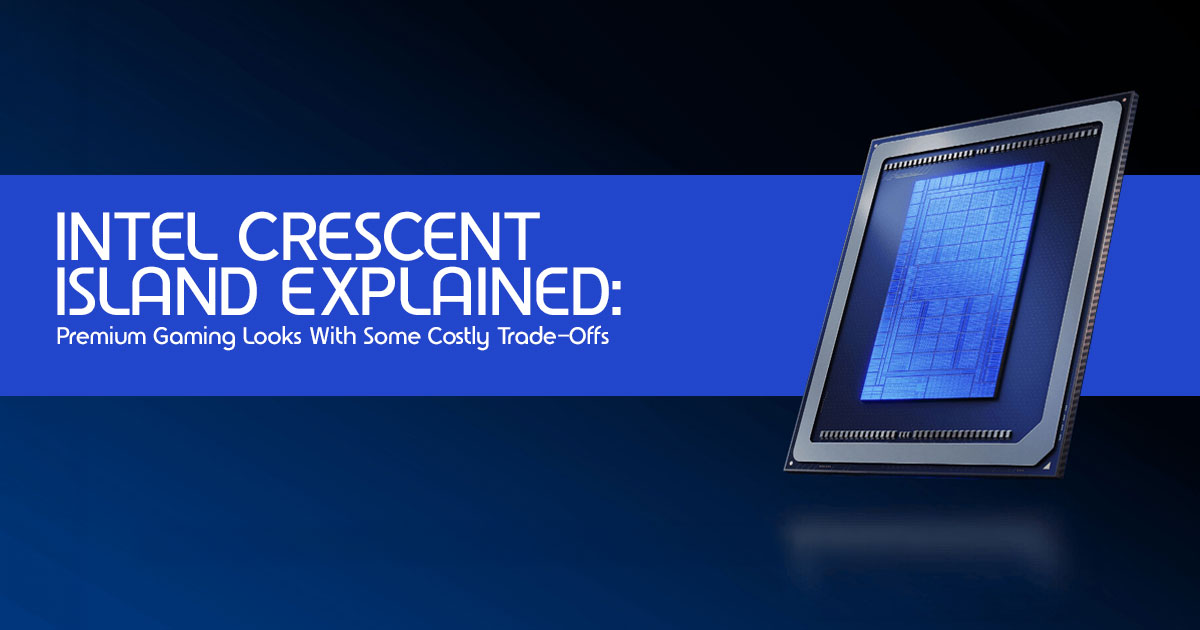
That’s where Intel Crescent Island enters the conversation with a very different approach.
Instead of chasing the same “more power at any cost” strategy used by many high-end AI accelerators, Intel appears to be focusing on something most businesses actually need: practical AI deployment at scale. The biggest surprise is Intel’s decision to skip expensive HBM memory and use LPDDR5X memory instead. That move could lower costs, simplify cooling, and make AI server infrastructure easier to deploy in standard air-cooled AI servers.
And that changes the discussion completely.
This is not a gaming GPU. It’s designed more like an AI data center GPU built for businesses that need stable performance, lower operating costs, and easier deployment.
For businesses struggling with:
- rising AI server costs,
- HBM supply shortages,
- power-hungry AI hardware,
- or expensive liquid-cooling systems,
Intel’s strategy may feel more realistic than what the industry has been pushing lately.
Quick Summary
- Intel Crescent Island is an upcoming AI inference accelerator focused on efficiency, deployment scale, and lower infrastructure costs.
- Intel is replacing costly HBM memory with LPDDR5X-9600 memory.
- The GPU is expected to deliver around 5 TB/s of GPU memory bandwidth while fitting into standard air-cooled servers.
- Instead of targeting extreme AI training workloads, Intel appears focused on affordable, scalable enterprise AI infrastructure.
- This could appeal to:
- AI startups,
- companies handling private AI deployment,
- private LLM hosting providers,
- and businesses running internal AI tools.
- The real story is not just raw It’s whether Intel can make large-scale AI deployment cheaper, easier, and more practical.
Why This AI GPU Matters Right Now
The AI industry has been stuck in a cycle where every new accelerator becomes:
- more expensive,
- harder to cool,
- and more difficult to deploy at scale.
That works for giant cloud providers with billion-dollar budgets. But many companies simply cannot afford to redesign their infrastructure around massive liquid-cooled GPU clusters.
Intel’s approach introduces a new perspective:
What if the future of AI hardware is not about building the fastest GPU possible, but building one that businesses can actually deploy in large numbers?
And that’s why people are paying attention to the Intel Crescent Island AI GPU.
Product Category Overview
The enterprise AI hardware market has become one of the most competitive areas in modern computing. Companies like Intel, NVIDIA, and AMD are racing to build hardware capable of handling:
- AI inference,
- large language models,
- enterprise AI deployment,
- cloud AI services,
- and data center acceleration.
Most modern AI GPUs rely on expensive HBM memory because it delivers extremely high bandwidth. But HBM also increases:
- hardware pricing,
- power consumption,
- cooling requirements,
- and supply-chain pressure.
Intel’s use of LPDDR5X memory could make AI servers cheaper, more power-efficient, and easier to scale for real-world deployment.
Why Real-World Analysis Matters More Than Marketing Claims
AI hardware launches often focus on:
- peak bandwidth,
- benchmark numbers,
- theoretical performance,
- and marketing
But those numbers rarely explain what businesses actually experience after deployment. Real-world performance depends on:
- cooling efficiency,
- power draw,
- software optimization,
- deployment costs,
- long-term reliability,
- and total operating expenses.
That’s why detailed analysis matters more than launch headlines.
As technology experts with over 20 years of experience in hardware and application research and development, we deeply analyze each product based on real-world performance, durability, and value for money. Our goal is to help you find the best product in every category—budget, performance, reliability, and long-term usage.
Whether you are:
- an AI startup founder,
- enterprise IT buyer,
- cloud infrastructure planner,
- machine learning engineer,
- data center operator,
- or simply following the future of AI GPUs,
our recommendations are based on extensive research, component analysis, real-world usability, and industry expertise.
In this article, we’ll uncover:
- why Intel is avoiding HBM memory,
- what 5 TB/s bandwidth really means,
- whether LPDDR5X AI accelerators can compete seriously,
- how this affects enterprise AI deployment,
- and who should actually consider hardware like Crescent Island when it Because this GPU may represent something bigger than another product release.
It may signal a shift in how the AI industry thinks about performance, scalability, and cost.
Technical Specifications at a Glance
| Feature | Specification |
| Architecture | Xe3P GPU architecture |
| Memory Capacity | 160GB to 480GB |
| Memory Type | LPDDR5X memory |
| Target Workload | AI inference |
| Cooling Requirement | Air-cooled optimized infrastructure |
| Bandwidth | ~1.5 TB/s |
The High Cost of the AI Race
Running AI at scale is becoming increasingly expensive. We see AI hardware costs exploding every month. NVIDIA is winning because everyone else is trying to copy their expensive, liquid-cooled formula. But Intel is finally doing something different.
With the Intel Crescent Island, they aren’t trying to build the most powerful supercomputer chip ever. They’re trying to build the one companies can actually afford to deploy in their data centers today. It’s a strategic move to lower AI infrastructure costs for everyone, not just the tech giants.
"Instead of chasing the most powerful AI GPU ever built, Intel may be building the one companies can actually afford to deploy at scale."
1. What Intel Crescent Island Actually Is
1.1 Crescent Island Is Not Built for Gamers — And That Matters
If you’re looking for a card to play the latest games, this isn’t it. Intel Crescent Island is a dedicated AI GPU built on the Xe3P GPU architecture. It’s designed primarily for AI inference workloads.
Why does that matter? Because while training a model takes massive power once, running that model (inference) happens billions of times. For most businesses, the cost of running the model is what actually shows up on the balance sheet.
Comparison: Training vs. Inference
| Feature | Training GPUs | Inference GPUs |
| Goal | Building and training AI models | Running and serving trained AI models |
| Power Design | Massive compute systems that are often liquid-cooled | Efficiency-focused architectures optimized for deployment scale |
| Cost Structure | “Blank check” infrastructure spending for maximum performance | Deployment-focused spending aimed at scalability and operational efficiency |
The gap most people miss is “inference economics.” Most enterprise workloads benefit more from efficiency and scalability than extreme peak performance.
Click here to buy from Amazon
2. The Biggest Story Nobody Is Explaining Properly
2.1 Why Intel Is Avoiding HBM Memory Entirely
NVIDIA and AMD are in a “memory war,” fighting over HBM memory (High Bandwidth Memory). HBM is fast, but it’s also the reason why AI chips are so hard to find and so expensive. There’s a global shortage, and the prices are through the roof.
Intel’s choice to use LPDDR5X memory isn’t a sign of weakness—it’s a supply-chain masterstroke. By using LPDDR5X memory technology already common in modern laptops and high-efficiency systems, Intel may also avoid some of the supply problems currently affecting HBM memory.
The Practical Upside:
- Lower Costs: LPDDR5X is significantly cheaper than HBM.
- Reliable Supply: You won’t have to wait 12 months for a shipment.
- Easier Cooling: It runs cooler, which is why air-cooled AI servers are back on the table.
If you’re a CTO looking to deploy 500 servers, you care more about having a predictable supply and a manageable power bill than a benchmark win you’ll never actually see in production.
3. Understanding the 1.5 TB/s Bandwidth Claim
3.1 Is 1.5 TB/s Actually Fast Enough for Modern AI?
In simple terms: GPU memory bandwidth works like the width of a pipe. The wider the pipe, the more data can move through it at once. Intel is claiming 1.5 TB/s, which is lower than NVIDIA’s top-tier chips, but here’s why that’s okay.
Memory Bandwidth Comparison
| GPU | Memory Type | Approx Bandwidth |
| Intel Crescent Island | LPDDR5X | ~1.5 TB/s |
| NVIDIA H200 | HBM3 | ~4.8 TB/s |
| AMD MI350 | HBM3E | ~5.0+ TB/s |
The Real-World Reality: Most enterprise AI tasks don’t actually need 5 TB/s. If you’re running a chatbot or a customer service AI, 1.5 TB/s is plenty. It’s like having a 10-lane highway when you only have 4 lanes of traffic. Why pay for the extra 6 lanes? For AI inference, the cost-per-token is what wins, not the peak bandwidth.
4. The Real Innovation Might Be Air Cooling
4.1 Why Air-Cooled AI Servers Matter
Liquid cooling can be expensive and difficult for many IT departments to deploy at scale. It’s messy, expensive to maintain, and requires retrofitting your entire data center. Intel Crescent Island is designed to work with air-cooled AI servers.
This could give mid-sized businesses a simpler way to expand AI infrastructure without major cooling upgrades. For businesses running on-prem AI servers, that simplicity matters. You can install these in existing racks without redesigning the entire cooling system. When you factor in the money saved on data center cooling, the “slower” chip often becomes the much smarter financial choice.
5. Huge Memory Capacity: Intel’s Secret Weapon
5.1 Why 480GB Matters More Than Speed
Modern AI models are getting bigger. They don’t just need speed; they need space. If a model doesn’t fit in the GPU memory (VRAM), it slows to a crawl. Intel is offering versions with up to 480GB of memory.
This means you can run massive models—or many smaller ones at the same time—on a single AI GPU. For a startup or a research lab, being able to fit a whole model on one card instead of splitting it across four NVIDIA cards is a massive win for both simplicity and cost.
6. Intel vs NVIDIA vs AMD: The Real Battlefield
6.1 Intel Is Not Trying to Beat NVIDIA Everywhere
We need to stop comparing these like they’re in the same race. NVIDIA still leads the market when it comes to raw AI performance. Intel is aiming for the “Efficiency and Scale” category.
| Feature | Intel Crescent Island | NVIDIA H200 / Blackwell Series | AMD Instinct MI350 Series |
| Primary Focus | AI inference efficiency | Maximum AI performance | Enterprise AI acceleration |
| Target Market | Cost-conscious enterprise AI deployments | Hyperscalers and frontier AI labs | Enterprise and cloud AI providers |
| Memory Type | LPDDR5X memory | HBM3 / HBM3E | HBM3E |
| Estimated Memory Capacity | 160GB–480GB | Up to 192GB+ | Up to 288GB+ |
| GPU Memory Bandwidth | ~1.5 TB/s | Up to ~8 TB/s | Up to ~5+ TB/s |
| Cooling Design | Air-cooled AI servers | Often liquid-cooled | Mixed cooling approaches |
| Power Consumption | Expected to be lower | Extremely high | High |
| AI Training Performance | Moderate | Industry-leading | High-end enterprise performance |
| AI Inference Performance | Optimized for scalable enterprise inference | Extremely powerful | Strong enterprise inference capability |
| Deployment Complexity | Easier integration into existing data centers | Complex infrastructure requirements | Moderate deployment complexity |
| Best Use Case | Private AI deployment, enterprise inference, and on-prem AI servers | Massive AI model training clusters | Large-scale enterprise AI infrastructure |
| Supply Chain Advantage | Avoids heavy dependence on HBM supply | Limited by HBM supply constraints | Also affected by HBM availability |
| Infrastructure Cost | Lower | Very expensive | Expensive |
| Enterprise Appeal | Cost-efficient AI hardware | Premium AI infrastructure | Enterprise-focused AI servers |
| Software Ecosystem | Growing ecosystem | CUDA ecosystem dominance | ROCm ecosystem steadily improving |
| Who It’s Best For | Businesses scaling AI affordably | Elite AI labs and hyperscalers | Enterprises balancing performance and cost |
Quick Takeaways
Intel Crescent Island
Best for companies that want:
- air-cooled AI servers,
- simpler deployment,
- lower operating costs,
- and scalable AI server infrastructure without rebuilding data centers.
NVIDIA
Still dominates:
- ultra-large AI training,
- cutting-edge AI research,
- and maximum raw performance.
But the cost and infrastructure requirements are extremely high.
AMD
Sits in the middle:
- strong enterprise AI performance,
- improving software ecosystem,
- and growing adoption in cloud AI
Intel may not lead in raw speed, but it could become one of the most practical options for businesses looking for cost-efficient AI hardware.
7. The Risks Intel Still Faces
7.1 Where Crescent Island Could Struggle
Intel still faces major challenges in the AI market. NVIDIA’s CUDA software is the industry standard. Most AI developers know it by heart. Intel’s software ecosystem is getting better, but it’s not there yet.
If your team is 100% reliant on CUDA-specific tools, switching to Intel Crescent Island will take some work. There’s also the “trust factor”—Intel needs to prove they can support these chips for the long haul.
Click here to buy from Amazon
8. Who Should Actually Care?
8.1 This GPU Is Probably Not for Everyone
Best Fit Users:
- Enterprise AI teams running production models.
- Cost-conscious data centers in the US.
- Startups hosting their own private LLMs.
- Companies that hate the complexity of liquid cooling.
Probably Not Ideal For:
- Research labs training the next “GPT-5.”
- High-frequency trading or ultra-low latency needs.
9. The Bigger Industry Shift
9.1 A New Direction for AI Hardware
The AI hardware market is starting to split into different categories. We’re moving away from one-size-fits-all chips. We think the future is “ultra-premium” for training and “affordable-scale” for deployment. Intel Crescent Island is the first real flag planted in that second camp. The next war won’t be about who is fastest—it’ll be about who is most deployable.
10. Expected Release & Market Impact
Based on current reports, Intel expects customer sampling in the second half of 2026. This means we’ll likely see these in US data centers by late 2026 or early 2027. If you’re planning your 2027 infrastructure budget now, keep an eye on the benchmarks.
FAQ: Your Questions Answered
Q: What is Intel Crescent Island?
A: It’s a specialized AI GPU built for AI inference, focusing on low cost and air-cooled efficiency.
Q: Is it better than NVIDIA?
A: It’s better for your wallet and your power bill if you’re running inference. It is not “faster” for training massive models.
Q: Why use LPDDR5X?
A: To avoid the HBM memory shortage and keep the price down.
Key Takeaways
- Intel Crescent Island targets AI inference, not training.
- It uses LPDDR5X memory to stay affordable and available.
- Designed for air-cooled AI servers, saving on data center costs.
- Memory capacity up to 480GB allows for huge models on a budget.
- Crescent Island could become a practical option for private AI deployment and enterprise AI inference workloads.
Final Verdict
Intel might finally be betting on the future that most companies actually need. The cost of modern AI infrastructure is rising so fast that many companies are now looking for simpler and more affordable alternatives. If Intel can deliver a chip that is “practical over powerful,” they might just win the enterprise AI market.
Shop AI GPUs and Enterprise Hardware on Amazon
Have questions about your AI setup? Drop a comment below or reach out—we’d love to hear how you’re handling the high cost of hardware!
***Disclaimer***
This blog post reflects our research, analysis, and opinions based on available product information, user feedback, and industry knowledge. It should not be taken as the official position of any brand, manufacturer, or company mentioned here. While we aim to keep information accurate and up to date, product details, pricing, and availability can change. We recommend double-checking important details before making a purchase.
Some links in this article may be affiliate links. If you choose to buy through these links, we may earn a small commission at no extra cost to you. This helps support our work and allows us to keep publishing in-depth, unbiased reviews. Our recommendations are never influenced by affiliate partnerships.
Comments shared by readers reflect their own views and not ours. We are not responsible for outcomes resulting from the use of information on this site. Please seek professional advice where appropriate.
All product names, logos, and brands mentioned are the property of their respective owners. These names are used for identification and informational purposes only and do not imply endorsement.