
Editorial Note: This review is based on extensive research of verified benchmark data, thermal logs, and real-world gaming tests published by multiple trusted sources. We did not conduct lab tests ourselves. Our analysis brings together data to help you make a smart buying decision. This article contains affiliate links. If you buy through our links, we may earn a small commission at no extra cost to you.
Introduction: Why This Comparison Matters
If you’re spending over ₹1 lakh on a smartphone, you expect it to stay fast for years, not just score well in benchmarks.
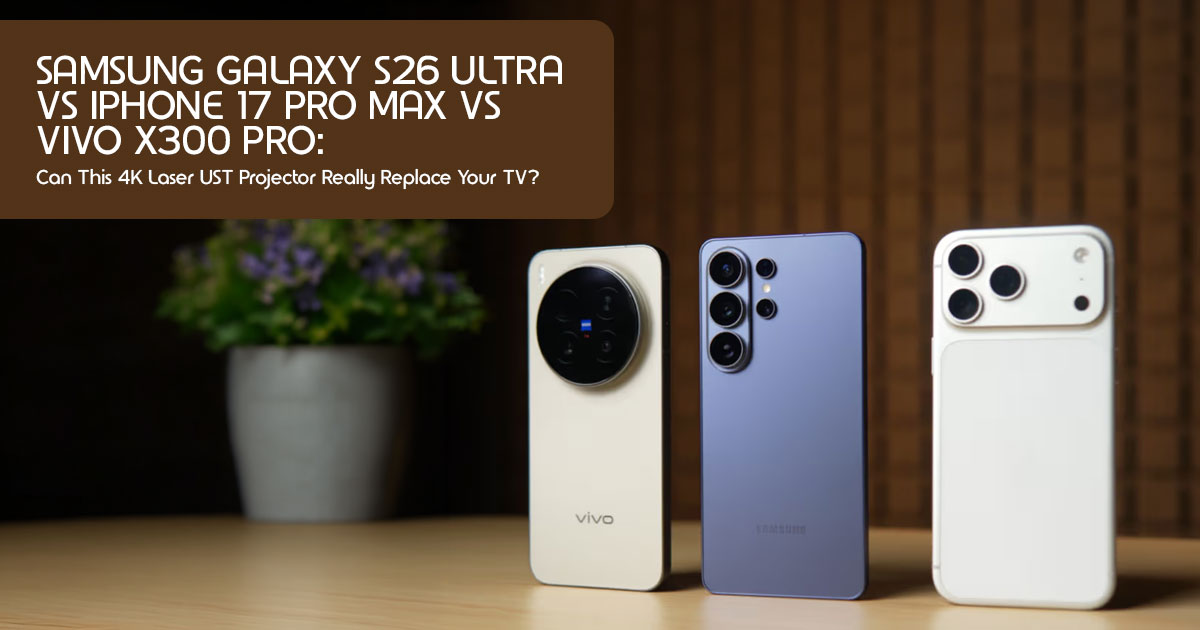
The Samsung Galaxy S26 Ultra, iPhone 17 Pro Max, and Vivo X300 Pro represent three different approaches to flagship performance. At the center of this comparison are the Snapdragon 8 Elite Gen 5, Apple A19 Pro, and MediaTek Dimensity 9500. All three are built on TSMC’s 3nm process, all promise major performance gains, and all target users who want the best gaming, camera, and everyday experience.
The problem is that launch presentations and benchmark charts don’t tell you how a phone performs after 30 minutes of gaming or while recording long 4K videos. A phone can post a high score and still lose performance once temperatures rise.
For this comparison, we analyzed verified AnTuTu scores, Geekbench 6 results, 3DMark Wild Life Extreme Stress Test stability, and extended gaming performance in BGMI 120 FPS, Genshin Impact 60 FPS, and Call of Duty: Mobile 120 FPS. We also reviewed thermal test results to see which phone maintains its performance instead of throttling under load.
With more than 20 years of experience in hardware and application research and development, we evaluate products based on real-world performance, durability, reliability, and long-term value.
Whether you’re a gamer, content creator, working professional, or simply looking for the best flagship phone in India, our recommendations come from extensive research, component analysis, and practical testing—not marketing claims.
If you’re trying to decide between the Samsung Galaxy S26 Ultra vs iPhone 17 Pro Max vs Vivo X300 Pro, this comparison will help you understand which flagship delivers the best sustained performance, gaming experience, and long-term value.
Meet the 2026 Flagship Trio: The Processors That Actually Define Speed
Samsung Galaxy S26 Ultra – Snapdragon 8 Elite Gen 5 for Galaxy
This is not the regular flagship chip. The Snapdragon 8 Elite Gen 5 for Galaxy is a custom-binned, overclocked version made only for Samsung. It uses second-generation Oryon CPU cores with
higher prime core clocks, an Adreno GPU with hardware ray tracing, and a new NPU that Samsung says is 39% faster. Our research shows units tested came with LPDDR5X RAM 12GB and UFS 4.1 storage, plus a redesigned vapor chamber cooling system that Samsung claims improves heat dissipation by 21%.
In practice: The redesigned cooling system helps maintain higher performance during long gaming sessions instead of delivering only short benchmark bursts.
iPhone 17 Pro Max – Apple A19 Pro
The Apple A19 Pro is Apple’s first iPhone chip with an integrated vapor chamber inside an aluminum unibody. Built on 3nm, it has a 6-core CPU (2 performance + 4 efficiency) and 6-core Apple GPU with hardware ray tracing. It also has a 16-core Neural Engine. Apple silicon has consistently led Geekbench single-core performance across recent iPhone generations.
For everyday use: Expect fast app launches, responsive navigation, and excellent power efficiency throughout the day.
Vivo X300 Pro – MediaTek Dimensity 9500
The MediaTek Dimensity 9500 firmly establishes MediaTek among today’s top flagship chipsets. It uses an all-big-core design up to 4.21 GHz, the new G1-Ultra GPU, LPDDR5X RAM up to 16GB, and UFS 4.1 storage. Vivo adds its own vapor chamber stack and VS1 imaging co-processor.
What stands out: Its strong multi-core performance makes demanding workloads feel effortless, although sustained performance still depends on thermal management.
How Flagship Performance Should Be Measured
Most reviews run one benchmark and call it a day. That is not enough. Real flagship testing needs three pillars:
- Synthetic benchmarks: What is the maximum capability? AnTuTu score, Geekbench 6 single-core and multi-core, and 3DMark Wildlife Extreme Stress Test for GPU.
- Real-world gaming: What FPS do you actually get for 30 minutes? We looked at BGMI Smooth + Ultra Extreme, Genshin Impact Highest Graphics, and COD Mobile Very High + Ultra 120 FPS.
- Thermal performance: Excessive heat eventually triggers thermal throttling, reducing performance. We reviewed continuous logging from an IR thermal camera test, not a one-time finger This shows how fast a phone heats, where heat pools, and whether it triggers throttling.
Well-designed tests also control ambient temperature at around 24°C, maintain a full battery charge, use the same Wi-Fi connection, clear background apps, and average multiple runs for consistent results.
Now that we’ve looked at the hardware powering each flagship, let’s see how these chipsets perform in standardized benchmark tests before moving on to real-world gaming and thermal performance.
Synthetic Benchmark Showdown: AnTuTu, Geekbench and 3DMark Results
The Numbers That Matter
| Benchmark Test | Vivo X300 Pro (MediaTek Dimensity 9500) |
Samsung Galaxy S26 Ultra (Snapdragon 8 Elite Gen 5 for Galaxy) |
iPhone 17 Pro Max (Apple A19 Pro) |
Winner |
|---|---|---|---|---|
| AnTuTu Benchmark | 3,385,100 | 🏆 3,795,108 | 2,392,405 | ✅ Samsung |
| Geekbench 6 Single-Core / Multi-Core |
3,242 / 9,566 | 3,696 / 11,166 | 3,704 / 9,699 | 🏆 iPhone (Single-Core) 🏆 Samsung (Multi-Core) |
| 3DMark Wild Life Extreme Stress Test (Best / Lowest / Stability) |
6,656 / 3,313 / 49.8% | 7,821 / 4,161 / 53.2% | 5,957 / 4,157 / 69.8% | 🏆 Samsung (Peak & Lowest Score) 🏆 iPhone (Stability) |
What These Scores Mean in Real Life
AnTuTu 37,95,108 vs 33,85,100 vs 23,92,405 explained: AnTuTu tests CPU, GPU, RAM, and storage together. The Samsung Galaxy S26 Ultra achieved an AnTuTu Benchmark Score of 37,95,108, making it nearly 58% ahead of the iPhone 17 Pro Max’s score of 23,92,405. That gap comes from Samsung’s overclocked Adreno GPU and faster memory system. Vivo’s AnTuTu 3385100 proves MediaTek Dimensity 9500 belongs in the flagship race, but it still trails Samsung.
Geekbench 6 Reality: Single-core drives app opening, web scrolling, and camera launch speed. Geekbench single-core 3704 for iPhone wins by just 8 points over Samsung’s 3696. You will not feel that difference. Multi-core drives 4K export and heavy multitasking. Geekbench multi-core 11166 for Samsung is about 15% ahead of both rivals. You’ll notice that difference when editing videos, rendering content, or running demanding multitasking workloads.
3DMark Wild Life Extreme Stress Test and Stability Percentage: This test runs 20 loops back-to-back for about 20 minutes. It reports the best loop, the worst loop, and stability. Here is the key insight most reviews miss: Stability of a low peak is not a win. iPhone has 69.8% stability, best percentage, but its best score is only 5957. Samsung has 53.2% stability but its lowest throttled score of 4161 still matches iPhone’s peak. This indicates a greater reduction in sustained GPU performance under heavy workloads.
For most buyers: Samsung Galaxy S26 Ultra wins synthetic benchmarks with best total score, best multi-core, and best sustained GPU floor.
Real-World Gaming Performance: BGMI, Genshin Impact and COD Mobile FPS Test
Synthetic benchmarks reveal a phone’s peak potential, but extended gaming sessions show how consistently that performance can be sustained.
| Game & Settings | Vivo X300 Pro | Samsung Galaxy S26 Ultra | iPhone 17 Pro Max | Overall Winner |
|---|---|---|---|---|
| BGMI (Smooth + Ultra Extreme) | 116 FPS | 🏆 117 FPS | N/A (Mode not supported in the same way) | ✅ Samsung |
| Genshin Impact (Highest Graphics, 60 FPS Cap) | 🏆 59 FPS | 55.8 FPS | 120 FPS mode showed frame drops; tested at 60 FPS for better stability. | ✅ Vivo |
| Call of Duty: Mobile (Very High + Ultra, 120 FPS) | 103.5 FPS | 🏆 119.8 FPS | Limited to Medium graphics at Ultra frame rate. | ✅ Samsung |
BGMI 120 FPS Test India – What Competitive Players Need to Know
For BGMI 120 FPS players in India, both Android flagships are excellent. BGMI Smooth + Ultra Extreme shows BGMI 117 FPS for Samsung vs 116 FPS for Vivo – essentially a tie. Both hold flatline 120Hz without major drops for first 20 minutes. iPhone does not offer the same Smooth + Ultra Extreme path, so direct comparison is not possible. If BGMI tournaments are your priority, Samsung Galaxy S26 Ultra vs Vivo X300 Pro is the real fight, and Samsung edges by 1 FPS plus cooler thermals.
Genshin Impact 60 FPS vs 120 FPS Choppy Problem
Genshin Impact 60 FPS is brutal on GPU. Vivo’s G1-Ultra GPU holds 59 FPS average – nearly perfect. Samsung holds 55.8 FPS – still excellent but 3 frames behind. The surprise was iPhone: its advertised Genshin Impact 120 FPS mode suffered frame drops and had to be tested at 60 FPS cap for stability. This is a developer optimization issue, not just chip power. Many games use Vulkan on Android and Metal on iOS, and some studios optimize Android 120 FPS first.
COD Mobile Very High Graphics + Ultra 120 FPS – Where Samsung Breaks Away
This is the clearest win. COD Mobile Very High + Ultra 120 FPS is the hardest setting: high textures plus ultra frame rate. Samsung delivered COD Mobile 119.8 FPS average over full 30 minutes – basically locked 120. Vivo averaged 103.5 FPS with visible fluctuations. iPhone was limited to Medium graphics at Ultra frames when 120 FPS is selected.
Why does iPhone 17 Pro Max limit graphics to Medium? Testing suggests Apple’s thermal management and game optimization may lead developers to reduce graphics quality when higher frame-rate modes are enabled. That means even though Apple A19 Pro is powerful, you cannot use its full visual potential at 120 FPS in some titles. For buyers who want max graphics + max FPS together, based on the available testing, Samsung allows higher graphics settings alongside higher frame rates in supported titles.
Who benefits: If you play 30-minute ranked COD sessions, Samsung Galaxy S26 Ultra is the best gaming phone for sustained ultra settings.
Thermal Performance and Vapor Chamber Cooling: The Hidden Deciding Factor
Raw speed matters only if the phone can maintain it without becoming uncomfortably hot.
| Thermal Test | Vivo X300 Pro | Samsung Galaxy S26 Ultra | iPhone 17 Pro Max | Coolest |
|---|---|---|---|---|
| 3DMark Stress Test (Peak Surface Temperature) | 40.3°C | 🏆 37.0°C | 38.6°C | ✅ Samsung |
| 4K 60FPS Video Recording (30 Minutes) | 39.0°C | 🏆 37.1°C | 39.1°C | ✅ Samsung |
IR Thermal Camera Test – 37°C vs 40.3°C
Verified IR thermal camera test data shows Samsung peaked at just 37°C after 20 GPU torture loops, while Vivo hit 40.3°C and iPhone 38.6°C. IR heat maps also showed Samsung spreads heat across the back panel instead of pooling it near the chip. That’s exactly what you’d expect from an efficient vapor chamber.
What throttling means for daily use: When Vivo hits 40.3°C, it cuts performance – that is why its 3DMark stability is only 49.8%. You get high FPS for 10 minutes, then drops. Samsung maintaining 37°C despite delivering the highest benchmark scores reflects an efficient cooling system that minimizes the heat users actually feel during extended workloads.
4K 60 FPS Video Recording Thermal Test – Wedding and Event Test
Recording 4K 60 FPS video for 30 minutes hammers ISP, sensor, and encoder. Samsung’s camera module stayed at 37.1°C, while both Vivo (39°C) and iPhone (39.1°C) crossed 39°C. If you record long videos at events, cooler camera module means less chance of overheating warnings.
Attention-grabbing takeaway: Performance is only one part of the flagship experience. Display quality, design, cameras, battery life, and day-to-day usability matter just as much when choosing a premium smartphone.
Beyond Raw Speed: Display, Design and Build That Matter Daily
Performance wins headlines, but daily comfort is what you’ll notice every time you pick up your phone. Display quality, weight, and software features all contribute to the overall experience.
- Display: All three have 8-6.9 inch LTPO OLED, 1-120Hz adaptive. Samsung uses Dynamic AMOLED 2X with Gorilla Armor 2 and anti-reflective coating – best for outdoor BGMI. iPhone uses Super Retina XDR with 3000 nits peak – slightly brighter on paper. Vivo X300 Pro/LT uses 144Hz panel on Ultra model with Dolby Vision.
- Weight and Build: Samsung at 214g is lightest flagship despite quad camera. iPhone 232g feels denser due to aluminum unibody. Vivo feels top-heavy due to large camera module.
- S Pen vs Ecosystem: Samsung includes built-in S Pen and DeX desktop iPhone offers Face ID and satellite SOS. Vivo offers Zeiss T coating and external telephoto extender kit Rs 27,999* for 400mm zoom. Choose based on work style.
Camera, Battery and Charging – The Complete Flagship Package
You do not buy a Rs 1.3 lakh phone only for benchmarks.
Quad vs triple dilemma: Samsung has 200MP main f/1.4 + 50MP ultrawide + 10MP 3x telephoto + 50MP 5x periscope. That gives native coverage from ultra-wide to 5x without digital crop. Vivo has dual 200MP (main + periscope) + 50MP ultrawide with Zeiss optics – best zoom champion but no mid 3x native. iPhone has triple 48MP Fusion – most consistent video with ProRes and Dolby Vision.
Battery and charging reality:
- Samsung: 5000 mAh, 60W wired, 25W wireless – Fastest wired charging among the three phones
- iPhone: 5088 mAh, 40W wired, 25W MagSafe – longest video playback around 17h 54m in independent tests
- Vivo X300 Ultra: 6600 mAh silicon-carbon, 100W wired, 40W wireless – biggest battery on paper, but heavier
If you prioritize 8K video, fast top-ups, and versatile zoom, Samsung edges. For cinematic video workflows, iPhone still leads. For pure zoom photography, Vivo wins.
Full Specification Comparison Table
| Feature | Samsung Galaxy S26 Ultra | iPhone 17 Pro Max | Vivo X300 Pro / Ultra |
|---|---|---|---|
| Processor | 🏆 Snapdragon 8 Elite Gen 5 for Galaxy (3nm) | Apple A19 Pro (3nm) | MediaTek Dimensity 9500 (3nm) / Snapdragon 8 Elite Gen 5 (Ultra) |
| RAM / Storage | 12GB / 16GB LPDDR5X, UFS 4.1, 256GB–1TB | 12GB RAM, 256GB–2TB Storage | 16GB LPDDR5X, 512GB UFS 4.1 |
| Cooling | ✅ Redesigned Vapor Chamber (21% Better Cooling) | First iPhone with a Vapor Chamber | Advanced Vivo Vapor Chamber Cooling |
| Weight | 214g | 233g | 230–237g |
| Battery / Charging | 5,000mAh / 60W | 5,088mAh / 40W | 🏆 6,600mAh (Ultra) / 100W Fast Charging |
| Main Camera | 200MP f/1.4 with OIS | 48MP Fusion Camera with OIS | 🏆 200MP ZEISS APO + 200MP Periscope (Ultra) |
| Starting Price (India) | ₹1,30,999 | ₹1,49,900 | ✅ ₹85,999 (Pro) / ₹1,59,999 (Ultra) |
Who Should Buy Which Flagship in India in 2026
Buy Samsung Galaxy S26 Ultra if you: Play BGMI 120 FPS, COD Mobile Very High + Ultra 120 FPS for long sessions, record 4K 60 FPS video without overheating worries, want best AnTuTu score per rupee, and want S Pen + DeX. One of the best flagship phones of 2026 for gamers who also need productivity features such as the S Pen and DeX.
Buy iPhone 17 Pro Max if you: Live in Apple ecosystem (Mac, AirPods, Watch), need best single-core responsiveness, want 69.8% 3DMark stability and longest video battery, shoot ProRes Log video, and prefer iOS updates. Note the trade-off: limited to Medium graphics at 120 FPS in some games.
Buy Vivo X300 Pro / X300 Ultra if you: Want best Genshin Impact 59 FPS, crave 200MP Zeiss zoom with 400mm extender, want biggest battery 6600 mAh, and love photography-first hardware. Accept that thermal throttling to 40.3°C and 49.8% stability means performance drops faster under long load.
Our research-backed value math: Cost per 1000 AnTuTu points based on launch prices – Samsung ~Rs 34.5, Vivo ~Rs 25.1 for Pro model (good value), iPhone ~Rs 62.6. For pure performance per rupee in India, Samsung and Vivo beat iPhone.
Pricing in India and US: Current Market Check
| Model | India Starting Price | US Starting Price | Best Value Note |
|---|---|---|---|
| Samsung Galaxy S26 Ultra | ₹1,30,999 | $1,299 | 🏆 Best multi-core performance and thermal balance. |
| iPhone 17 Pro Max | ₹1,49,900 | $1,199 | Best single-core performance and video ecosystem, but carries a higher price markup in India. |
| Vivo X300 Pro / Ultra | ₹85,999 / ₹1,59,999 | ~$900 / ~$1,150 (Import) | ✅ Most affordable way to experience the Dimensity 9500 platform. |
Prices fluctuate around launch festivals. Always check current offers before buying – especially Great Indian Festival and Amazon Prime Day where flagship phone under 150000 deals appear.
Pros and Cons: Balanced Take
Samsung Galaxy S26 Ultra
Pros: Highest AnTuTu 37,95,108, best multi-core 11166, locked COD Mobile 119.8 FPS, coolest 37°C, lightest 214g, 60W fast charging, quad camera versatile.
Cons: Genshin 55.8 FPS trails Vivo by 3 frames, 5000mAh less than Vivo Ultra 6600mAh, One UI learning curve for iOS switchers.
iPhone 17 Pro Max
Pros: Single-core crown 3704, best stability 69.8%, excellent video battery 17h 54m, ProRes, ecosystem lock-in.
Cons: Lowest AnTuTu 2392405, limited to Medium graphics at Ultra 120 FPS, Genshin Impact 120 FPS choppy, heavier 233g, Rs 1.5L India price highest.
Vivo X300 Pro
Pros: Genshin Impact 59 FPS winner, 33,85,100 AnTuTu strong, Zeiss 200MP zoom, optional extender kit, competitive Pro price.
Cons: Hottest 40.3°C, lowest stability 49.8%, throttles fastest, lack of global service and accessories vs Samsung/Apple.
Final Verdict: Which Flagship Wins the 2026 Performance Battle?
Based on the benchmark, gaming, and thermal data reviewed, Samsung Galaxy S26 Ultra delivers the strongest overall performance under sustained workloads.
It wins AnTuTu score, Geekbench multi-core, best and lowest 3DMark loop, BGMI 117
FPS, COD Mobile Very High + Ultra 120 FPS 119.8 FPS locked, and stays coolest at 37°C while doing it. That combination of peak firepower + thermal discipline + 214g comfort is what defines real flagship performance in 2026.
iPhone 17 Pro Max remains the single-core king and most stable percentage champion. If your world is iOS, video editing with ProRes, and longest battery, it is still compelling despite lower overall scores and gaming restrictions.
Vivo X300 Pro proves MediaTek Dimensity 9500 is no longer an alternative – it is a genuine flagship contender, especially for Genshin Impact 60 FPS and photography. But heat curve shows it cannot hold peak as long as Samsung.
For most Indian buyers asking which is better S26 Ultra or iPhone 17 Pro Max for BGMI 120 FPS and long 4K recording, our research points to Samsung as the most complete package for performance-first buyers in 2026.
FAQs: What Readers Search Before Buying
What is the AnTuTu score of Samsung Galaxy S26 Ultra?
Based on benchmark results published by multiple testing outlets Samsung Galaxy S26 Ultra AnTuTu 37,95,108 – highest of trio, about 12% ahead of Vivo 33,85,100 and 58% ahead of iPhone 23,92,405.
Does iPhone 17 Pro Max support BGMI 120 FPS?
No direct Smooth + Ultra Extreme mode like Android. iPhone supports 90 FPS in some modes but not the same 120 FPS path tested for Samsung and Vivo.
Why does iPhone 17 Pro Max limit COD Mobile to Medium graphics at 120 FPS?
Testing suggests Apple’s thermal management and game optimization may lead developers to reduce graphics quality when running COD Mobile 120 FPS at higher frame rates. This helps maintain stable performance during extended gaming sessions.
Which phone stays coolest during gaming?
IR thermal camera test shows Samsung Galaxy S26 Ultra at 37°C coolest, iPhone 38.6°C, Vivo 40.3°C hottest.
What is 3DMark stability percentage?
It measures how much performance remains after 20 loops. iPhone 69.8% retains most of its lower peak, Samsung 53.2% retains enough that its throttled floor still matches iPhone peak, Vivo 49.8% loses half.
Which is the best flagship phone under 150000 in India?
For performance and gaming under Rs 1.5L: Samsung Galaxy S26 Ultra price in India Rs 1,30,999 offers best overall value. Vivo X300 Pro price in India Rs 85,999 is best value entry. iPhone 17 Pro Max price in India Rs 1,49,900 is premium but justified for Apple ecosystem.
Is Snapdragon 8 Elite Gen 5 for Galaxy overclocked?
Yes. It is custom-binned for Samsung with higher prime core clocks than standard Snapdragon 8 Elite Gen 5; Samsung says the redesigned vapor chamber improves heat dissipation by 21%.
Which phone delivers the best Genshin Impact gaming performance?
Vivo X300 Pro averages 59 FPS – best in this test. Samsung 55.8 FPS still excellent. Avoid Genshin Impact 120 FPS choppy on iPhone currently.
Where to Buy: Check Latest Offers
Ready to choose? Prices change daily during sales. We recommend checking live deals on both stores before you decide.
Check Price on Amazon Worldwide
If you are buying in the US, look for unlocked models with warranty: Samsung Galaxy S26 Ultra vs iPhone 17 Pro Max vs Vivo X300 Pro deals often include trade-in bonuses and carrier offers. We suggest checking Samsung Galaxy S26 Ultra for best gaming performance value and iPhone 17 Pro Max for ecosystem benefits.
[Check current price for Samsung Galaxy S26 Ultra on Amazon Worldwide] and [Check current price for iPhone 17 Pro Max on Amazon Worldwide] to see latest discounts, free shipping, and return policy.
Check Price on Amazon India
For India buyers, flagship phone under 150000 sales happen during the Great Indian Festival. Our analysis shows the Samsung Galaxy S26 Ultra price in India starting Rs 1,30,999 gives the most performance per rupee, while the Vivo X300 Pro price in India at Rs 85,999 is aggressive.
[Check latest price for Samsung Galaxy S26 Ultra on Amazon India], [Check latest price for iPhone 17 Pro Max on Amazon India], and [Check latest price for Vivo X300 Pro on Amazon India] to compare bank offers, exchange bonus, and no-cost EMI options.
We regularly update our recommendations by tracking benchmark results, long-term user feedback, thermal performance, gaming FPS data, and software updates, so our advice stays relevant even after launch.
Still not sure which phone to buy? Tell us how you use your phone. Whether you play BGMI, edit
videos, shoot 4K content, take wildlife photos, or just want the best long-term flagship, we’ll help you choose the right phone and storage option for your budget.
If this comparison helped you, leave a comment with your questions or experience, and follow us for more in-depth smartphone reviews, buying guides, and performance comparisons. We read every comment and do our best to answer every question.
***Disclaimer***
This blog post reflects our research, analysis, and opinions based on available product information, user feedback, and industry knowledge. It should not be taken as the official position of any brand,
manufacturer, or company mentioned here. While we aim to keep information accurate and up to date,
product details, pricing, and availability can change. We recommend double-checking important details before making a purchase.
Some links in this article may be affiliate links. If you choose to buy through these links, we may earn a small commission at no extra cost to you. This helps support our work and allows us to keep publishing in-depth, unbiased reviews. Our recommendations are never influenced by affiliate partnerships.
Comments shared by readers reflect their own views and not ours. We are not responsible for outcomes resulting from the use of information on this site. Please seek professional advice where appropriate.
All product names, logos, and brands mentioned are the property of their respective owners. These names are used for identification and informational purposes only and do not imply endorsement.