
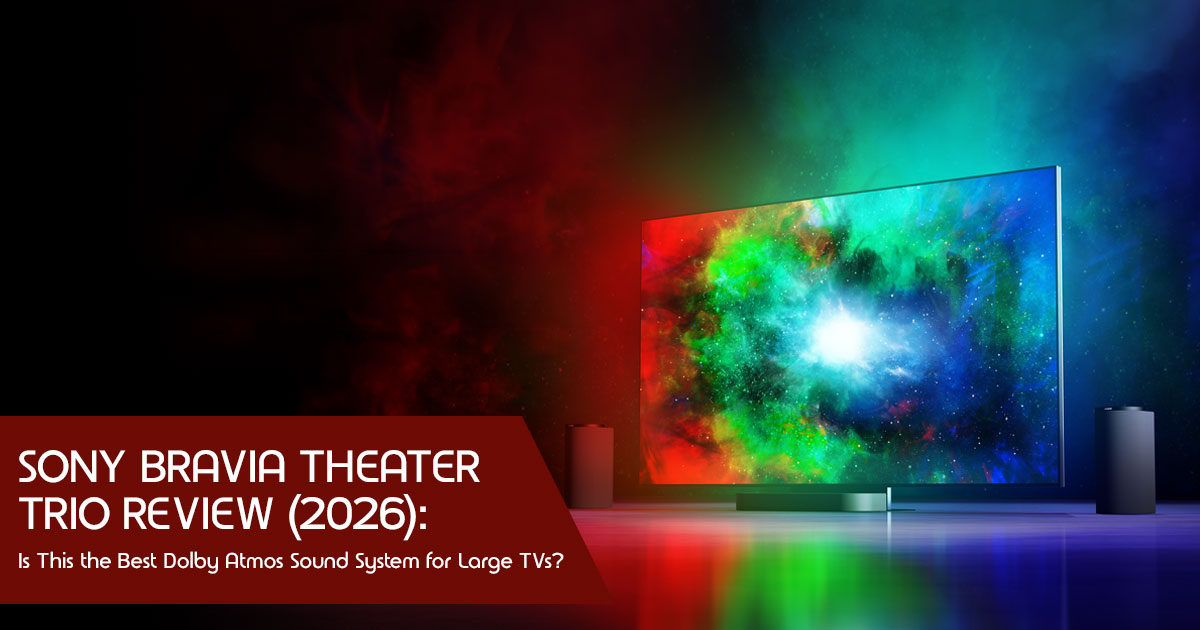
Large TVs deserve audio that feels just as big. Once you move to an 85-inch TV or larger, the weak point is rarely the picture. It’s the sound. Built-in TV speakers often struggle to create the scale, clarity, and direction needed to match a screen of that size.
The Sony Bravia Theater Trio takes a different approach. Instead of relying on a single soundbar, it uses three dedicated wireless speakers for the left, center, and right channels. The goal is simple: deliver a wider, more natural soundstage that better matches large TVs while supporting Dolby Atmos, DTS:X, and 360 Spatial Sound Mapping.
But does this design actually improve the experience, or is it just another premium feature with a premium price tag? That’s the question most buyers want answered before spending on a high-end home theater system.
Click here to buy from Amazon
As technology experts with over 20 years of experience in hardware and application research and development, we evaluate every product based on real-world performance, durability, and value for money. Whether you’re building a premium home theater, upgrading from a traditional soundbar, or looking for the best TV audio system for a large living room, our recommendations are based on independent testing, component analysis, real-world usability, and industry expertise rather than marketing claims.
For this review, we examined independent lab tests, trusted reviews from multiple publications, and long-term user feedback to understand how the Sony Bravia Theater Trio performs in everyday use. We’ll cover its sound quality, Dolby Atmos performance, dialogue clarity, gaming and movie performance, setup, connectivity, pros and cons, and whether it’s worth buying in 2026.
What Makes the Sony Bravia Theater Trio Different from Traditional Soundbars?
Most soundbars sit under the TV in a single enclosure. They rely on beam-steering and virtual channels to create width and height. The Sony Bravia Theater Trio removes that limitation by using physical separation.
The system includes:
- A compact center speaker that sits directly below the screen
- Two larger left and right speakers that can sit on stands or mount on the wall
Each side speaker carries an up-firing driver. The design creates a wider front soundstage that feels more natural with large images. Sony’s 360 Spatial Sound Mapping uses room measurements to create multiple phantom speakers throughout the room, making the soundstage feel wider and more immersive. This processing helps create convincing surround and height effects without requiring dedicated rear speakers in the base package.
The result is an expansive front soundstage that feels much larger than the speakers themselves. It works especially well with 75-inch TVs and larger, where the wider speaker placement creates a more natural soundstage.
Key Specifications at a Glance
| Feature | Details |
|---|---|
| Channel Configuration | 3.0.2-channel (Dedicated Left, Center, Right + Dual Up-Firing Speakers) |
| Supported Audio Formats | Dolby Atmos, DTS:X, and IMAX Enhanced |
| Connectivity | HDMI eARC (Output), 1 × HDMI Input (Passthrough), Optical Audio, Bluetooth, and Wi-Fi |
| Video Passthrough | Supports 4K at 120Hz, VRR, ALLM, and Dolby Vision |
| Room Calibration | 360 Spatial Sound Mapping with the Bravia Connect app and included USB calibration microphone |
| Streaming Support | Apple AirPlay 2, Spotify Connect, and Wi-Fi music playback |
| Expandability | Supports up to 2 wireless subwoofers and 2 rear surround speakers |
| Power | Wireless speaker modules; each speaker requires its own AC power outlet |
These numbers come from manufacturer data cross-checked against independent testing reports.
Design and Build Quality
The Sony Bravia Theater Trio uses a clean, modern aesthetic. The left and right speakers have a cylindrical shape with fabric wrapping and a metallic accent ring at the top. They look substantial but not bulky once placed.
The center unit resembles a short, narrow bar. It sits low enough under most TVs to avoid blocking the bottom of the screen. All three pieces support wall mounting and include long power cables for flexible placement.
The overall build quality feels premium and well put together. The fabric finish looks premium, although it can collect dust over time. There is no front display — only status lights. Most users control everything through the Bravia Connect app or the included remote.
Practical note: You will need three separate power outlets. Plan your layout before unboxing.
How the Sony Bravia Theater Trio Performs in Real Rooms
How well the Sony Bravia Theater Trio performs depends largely on your room, speaker placement, and the content you’re watching. Here’s what we found after reviewing independent testing and long-term user experiences.
Click here to buy from Amazon
Movies and Dolby Atmos Content
The system performs best with object-based audio formats, where Dolby Atmos and DTS:X fully showcase its wide front soundstage and immersive height effects. Up-firing drivers on the side speakers bounce height effects off the ceiling. 360 Spatial Sound Mapping expands the sound into a wide, cohesive bubble.
Explosions and ambient effects stretch beyond the physical speaker positions. Movement across the front feels continuous rather than jumping between discrete units. This better matches the visual scale of large TVs than most traditional soundbars.
Without added rear speakers, effects directly behind the listener remain softer. Many users eventually add Sony’s compatible wireless rear speakers for a more complete surround experience.
Dialogue and TV Shows
A dedicated center channel helps anchor voices to the screen. This is a clear advantage over systems that rely on a phantom center.
Some listeners report the center can sound slightly less powerful than the side speakers during heavy action scenes. The system includes a Voice mode that boosts speech. Results depend on room acoustics and source material.
Music Playback
Stereo music benefits from the physical left and right separation. Native two-channel playback delivers clear imaging and good width. Vocals sit naturally in the mix.
Turning on spatial processing up-mixes stereo tracks. This creates a bigger presentation but can make the center feel congested. Many listeners prefer the purer stereo mode for music.
Bass is solid for everyday listening without a dedicated subwoofer. You’ll hear good impact during most scenes, but it doesn’t deliver the deep rumble that a dedicated subwoofer can provide.
Features and Everyday Setup
The Bravia Connect app guides calibration. You place the included USB microphone at the listening position. The system plays test tones and measures the room.
360 Spatial Sound Mapping then creates virtual speakers based on those measurements. You can toggle the processing on or off depending on content.
Other useful features include:
- HDMI In port with full 4K/120Hz passthrough and variable refresh rate support
- Support for AirPlay 2 and Spotify Connect
- Three bass level presets (no full manual EQ)
- Compatibility with additional Sony wireless subs and rears
Setup takes 15–30 minutes once you decide on speaker placement. The system works with any TV that has HDMI eARC, though it pairs especially cleanly with recent Sony Bravia models.
Sony Bravia Theater Trio vs Popular Alternatives
Buyers often compare this system to complete packages from other brands. Here is how the options stack up based on current reviews and test data.
| System | Channels (Base) | Includes Sub + Rears? | Best For | Approx. Price Range | Key Trade-off |
|---|---|---|---|---|---|
| Sony Bravia Theater Trio | 3.0.2 | No | Large TVs and users who prioritize a wide front soundstage. | Premium | Requires optional subwoofer and rear speakers for deeper bass and full surround sound. |
| Sonos Arc Ultra | 9.1.4 (Virtual) | Integrated Bass System | Users wanting a premium single-bar setup with a strong smart-home ecosystem. | Mid-Premium | Doesn’t provide the same physical left, center, and right speaker separation as a dedicated LCR system. |
| Samsung HW-Q990H | 11.1.4 | Yes | Buyers wanting a complete Dolby Atmos surround package right out of the box. | Mid-Premium | Larger footprint and a different sound signature compared to Sony’s tuning. |
| Sony Bravia Theatre Quad | 4.0.4 (Virtual) | No | Minimalist wall-mounted home theater installations. | Premium | Uses a phantom center channel instead of a dedicated physical center speaker. |
The Sony Bravia Theater Trio stands out when screen size is the priority. It delivers more natural left-to-right separation than single-bar systems. The wider front soundstage comes at the cost of a more involved setup and additional power outlets.
If you want everything in one box today, the Samsung package usually provides more immediate bass and rear effects. Sonos offers simpler integration if you already own other Sonos speakers.
Who Should Buy the Sony Bravia Theater Trio?
This system suits viewers who:
- Own or plan to buy a very large TV (85 inches and above)
- Value a wide, continuous front soundstage
- Enjoy Dolby Atmos movies and want height effects without ceiling speakers
- Are willing to expand the system later with subs or rears
- Prefer a clean, wireless look over traditional speaker stands
It may not suit buyers who:
- Want strong bass out of the box without extra purchases
- Prefer maximum customization (limited manual EQ)
- Have a small room or already own a full surround setup
- Are on a tighter budget
Potential Limitations to Consider
No audio product is perfect for every situation. The Sony Bravia Theater Trio has a few clear constraints.
Bass is where most users notice the system’s biggest limitation. Without a subwoofer, low-frequency impact feels lighter during action scenes. Adding one of Sony’s optional subs changes the experience significantly.
The center speaker receives mixed feedback. It provides better dialogue anchoring than phantom designs, yet some users find it less authoritative than the side speakers during complex mixes.
Only one HDMI input limits direct connections. Gamers or users with multiple sources may need to route everything through the TV.
Its price sits toward the higher end of the premium home theater market. The base package costs more than many complete systems that include a subwoofer and rear speakers.
Pricing and Current Value
The Sony Bravia Theater Trio launched at a premium level. Retail prices change regularly. At the time of writing, the system sits firmly in the premium price segment compared with many competing home theater systems.
Its value improves if you plan to expand the system over time. Many owners start with the base system and later add Sony’s compatible wireless subwoofer or rear speakers. This modular path lets you spread the cost.
Before buying, compare current pricing across retailers. Check bundle deals that include expansion speakers, as they can improve overall value.
Click here to buy from Amazon
Frequently Asked Questions About the Sony Bravia Theater Trio
Is the Sony Bravia Theater Trio better than a regular soundbar?
It offers a wider soundstage and more natural separation than most single-enclosure bars because of its physical left, center, and right layout. The trade-off is higher cost and the need for three power outlets.
Does the Sony Bravia Theater Trio need a subwoofer?
The base system produces usable bass for many rooms. However, most listeners add one of the optional subs for deeper impact during movies. The system is designed with expansion in mind.
Can I use the Sony Bravia Theater Trio without rear speakers?
Yes. The 360 Spatial Sound Mapping creates virtual surround and height effects. Adding rears improves precision and immersion but is not required for basic use.
How does the Sony Bravia Theater Trio compare to the Sony Bravia Theatre Quad?
The Trio adds a physical center speaker for stronger dialogue anchoring. The Quad uses four flatter speakers and relies more on processing for the center image. Placement flexibility differs between the two.
What size TV works best with the Sony Bravia Theater Trio?
The system is designed for 75-inch TVs and larger, where its wider speaker placement creates a more natural front soundstage.
Does the Sony Bravia Theater Trio support gaming features?
The HDMI input passes through 4K at 120Hz, VRR, and ALLM. This makes it suitable for next-generation consoles when connected properly.
Final Verdict on the Sony Bravia Theater Trio
The Sony Bravia Theater Trio succeeds at solving a specific problem: matching audio scale to very large screens. Its deconstructed three-piece layout creates width and presence that traditional soundbars rarely match.
Sound quality is strong for movies and surprisingly capable with music when spatial processing stays off. The 360 Spatial Sound Mapping technology delivers convincing height and surround effects from a front-only setup.
Buyers who prioritize front-stage immersion and plan to grow the system will likely appreciate the design. Those who want immediate full-surround performance or deeper bass without additional purchases may find better immediate value elsewhere.
If your main display is large and you want a premium, expandable Dolby Atmos solution with genuine left-right separation, the Sony Bravia Theater Trio deserves serious consideration.
Should You Buy the Sony Bravia Theater Trio Right Now?
Consider your current setup first. Measure your room and note how far your seating is from the screen. Think about whether you will add a subwoofer or rear speakers within the next year.
If the front width and clean design appeal to you, this system delivers a distinctive listening experience. Many reviewers consistently praise its wide, cohesive soundstage, especially when paired with large-screen TVs.
Ready to see current pricing and availability?
Check the latest deals on Amazon Worldwide — see real-time pricing, bundle options, and customer reviews for the Sony Bravia Theater Trio.
Check current pricing and offers on Amazon India — compare local availability and any regional bundles for the Sony Bravia Theater Trio.
Compare today’s price, available bundles, and warranty options before buying.
Our review is based on extensive research, professional reviews, and long-term owner feedback. Actual performance can vary depending on your room size, speaker placement, content, and listening preferences, so it’s always a good idea to check the latest retailer listings before purchasing.
If you found this review helpful, leave a comment and share your experience or questions about the Sony Bravia Theater Trio. If there’s another sound system, soundbar, or home theater product you’d like us to review, let us know. Follow us for more in-depth reviews, buying guides, and comparisons, and if you have any questions before buying, ask in the comments—we’re always happy to help.
***Disclaimer***
This blog post reflects our research, analysis, and opinions based on available product information, user feedback, and industry knowledge. It should not be taken as the official position of any brand, manufacturer, or company mentioned here. While we make every effort to keep our reviews accurate and up to date, product specifications, pricing, software features, and availability may change over time. We recommend double-checking important details before making a purchase.
Some links in this article may be affiliate links. If you choose to buy through these links, we may earn a small commission at no extra cost to you. This helps support our work and allows us to keep publishing in-depth, unbiased reviews. Affiliate partnerships never influence our recommendations.
Opinions expressed by readers are their own and do not necessarily reflect ours. We are not responsible for outcomes resulting from the use of information on this site. Please seek professional advice where appropriate.
All product names, logos, and brands mentioned are the property of their respective owners. These names are used for identification and informational purposes only and do not imply endorsement.