
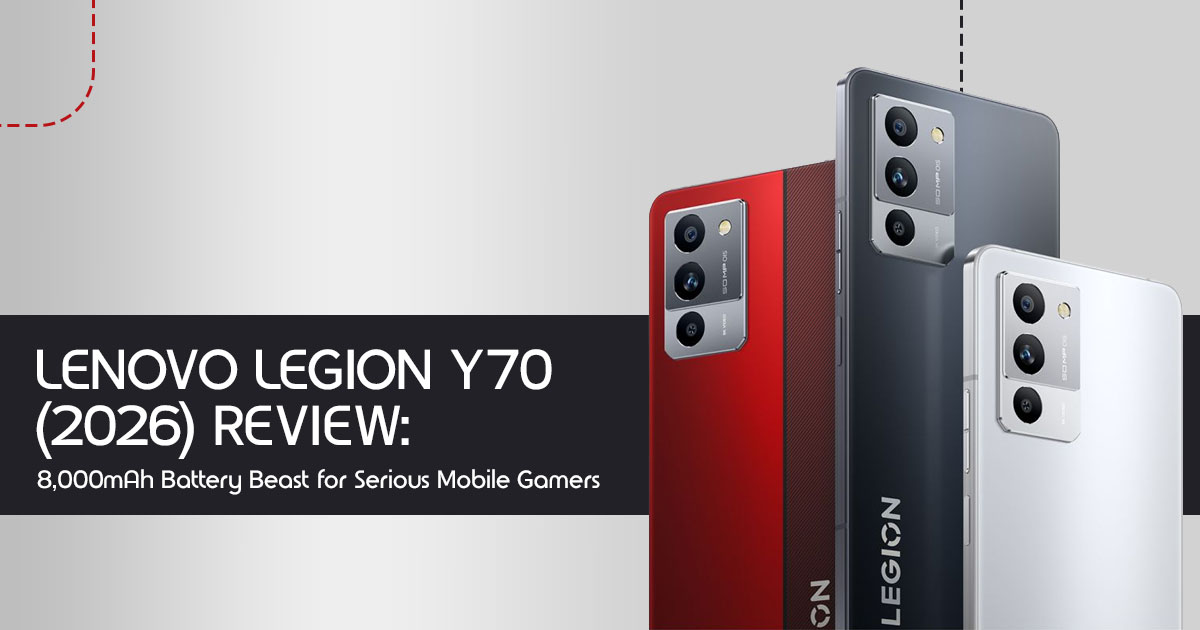
Quick Verdict
For mobile gamers who prioritize sustained performance and epic battery life over camera prowess or a super-slim design, the Lenovo Legion Y70 (2026) looks like a compelling contender. Its massive 8,000mAh battery and advanced cooling system promise to tackle the biggest pain points of long gaming sessions: battery anxiety and thermal throttling. While it might not be the sleekest daily driver, its focus on core gaming experience could make it a great value for those who live for mobile esports or extended play. We believe it’s a strong comeback for Lenovo in the performance phone category, but its true success will hinge on real-world software stability and global availability.
Introduction
Every mobile gamer knows the feeling. You start a match with smooth frame rates and fast response times, but after 20 minutes, your phone heats up, performance drops, battery drains faster than expected, and suddenly the experience becomes frustrating instead of fun. That’s still one of the biggest problems with many gaming smartphones today.
And that’s why people have become more careful before buying a new mobile gaming phone. Raw benchmark scores and flashy marketing no longer impress serious users. Most gamers now care more about stable FPS, efficient cooling, long battery life, reliable connectivity, and whether the phone can handle long gaming sessions without slowing down.
The upcoming Lenovo Legion Y70 (2026) is getting attention because it appears to focus on those real-world problems instead of relying only on aggressive gamer styling and spec-sheet marketing. Early leaks point toward a powerful next-generation Snapdragon gaming phone, a massive 8,000mAh battery, improved cooling, and features aimed at competitive players and long gaming sessions. But leaks alone never tell the full story.
That’s where real analysis matters.
Most launch coverage simply repeats specifications and benchmark listings. But specs do not explain how a phone feels after three hours of gaming, how badly it throttles under pressure, or whether the battery performance holds up over time. And that’s exactly why user-focused reviews matter so much in the gaming smartphone market. They help separate marketing promises from actual everyday performance.
As technology experts with over 20 years of experience in hardware and application research and development, we deeply analyze each product based on long-session performance, durability, and value for money. Our goal is to help you find the best product in every category—budget, performance, reliability, and long-term usage. Whether you are a competitive mobile gamer, a BGMI or Call of Duty Mobile player, a content creator, a heavy multitasker, or someone searching for a powerful daily-use flagship phone, our recommendations are based on extensive research, component analysis, real-world usability, and industry expertise.
In this article, we’ll break down what the Lenovo Legion Y70 (2026) could genuinely offer beyond the hype. We’ll look at the leaked hardware, expected gaming performance, cooling system, battery endurance, real-world usability, possible weaknesses, and whether this phone has what it takes to become one of the best gaming phones of 2026 alongside brands like ASUS ROG, RedMagic, and iQOO.
Because in 2026, people are not just buying performance anymore. They’re buying consistency, comfort, reliability, and a phone they can trust when the match gets intense.
TL;DR
- The Lenovo Legion Y70 (2026) is shaping up to be a serious gaming smartphone focused on real-world gaming performance, not just flashy specs.
- Expected highlights include Qualcomm’s upcoming flagship Snapdragon processor, an 8,000mAh battery, improved cooling, and long-session gaming stability.
- This article goes beyond benchmark leaks to analyze thermal performance, battery life, daily usability, competitive gaming features, and possible drawbacks.
- We also compare Lenovo’s approach with rivals like ASUS ROG Phone, RedMagic, and iQOO gaming phones.
- Best suited for mobile gamers, power users, streamers, and users who want strong performance without constant overheating and throttling issues.
Why This Review is Essential
In a market saturated with hype, it’s easy to get lost in marketing jargon. In this Lenovo Legion Y70 review, our goal is to cut through the noise and provide a human-first perspective on the Lenovo Legion Y70 (2026). We’ll dissect its rumored features, compare it to established rivals, and most importantly, discuss how these elements translate into a real-world gaming experience for you, the user. We believe that understanding the tradeoffs and nuances is far more valuable than just reciting a spec sheet.
What You Will Learn From This Review
By the end of this comprehensive guide, you will have a clear understanding of:
- The Lenovo Legion Y70 (2026)’s core strengths and potential weaknesses.
- How Lenovo’s upcoming Snapdragon-powered hardware and 8,000mAh battery could affect gaming performance and daily use.
- The effectiveness of its cooling system in preventing thermal throttling.
- Key gaming features that actually matter for competitive and casual players.
- How it stacks up against alternative gaming phones like the ASUS ROG Phone and RedMagic series.
- Whether the Legion Y70 (2026) is a viable daily driver beyond gaming.
- The biggest risks and considerations before making a purchase decision.
- Our expert take on what Lenovo needs to get right for a successful comeback.
Now let’s see whether the Lenovo Legion Y70 (2026) can truly deliver the gaming performance and battery life mobile gamers have been asking for.
1. Why the Lenovo Legion Series Still Matters in 2026
Lenovo’s Legion brand has a storied, albeit sometimes turbulent, history in the gaming world. From powerful laptops to innovative accessories, Legion has consistently aimed to push the boundaries of gaming performance. In the mobile gaming phone arena, Lenovo made an initial splash, then seemed to recede from the spotlight. This absence left a void, especially for users who appreciated their unique approach to mobile gaming hardware.
1.1. A Brief History and the Comeback
The early Lenovo Legion gaming phones were known for their aggressive designs and hardware-first philosophy. They often featured innovative cooling solutions and dedicated gaming features that set them apart. However, the gaming smartphone market is fiercely competitive, with brands like ASUS ROG Phone, RedMagic, and iQOO constantly vying for dominance. Lenovo’s temporary disappearance led many to wonder if they had abandoned the segment entirely. Their comeback with the Legion Y70 (2026) is significant because it signals a renewed commitment to a market that is rapidly evolving.
1.2. The Evolving Gaming Smartphone Landscape
The gaming phone market in 2026 is vastly different from previous years. We’ve seen a clear shift away from purely RGB-heavy gimmicks and towards more performance-focused devices that can also function as reliable daily drivers. Users are no longer just looking for raw power; they demand sustained performance, efficient cooling, long battery life, and a polished software experience. This evolution means that brands must now cater to a broader audience, including casual gamers, esports enthusiasts, and even power users who simply want a high-performance smartphone.
Lenovo’s return matters now more than ever because the demand for high-performance mobile devices is at an all-time high. With the rise of console-quality games on mobile platforms and the increasing popularity of mobile esports, a phone that can deliver a stable, lag-free, and comfortable gaming experience is highly sought after. The Legion Y70 (2026) has the potential to capture a significant share of this market if it can effectively address these modern search intents:
- “Is Lenovo making gaming phones again?”
- “Best gaming phone brands 2026”
- “Lenovo Legion comeback”
- “Gaming phones with long battery life”
- “Phones for mobile esports”
Lenovo isn’t just launching another gaming phone here. The company is trying to prove it can still compete in a market that has changed a lot over the last few years.
2. What the Geekbench Leak Actually Tells Us
Recent Geekbench leaks suggest that the Lenovo Legion Y70 (2026) could feature
Qualcomm’s upcoming Snapdragon 8-series processor, paired with Lenovo’s latest Android-based software. On paper, the leaked Lenovo Legion Y70 specs already look impressive for a modern gaming smartphone. But what do these figures truly mean for your gaming experience?
2.1. Snapdragon 8 Gen 5 Performance Expectations
Qualcomm’s upcoming flagship chipset is expected to bring major improvements in gaming performance, efficiency, and thermal management. We anticipate enhanced app launch speeds, smoother multitasking, and, crucially, higher and more stable FPS in demanding games. This chip is also likely to feature advanced AI-assisted gaming optimization, which can dynamically adjust settings to maintain optimal performance and power efficiency.
2.2. Beyond Benchmarks: Real-World Performance
It’s easy to get caught up in benchmark scores, but as any seasoned gamer knows, synthetic tests don’t always translate directly to smooth gameplay. A high score in Geekbench is a good indicator of raw processing power, but it doesn’t tell the whole story. What truly matters is how the phone performs under sustained load, especially during long gaming sessions.
This is where thermal control becomes paramount.
We’ve all experienced phones that start strong but quickly throttle down due to heat buildup, leading to frustrating FPS drops and stuttering. The Snapdragon 8 Gen 5 promises better heat efficiency, but its real-world impact will depend heavily on Lenovo’s cooling system design. A well-implemented cooling solution will allow the chip to maintain its peak performance for longer, ensuring a consistently fluid experience in titles like BGMI, Call of Duty Mobile, Genshin Impact, and Warzone Mobile.
For users, this means we should expect:
- Blazing-fast app launch speeds and seamless transitions between applications.
- Effortless multitasking, even with several demanding apps .
- High FPS gaming in the most graphically intensive titles, with fewer stutters.
- Excellent emulator performance for classic games.
- The ability to stream while gaming without significant performance degradation.
Instead of just numbers, think about what these scores enable: a more responsive, immersive, and ultimately, more enjoyable overall gameplay experience.
Raw hardware only tells part of the story. What really matters is whether Lenovo can keep performance stable during long gaming sessions without overheating or throttling.
3. The 8,000mAh Battery Could Be the Biggest Story Here
In the world of gaming phones, raw processing power often steals the headlines, but for many mobile gamers, battery life is the unsung hero. The rumored 8,000mAh battery in the Lenovo Legion Y70 (2026) isn’t just a big number; it could fundamentally change the mobile gaming experience by addressing one of the most common frustrations: battery anxiety.
3.1. Why Battery Life Matters More Than Peak Performance
What good is a powerful processor if your phone dies halfway through a crucial match or a long commute? For esports players and dedicated mobile gamers, sustained gaming sessions are the norm. An 8,000mAh battery promises exceptional gaming endurance, potentially offering hours more playtime than competitors.
Based on projected usage patterns, the battery could potentially deliver:
- BGMI: an estimated 8–10 hours of gameplay under moderate-to-heavy usage.
- Call of Duty Mobile: roughly 7–9 hours depending on graphics settings and brightness levels.
- Genshin Impact: around 6–8 hours, which is impressive for a graphically demanding game.
- Warzone Mobile: close to 5–7 hours based on expected high-performance gaming usage.
This kind of battery longevity means less time tethered to a charger and more freedom to game on the go, making the Legion Y70 (2026) a strong contender for those seeking the best gaming phone with long battery life.
3.2. Potential Concerns: Weight, Thickness, and Charging
However, a battery of this size doesn’t come without tradeoffs. We anticipate the Lenovo Legion Y70 (2026) will likely be heavier and thicker than conventional smartphones. This raises important questions about daily usability and comfort. Would you actually enjoy carrying this phone daily? For some, the added weight might be a small price to pay for uninterrupted gaming, while for others, it could be a deal-breaker.
Charging time is another factor. While the device is rumored to support 90W fast charging, replenishing an 8,000mAh battery will still take a significant amount of time compared to smaller batteries. Furthermore, heat buildup during charging, especially if gaming simultaneously, is a concern that Lenovo’s cooling system will need to address effectively.
3.3. Comparing Battery Giants
When we look at rivals, the Legion Y70 (2026)‘s battery stands out. Most gaming phones like the ASUS ROG Phone series, RedMagic devices, and iQOO gaming-focused phones typically hover around the 5,000mAh to 6,000mAh mark. While these are respectable, an 8,000mAh battery could give Lenovo a significant advantage in sustained gaming performance and overall battery life. This could make the Legion Y70 (2026) one of the gaming phones with the best battery life in its category.
| Feature | Lenovo Legion Y70 (2026) (Expected) | ASUS ROG Phone 8 Pro (Example) | RedMagic 9 Pro (Example) |
| Battery Capacity | 8,000mAh | 6,000mAh | 6,500mAh |
| Fast Charging | 90W | 65W | 80W |
| Gaming Endurance | Excellent | Very Good | Very Good |
| Weight/Thickness | Potentially higher | Moderate | Moderate |
Lenovo clearly understands one thing mobile gamers constantly complain about — battery life. If they can manage the weight and charging heat effectively, the Legion Y70 (2026) could become the go-to device for marathon gaming sessions.
4. Cooling System Breakdown: Is Lenovo Solving Thermal Throttling?
Few things ruin a gaming session faster than thermal throttling. It’s that frustrating moment when your phone, after just 20-30 minutes of intense gameplay, starts to stutter, drop frames, and feel uncomfortably hot. This isn’t just an annoyance; it directly impacts your competitive edge and overall enjoyment. Lenovo is keenly aware of this, and the Legion Y70 (2026) is rumored to feature a robust thermal architecture designed to combat this very issue.
4.1. Understanding Vapour Chamber Cooling
Early reports suggest that the Legion Y70 (2026) could feature a large vapour chamber cooling system, boasting a substantial 5,500mm² heat dissipation area. In simple terms, a vapour chamber is a highly efficient heat spreader. It works by using a small amount of liquid that vaporizes when it absorbs heat from the processor, then travels to a cooler part of the chamber where it condenses, releasing the heat, and returning to repeat the cycle. This continuous process effectively moves heat away from critical components, allowing the upcoming Snapdragon chipset to maintain stable performance for longer gaming sessions.
Beyond the vapour chamber, Lenovo is also incorporating 12W liquid metal thermal conductivity and 10W high thermal conductivity gel. These materials further enhance heat transfer, ensuring that the heat generated by the powerful chipset is efficiently managed and dissipated. The main goal is simple: keep the phone cool enough to hold stable frame rates during long gaming sessions.
4.2. How the Cooling System Could Affect Everyday Gaming
So, what does this mean for your real-world gaming experience? If Lenovo’s cooling claims hold true, we should see a significant reduction in common gaming phone annoyances:
- FPS drops after 20-30 minutes: The advanced cooling should allow for sustained high frame rates even during extended play sessions in demanding titles.
- Overheating during charging + gaming: While still not ideal, efficient cooling could mitigate the combined heat generated by fast charging and intensive gaming, making it a more viable option for some users.
- Outdoor gaming performance: Playing under direct sunlight often exacerbates overheating. A superior cooling system could improve the phone’s ability to maintain performance in challenging environments.
It’s crucial to approach marketing claims with a healthy dose of skepticism. While the technology sounds promising, the true test will be how it performs in actual use. We’re
looking for a phone that can deliver on its promise of stable thermals, not just in a lab, but in the hands of everyday gamers facing real-world conditions. If Lenovo gets this right, the Legion Y70 (2026) could set a new standard for gaming phone cooling and become a top choice for serious competitive players.
5. Gaming Features That Could Actually Matter
Beyond raw power and battery life, gaming phones often pack a suite of specialized features designed to enhance the gaming experience. While some are marketing fluff, others can genuinely make a difference. The Lenovo Legion Y70 (2026) is expected to include several such features, and we’ll examine which ones are likely to be truly impactful.
5.1. Dedicated Gaming Antenna and AI Signal Switching
One intriguing feature is the rumored dedicated gaming antenna on the right side of the phone. For mobile gamers, especially those playing competitive online titles, network stability is paramount. A dedicated antenna, strategically placed for landscape grip connectivity, could significantly reduce ping spikes and ensure a more stable connection. This could provide a subtle but crucial esports advantage, minimizing frustrating lag during critical moments.
Coupled with this is AI signal switching, which aims to intelligently detect and switch between networks (Wi-Fi, 5G) to maintain the strongest possible connection. While this sounds genuinely useful, especially in areas with fluctuating signal strength, we approach such claims with a degree of skepticism. The real question is whether this is a truly
innovative solution that translates to tangible benefits, or if it’s primarily a marketing term for standard network optimization. We’ll be looking for real-world tests to confirm its effectiveness in preventing dropped connections and maintaining low latency.
5.2. Touch Response, Haptics, and Potential Shoulder Triggers
For any gaming phone, touch response and latency are critical. A highly responsive screen ensures that your inputs register instantly, which is vital for fast-paced games. While specific numbers aren’t yet available, we expect the Legion Y70 (2026) to feature a high touch sampling rate and low touch latency, providing a fluid and precise control experience.
Stereo speakers and advanced haptics also play a significant role in immersion. Good stereo separation can help with spatial audio cues in games, while precise haptic feedback can enhance the feeling of in-game actions, making the experience more engaging. Many gaming phones also include physical shoulder triggers or capacitive buttons that mimic console controllers, offering a more tactile and ergonomic control scheme. While not confirmed, the inclusion of such gaming software and hardware enhancements would be a strong indicator of Lenovo’s commitment to a comprehensive gaming experience.
Most early reports mention these features but rarely explain why they actually matter in everyday gaming. A dedicated antenna isn’t just a spec; it means fewer frustrating disconnections. Enhanced haptics aren’t just a vibration motor; they mean a more immersive gunfight. Lenovo needs to ensure these features are not just present, but genuinely improve the user experience and solve real gamer problems.
6. What We Still Don’t Know (And Why It Matters)
While the Lenovo Legion Y70 (2026) has revealed some impressive specifications, there are still crucial pieces of information missing that will significantly impact its overall appeal and everyday usability. Acknowledging these unknowns is vital for building trust and providing a balanced perspective to potential buyers.
6.1. Key Missing Details and Their Importance
Here’s a breakdown of what we still don’t know, and why these details are critical:
- Display Brightness and OLED Quality: A gaming phone needs a bright, vibrant display for optimal visibility, especially when gaming outdoors. The quality of the OLED panel (color accuracy, contrast) directly impacts the visual experience. A powerful phone with a mediocre screen is a missed opportunity.
- Refresh Rate: While 144Hz is rumored, confirmation and details on adaptive refresh rate technologies are important for smooth visuals and battery efficiency.
- Charging Speed (Full Details): Beyond the 90W, understanding the full charging curve and how quickly it charges from 0% to 100% is crucial for managing the massive 8,000mAh battery.
- Camera Setup: While not the primary focus of a gaming phone, a capable camera is essential for a daily driver. Details on sensor size, megapixels, optical image stabilization (OIS), and computational photography features are important for users who want a versatile device.
- Storage Speeds: The type of storage (e.g., UFS 0) and its read/write speeds impact game loading times and overall system responsiveness. Faster storage means less waiting and a smoother experience.
- Software Support Policy: This is perhaps one of the most critical A powerful gaming phone with weak or infrequent software updates becomes outdated quickly. Lenovo’s commitment to long-term Android updates and security patches will heavily influence the phone’s longevity and value. This is a common pitfall for many niche devices.
- IP Rating: Water and dust resistance (or lack thereof) is a significant factor for durability and peace of mind, especially for a device that might be used in various
- Global Launch Plans: Many gaming phones initially launch in Understanding Lenovo’s strategy for global availability (US, Europe, India) and potential regional variations in specs or pricing is vital for our audience.
These details aren’t just technical specifications; they represent aspects of the user experience that can make or break a phone’s appeal. For instance, a powerful gaming phone with weak software updates becomes outdated quickly, undermining its initial performance advantages. Similarly, a fantastic gaming device that’s only available in select markets severely limits its reach and impact. We need these answers to form a complete picture of the Legion Y70 (2026)’s potential.
7. Expected Real-World Gaming Experience
Beyond the benchmarks and spec sheets, what truly matters is how the Lenovo Legion Y70 (2026) performs in the hands of real users. Different types of gamers and smartphone users have varying needs and expectations. Here, we break down the anticipated real-world gaming experience for several key user profiles.
7.1. Casual Gamers
For casual gamers who enjoy popular titles like Candy Crush, Clash Royale, or occasional rounds of PUBG Mobile, the Legion Y70 (2026) will likely be overkill in terms of raw power. However, the benefits will manifest in effortless performance, zero lag, and exceptional battery life.
These users will appreciate not having to worry about charging their phone frequently, even with moderate gaming. The large screen and potentially good speakers will enhance their casual gaming sessions, making it a smooth and reliable device for everyday use with an added bonus of superior gaming capability.
7.2. Competitive Esports Players
This is where the Legion Y70 (2026) is designed to shine. Players searching for the best phone for BGMI or competitive mobile esports titles usually care about stable FPS, cooling, and low latency more than flashy features. The rumored flagship Snapdragon processor, combined with the advanced cooling system and dedicated gaming antenna should provide a significant edge.
We expect sustained high FPS in titles like Call of Duty Mobile, PUBG Mobile, and Genshin Impact, even during extended tournaments or practice sessions. The large 8,000mAh battery means fewer interruptions for charging, allowing players to focus on their game.
However, the potential weight and bulk might be a factor for players who prefer lighter devices for quick movements.
The Legion Y70 could also become a strong option for players searching for the best phone for Call of Duty Mobile, especially if Lenovo delivers stable cooling and consistent frame rates.
7.3. Emulator Users
Emulator enthusiasts often push their devices to the limit, requiring robust CPU and GPU performance, ample RAM, and efficient cooling. The Legion Y70 (2026), with its Snapdragon 8 Gen 5 and up to 16GB of RAM, is poised to be an excellent platform for emulation.
Users should expect smooth performance across a wide range of emulators, from classic console titles to more demanding modern systems. The large display will also enhance the visual experience of emulated games, making it a compelling choice for those looking to relive gaming history on their mobile device.
7.4. Streamers and Content Creators
For streamers and content creators who use their phone for mobile gaming, the Legion Y70 (2026) offers a powerful package. Lenovo’s upcoming Snapdragon-powered hardware should be capable of handling gaming and streaming at the same time without major slowdowns. The massive battery is a huge advantage, allowing for longer streaming sessions without needing to be tethered to a power bank.
However, the quality of the front-facing camera and microphone (which are currently unknown) will be critical for delivering high-quality content. If these aspects are strong, the Legion Y70 (2026) could be a portable powerhouse for mobile content creation.
7.5. Heavy Multitaskers
Even for non-gamers who are simply heavy multitaskers, the Legion Y70 (2026)’s specifications are appealing. The powerful processor and generous RAM will ensure blazing-fast app switching, smooth web browsing, and efficient handling of multiple demanding applications. The long battery life will be a boon for productivity, allowing users to go through a full workday and beyond without needing a charge. While the gaming-centric design might not appeal to everyone, the underlying performance and endurance make it a highly capable device for anyone who demands a lot from their smartphone.
8. Lenovo Legion Y70 (2026) vs Rival Gaming Phones
The mobile gaming segment is a battleground of innovation, with several strong contenders vying for the title of best mobile gaming device. To truly understand where the Lenovo Legion Y70 (2026) stands, we need to compare it against its closest rivals, focusing on practical differences rather than just raw specifications.
8.1. Lenovo Legion Y70 (2026) vs. ASUS ROG Phone Series
The ASUS ROG Phone series has long been considered the gold standard for gaming smartphones, known for its aggressive design, extensive accessory ecosystem, and highly optimized software. The Legion Y70 (2026) will face stiff competition here.
| Feature | Lenovo Legion Y70 (2026) (Expected) | ASUS ROG Phone 8 Pro (Example) |
| Processor | Snapdragon 8 Gen 5 | Snapdragon 8 Gen 4 |
| Battery | 8,000mAh | 6,000mAh |
| Cooling | Advanced VC + Liquid Metal | GameCool 8 (VC + Graphite) |
| Comfort | Potentially heavier/thicker | Generally well-balanced |
| Cameras | Unknown, likely secondary | Improved, more versatile |
| Pricing | Expected to be competitive | Premium |
| Software | Unknown, hopefully cleaner | ROG UI (gaming-focused) |
| Accessories | Unknown, likely limited | Extensive (AeroActive Cooler, Kunai Gamepad) |
The Legion Y70 (2026)’s 8,000mAh battery could be a significant differentiator, offering superior gaming endurance. However, the ROG Phone typically excels in software optimization, accessory support, and often has a more refined camera system. If Lenovo can deliver a cleaner software experience and competitive pricing, it could be a strong alternative.
8.2. Lenovo Legion Y70 (2026) vs. RedMagic Series
RedMagic phones are renowned for their active cooling systems (built-in fans) and pure gaming focus, often offering excellent value. This comparison will highlight differences in thermal management and overall design philosophy.
| Feature | Lenovo Legion Y70 (2026) (Expected) | RedMagic 9 Pro (Example) |
| Processor | Snapdragon 8 Gen 5 | Snapdragon 8 Gen 3 |
| Battery | 8,000mAh | 6,500mAh |
| Cooling | Advanced VC + Liquid Metal | ICE 13.0 (VC + Fan) |
| Comfort | Potentially heavier/thicker | Flat design, can be bulky |
| Cameras | Unknown, likely secondary | Functional, but not a highlight |
| Pricing | Expected to be competitive | Excellent value |
| Software | Unknown, hopefully cleaner | RedMagic OS (gaming-focused) |
| Shoulder Triggers | Possible | Yes, dedicated |
The Legion Y70 (2026)’s passive cooling system, even with liquid metal, will be tested against RedMagic’s active fan solution. While the 8,000mAh battery is a clear advantage, RedMagic often offers a more complete gaming hardware package with dedicated shoulder triggers and a lower price point. The Legion Y70 (2026) needs to prove its sustained performance can match or exceed the RedMagic without the added fan noise.
While regular flagships offer excellent performance and superior cameras, they often lack the dedicated cooling systems and massive batteries found in gaming phones. The Legion Y70 (2026) is built for sustained gaming performance, whereas a flagship phone might throttle sooner under heavy load. The choice comes down to priorities: uncompromised gaming vs. a premium all-around experience with a top-tier camera. For serious mobile gamers, the Legion Y70 (2026) offers a specialized experience that general flagships can’t quite match.
9. Biggest Risks Buyers Should Consider
No device is perfect, and a truly human-centric review must acknowledge the potential pitfalls. For the Lenovo Legion Y70 (2026), despite its promising features, there are several risks that potential buyers should carefully consider. This section aims to build trust by openly discussing these concerns, which are often glossed over in other tech articles.
9.1. Potential Pitfalls and Long-Term Concerns
- Possible Overheating Despite Claims: While Lenovo is touting an advanced cooling system, the reality of sustained high-performance gaming can be brutal. There’s always a risk that even the best passive cooling might struggle under extreme, prolonged loads, leading to some degree of thermal throttling. We’ve seen this with many gaming phones in the past, and it’s a concern until real-world tests prove
- Delayed Software Updates: Lenovo’s track record with software updates for its mobile devices has been inconsistent. For a gaming phone running Android 16, timely security patches and Android version updates are crucial for both security and long-term usability. Delayed updates can quickly make a powerful phone feel outdated and vulnerable.
- China-Exclusive Software Issues: If the Legion Y70 (2026) is primarily designed for the Chinese market, there’s a possibility that the global version (if released) might come with bloatware, region-locked features, or a less polished software experience for international users. This can significantly impact the daily driver experience.
- Accessory Ecosystem: Unlike the ASUS ROG Phone series, which boasts a rich ecosystem of gaming accessories (external coolers, gamepads), Lenovo’s accessory support for its Legion phones has historically been limited. This could mean fewer options for enhancing your gaming setup.
- Resale Value: Gaming phones often have a lower resale value compared to mainstream Their niche appeal and rapid technological advancements mean they depreciate faster. This is an important consideration for users who frequently upgrade their devices.
- Gaming Phone Durability Concerns: The aggressive designs and specialized components of gaming phones can sometimes lead to durability concerns. While modern phones are generally robust, the stress of intense gaming, coupled with potential bulk, might make them more susceptible to wear and tear or accidental damage.
- Limited Global Support: If the phone has a limited global release, customer support, warranty claims, and repair services might be challenging to access outside of specific regions. This is a significant risk for international buyers.
These risks are not meant to deter, but rather to inform. Understanding these potential tradeoffs allows buyers to make a more informed decision, ensuring that the Lenovo Legion Y70 (2026) aligns with their expectations and needs. Acknowledging these flaws is what separates a genuine review from mere hype.
10. Predicted Price and Market Positioning
Pricing is often the ultimate determinant of a device’s success, especially in the competitive mobile esports market. For the Lenovo Legion Y70 (2026), its market positioning will heavily influence its appeal. We need to consider not just the raw cost, but its value proposition against rivals.
10.1. Expected Pricing and Competitive Edge
Given Lenovo’s history and the rumored specifications, we anticipate the Legion Y70 (2026) to be aggressively priced, particularly in its initial launch markets like China. For a global release, we would expect a competitive price point that undercuts established players like the ASUS ROG Phone series, while offering a compelling alternative to RedMagic and iQOO flagships.
- Expected China Pricing: Likely to be in the range of ¥3,500 – ¥4,500 (approximately $480 – $620 USD), offering excellent value for the specifications.
- Possible India/Global Pricing: If launched globally, we could see a price point in the range of $600 – $800 USD. This would position it as a premium mid-range to affordable flagship gaming phone.
Lenovo’s strategy will likely be to offer flagship gaming performance and unmatched battery life at a price that makes consumers think twice before opting for more expensive, albeit more established, brands. The question then becomes: What price would make this phone worth buying? For many, if it can deliver on its promises of sustained performance and long endurance at a sub-$700 price point, it could be a game-changer.
10.2. Market Positioning: Value vs. Premium
The Legion Y70 (2026) appears to be positioning itself as a value-oriented gaming powerhouse. It’s not trying to be the most aesthetically pleasing or the most camera-centric phone. Instead, its focus is squarely on delivering a superior gaming experience through raw power, massive battery, and effective cooling. This strategy could resonate strongly with budget-conscious gamers and those who prioritize performance per dollar.
However, it will need to balance this with a polished user experience to avoid being perceived as merely a “spec monster.” If Lenovo can strike the right balance between aggressive pricing, robust hardware, and refined software, the Legion Y70 (2026) could carve out a significant niche in the global gaming smartphone space.
11. Should You Wait for the Lenovo Legion Y70 (2026)?
Making a purchasing decision for a new smartphone, especially a gaming phone, can be challenging. With new devices constantly emerging, it’s natural to wonder if waiting for the Lenovo Legion Y70 (2026) is the right move. This section aims to help you decide by outlining scenarios where waiting makes sense, and when you might be better off considering other options.
11.1. Wait for It If…
- You prioritize gaming battery life above all else. The 8,000mAh battery is a significant draw, promising unmatched endurance for long gaming sessions.
- You are a hardcore mobile gamer who frequently engages in long gaming sessions and needs a device that can keep up without constant recharging or thermal throttling.
- Cooling efficiency and sustained high FPS gaming are critical to your If you’re tired of your current phone throttling mid-game, the Legion Y70 (2026)’s advanced cooling system could be a game-changer.
- You are looking for a powerful gaming phone that offers great value and potentially undercuts more expensive rivals while delivering top-tier performance.
- You are an emulator enthusiast or mobile content creator who needs robust performance and battery life for demanding tasks.
11.2. Skip It If…
- You care more about camera quality than gaming performance. While the camera specs are unknown, gaming phones typically don’t compete with mainstream flagships in this area.
- You prefer compact phones and a lightweight design. The Legion Y70 (2026) is expected to be a larger and heavier device due to its massive battery and cooling
- Guaranteed long-term software support and frequent Android updates are paramount. Lenovo’s track record in this area has been inconsistent, which could be a concern for some users.
- You need a phone with a rich accessory ecosystem readily available at launch, as Lenovo’s might be more limited compared to brands like ASUS ROG.
- You are a casual gamer who only plays occasionally and would benefit more from a balanced flagship phone that excels in all areas, including camera and design.
Ultimately, the decision to wait for the Lenovo Legion Y70 (2026) depends on your individual priorities. If uncompromised mobile gaming performance, exceptional battery life, and effective cooling are at the top of your list, then it’s definitely worth keeping an eye on this device. If other factors like camera, design, or software support are more important, you might find better options elsewhere.
12. FAQ Section (Important for AI Visibility + Featured Snippets)
Q: Is the Lenovo Legion Y70 (2026) a flagship phone?
A: While it boasts flagship-level specifications like the Snapdragon 8 Gen 5 processor and a massive 8,000mAh battery, the Legion Y70 (2026) is primarily positioned as a gaming flagship. This means its focus is heavily skewed towards gaming performance and endurance, potentially making tradeoffs in areas like camera versatility or overall design refinement compared to traditional all-around flagship smartphones.
Q: Does the Legion Y70 support fast charging?
A: Yes, the Lenovo Legion Y70 (2026) is rumored to support 90W fast charging. This high wattage should allow the 8,000mAh battery to charge relatively quickly, though a battery of this size will still take longer to fully replenish than smaller capacities found in other phones.
Q: Will Lenovo launch the Legion Y70 globally?
A: Lenovo has a history of launching its Legion gaming phones primarily in China, with some models eventually making their way to select global markets. While there’s no official confirmation yet for the Legion Y70 (2026), we anticipate a similar strategy. Potential buyers outside of China should keep an eye on official announcements regarding global availability.
Q: Is the rumored Snapdragon chipset expected to be good for gaming?
A: Absolutely. Qualcomm’s upcoming flagship Snapdragon chipset is expected to deliver major improvements in gaming performance, efficiency, and thermal control. This makes it exceptionally well-suited for high-end mobile gaming, delivering smooth frame rates, fast loading times, and support for advanced graphics features in the most demanding titles.
Q: How much RAM will the Legion Y70 have?
A: The Lenovo Legion Y70 (2026) is expected to come with up to 16GB of RAM. This generous amount of RAM is crucial for intensive multitasking, running multiple demanding applications simultaneously, and ensuring a fluid experience during long gaming sessions.
Q: Is an 8,000mAh battery too heavy for daily use?
A: An 8,000mAh battery is indeed substantial and will likely contribute to the Legion Y70 (2026) being heavier and thicker than many standard smartphones. For users who prioritize exceptional battery life and gaming endurance, the added weight might be a worthwhile tradeoff. However, for those who prefer a lightweight and slim device for one-handed usability, it could feel cumbersome for daily use.
13. Conclusion — Focus on Experience, Not Just Power
Raw power alone no longer impresses smartphone buyers. What matters now is sustained performance, comfort, battery life, software stability, and whether the phone still feels good after months of use. The Lenovo Legion Y70 (2026), with its rumored next-generation Snapdragon hardware, advanced cooling system, and groundbreaking 8,000mAh battery, is poised to be one of the most interesting gaming phones of the year. It directly addresses critical pain points for mobile gamers, promising uninterrupted gaming sessions and throttle-free performance.
However, its true success will hinge on Lenovo’s ability to balance gaming performance with everyday usability. Can it offer a polished software experience? Will its camera be good enough for daily use? And can it maintain a competitive price point globally? If Lenovo gets these crucial elements right, the Legion Y70 (2026) could indeed be a serious gaming phone and a compelling alternative to established rivals, appealing not just to hardcore gamers but also to power users seeking exceptional battery life and performance.
Ready to Level Up Your Mobile Gaming?
The Lenovo Legion Y70 (2026) is officially set to launch on May 19, 2026, and it’s already shaping up to be one of the most talked-about gaming smartphones of the year. Lenovo is marketing the device with AI-assisted gaming and performance optimization features.
For mobile gamers who are tired of overheating, battery drain, and unstable performance, the Legion Y70 could become a serious alternative to premium gaming phones from brands like ASUS ROG and RedMagic.
If you’re planning to wait for the official release, keep an eye on upcoming announcements, pricing details, and regional availability. We’ll continue updating this page with the latest information, performance insights, and buying options as soon as the phone officially becomes available.
But if you want a powerful gaming phone right now, there are already some excellent alternatives worth checking out.
Try an Alternative Gaming Phone Available Now
The RedMagic Series remains one of the strongest choices for users who want:
- high refresh rate gaming
- advanced cooling systems
- strong battery life
- shoulder triggers
- competitive mobile gaming features
- flagship-level gaming performance You can explore the latest models here:
Amazon Worldwide – RedMagic Series Gaming Phones
RedMagic Series on Amazon
What do you think about the Lenovo Legion Y70 (2026) so far?
Are you excited about the massive 8,000mAh battery, upgraded cooling system, and expected Snapdragon 8 Gen 5 gaming performance? Or do you think Lenovo still has something to prove in the modern gaming smartphone market?
Share your thoughts, questions, and gaming experience in the comments. Whether you need buying advice, performance guidance, or help choosing between gaming phones, we’d love to hear from you.
***Disclaimer***
This blog post reflects our research, analysis, and opinions based on available product information, user feedback, and industry knowledge. It should not be taken as the official position of any brand, manufacturer, or company mentioned here. While we aim to keep information accurate and up to date, product details, pricing, and availability can change. We recommend double-checking important details before making a purchase.
Some links in this article may be affiliate links. If you choose to buy through these links, we may earn a small commission at no extra cost to you. This helps support our work and allows us to keep publishing in-depth, unbiased reviews. Our recommendations are never influenced by affiliate partnerships.
Comments shared by readers reflect their own views and not ours. We are not responsible for outcomes resulting from the use of information on this site. Please seek professional advice where appropriate.
All product names, logos, and brands mentioned are the property of their respective owners. These names are used for identification and informational purposes only and do not imply endorsement.