
Introduction
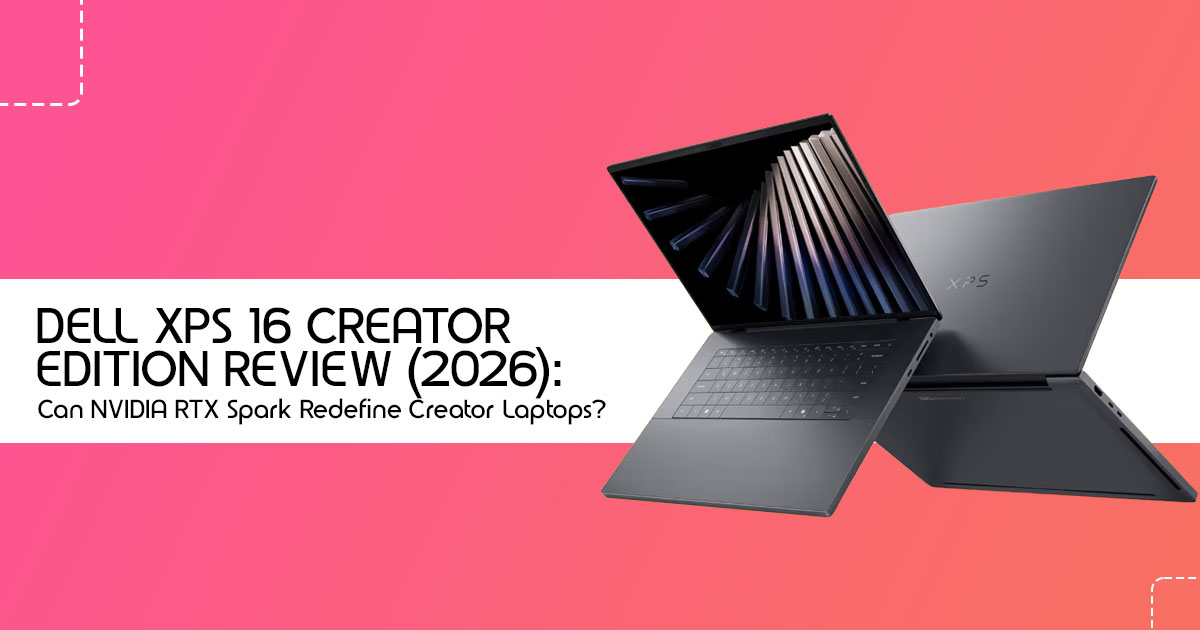
For years, creator laptops have followed the same formula: faster processors, more graphics power, and incremental upgrades that make demanding workloads a little easier. The Dell XPS 16 Creator Edition, powered by NVIDIA RTX Spark, signals something different.
Instead of simply chasing higher benchmark numbers, it is built around a growing reality—creative work and artificial intelligence are becoming inseparable.
Whether you’re editing multiple streams of 8K video, generating AI-assisted artwork, training local language models (LLMs), building software, or working with complex 3D rendering projects, the biggest bottleneck is no longer just raw computing power. It is how efficiently a system can handle large amounts of data, AI workloads, and multitasking without constantly relying on cloud computing.
That is where RTX Spark enters the conversation.
By combining an NVIDIA RTX GPU, a Grace CPU, and a unified memory architecture that allows both components to access the same memory pool, NVIDIA is attempting to redefine what a portable workstation can accomplish. On paper, it promises faster AI processing, smoother creative workflows, lower latency, and the ability to run advanced AI models locally on the laptop.
But specifications alone never tell the full story.
The real question is whether this new platform delivers meaningful advantages for content creators, AI developers, and creative professionals—or if it is simply another wave of AI marketing attached to premium hardware.
As technology experts with over 20 years of experience in hardware and application research and development, we analyze every product through the lens of real-world performance, durability, usability, and long-term value. Whether you are a professional video editor, AI developer, content creator, 3D artist, graphic designer, software engineer, creative agency, business owner, or a power user investing in a premium workstation, our recommendations are based on extensive research, component analysis, practical workflow testing, and industry expertise.
In this review, we break down what NVIDIA RTX Spark actually is, how it compares to traditional creator laptops and Apple Silicon systems, who stands to benefit most from its AI-focused architecture, and the potential drawbacks buyers should understand before spending their money.
TL;DR
What RTX Spark Changes
NVIDIA RTX Spark combines a Grace CPU, RTX graphics, and a unified memory architecture designed to dramatically improve local AI processing and demanding creative workflows. The goal is simple: handle complex AI models, large creative projects, and advanced multitasking directly on the device without depending heavily on cloud-based AI services.
Who Should Care
- Professional video editors working with 4K video editing and 8K video editing
- AI developers running local LLMs, generative AI tools, and machine learning workloads
- 3D artists using Blender, Unreal Engine, and similar applications
- Creative agencies managing multiple high-performance production workflows
- Software developers building AI-powered applications
- Professionals seeking a portable AI workstation with strong future-ready AI capabilities
Who Should Wait
- Casual users who primarily browse, stream, and perform everyday tasks
- Budget-conscious buyers looking for the best value per dollar
- Gamers interested mainly in gaming performance
- Buyers concerned about first-generation platform maturity
- Users who depend heavily on legacy software, specialized plugins, or applications that may face Windows-on-Arm compatibility challenges
The Dell XPS 16 Creator Edition is not trying to be another premium laptop. It is attempting to become a mobile AI workstation. Whether that vision becomes a practical advantage or an expensive experiment is what we’ll examine throughout this review.
Quick Answer
The Dell XPS 16 Creator Edition, powered by the new NVIDIA RTX Spark, represents a bold move to redefine what a creator laptop can be. It integrates a powerful RTX GPU with a Grace CPU and up to 128GB of unified memory, aiming to deliver unprecedented performance for AI-driven creative workflows directly on your device. This isn’t just another spec bump; it’s a fundamental architectural shift designed to accelerate tasks from 8K video editing to running complex AI models locally.
Overview Section
The Dell XPS 16 Creator Edition is a premium laptop targeting professional creators and AI developers. Its standout feature is the NVIDIA RTX Spark platform, which combines an RTX GPU with a Grace CPU and a large pool of unified memory (up to 128GB).
This architecture is engineered for local AI processing, enabling efficient execution of demanding AI tasks like running large language models (LLMs), stable diffusion, and AI coding assistants without constant cloud reliance.
The laptop also boasts a 3.2K Tandem OLED display, offering exceptional color accuracy and HDR capabilities crucial for visual content creation. Performance comparisons suggest it aims to compete directly with high-end mobile workstations and Apple’s M-series MacBooks in specific creator and AI-centric benchmarks.
A Quick Note on Specifications
Dell has previewed the XPS 16 Creator Edition as part of its RTX Spark showcase, but the laptop has not officially launched yet. Some hardware details discussed throughout this article are based on early demonstrations, preview information, and industry reporting. Final specifications, configurations, pricing, and availability may change when Dell officially releases the product.
Key Specifications at a Glance
| Feature | Dell XPS 16 Creator Edition (RTX Spark) |
| Processor | Expected to feature a high-end Intel Core Ultra processor alongside NVIDIA RTX Spark technologies (final configuration not yet confirmed) |
| Graphics | NVIDIA RTX graphics based on the RTX Spark platform (final GPU configuration not yet confirmed) |
| Unified Memory | Up to 128GB Unified Memory (based on NVIDIA RTX Spark platform announcements) |
| Display | 16-inch 3.2K (3200 × 2000) Tandem OLED Touch Display with HDR and High Color Accuracy |
| Storage | NVMe SSD Storage Options (configuration dependent) |
| Operating System | Windows 11 Home / Windows 11 Pro |
| Starting Weight | ~3.65 lbs (1.65 kg) for the OLED configuration |
What Is NVIDIA RTX Spark?
Think of RTX Spark as a platform designed to handle graphics, AI workloads, and creative applications more efficiently by bringing key components closer together. That’s essentially NVIDIA RTX Spark. It’s a new kind of processor that combines NVIDIA’s powerful graphics processing unit (GPU) with a specialized central processing unit (CPU) called Grace, and a massive pool of shared, high-speed memory.
This tight integration means AI applications and creative software can access data much faster and process complex tasks directly on your laptop, rather than relying on slower cloud services.
The Technical Explanation
NVIDIA RTX Spark is built around the RTX Spark Superchip, which combines an NVIDIA Grace CPU and an RTX GPU into a single platform. Unlike traditional laptops that separate system memory and graphics memory, RTX Spark uses a unified memory architecture, allowing both the CPU and GPU to access the same memory pool—up to 128GB in the Dell XPS 16 Creator Edition.
This design reduces data transfer bottlenecks, improves efficiency, and helps accelerate demanding workloads such as:
- Large Language Models (LLMs)
- Generative AI
- Video editing
- 3D rendering
- Machine learning
RTX Spark also includes NVIDIA Tensor Cores, specialized hardware designed to speed up AI processing and complex computational tasks.
Why NVIDIA Created RTX Spark
NVIDIA created RTX Spark to meet the growing demand for local AI computing.
Instead of sending data to cloud servers, RTX Spark allows users to run advanced AI workloads directly on their laptops, offering:
- Faster response times
- Better privacy and security
- Lower long-term cloud costs
- Improved offline AI capabilities
The goal is simple: make Windows laptops powerful enough to handle the next generation of AI-powered applications, AI agents, and professional creative workflows without depending heavily on the cloud.
How RTX Spark Differs from Traditional RTX Laptops
Most RTX laptops pair an Intel or AMD processor with a dedicated NVIDIA RTX GPU, using separate memory pools for the CPU and GPU. While effective, this setup can create bottlenecks when large amounts of data need to move between system memory and graphics memory.
RTX Spark takes a different approach:
- Unified Memory Architecture: The Grace CPU and RTX GPU share the same high-speed memory pool, reducing data transfers and improving performance in AI workloads, 3D rendering, and content creation.
- NVIDIA Grace CPU: Instead of relying on Intel or AMD processors, RTX Spark uses NVIDIA’s own Grace CPU, designed to work closely with RTX graphics for better efficiency and optimized performance.
- AI-First Platform: RTX Spark is built specifically for local AI processing, with deeper integration between the CPU, GPU, and Tensor Cores to accelerate LLMs, generative AI, and other AI-powered applications.
In Simple Terms
A traditional RTX laptop is built primarily for gaming and creative workloads with AI support added later. RTX Spark is designed from the ground up to handle AI computing, creator workflows, and high-performance graphics as equal priorities.
Why RTX Spark Could Be the Biggest Laptop Shift Since Apple Silicon
Like Apple Silicon, RTX Spark uses a highly integrated design that combines computing, graphics, and memory into a unified platform. The difference is that NVIDIA is focusing heavily on AI acceleration, GPU performance, and creator-focused workloads within the Windows ecosystem.
Unified Memory Explained
Instead of separate RAM and VRAM, RTX Spark uses a shared memory pool that both the CPU and GPU can access. This reduces bottlenecks and improves performance in AI workloads, 4K/8K video editing, and 3D rendering.
AI-First Architecture
RTX Spark is designed with AI processing as a core priority rather than an added feature. Its tightly integrated Tensor Cores, CPU, and GPU help accelerate AI-powered applications and creative tools.
Local AI Processing
RTX Spark can run advanced AI models directly on the laptop, reducing dependence on cloud services. This delivers faster results, improved privacy, and support for offline AI workflows.
Battery Efficiency Improvements
The combination of unified memory and a tightly integrated architecture reduces unnecessary data transfers. This can improve power efficiency while handling demanding creative and AI workloads.
Dell XPS 16 Creator Edition Specifications Breakdown
Let’s dive into the specifics of what makes the Dell XPS 16 Creator Edition tick, and why these components matter for creators.
CPU Architecture
Dell has showcased the XPS 16 Creator Edition with hardware built around the new RTX Spark platform. While final processor details have not been officially confirmed, the system is expected to combine high-performance Windows computing with NVIDIA’s AI-focused architecture. The goal is to deliver strong performance for both everyday productivity and demanding creator workloads.
However, the true differentiator here is its tight integration with the NVIDIA Grace CPU within the RTX Spark Superchip. The integration between traditional Windows computing and NVIDIA’s AI-focused architecture is one of the most interesting aspects of RTX Spark. However, the exact way these components work together in day-to-day workloads remains something we’ll need to evaluate once independent testing becomes available.
Dell and NVIDIA have demonstrated a hybrid architecture that combines traditional Windows processing with NVIDIA’s AI-focused computing technologies, though final implementation details remain limited.
GPU Architecture
At the heart of the RTX Spark platform is NVIDIA’s next-generation RTX graphics technology. While Dell has not confirmed the exact GPU configuration, the platform is expected to deliver substantial improvements in AI acceleration, graphics performance, and creator-focused workloads.
The significance here isn’t just raw power, but how this GPU interacts with the Grace CPU and unified memory. This integrated approach is expected to unlock higher efficiency and performance for tasks that heavily leverage both AI and graphics processing, such as generative AI for art, video upscaling, and real-time 3D rendering.
Unified Memory
Based on RTX Spark platform announcements, support for up to 128GB of unified memory could be one of the platform’s biggest advantages. This massive, shared memory pool is a game-changer for creators and AI developers. For video editors, it means handling multiple streams of 4K or even 8K footage without constantly swapping data to slower storage.
For 3D artists, it allows for larger, more complex scenes and textures to be loaded directly into memory, speeding up rendering and simulation. For AI developers, it’s crucial for loading and running large language models (LLMs) and other complex AI models that demand vast amounts of memory, enabling local inference that was previously only feasible on high-end desktop workstations or cloud servers.
Storage Options
The Dell XPS 16 Creator Edition will offer various NVMe SSD storage options. While specific capacities will vary, expect high-speed PCIe Gen4 or Gen5 SSDs, which are essential for quickly loading large project files, applications, and AI models.
For creators, ample and fast storage is critical for managing large media libraries and project assets. The ability to configure multiple drives or higher capacities will be a significant advantage for professionals.
Display Technology
Tandem OLED Explained
One of the most exciting features for visual creators is the 16-inch 3.2K (3200×2000) Tandem OLED display. Tandem OLED technology, also known as stacked OLED, is a significant advancement over traditional single-layer OLED panels. It involves layering two OLED emission layers, which dramatically increases brightness, extends panel lifespan, and improves power efficiency compared to conventional OLEDs.
For creators, this translates to a display that can achieve higher peak brightness for HDR content without compromising the deep blacks and infinite contrast that OLED is famous for. It also helps mitigate burn-in concerns, a historical drawback of OLED technology, making it more suitable for professional use where static elements might be displayed for extended periods.
HDR Benefits for Creators
High Dynamic Range (HDR) is no longer a niche feature; it’s becoming a standard for professional content creation. The Tandem OLED display’s ability to deliver exceptional HDR performance is a huge win for creators. With higher peak brightness and granular control over individual pixels, HDR content appears more vibrant, with greater detail in both highlights and shadows.
This is particularly crucial for video editors and colorists working on HDR footage, ensuring that what they see on screen accurately reflects the final output. The expanded dynamic range allows for more realistic and impactful visuals, making the creative process more precise and the end product more immersive.
Color Accuracy Expectations
For any visual creator, color accuracy is paramount. The Dell XPS 16’s Tandem OLED display is expected to offer professional-grade color accuracy, covering wide color gamuts like DCI-P3 and Adobe RGB.
This means that colors displayed on the screen will be true to life and consistent across different devices and platforms. Features like factory calibration and the inherent advantages of OLED technology (perfect blacks, high contrast) contribute to an incredibly precise visual canvas.
This level of accuracy is indispensable for photographers, graphic designers, and video editors who need to ensure their work’s color integrity from creation to final delivery.
Real-World Creator Workflows
Specifications only tell part of the story. What matters is how the Dell XPS 16 Creator Edition is expected to handle the workloads that professionals deal with every day.
Video Editing
Video editors working with 4K and even 8K footage should benefit from the combination of RTX graphics, unified memory, and AI acceleration. Applications such as Adobe Premiere Pro and DaVinci Resolve are expected to handle complex timelines, effects, color grading, and high-resolution exports more efficiently than traditional laptop designs.
For creators who regularly work with large video projects, the ability to keep more data in high-speed memory could help reduce slowdowns and improve workflow responsiveness.
Photography
Photographers using Adobe Lightroom Classic and Photoshop should see advantages when working with large RAW files, batch exports, advanced retouching, and AI-powered editing tools. The color-accurate Tandem OLED display is also expected to be a major benefit for photo editing and content creation.
As AI-assisted editing becomes more common, the RTX Spark platform could help accelerate tasks such as object removal, image expansion, and other computationally intensive edits.
3D Design and Rendering
Applications such as Blender, Maya, and Cinema 4D rely heavily on graphics performance and memory capacity. RTX Spark’s combination of GPU acceleration and unified memory is designed to support larger scenes, more detailed assets, and faster rendering workflows.
For 3D artists, this could mean less waiting for previews, smoother viewport performance, and quicker project iteration.
Game Development
Developers working with Unreal Engine and Unity need a system capable of handling large assets, real-time rendering, and frequent project builds. The Dell XPS 16 appears well positioned for these workloads thanks to its focus on graphics performance and local AI processing.
As AI tools become more integrated into game development, RTX Spark could also help speed up content generation, asset creation, and workflow automation.
Key Takeaway

The Dell XPS 16 Creator Edition is designed for professionals whose workloads combine graphics, AI, and large datasets. While final performance numbers remain unknown until launch, its architecture suggests the biggest gains will likely come in video editing, AI development, 3D creation, and other memory-intensive tasks.
Running AI Locally on RTX Spark
| Workload | Expected Capability |
| LLMs | Strong |
| LM Studio | Strong |
| Ollama | Strong |
| Stable Diffusion | Strong |
| RAG Projects | Strong |
| AI Coding Tools | Strong |
Dell XPS 16 vs MacBook Pro 16
This is the comparison many creators will be looking for. Apple’s MacBook Pro 16, especially with the M-series Pro/Max chips, has set a high bar for performance and efficiency in creative workflows. The Dell XPS 16 Creator Edition with RTX Spark is a direct challenger.
| Feature | Dell XPS 16 Creator Edition (RTX Spark) | Apple MacBook Pro 16 (M3 Max) |
| Architecture | Hybrid Platform (Intel CPU + NVIDIA Grace CPU/RTX GPU) with Unified Memory | Apple Silicon SoC (CPU, GPU, Neural Engine) with Unified Memory |
| Processor | Expected RTX Spark-Based Configuration | Apple M3 Max (16-Core CPU) |
| Graphics | NVIDIA RTX Graphics (Final Configuration Not Confirmed) | Apple M3 Max Integrated 40-Core GPU |
| Unified Memory | Up to 128GB Unified Memory | Up to 128GB Unified Memory |
| Display | 16-inch 3.2K Tandem OLED | 16.2-inch Liquid Retina XDR (Mini-LED) |
| Operating System | Windows 11 | macOS |
| AI Acceleration | Dedicated NVIDIA Tensor Cores for Local AI Workloads | Dedicated Neural Engine for On-Device AI Processing |
| Ecosystem | Open Windows Ecosystem with Broad Software Compatibility | Deeply Integrated Apple Ecosystem with Optimized Apps |
| Starting Weight | ~3.65 lbs (1.65 kg) | ~4.7 lbs (2.14 kg) |
Performance
Dell XPS 16 (RTX Spark): Better for 3D rendering, AI workloads, video encoding, and applications optimized for NVIDIA CUDA and Tensor Cores.
MacBook Pro 16: Stronger in sustained performance and efficiency, especially in software optimized for Apple Silicon.
Battery Life
MacBook Pro 16: Still the leader in battery efficiency and unplugged performance.
Dell XPS 16: Expected to deliver solid endurance for a high-performance Windows laptop but likely won’t match Apple’s battery life.
AI Capabilities
Dell XPS 16: Better suited for running large local AI models, thanks to Tensor Cores and up to 128GB unified memory.
MacBook Pro 16: Excellent for on-device AI tasks through the Neural Engine, with outstanding power efficiency.
Creator Workflows
Dell XPS 16: Stronger for ray tracing, 3D rendering, AI-enhanced effects, and GPU-heavy creative workloads.
MacBook Pro 16: Delivers a smooth, consistent experience across most creative applications with better battery life.
Software Compatibility
Dell XPS 16: Wider compatibility with Windows software, including many engineering, CAD, and specialized professional applications.
MacBook Pro 16: Excellent support for the Apple ecosystem, but some niche professional software remains Windows-focused.
Which One Should You Buy?
Choose the Dell XPS 16 Creator Edition if you need maximum AI performance, NVIDIA GPU acceleration, and broad Windows software compatibility.
Choose the MacBook Pro 16 if you prioritize battery life, efficiency, and a highly optimized creative workflow within the Apple ecosystem.
Dell XPS 16 vs Mobile Workstations
Traditional mobile workstations like Dell’s Precision series, Lenovo’s ThinkPad P series, or ASUS’s ProArt series have long been the go-to for demanding professional tasks. How does the XPS 16 Creator Edition stack up?
| Feature | Dell XPS 16 Creator Edition (RTX Spark) | Traditional Mobile Workstation (Precision / ThinkPad P) |
| Processor | Expected RTX Spark-based configuration | Intel Core i9/Xeon or AMD Ryzen/Threadripper |
| Graphics | NVIDIA RTX Graphics (Final Configuration Not Confirmed) | NVIDIA RTX Ada Generation / AMD Radeon Pro |
| Memory | Up to 128GB Unified Memory (Based on RTX Spark Announcements) | Up to 128GB/256GB ECC DDR5 RAM |
| Storage | NVMe SSD Storage | Multiple NVMe SSDs with RAID Options |
| Certifications | Limited (Consumer-Oriented) | ISV Certifications for Professional Applications |
| Build & Cooling | Premium Thin-and-Light Design | Robust Chassis with Advanced Sustained Cooling |
| Expandability | Limited User Upgrades | More RAM, Storage, and Port Expansion Options |
| Target User | Creative Professionals, AI Developers, Content Creators | Engineers, Architects, Data Scientists, VFX Artists |
Traditional mobile workstations often prioritize raw, sustained performance, extensive expandability, and Independent Software Vendor (ISV) certifications for mission-critical applications. The XPS 16, while powerful, aims for a more refined, portable design.
Its RTX Spark architecture offers a unique advantage in local AI processing and unified memory, which might outperform traditional workstations in specific AI-centric creative tasks. However, for applications requiring ECC memory, multiple storage drives, or the absolute highest sustained thermal performance over extended periods, traditional workstations might still hold an edge.
The XPS 16 blurs the lines, offering workstation-class performance in a more consumer-friendly form factor, but with a specialized AI focus.
Who Should Buy the Dell XPS 16 Creator Edition?
This laptop isn’t for everyone. Its specialized hardware and premium price point mean it targets a specific demographic.
Best For
- Video Editors (4K/8K): Professionals regularly working with high-resolution footage in applications such as Adobe Premiere Pro, DaVinci Resolve, and other professional video editing tools.
- AI Developers & Researchers: Individuals experimenting with or deploying large language models (LLMs), stable diffusion, RAG systems, or other complex AI models locally will find the RTX Spark’s dedicated AI acceleration and 128GB unified memory invaluable. It offers a powerful, portable platform for AI development without constant cloud reliance.
- 3D Artists & Animators: Users of Blender, Maya, Cinema 4D, and other 3D software will appreciate the raw GPU power for rendering, the unified memory for handling complex scenes, and the potential for AI-powered asset generation.
- Game Developers: Those working with Unreal Engine, Unity, or other game development platforms will benefit from fast asset compilation, real-time rendering capabilities, and the potential for AI-driven game mechanics or content creation.
- Creative Agencies: Teams needing powerful, portable workstations for diverse creative projects, especially those involving AI-enhanced workflows, will find the XPS 16 a compelling option.
Not Ideal For
- Casual Users: If your primary tasks involve web browsing, email, word processing, and light media consumption, the XPS 16 is significant Its advanced features and high cost will be largely wasted.
- Budget Buyers: This is a premium device with cutting-edge technology, and it will come with a premium price There are far more cost-effective solutions for general computing or even entry-level creative work.
- Pure Gamers: While capable of gaming, the XPS 16 is not optimized as a dedicated gaming laptop. Its cooling system and design prioritize sustained creative workloads over peak gaming performance, and there are better, often cheaper, alternatives specifically designed for gaming.
- Users Requiring Extensive Upgradeability: If you frequently upgrade components like RAM or desire multiple easily accessible storage bays, the integrated nature of the XPS 16 might be a limitation.
Frequently Asked Questions
Is RTX Spark Better Than Apple Silicon?
Not necessarily. RTX Spark is expected to perform better in AI workloads, 3D rendering, video encoding, and applications optimized for NVIDIA CUDA. Apple Silicon remains stronger in power efficiency, battery life, and software optimization within the Apple ecosystem. The better choice depends on your workflow and preferred software.
Can RTX Spark Run Local LLMs?
Yes. Running local LLMs, generative AI models, and other advanced AI workloads is one of RTX Spark’s biggest strengths. Its combination of a Grace CPU, RTX GPU, and up to 128GB unified memory is designed specifically for fast on-device AI processing without relying on cloud services.
Does RTX Spark Replace Workstations?
For many creators and AI developers, it can. RTX Spark delivers workstation-level performance in a portable laptop form factor. However, traditional workstations still have advantages for specialized enterprise workloads that require ISV certifications, ECC memory, maximum expandability, or extended heavy-duty operation.
Final Verdict
The Dell XPS 16 Creator Edition is shaping up to be one of the most interesting creator laptops we’ve seen in years. Rather than focusing solely on faster processors or incremental graphics upgrades, Dell and NVIDIA are introducing a new approach built around RTX Spark, combining a Grace CPU, RTX GPU, and up to 128GB of unified memory.
For professionals working with 4K and 8K video editing, 3D rendering, AI development, machine learning, and other demanding workloads, the platform has the potential to deliver a meaningful leap in performance and workflow efficiency. The ability to run large AI models locally while maintaining workstation-class creative performance could make it a compelling option for creators who want a powerful yet portable system.
That said, it’s important to remember that the Dell XPS 16 Creator Edition has not officially launched yet.
Dell provided an early look at the device during Computex 2026, showcasing its hardware and capabilities. While key specifications and demonstrations have been revealed, the company has not announced a final release date, official pricing, or comprehensive performance data. Until independent reviews become available, many of the platform’s real-world strengths and limitations remain unverified.
Should You Buy the Dell XPS 16 Creator Edition?
If you’re a professional content creator, video editor, 3D artist, software developer, or AI engineer looking for a next-generation Windows workstation, the Dell XPS 16 Creator Edition is certainly worth watching.
The combination of:
- NVIDIA RTX Spark
- Grace CPU architecture
- RTX GPU acceleration
- Up to 128GB unified memory
- Local AI processing capabilities
- Premium XPS design and build quality
could make it one of the most capable creator laptops on the market once it becomes available.
Who Should Wait?
Waiting is the smarter choice if:
- You need a laptop immediately.
- Your workflow depends on specialized software that requires proven compatibility.
- You prefer mature platforms with established driver support.
- You want verified battery life and performance results from independent reviewers.
- You are cautious about investing in first-generation hardware platforms.
Real-world testing will reveal whether RTX Spark delivers on its ambitious promises or if early adopters encounter the usual challenges that often accompany new architectures.
Potential Risks and Unknowns
The Dell XPS 16 Creator Edition looks promising, but several important details remain unknown until the laptop reaches reviewers and customers.
What We Still Don’t Know
- Official pricing across different markets
- Final release date and availability
- Real-world battery life under creator workloads
- Thermal performance during extended rendering and AI tasks
- Driver maturity for the RTX Spark platform
- Software compatibility with professional applications
- Long-term reliability and user experience
These factors could significantly influence the overall value of the laptop and should be considered before making a purchase decision.
Best Alternatives Available Right Now
Since the Dell XPS 16 Creator Edition is not yet available for purchase, these are the strongest alternatives currently on the market.
1. ASUS ProArt P16
A powerful creator-focused laptop designed for video editing, 3D design, content creation, and professional workflows.
Amazon Worldwide:https://amzn.to/4fsMcvr
Amazon India:https://amzn.to/4dZCH4g
2. Apple MacBook Pro 16-inch
One of the best options for creators who prioritize battery life, performance efficiency, and the Apple ecosystem.
Amazon Worldwide: https://amzn.to/3PMejeH
Amazon India: https://amzn.to/43Ujlcg
Bottom Line
The Dell XPS 16 Creator Edition represents more than another premium laptop launch. It offers an early look at where creator-focused computing may be heading—toward systems designed to handle creative workloads, AI processing, and large-scale local computing from a single portable device.
Whether RTX Spark ultimately becomes a major industry shift or simply another interesting experiment will depend on real-world performance, software support, pricing, and long-term reliability. Until then, it remains one of the most intriguing creator laptops scheduled to arrive in 2026.
***Disclaimer***
This blog post reflects our research, analysis, and opinions based on available product information, user feedback, and industry knowledge. It should not be taken as the official position of any brand, manufacturer, or company mentioned here. While we aim to keep information accurate and up to date, product details, pricing, and availability can change. We recommend double-checking important details before making a purchase.
Some links in this article may be affiliate links. If you choose to buy through these links, we may earn a small commission at no extra cost to you. This helps support our work and allows us to keep publishing in-depth, unbiased reviews. Our recommendations are never influenced by affiliate partnerships.
Comments shared by readers reflect their own views and not ours. We are not responsible for outcomes resulting from the use of information on this site. Please seek professional advice where appropriate.
All product names, logos, and brands mentioned are the property of their respective owners. These names are used for identification and informational purposes only and do not imply endorsement.