
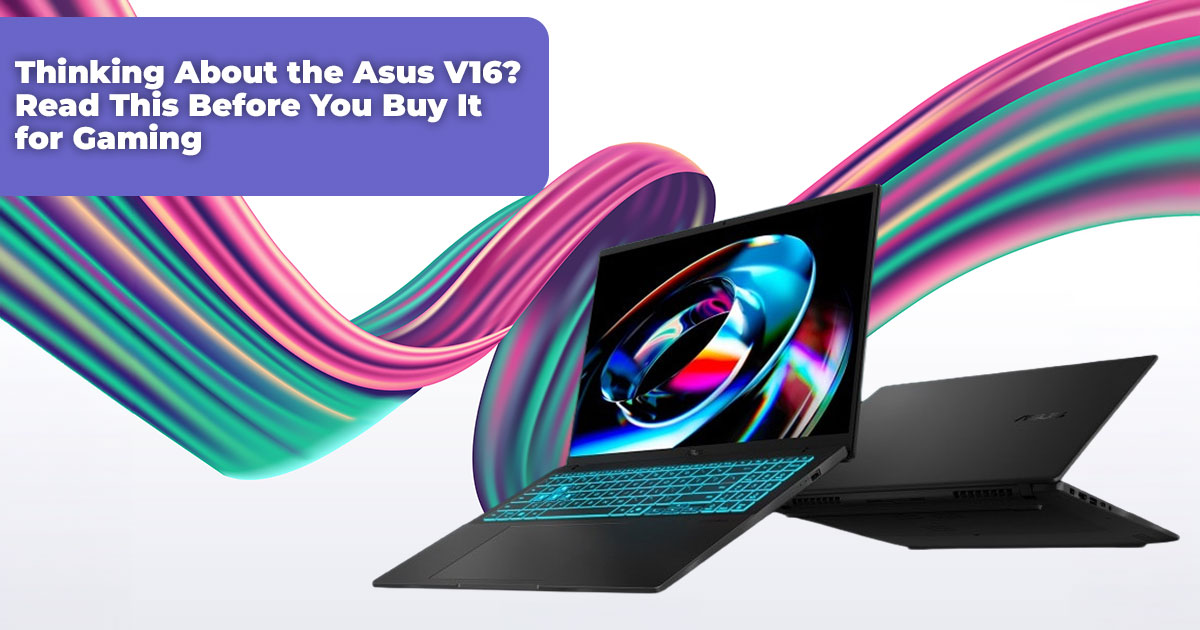
Introduction: A Professional Laptop That Still Plays Games—Is That Too Much to Ask?
Most laptop buyers today want one machine that can handle office work, video calls, and school assignments during the day, then run a few games at night without looking out of place. What they don’t want is a bulky device covered in lights, loud fans, and aggressive styling.
That’s where the Asus V16 steps in.
It’s positioned as a professional-looking gaming laptop with a clean design, muted appearance, and hardware that suggests solid gaming power on paper. The idea is simple: one laptop that fits into a classroom or office and still works as a stealth gaming laptop after hours.
But design alone doesn’t decide value.
After using the Asus V16 daily for weeks, the strengths and limitations became clear. This Asus V16 review focuses on real-world use rather than short benchmark runs, because daily experience is what determines whether a laptop actually works for your routine.
Buy from Amazon now
Buy on Amazon Worldwide | Buy on Amazon India
As technology experts with over 20 years of experience in hardware and application research and development, we analyze each product based on real-world performance, durability, and value for money. Our goal is to help readers find the best option across budget, performance, reliability, and long-term use.
For students, remote workers, office professionals, and casual gamers, every recommendation here is based on component analysis, extended daily use, and industry expertise.
The big question remains: when costs are cut, does quality survive—or does it quietly disappear?
Technical Specifications at a Glance
| Feature | Details |
| Display | 16-inch, 2560×1600 (1600p), 120Hz, matte finish |
| Processor | Latest-generation Intel Core processor optimized for efficiency
and sustained workloads |
| Graphics | RTX 5070 (50–60W limit) or RTX 5060 option |
| RAM | 16GB base, upgradable to 32GB |
| Storage | 1TB SSD, single M.2 slot only |
| Weight | 4.2 pounds |
| Battery | 70Wh |
| Ports | 2× USB-C (one with charging), 2× USB-A, HDMI, headphone
jack |
| Approximate Price | Starts around $1,500 (RTX 5070 config) |
1. Who the Asus V16 Is Really For
The Asus V16 is built for people who want the best professional-looking gaming laptop without the usual gamer aesthetic. That includes students balancing coursework and gaming, remote workers spending long hours in meetings, and anyone who wants a quiet gaming laptop that doesn’t draw attention in public spaces.
It promises practical productivity during the day and capable gaming at night, all while staying portable and restrained in design. In theory, it sounds like a sensible solution for real life in 2025–2026, where flexibility matters more than flashy hardware.
But one core design decision shapes everything, from performance to pricing. And it changes how this laptop should be judged.
That’s where expectations start to shift.
2. Why This Asus V16 Review Matters Right Now
Many Asus V16 reviews focus on short benchmarks and average frame rates. Those numbers look reassuring, but they don’t show what happens after a full day of work followed by an evening gaming session. They also don’t explain how the Asus V16 battery life feels when there’s no outlet nearby.
This review looks at what actually affects ownership:
- Typing comfort during long writing sessions
- Display quality under different lighting conditions
- Fan noise during calls and quiet work
- Heat levels during extended use
- Whether the Asus V16 keyboard and trackpad feel dependable over time These details shape daily satisfaction far more than a single benchmark score.
3. What You’ll Learn From This Asus V16 Review
- How Asus V16 GPU wattage and power limits affect real gaming performance
- Where Asus V16 display quality and speakers stand out—or fall short
- An honest assessment of Asus V16 build quality and durability
- Real-world Asus V16 battery life for both work and gaming
- Clear Asus V16 pros and cons to support a buying decision
- Better alternatives that address the main weaknesses
- Exactly who should consider the Asus V16—and who should avoid it
Quick — Key Takeaway
The Asus V16 works well as a productivity laptop with light gaming capability, especially when found at a strong discount. At full price, the Asus V16 RTX 5070 throttling, tight power limits, and build compromises make it difficult to recommend for anyone expecting consistent gaming performance.
It aims to balance professional use and gaming. Right now, the price tips that balance the wrong way.
If you’re already checking prices or comparing configurations while reading, it helps to know what the Asus V16 actually costs in different regions.
These are the two most common versions people look at when deciding whether the trade-offs make sense:
- Amazon Worldwide – ASUS V16 Gaming Laptop, 16” WUXGA 144Hz Display, Intel Core 7 240H, NVIDIA GeForce RTX 5060, 32GB RAM, 1TB SSD, Windows 11
- Amazon India – ASUS Gaming V16 (2025), Intel Core 7 240H, RTX 4050, 16GB RAM, 512GB SSD, 16” 144Hz, Windows 11
4. Asus V16 Design Purpose: A Professional Looking Gaming Laptop for Work and Play
The Asus V16 is made for people who want one laptop that can cover work and gaming without switching devices. It avoids the usual gaming laptop look. There are no oversized vents, no glowing logos, and no sharp design choices. Instead, it uses a simple metal lid, neutral colors, and a low-profile design that feels at home in offices, classrooms, and shared workspaces.
That puts it squarely in the stealth gaming laptop category and makes it appealing to anyone searching for a professional-looking gaming laptop. On paper, the idea is clear: handle daily work without noise or distractions, then run games in the evening without turning the laptop into a loud, bulky machine.
The challenge comes from that same slim and quiet design. When the laptop is pushed for longer gaming sessions, the Asus V16 thermal performance becomes the main limiting factor. Comfort and appearance take priority over sustained output, and that choice shapes the overall experience.
5. Asus V16 GPU Wattage and Power Limit Explained in Simple Terms
One detail matters more than most people expect: GPU wattage.
In gaming laptops, GPU wattage decides how much power the graphics card can use. Higher wattage usually leads to stronger and more consistent performance, especially during longer gaming sessions. Many mid-range gaming laptops allow GPUs to run between 100W and 140W.
The Asus V16 RTX 5070 runs at around 50–60W. This keeps heat and fan noise under control, but it also limits how much performance the GPU can sustain. Early in a gaming session, frame rates look solid. After about 10–15 minutes, Asus V16 GPU throttling begins as heat builds up, and performance settles lower than the specs suggest.
That’s why searches like “why Asus V16 RTX 5070 underperforms” and “does Asus V16 throttle GPU” are so common. The hardware itself isn’t weak, but the Asus V16 power limit defines how far it can go. The Asus V16 RTX 5060 version fits these limits more realistically and usually costs less, which makes it a better match for many buyers.
6. Asus V16 Real-World Use: Work Comfort, Gaming Behavior, and Battery Life
For everyday work, the Asus V16 feels comfortable and easy to live with. The keyboard supports long typing sessions without strain, making it suitable for documents, assignments, and reports. The screen stays comfortable for extended reading and writing. Asus V16 webcam quality and Asus V16 microphone quality handle video calls, online classes, and meetings without extra equipment.
Gaming starts strong but changes as sessions go on. After 20–30 minutes, the underside warms up, fans become more noticeable, and frame rates level off lower than expected. Most modern games run best at 1080p or 1200p on medium settings to stay stable over time.
At 4.2 pounds, carrying it around campus or to a café is manageable, though the charger adds noticeable weight. Asus V16 battery life for work averages 4–6 hours of mixed use, such as browsing, documents, and streaming. Gaming on battery drains fast and triggers heavy throttling, which makes unplugged gaming impractical.
One repeated issue is the Asus V16 trackpad quality. Gestures work as expected, but precision feels inconsistent. Missed clicks and cursor jumps happen often enough that many users end up using a mouse.
7. Asus V16 Display Quality and Speaker Performance in Daily Use
Indoors, the Asus V16 display quality is one of its strongest points. The 1600p 120Hz panel looks sharp, text appears clean, and motion feels smooth. The matte finish reduces reflections from indoor lighting, which helps during long work sessions, streaming, and casual gaming.
The Asus V16 speaker quality is better than expected for a thin laptop. Voices sound clear, bass has presence, and volume stays clean for everyday listening. Movies, music, and calls all benefit from speakers that don’t feel like an afterthought.
Brightness is the main drawback. In bright rooms or outdoor settings, the screen can look washed out. This makes the V16 better suited for indoor desk use rather than frequent outdoor or café-based work.
For users who spend most of their time indoors, the display and speakers add real value. For those who work in bright environments, this limitation is worth keeping in mind.
8. Asus V16 Real-World Performance: CPU Strength vs GPU Limits
In everyday use, the Asus V16 performance feels reliable for work-focused tasks. CPU-heavy workloads such as photo editing, light video work, coding, and running many browser tabs remain smooth and responsive. For productivity, the laptop behaves like a solid daily driver and rarely feels held back.
Gaming tells a different story. GPU-intensive games push the cooling system quickly, and longer sessions expose the limits of the design. Newer AAA titles often need lower graphics settings or reduced resolution to stay smooth over time. While the higher-resolution display helps mask brief drops, thermal limits still show up once heat builds.
This pattern is common in thin gaming laptops, where limited cooling space forces manufacturers to cap power. The Asus V16 favors short bursts of power rather than long, demanding gaming sessions.
9. Asus V16 Build Quality and Durability: Where the Budget Shows
At first glance, the Asus V16 build quality feels reassuring. The metal lid adds rigidity and gives the laptop a more premium look. However, the rest of the chassis relies on plastic, which shows minor flex when pressure is applied.
The keyboard deck has a small amount of give during firm typing. It doesn’t affect basic use, but it’s noticeable compared to higher-end laptops. Over time, the hinges develop light wobble when adjusting the screen. These aren’t immediate failures, but they reflect Asus V16 build compromises that separate it from more expensive models.
For normal daily use, durability is acceptable. For buyers expecting a rigid, long-term premium feel, the materials may feel limiting.
10. Asus V16 Battery Life, Upgrade Options, and Long-Term Use
Asus V16 battery life depends heavily on how the laptop is used. For gaming, battery runtime is short and restricted by power limits. Performance drops quickly, making unplugged gaming impractical. For productivity, expect 4–6 hours of mixed use, not a full workday.
Upgrade options are mixed. Asus V16 RAM upgrade is straightforward thanks to an accessible memory slot, which makes increasing RAM simple. Asus V16 SSD upgrade is more restrictive, as there is only a single M.2 slot, limiting future storage expansion.
For users who prioritize clean design, quiet operation, and balanced daily use, the Asus V16 fits a specific niche. Understanding these limits early helps avoid frustration later.
Buy from Amazon now
Buy on Amazon Worldwide | Buy on Amazon India
11. Asus V16 Price and Value in 2025–2026: Is It Worth Buying?
At around $1,500 for the RTX 5070 model, expectations are naturally high. At this price, buyers expect strong performance for both work and gaming. In practice, the Asus V16 RTX 5070 price often feels hard to justify given the power limits and performance constraints.
The Asus V16 RTX 5060 version usually makes more sense financially. It aligns better with the laptop’s cooling design and costs less, making it easier to accept the performance trade-offs. Asus V16 gaming laptop deals, especially during major sales events, can also shift the value closer to reasonable.
That’s why searches like “is Asus V16 worth buying” and “is Asus V16 overpriced” are so common. At full price, many buyers hesitate. At the right discount, the V16 becomes a more practical option for the right audience.
For readers comparing real-world pricing before deciding, these are the two Asus V16 configurations most commonly available right now.
Checking them side by side helps put the performance limits into proper context. Click here to explore more on Amazon Worldwide and Amazon India.
12. Best Alternatives to Asus V16 That Actually Fix the Core Problems
Once the Asus V16 is understood clearly, the next question becomes simple: is there something that does the same job with fewer compromises?
For many buyers, the answer is yes—and it comes from Asus itself.
The Asus TUF Gaming lineup keeps a fairly restrained look while solving the V16’s biggest issue: limited sustained power. These models allow the GPU to run closer to its intended limits, which changes real-world gaming and long-term reliability.
| Feature | Asus V16 (RTX 5070) | Asus TUF A16 | Asus TUF A14 |
| Weight | 4.2 lbs | 4.8 lbs | 3.9 lbs |
| GPU Power Limit | 50–60W | 120–140W | 100–115W |
| Sustained
Gaming |
Noticeable throttling | Consistent
performance |
Balanced and stable |
| Build Feel | Some flex | Solid | Very sturdy |
| Battery (mixed
use) |
4–6 hours | 5–7 hours | 6–8 hours |
| Typical Price Range | ~$1,500 | $1,600–$1,750 | $1,300–$1,450 |
| Best Fit | Office-first look | Gaming + work
balance |
Portability + value |
Here’s the practical takeaway:
- The Asus TUF A16 is the right choice if gaming performance matters. It delivers performance closer to what most RTX 5070 gaming laptops deliver without constant throttling. It’s thicker and heavier, but it behaves the way a gaming laptop should during long sessions.
- The Asus TUF A14 is the smarter pick for most It’s lighter, usually cheaper, and avoids most of the V16’s performance drops. For buyers who want portability without giving up consistency, this is often the better choice.
If the V16 feels close but still frustrating, these two models make it clear what changes when power and cooling are handled properly.
Read our other articles for more reviews on the Asus TUF A14 and Asus TUF A16 here.
13. Who Should Buy the Asus V16 — And Who Should Walk Away
The Asus V16 isn’t a bad laptop. It’s a specific laptop. Once expectations are clear, the decision becomes much easier.
The Asus V16 makes sense if:
- A professional-looking gaming laptop matters more than raw gaming power
- Most daily work is CPU-based: writing, browsing, research, light editing
- Gaming is occasional and focused on lighter or older titles
- You find a strong discount that brings the price well below typical RTX 5070 systems In those cases, the V16 can feel clean, quiet, and easy to live with.
You should skip the Asus V16 if:
- You’re paying the full RTX 5070 price
- You expect steady high-settings gaming in modern titles
- You rely on battery life or trackpad quality during long days away from a desk
- You do GPU-heavy creative work that needs sustained performance
This is where many buyers get stuck. On paper, the specs look convincing. In daily use, the power limits define everything.
What we’d choose:
For most people spending this kind of money, the Asus TUF A14 makes more sense. It delivers fewer surprises, better balance, and stronger long-term value. The TUF A16 is the move if gaming performance is the priority and extra weight isn’t a deal-breaker.
Summary — The Decision, Made Simple
- Choose the Asus V16 if you want a clean, quiet laptop for work with light This only makes sense if the price is right.
- Skip it if you expect full RTX-class gaming performance.
- Buy the Asus TUF A14 for the best balance of portability, performance, and value.
- Buy the Asus TUF A16 if gaming comes first and you want consistent results.
If you’ve reached this point, the decision is already clear. The next step isn’t more research. It’s choosing the laptop that matches how you actually use it.
14. Clearing Common Doubts About the Asus V16
Before making a final call, most buyers pause at the same questions. These are the practical concerns people search for after reading specs or watching reviews. The answers below focus on real-world Asus V16 performance, not marketing claims, so readers can quickly decide whether this laptop fits their daily use.
Q. Is the Asus V16 good for gaming?
- The Asus V16 gaming performance is solid for casual play and older titles. It handles modern games at 1080p or 1200p on medium settings, but the Asus V16 RTX 5070 throttling limits performance in demanding AAA games. It’s fine for evening gaming, not for sustained high- settings play.
Q. Is the Asus V16 good for work and study?
- Yes. For productivity, the Asus V16 performs very well. The keyboard is comfortable for long typing, the webcam and microphone are clear, and the fan noise stays low during everyday tasks. This makes it a strong choice for students, remote workers, and office use.
Q. Does the Asus V16 overheat during gaming?
- The laptop does get warm under load, especially during longer gaming sessions. However, it stays within safe temperature limits because power limits and thermal throttling step in early. Heat is controlled, but performance drops as a result.
Q. Why does the Asus V16 have strict power limits?
- Like many thin gaming laptops, the Asus V16 prioritizes a slim design and quieter operation. The cooling system can’t dissipate high heat for long periods, so Asus caps GPU wattage to protect the hardware and manage fan noise. This trade-off affects sustained gaming performance.
These answers reflect what most buyers want to know after searching terms like “is Asus V16 worth buying,” “does Asus V16 throttle GPU,” and “Asus V16 good for work and gaming.” If those trade-offs sound acceptable, the V16 can fit well. If not, looking at alternatives with higher power limits is the smarter move, refer to section 12.
Buy from Amazon now
Buy on Amazon Worldwide | Buy on Amazon India
15. Frequently Asked Questions About the Asus V16
These are the questions people usually search right before making a decision. The answers below focus on real-world use, common concerns, and whether the Asus V16 actually makes sense for different types of buyers in 2025–2026.
Q. Is the Asus V16 worth it in 2025–2026?
- The Asus V16 is worth considering only if design and quiet operation matter most and you find it at a good discount. At full price, the performance limits make it harder to justify compared to better-balanced alternatives.
Q. What are the main Asus V16 problems?
- The most common Asus V16 issues are GPU throttling, an average trackpad, short battery life, and some chassis flex. None is a deal-breaker alone, but together they affect long-term satisfaction.
Q. Asus V16 RTX 5070 vs RTX 5060 — which version is better?
- For most buyers, the Asus V16 RTX 5060 offers better value. Both GPUs are similarly power- limited, so the real-world gaming difference is smaller than expected, while the 5060 model usually costs less.
Q. Can you upgrade the Asus V16 later?
- RAM upgrades are supported, which helps extend usability. Storage upgrades are limited because there is only a single M.2 slot, so expansion options are restricted.
Q. How loud is the Asus V16 fan noise during daily use?
- During productivity tasks, the Asus V16 fan noise stays very low and often goes unnoticed. During longer gaming sessions, fans become audible but remain quieter than many traditional gaming laptops.
Q. Is the Asus V16 a good gaming laptop under $1,500?
- It can be a reasonable option when discounted, especially for casual or medium-setting gaming. Buyers who want consistent high-performance settings should look at laptops with higher GPU power limits.
16. Final Verdict: Strong for Work, Limited for Serious Gaming
The Asus V16 makes sense once its role is clear. It’s a clean, professional-looking laptop that works well for office tasks, online classes, video calls, and everyday multitasking. For students and hybrid work users who want one machine for work first and gaming second, it can be a reasonable choice—especially if it’s picked up at the right price.
The limitation shows up when gaming becomes the focus. The strict Asus V16 power limit holds the hardware back, which means the specs don’t always translate into the performance buyers expect. Short gaming sessions are fine, but longer ones expose the trade-offs. In the 2025–2026 market, there are alternatives that offer stronger and more consistent gaming performance without sacrificing a clean, professional design.
The takeaway is straightforward: the Asus V16 works best as a productivity-focused laptop with light to moderate gaming on the side. It isn’t built for long, high-end gaming sessions.
For those checking current prices or comparing conffgurations, here are the two conffgurations most readers compare before deciding:
- Amazon Worldwide – ASUS V16 Gaming Laptop, 16” WUXGA 144Hz Display, Intel Core 7 240H, NVIDIA GeForce RTX 5060, 32GB RAM, 1TB SSD, Windows 11
- Amazon India – ASUS Gaming V16 (2025), Intel Core 7 240H, RTX 4050, 16GB RAM, 512GB SSD, 16” 144Hz, Windows 11
If you’ve already used the Asus V16 or are considering it, sharing real experiences helps everyone—battery life, gaming results, or daily use questions. We’re always glad to help readers decide whether this laptop fits their needs before they commit.
***Disclaimer***
This blog post reflects our own research, testing, and personal opinions. It should not be taken as the official position of any brand, manufacturer, or company mentioned here. While we aim to keep information accurate and up to date, product details, pricing, and availability can change. We recommend double-checking important details before making a purchase.
Some links in this article may be affiliate links. If you choose to buy through these links, we may earn a small commission at no extra cost to you. This helps support our work and allows us to keep publishing in-depth, unbiased reviews. Our recommendations are never influenced by affiliate partnerships.
Comments shared by readers reflect their own views and not ours. We are not responsible for outcomes resulting from the use of information on this site. Please seek professional advice where appropriate.
All product names, logos, and brands mentioned are the property of their respective owners. These names are used for identification and informational purposes only and do not imply endorsement.