
Quick Answer
What Is the Blackmagic PYXIS 6K?
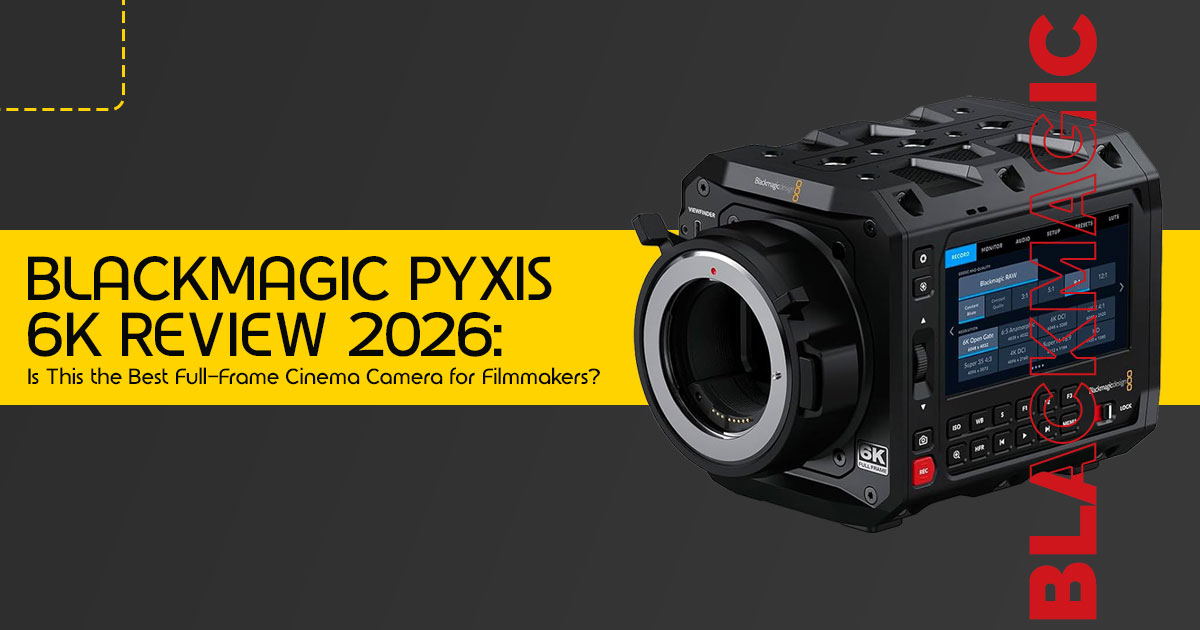
The Blackmagic PYXIS 6K is a compact, full-frame 6K cinema camera designed for professional filmmaking. It features a modular, box-style body, a 36x24mm sensor, 13 stops of dynamic range, and records internally in Blackmagic RAW (BRAW), Blackmagic Design’s professional RAW video format. It’s built for extensive rigging and offers multiple lens mount options (EF, PL, L-mount).
Who Should Buy It?
Filmmakers prioritizing exceptional image quality, a flexible modular design for custom rigging, and a seamless Blackmagic RAW workflow within DaVinci Resolve will find the PYXIS 6K an excellent choice. It’s particularly well-suited for indie filmmakers, documentary creators, and those producing content where manual focus and a controlled shooting environment are standard.
Who Should Skip It?
If continuous autofocus is critical for your work (e.g., vlogging, fast-paced run-and-gun, sports), or if you require built-in ND filters and robust weather sealing, the PYXIS 6K might not be the best fit. Users heavily reliant on ProRes codecs or those seeking a simple, all-in-one solution without additional rigging will also find it less ideal.
Is It Better Than the Sony FX3?
The PYXIS 6K offers a higher-resolution full-frame 6K sensor, while the Sony FX3 focuses on oversampled 4K capture and class-leading autofocus performance. However, the FX3 excels in autofocus performance, in-body image stabilization (IBIS), and a more compact, ready-to-shoot form factor, making it better for solo operators and hybrid shooters. When comparing the Blackmagic PYXIS 6K vs Sony FX3, the decision comes down to priorities. When comparing the Blackmagic PYXIS 6K vs Sony FX3, it really comes down to how you shoot. The PYXIS is built for filmmakers who want maximum image quality and grading flexibility, while the FX3 is designed for creators who need dependable autofocus and a faster shooting experience.
Is It Worth the Price?
At its price point, the PYXIS 6K delivers exceptional image quality and a professional workflow typically found in much more expensive cinema cameras. While the initial body cost is attractive, it’s important to factor in the additional expenses for essential accessories like external monitors, batteries, and rigging. For those who can leverage its strengths and are prepared for the modular approach, it offers significant value.
1.0 Introduction
Cinema cameras have become more capable than ever, but they’ve also become more expensive. That’s what makes the Blackmagic PYXIS 6K so interesting. It brings a full-frame 6K sensor, Blackmagic RAW recording, and a professional cinema workflow to a price range that independent filmmakers can realistically afford.
The Blackmagic PYXIS 6K represents a significant shift in Blackmagic Design’s camera strategy. Instead of following the DSLR-style design of earlier models, Blackmagic has moved to a modular box-camera format built for professional productions. The result is a full-frame 6K cinema camera that offers greater flexibility for rigging, monitoring, and customization.
As technology experts with over 20 years of experience in hardware and application research and development, we evaluate cameras not only on specifications but also on real-world usability, workflow efficiency, and long-term value.
This isn’t a review filled with marketing fluff or technical jargon for its own sake. Instead, we’ll cut through the noise to provide a human-centric, opinion-driven analysis of how the PYXIS 6K truly performs in the hands of filmmakers. We’ll explore its strengths, acknowledge its compromises, and compare it directly against its closest rivals, helping you decide if this camera is the right tool to bring your cinematic visions to life.
1.1 Technical Specifications at a Glance
| Feature | Specification |
| Sensor Size | Full-Frame (36 × 24mm) CMOS |
| Resolution | 6K (6048 × 4032) |
| Dynamic Range | 13 Stops |
| Native ISO | Dual Native ISO 400 / 3200 |
| Lens Mounts | EF, PL, or L-Mount (Selected at Purchase) |
| Recording Format | Blackmagic RAW (BRAW) 12-bit |
| Frame Rates | Up to 36fps (6K Open Gate), 60fps (4K DCI), and 120fps (HD) |
| Storage | 2× CFexpress Type B Slots and USB-C External Recording |
| Connectivity | 12G-SDI, 2× USB-C, Mini XLR, Gigabit Ethernet, and Bluetooth |
| Monitor | 4-inch HDR LCD Touchscreen (Side-Mounted) |
| Autofocus | Contrast-Detect Autofocus (Single-Shot Only, No Continuous AF) |
| Weight | Approximately 1.5 kg (Body Only) |
This review is designed to be a valuable resource whether you’re considering a purchase, already own a PYXIS 6K, or simply want to understand the evolving landscape of cinema cameras. We’re here to help you navigate the complexities and make the best choice for your filmmaking journey.
2.0 Why Blackmagic Created the PYXIS 6K
The PYXIS 6K reflects a growing shift toward modular cinema cameras. Unlike hybrid cameras designed for both photography and video, the PYXIS focuses entirely on filmmaking. Its box-style design gives creators the flexibility to build custom rigs for gimbals, drones, studio work, documentaries, and commercial productions.
Blackmagic essentially took the imaging pipeline from its Cinema Camera 6K and placed it inside a more production-friendly chassis with extensive mounting points, professional connectivity, and improved rigging flexibility. The result is a camera aimed at filmmakers who value image quality and customization over convenience features such as advanced autofocus or in-body stabilization.
3.0 PYXIS 6K Specifications Explained Simply
Understanding camera specifications can often feel like deciphering a foreign language. Here, we break down the key technical aspects of the PYXIS 6K into plain English, explaining what each feature means for your actual filmmaking process.
3.1 Sensor: Full-Frame Power
The PYXIS 6K features a full-frame 36x24mm CMOS sensor. In simple terms, this is a large sensor, similar in size to a 35mm film frame. A larger sensor generally means better low-light performance, shallower depth of field (that beautiful blurry background effect), and a wider field of view with any given lens compared to smaller sensors like Super 35mm.
This full-frame sensor is a significant upgrade for many Blackmagic users, offering a more cinematic look and greater flexibility in image acquisition.
3.2 Dynamic Range: Capturing the Extremes
With 13 stops of dynamic range, the PYXIS 6K can capture a wide range of light and shadow detail in a single shot. Imagine a scene with bright highlights (like a window) and deep shadows (under a table).
A camera with good dynamic range can retain detail in both areas without blowing out the highlights or crushing the shadows. This is crucial for achieving a rich, film-like image and provides significant latitude for color grading in post-production.
3.3 Recording Formats: The Blackmagic RAW Advantage
The Blackmagic PYXIS 6K records internally in Blackmagic RAW (BRAW), a format optimized for DaVinci Resolve workflows and maximum post-production flexibility. Unlike highly compressed formats that discard image information to save space, BRAW is a partially debayered, visually lossless codec.
This means it retains much of the flexibility of uncompressed RAW files but with significantly smaller file sizes. It’s designed for a seamless workflow within DaVinci Resolve, offering extensive control over parameters like ISO, white balance, and gamma in post-production without degrading image quality.
While it doesn’t offer ProRes, BRAW’s efficiency and quality make it a powerful choice for serious filmmakers.
3.4 Frame Rates: Motion Control
The camera offers a versatile range of frame rates: up to 36 frames per second (fps) in 6K 3:2 Open Gate, 60fps in 4K DCI, and 120fps in Full HD (1080p). Higher frame rates are essential for capturing smooth slow-motion footage, while standard rates like 24fps or 25fps are used for cinematic or broadcast looks.
The ability to shoot 6K open gate also provides flexibility for reframing and creating vertical video content in post. It’s important to note that achieving the highest frame rates often involves a crop of the sensor.
3.5 Connectivity: Professional Integration
The PYXIS 6K is built for professional integration, featuring a comprehensive suite of ports: 12G-SDI for high-quality video output to professional monitors or recorders, two USB-C ports for external SSD recording, webcam functionality, or accessories, a mini XLR input with phantom power for professional audio, 3.5mm audio input, Ethernet for network control and live streaming, and Bluetooth for remote control. This extensive connectivity ensures it can fit into almost any production setup.
3.6 Storage Options: Fast and Flexible
For internal recording, the PYXIS 6K utilizes two CFexpress Type B card slots. These are high-speed memory cards necessary for handling the large data rates of 6K BRAW files.
Additionally, one of the USB-C ports allows for direct recording to external USB-C SSDs, offering a cost-effective and flexible storage solution, especially for longer takes or when needing to quickly offload footage.
4.0 What Makes PYXIS Different From Other Cinema Cameras?
The Blackmagic PYXIS 6K enters one of the most competitive segments of the cinema camera market. Buyers considering the camera are often comparing the Blackmagic PYXIS 6K vs Sony FX3, Blackmagic PYXIS 6K vs Sony FX6, and Blackmagic Cinema Camera 6K before making a decision.
4.1 Modular Design Philosophy: Build a Camera Around Your Workflow
Unlike many cameras that come as a fixed unit, the PYXIS 6K embraces a truly modular design. Its box-like form factor is intentionally minimalist, providing a core imaging engine that can be extensively customized. This means you’re not paying for features you don’t need or struggling with an ergonomic design that doesn’t suit your specific shooting style.
Instead, you add only the necessary accessories—monitors, batteries, grips, matte boxes—to build a bespoke camera rig tailored to your project’s demands. This flexibility is a significant departure from traditional camera designs and offers immense creative freedom.
4.2 Built for Rigging: A Filmmaker’s Playground
The aerospace aluminum body of the PYXIS 6K is riddled with multiple 1/4″ and 3/8″ mounting threads on the top, bottom, and right side. This isn’t just a convenience; it’s a fundamental aspect of its design.
Whether you’re mounting it on a gimbal, a crane, a car, or building a shoulder rig, the PYXIS provides ample, secure attachment points. This robust rigging capability reduces dependence on large third-party cages while providing extensive mounting options directly on the body.
4.3 Designed for Professional Productions: Beyond the Hobbyist
While its price point makes it accessible to indie filmmakers, the PYXIS 6K is unequivocally designed for professional use. Features like the 12G-SDI output, mini XLR input with phantom power, and Ethernet connectivity speak to its integration into professional workflows.
The exclusive use of Blackmagic RAW, coupled with its deep integration with DaVinci Resolve, underscores its commitment to a high-quality, post-production-centric pipeline. This camera isn’t trying to be a hybrid stills/video camera; it’s a dedicated cinema tool built to deliver broadcast and theatrical-quality images.
5.0 Who Is the PYXIS 6K Really For?
Indie Filmmakers
The PYXIS 6K is arguably one of the most affordable paths into full-frame cinema production. For many creators, it may be one of the best cinema cameras for indie filmmakers, combining professional image quality, Blackmagic RAW, and a flexible modular design without pushing the budget into five-figure territory.
Documentary Creators
Documentary creators can benefit from the camera’s image quality and dynamic range, though manual focus skills become increasingly important during unpredictable shooting situations.
Commercial Production Teams
For commercials, branded content, and corporate productions, the PYXIS delivers excellent image quality and integrates easily into professional production workflows.
Who May Want Something Else
Wedding filmmakers, sports shooters, and solo operators who rely heavily on autofocus may be better served by cameras such as the Sony FX3 or Canon C70.
6.0 Image Quality
Color Science and Dynamic Range
The PYXIS 6K delivers the familiar Blackmagic look, characterized by natural color reproduction, pleasing skin tones, and smooth highlight transitions. Combined with 13 stops of dynamic range, the camera retains impressive detail across both bright highlights and shadow areas.
Low-Light Performance
The dual-native ISO design helps maintain clean footage in challenging lighting conditions. The PYXIS performs well in low light, though the Sony FX6 remains one of the strongest performers in extreme low-light environments thanks to its higher native sensitivity and advanced sensor design.
Rolling Shutter
Rolling shutter is present but generally manageable for narrative, documentary, and commercial productions. Fast action shooters may notice distortion during aggressive pans.
7.0 Lens Mount Guide: Choosing Your Glass
The choice of lens mount is a fundamental decision that impacts your lens options, adaptability, and even the overall aesthetic of your footage. The PYXIS 6K offers three distinct lens mount options, and your selection at the time of purchase is permanent.
7.1 EF Mount Explained: The Ubiquitous Choice
The Canon EF mount is arguably the most widespread lens mount in the world, offering an enormous selection of affordable and high-quality lenses from Canon and third-party manufacturers. The PYXIS 6K’s EF mount features a locking mechanism, providing a secure connection similar to a PL mount.
This is a great option for filmmakers who already own EF glass or want access to a vast, cost-effective lens ecosystem. However, its longer flange distance means it’s less adaptable to other lens systems compared to the L-mount.
7.2 PL Mount Explained: The Cinema Standard
The PL mount is the industry standard for professional cinema lenses. If you’re working with high-end cine glass or renting professional lenses, the PL mount is the most direct and robust option. It offers superior mechanical stability and precision, crucial for demanding productions.
Choosing the PL mount version of the PYXIS 6K means you’re ready to integrate seamlessly into professional cinema workflows, though PL lenses typically come with a higher price tag.
7.3 L-Mount Explained: The Versatile Adapter
The L-mount stands out as the most versatile option due to its short flange distance. This allows for easy adaptation of many popular lens systems, including Canon EF and Nikon F, through widely available adapters. If you anticipate using a variety of vintage lenses, different brand lenses, or want maximum flexibility for future lens acquisitions, the L-mount is an excellent choice. It offers the broadest compatibility, making it a future-proof option for evolving lens kits.
7.4 Which Version Should You Buy?
This decision hinges entirely on your existing lens collection and future acquisition plans:
- Choose EF Mount if: You primarily use Canon EF lenses, value a vast and affordable lens ecosystem, and prefer a secure, locking mount.
- Choose PL Mount if: You work with professional cinema lenses, rent high-end glass, or prioritize mechanical robustness and industry-standard compatibility.
- Choose L-Mount if: You desire maximum versatility, plan to adapt a wide range of lenses (including vintage or other brands), or want the most future-proof option for lens compatibility.
Remember, the mount is not interchangeable after purchase, so consider your long-term needs carefully.
8.0 Editing Workflow: Post-Production Powerhouse
The PYXIS 6K’s design and recording format are intrinsically linked to a powerful post-production workflow, primarily centered around Blackmagic Design’s own DaVinci Resolve.
8.1 Blackmagic RAW Benefits: Unlocking Creative Control
Recording in Blackmagic RAW (BRAW) is a cornerstone of the PYXIS 6K workflow. BRAW files offer incredible flexibility in post-production, allowing you to adjust ISO, white balance, tint, and exposure with minimal loss of quality.
This means creative decisions can be refined long after the shoot, providing immense creative control and salvaging shots that might otherwise be unusable. Its efficient compression also means smaller file sizes compared to uncompressed RAW, making it more manageable for storage and editing.
8.2 DaVinci Resolve Integration: A Seamless Ecosystem
The PYXIS 6K is designed to work seamlessly with DaVinci Resolve, Blackmagic Design’s comprehensive editing, color grading, VFX, and audio post-production software. The camera even includes a full license for DaVinci Resolve Studio.
This tight integration means BRAW files are natively supported, offering real-time playback and full access to all RAW parameters. For users already in the Resolve ecosystem, or those willing to learn it, this provides an incredibly powerful and efficient workflow.
8.3 Proxy Workflow: Speeding Up the Edit
For faster editing, especially on less powerful computers or for quick turnarounds, the PYXIS 6K offers simultaneous recording of 1080p H.264 proxies alongside the high-quality BRAW files.
This means you can edit with the lightweight proxy files for speed and then relink to the original BRAW files for final color grading and export. This feature significantly streamlines the editing process, saving valuable time in post-production.
8.4 Cloud Collaboration: Modern Production Pipelines
Blackmagic Design has been actively developing cloud collaboration features within DaVinci Resolve. The PYXIS 6K, with its Ethernet and USB-C connectivity, can integrate into these modern production pipelines.
This allows teams to work remotely on projects, sharing media and project files efficiently. While still evolving, this capability positions the PYXIS 6K for future-proof collaborative workflows, particularly beneficial for distributed teams and larger productions.
9.0 Key Alternatives
| Camera | Best For |
| Sony FX3 | Solo creators, content producers, and autofocus-heavy workflows that require reliable subject tracking and compact portability. |
| Sony FX6 | Professional productions requiring built-in electronic ND filters, exceptional low-light performance, broadcast-ready features, and fast-paced shooting flexibility. |
| Blackmagic Cinema Camera 6K | Filmmakers who want the same full-frame 6K sensor and Blackmagic RAW workflow in a more traditional camera body without building a full cinema rig. |
Quick Recommendation
Choose the PYXIS if image quality and modularity matter most. Choose the FX3 if autofocus is your priority. In the Blackmagic PYXIS 6K vs Sony FX6 debate, the FX6 remains the stronger choice for filmmakers who need built-in ND filters, exceptional low-light performance, and reliable autofocus. The PYXIS, however, delivers a full-frame 6K workflow at a much lower entry price.
10.0 Things You Need to Know Before Buying
Hidden Costs
The PYXIS body may appear affordable, but most users will also need an external monitor, V-mount batteries, storage media, and rigging accessories. These additions can significantly increase the overall system cost.
Biggest Limitations
The camera lacks continuous autofocus, built-in ND filters, and in-body stabilization. These omissions are understandable given the price but can impact certain workflows.
Who Should Avoid It?
The PYXIS is not ideal for:
- Weddings
- Sports
- Fast-paced event coverage
- Travel creators seeking lightweight setups
- Solo shooters dependent on autofocus
Common Mistakes New Owners Make
- Choosing the wrong lens mount
- Underestimating rigging costs
- Buying insufficient storage
- Ignoring backup workflows
11.0 Professional Tips From Working Cinematographers
Drawing on the experience of seasoned professionals can elevate your filmmaking with the PYXIS 6K. Here are some insights from those who use similar tools day in and day out.
11.1 Exposure Techniques: Mastering the Image
Working cinematographers emphasize the importance of exposing for the highlights with Blackmagic cameras. Given the excellent highlight roll-off and dynamic range, protecting your brightest areas will yield the most pleasing results. Utilize false color and zebras extensively to ensure accurate exposure, especially in challenging lighting conditions. Don’t be afraid to slightly underexpose to preserve highlight detail, as BRAW provides ample latitude to lift shadows in post.
11.2 Monitoring Strategies: See What You Get
Invest in a high-quality external monitor and learn to trust its display. Calibrate it regularly. Many professionals also recommend using an EVF for critical focus, especially in bright daylight. Develop a habit of checking waveforms and vectorscopes on your monitor to ensure technical accuracy, even if you’re primarily relying on false color for quick checks.
11.3 Media Backup Methods: Redundancy is Key
Professionals never rely on a single copy of their footage. Implement a robust 3-2-1 backup strategy on set: three copies of your data, on two different types of media, with one copy stored off-site.
This might involve recording to two CFexpress cards simultaneously (if supported by the camera in future updates or external recorders), then immediately offloading to two separate external drives, one of which leaves the set with a different person. Data integrity is paramount.
11.4 Efficient Color Grading Workflow: Unleashing BRAW
Leverage the power of DaVinci Resolve and the flexibility of BRAW. Start your color grade by making primary adjustments to exposure, white balance, and contrast within the RAW tab of Resolve, as these changes are non-destructive and utilize the full sensor data. Then move to the color page for creative grading. Learn to use nodes effectively to build complex looks and manage your color pipeline efficiently.
12.0 Blackmagic PYXIS 6K Pros and Cons
Pros
- Full-frame 6K sensor
- Excellent Blackmagic RAW workflow
- Professional SDI connectivity
- Flexible modular design
- Strong value for cinema production Cons
- No continuous autofocus
- No built-in ND filters
- Requires accessories for optimal use
- Limited handheld usability without rigging
13.0 Final Verdict
The Blackmagic PYXIS 6K gets a lot right. It delivers impressive image quality, a powerful Blackmagic RAW workflow, and the flexibility filmmakers expect from a modern modular cinema camera. While it isn’t the right choice for every shooting style, it offers remarkable value for creators who prioritize image quality over convenience features.
Is the Blackmagic PYXIS 6K Worth Buying in 2026?
Buy It If:
- You want a full-frame cinema camera under $3,000
- You already use DaVinci Resolve
- You prefer manual focus workflows
- You plan to build a custom cinema rig
- You prioritize image quality over autofocus
Skip It If:
- You shoot weddings or sports
- You rely on continuous autofocus
- You need built-in ND filters
- You want a ready-to-shoot camera without accessories
Best For:
- Indie Filmmakers: Seeking cinematic 6K full-frame image quality on a budget.
- Filmmakers Prioritizing Post-Production Control: Those who thrive in DaVinci Resolve and leverage the flexibility of Blackmagic RAW.
- Creators Building Custom Rigs: Individuals who appreciate a modular system for tailored setups (gimbal, studio, virtual production).
- Narrative and Documentary Work: Where controlled environments and deliberate camera movements are common.
Not Ideal For:
- Run-and-Gun Shooters: Who need fast, reliable continuous autofocus and built-in NDs.
- Solo Operators Without Rigging Experience: The camera requires significant accessorizing to be fully functional.
- Autofocus-Dependent Workflows: Such as vlogging, fast-paced events, or sports.
- Those Needing Robust Weather Sealing: Not designed for harsh environmental conditions.
Value Assessment: More Than Just a Price Tag
At its core, the PYXIS 6K offers exceptional value. For filmmakers shopping on a budget, it’s one of the strongest contenders for the title of best cinema camera under $3000. The body price is incredibly attractive for a full-frame 6K cinema camera, especially when compared with many competing professional cinema systems.
When these are factored in, the overall investment is still competitive, especially when considering the professional-grade image quality and the included DaVinci Resolve Studio license. It’s an investment in a powerful imaging engine that allows you to build a system tailored to your evolving needs.
Long-Term Investment Potential: A Foundation for Growth
The PYXIS 6K represents a solid long-term investment for filmmakers committed to the Blackmagic ecosystem. Its modular design suggests future adaptability, and the continued development of Blackmagic RAW and DaVinci Resolve ensures a robust and evolving post-production pipeline. As the industry shifts towards more flexible and customized camera systems, the PYXIS 6K is well-positioned to remain a relevant and powerful tool for years to come.
Ready to elevate your filmmaking with the Blackmagic PYXIS 6K? Explore the latest deals and purchase options on Amazon.
Have you had hands-on experience with the PYXIS 6K? Share your insights, ask questions, or seek advice from our community of filmmakers in the comments below! Your experiences help us all grow.
***Disclaimer***
This blog post reflects our research, analysis, and opinions based on available product information, user feedback, and industry knowledge. It should not be taken as the official position of any brand, manufacturer, or company mentioned here. While we aim to keep information accurate and up to date, product details, pricing, and availability can change. We recommend double-checking important details before making a purchase.
Some links in this article may be affiliate links. If you choose to buy through these links, we may earn a small commission at no extra cost to you. This helps support our work and allows us to keep publishing in-depth, unbiased reviews. Our recommendations are never influenced by affiliate partnerships.
Comments shared by readers reflect their own views and not ours. We are not responsible for outcomes resulting from the use of information on this site. Please seek professional advice where appropriate.
All product names, logos, and brands mentioned are the property of their respective owners. These names are used for identification and informational purposes only and do not imply endorsement.