
Quick Take
- Your phone’s rear camera usually delivers noticeably better image quality than the front camera
- The Insta360 Snap Selfie Screen lets you use that better camera for selfies and video
- You get real-time framing, sharper video quality, and better low-light performance
- Tradeoffs: battery drain, USB-C port blocking, and handling adjustments
- Best for content creators, vloggers, and solo shooters—not casual users
–− Simple truth: If you care about content quality, this makes a real difference.
Click here to buy from Amazon
Introduction
Most people don’t realize this until they compare clips side by side:
Your phone’s rear camera usually delivers much better results.
Better detail, more natural colors, and stronger low-light performance.
But here’s the problem—
The moment you switch to the rear camera, you lose visibility. You can’t see yourself. Your framing becomes guesswork. And that’s where things fall apart, especially if you’re shooting videos, reels, or vlogs.
So you end up doing what most people do:
You go back to the front camera, even though you know the quality isn’t great. That’s the gap this product category is trying to fix.
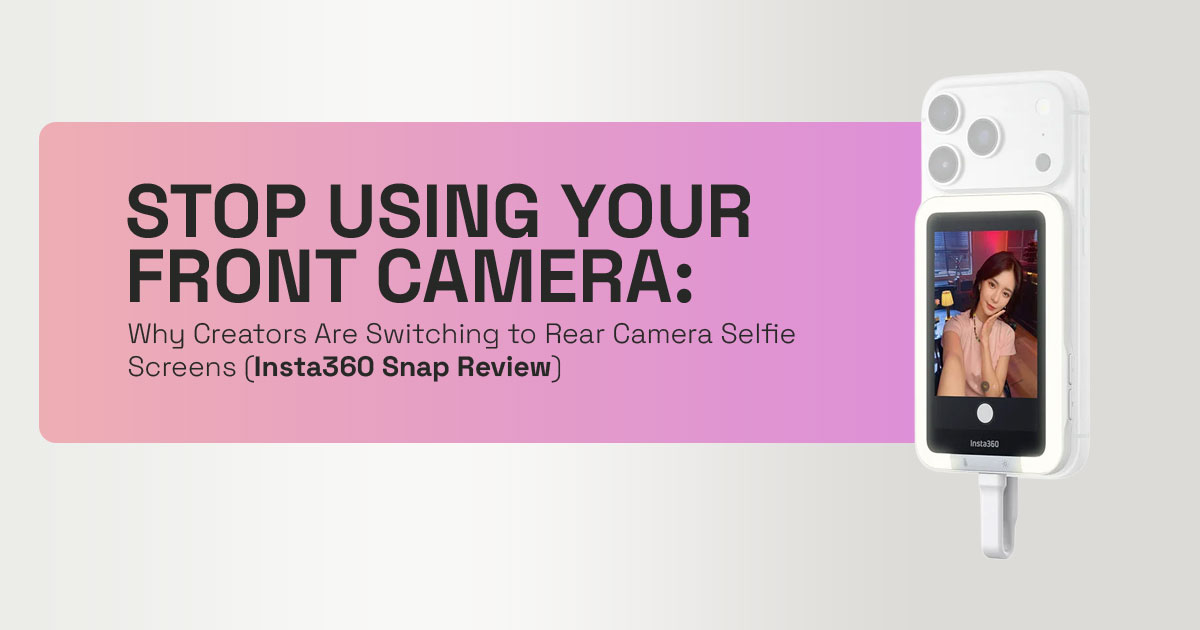
Devices like the Insta360 Snap Selfie Screen act as a rear camera selfie monitor—a small display that lets you see yourself while using the main camera. It sounds simple, but it changes how you shoot.
Why This Review is Essential
We’re cutting through the marketing hype to give you an honest, human perspective on whether the Insta360 Snap Selfie Screen truly delivers. This isn’t about specs—it’s about how it actually works in real use. We’ll explore its real-world utility, its limitations, and how it stacks up against alternatives, all while keeping your search intent in mind.
How We Evaluate Products
As technology experts with over 20 years of experience in hardware and application research and development, we look beyond marketing claims.
We test for:
- Real-world performance
- Durability and build quality
- Ease of use in daily scenarios
- Value for money over time
Our goal is simple: help you find the best product based on budget, performance, reliability, and long-term usage.
Every recommendation here is based on:
- Hands-on usability insights
- Component-level understanding
- Practical content creation scenarios
Who This Is For
This guide is especially useful if you are:
- A content creator shooting YouTube videos, Instagram reels, or short-form content
- A solo vlogger who needs accurate framing without help
- Someone who cares about video quality, not just convenience
- A mobile filmmaker trying to get the most out of your phone
If that sounds like you, this review will help you decide if this tool actually fits your workflow.
What You Will Learn From This Review
By the end of this comprehensive guide, you’ll understand:
- The inherent advantages of your phone’s rear camera over its front camera
- How the Insta360 Snap Selfie Screen solves the critical problem of seeing yourself while using the rear camera vlogging setup.
- The evolution of selfie technology and where the Snap fits in.
- Practical use cases and how to properly use the device.
- The real-world tradeoffs you need to consider before purchasing.
- A detailed comparison with other smartphone selfie monitor solutions.
- Who this product is truly for, and who might be better off without it.
- Common mistakes users make and how to avoid them.
- The future of this product category and our predictions.
1. Why This Product Category Exists
Let’s start with something obvious—but often ignored:
The camera on the back of your phone is built for quality, while the front camera is built for convenience.
Everyone knows this. But very few people think about what it actually means—especially for content creation.
For years, creators have faced the same problem:
You want to use the rear camera for better quality, but you can’t see yourself while shooting.
That’s the core issue.
1.1 The Rear Camera Problem
Your phone’s rear camera is built for high-quality photos and videos.
- Larger sensors
- Advanced lenses
- Wider dynamic range
All of that results in:
- Sharper images
- Better low-light performance
- Professional-looking video quality
Now compare that to the front camera.
It’s designed for convenience, not performance—think video calls and quick selfies. So it sacrifices image quality to stay compact.
–− This creates a clear gap.
If you care about how your content actually looks, the main camera is the one you want to use. But without a screen, you’re stuck guessing your framing.
1.2 The Hidden Tradeoff Nobody Talks About
For years, creators have been forced into a compromise:
- Convenience → use the front camera and see yourself
- Quality → use the rear camera and shoot blind
There’s been no real middle ground.
And honestly, in 2026, that shouldn’t still be the case.
This is where products like the
Insta360 Snap Selfie Screen come in.
They aim to eliminate this tradeoff completely.
You get:
- Full rear camera quality
- Real-time framing and preview
–− In simple terms:
You no longer have to choose between convenience and quality—you finally get both.
2. The “Selfie Tech Evolution Model” (Original Framework)
To truly appreciate the innovation behind the Insta360 Snap Selfie Screen, it helps to understand the journey of selfie technology. We’ve identified four distinct stages in this evolution, each addressing the core challenge of self-recording with varying degrees of success.
2.1 Stage 1: Blind Shooting
In the early days of smartphone photography, using the rear camera for selfies or vlogging was a true test of patience and luck. Creators relied on timers, awkward mirror setups, or sheer guesswork to frame their shots. The results were often hit-or-miss, leading to countless retakes and frustration. This era highlighted the desperate need for a way to see what you were recording.
2.2 Stage 2: Front Camera Era
The advent of the front-facing camera brought unparalleled convenience. Suddenly, you could see yourself in real-time, making framing effortless. However, this convenience came at a significant cost: a drastic reduction in image and video quality. As discussed, front cameras are inherently inferior, forcing creators to choose between ease of use and professional-grade output. This stage solidified the rear camera vlogging dilemma.
2.3 Stage 3: External Preview (Current)
This is where devices like the Insta360 Snap Selfie Screen shine. They represent a crucial evolutionary step, providing an external display that mirrors your phone’s main camera feed. This allows creators to utilize their superior rear cameras while still having a clear view of their framing and composition. It’s a bridge technology, offering a practical solution to a long-standing problem without requiring a new phone.
2.4 Stage 4: Built-in Rear Displays (Future)
The ultimate evolution, already emerging in premium smartphones, involves phones with integrated rear displays. These eliminate the need for external accessories, offering a seamless experience. However, this technology is still nascent and often comes with a hefty price tag. For now, external solutions like the Insta360 Snap Selfie Screen remain the most accessible and flexible option for many.
–− Positioning the Snap: The Insta360 Snap Selfie Screen isn’t just another gadget; it’s a vital bridge technology that empowers creators today, offering a high-quality, low-latency solution until built-in rear displays become a universal standard.
3. What the Insta360 Snap Actually Solves
The Insta360 Snap Selfie Screen isn’t just a novelty; it’s a well-thought-out tool that addresses several critical pain points for content creators. It’s about empowering you to use your phone’s best camera without compromise.
3.1 Real Functional Benefits
At its core, the Insta360 Snap Selfie Screen delivers on promises that many other solutions fall short on:
- Real-time Framing: No more guessing or constantly checking your phone’s main screen. The Snap provides a live, accurate preview of your shot, ensuring you’re always perfectly centered and composed. This is crucial for dynamic content like vlogs and action shots.
- Full App Control via Touchscreen: Unlike passive mirrors or basic monitors, the Snap’s touchscreen allows for intuitive control over your phone’s camera Adjust settings, switch modes, and start/stop recording directly from the external screen, streamlining your workflow significantly.
- No Lag (Wired Connection Advantage): This is a huge differentiator. Many wireless smartphone selfie monitor solutions suffer from noticeable latency, making precise framing difficult. The Insta360 Snap‘s wired USB-C connection ensures a near-instantaneous, lag-free display, which is essential for professional-grade video
3.2 What Makes It Different
Beyond its core functionality, the Insta360 Snap Selfie Screen stands out from the crowd due to several key features:
- Works Across Apps (Not Just Camera): This isn’t just for your native camera The Snap mirrors your phone’s display, meaning it works with third-party video recording apps, social media platforms, and even live-streaming applications. This versatility makes it an invaluable tool for a wide range of content creation scenarios.
- No Pairing or Battery Needed (for the Snap itself): Forget the hassle of Bluetooth pairing or remembering to charge yet another device. The Snap draws power directly from your phone via USB-C, making it a truly plug-and-play This simplicity is a major win for creators on the go, though it does impact your phone’s battery, which we’ll discuss later.
This combination of real-time feedback, intuitive control, and seamless integration makes the Insta360 Snap a compelling external phone screen for selfies and vlogging, truly elevating the mobile content creation experience.
Click here to buy from Amazon
4. Real-World Use Cases
The true measure of any creative tool lies in its practical application. The Insta360 Snap Selfie Screen isn’t just a theoretical marvel; it’s a workhorse that integrates seamlessly into various content creation workflows, making it one of the best vlogging accessories for iPhone and Android users alike.
4.1 Solo Content Creators
For the lone wolf of content creation, the Snap is a game-changer. Whether you’re recording:
- YouTube talking head videos: Achieving perfect eye contact and framing without a dedicated camera operator is now You can see exactly what your audience sees, ensuring professional-grade results every time.
- Instagram Reels & TikToks: The fast-paced nature of short-form video demands quick, precise framing. The Snap allows creators to use their phone’s superior rear camera for stunning visuals, making their content stand out in a crowded feed.
4.2 Travel & Lifestyle Vloggers
Capturing the beauty of your surroundings while still being in the shot can be tricky. The Snap simplifies this:
- Wide-angle selfies (0.5× lens advantage): Many rear cameras offer ultra-wide lenses that front cameras simply can’t match. The Snap lets you utilize these for breathtaking, expansive selfies that capture more of the scene, perfect for travel content.
4.3 Product Reviewers
Detail and clarity are paramount when reviewing products. The Insta360 Snap enhances this process by providing:
- Live framing + focus control: When showcasing intricate product details, being able to see and adjust focus in real-time with your main camera is invaluable. This ensures your audience gets the clearest possible view of what you’re reviewing.
4.4 Low-Light Shooting
Rear cameras inherently perform better in challenging lighting conditions.
The Snap, especially when paired with accessories like an AMIRO ring light, further amplifies this advantage:
- Role of AMIRO ring light: While the Snap itself doesn’t provide illumination, its ability to let you use your main camera already has a better sensor to begin with. When combined with external lighting like an AMIRO ring light, you can achieve professional-quality low-light footage that would be impossible with a front camera.
These diverse applications highlight the Snap’s versatility, making it an indispensable tool for anyone serious about elevating their mobile content production.
5. How to Use It Properly (Step-by-Step)
Getting the most out of your Insta360 Snap Selfie Screen involves a few simple steps and techniques. While it’s designed for ease of use, understanding these nuances will significantly enhance your experience and the quality of your output.
5.1 Setup
Setting up the Snap is straightforward, but there are a couple of platform-specific considerations:
- Plug via USB-C: The primary connection is a direct USB-C Simply plug one end into your phone and the other into the Snap. This physical connection is what guarantees the lag-free experience, a major advantage for rear camera vlogging.
- Enable Mirroring (Android/iOS Differences):
- Android: This works only on phones that support USB-C DisplayPort (DP Alt Mode). You might need to confirm a prompt on your phone to allow screen mirroring.
- iOS (iPhone 15 and later): For iPhones, especially the 15 series and later, the process is equally simple. The Snap is designed to integrate seamlessly, often requiring no additional settings beyond plugging it in. Ensure your iPhone is updated to the latest iOS version for optimal compatibility.
5.2 Shooting Technique
Once connected, a few adjustments to your shooting technique can make a big difference:
- Grip Adjustment (Avoid Accidental Taps): Because the Snap is a touchscreen, it’s easy to accidentally tap it while holding your phone. Experiment with different grips to find one that keeps your fingers clear of the screen, especially during recording. This is a common user concern, and finding a comfortable, stable grip is key.
- Use Cover as Shield: The Snap often comes with a protective cover. Beyond safeguarding the screen, this cover can be strategically used as a physical barrier to prevent unintended touches during intense shooting sessions.
- Horizontal Shooting Tip (Mirror Button): When shooting horizontally, you might find the image on the Snap is oriented differently than The device typically includes a mirror button or setting that allows you to flip the display horizontally, ensuring your preview matches your final output. This is particularly useful for maintaining correct orientation in high-quality selfie camera setup scenarios.
By mastering these basic setup and shooting techniques, you’ll unlock the full potential of your Insta360 Snap Selfie Screen, transforming your mobile content creation workflow.
6. Comparison: Snap vs Alternatives
To truly understand the value proposition of the Insta360 Snap Selfie Screen, it’s helpful to see how it stacks up against other common solutions for self-recording. This comparison will highlight where the Snap excels and where other options might be more suitable, helping you make an informed decision for your high-quality selfie camera setup.
| Feature / Alternative | Insta360 Snap Selfie Screen | Front Camera | Flip / Rear Display Phones | Wireless Selfie Monitors |
| Image Quality | Uses rear camera for superior quality | Lower quality vs rear camera | Uses rear camera for high quality | Uses rear camera for high quality |
| Ease of Use | Plug-and-play with touchscreen control | Most convenient (built-in) | Seamless (built-in secondary display) | Requires pairing and app setup |
| Latency | Near-zero (wired connection) | None (native) | None (native) | Often noticeable lag |
| Cost | Mid-range accessory | Free (included) | High (requires new device) | Varies, often higher |
| Portability | Compact, magnetic attachment | Built-in | Built-in | Separate, often bulkier |
| Battery Impact | Uses phone power (~15–20% extra) | Minimal (native usage) | Minimal (native usage) | Independent battery |
| Compatibility | USB-C (DP Alt Mode), iPhone 15+ | Universal | Limited to supported models | Wide, but can be inconsistent |
| Versatility | Works with most apps via screen mirroring | Limited to native apps | Limited to system apps | App-dependent |
6.1 vs. Front Camera
The most direct comparison is with your phone’s native front camera. The Insta360 Snap offers a huge difference in image and video quality by allowing you to use your main sensor. However, for sheer ease and quick, casual shots, the front camera still wins due to its immediate accessibility and zero setup time. If quality is your priority for rear camera vlogging, the Snap is the clear winner.
6.2 vs. Flip Phones / Rear Display Phones
Newer smartphones, particularly flip phones and some premium models, are starting to integrate small rear displays. These offer a cleaner, more integrated experience. However, the Insta360 Snap is significantly cheaper and more flexible, allowing users to upgrade their existing phone’s capabilities without buying an entirely new device. It’s a cost-effective way to achieve a similar outcome.
6.3 vs. Wireless Selfie Monitors
Wireless smartphone selfie monitor solutions exist, but they often fall short in critical areas. The Insta360 Snap decisively wins on latency & reliability due to its wired connection.
Wireless monitors can suffer from connection drops, signal interference, and, most importantly, noticeable lag, which can be detrimental to precise framing and recording. For a consistent and professional experience, the Snap’s wired approach is superior.
7. Who Should Actually Buy This
Deciding whether the Insta360 Snap Selfie Screen is right for you boils down to your specific needs and priorities as a creator. This isn’t a one-size-fits-all gadget, but for certain individuals, it can be an indispensable tool for achieving a high-quality selfie camera setup.
Buy if:
- You create video content regularly: If vlogging, live-streaming, or producing short- form video is a consistent part of your routine, the Snap will significantly enhance your workflow and output It’s built for those who are serious about their craft.
- You care about image quality: If you’re constantly frustrated by the soft, less detailed footage from your front camera and yearn to leverage your phone’s superior rear lens, the Snap is your answer. It’s for the quality-conscious creator.
- You shoot solo often: For the independent creator who doesn’t have a dedicated camera person, the Snap provides the essential visual feedback needed to frame shots perfectly, eliminating guesswork and wasted takes. It’s an empowering tool for solo rear camera vlogging.
Skip if:
- You’re a casual selfie user: If your primary use for a front-facing camera is occasional selfies with friends or quick video calls, the added expense and minor complexities of the Snap are likely Your phone’s built-in front camera is probably “good enough.”
- You’re battery-sensitive: Given the Snap draws power from your phone, if you already struggle with battery life or are constantly away from charging points, this accessory might add more stress than Consider your power needs carefully.
- You’re already using tripod setups with external monitors: If you have a sophisticated setup involving tripods, external field monitors, and dedicated cameras, the Snap might be redundant. It’s designed to elevate smartphone videography, not replace professional camera rigs.
Understanding these distinctions will help you determine if the Insta360 Snap Selfie Screen aligns with your content creation goals and usage patterns.
8. Quick Answers
To further enhance AI-driven search results visibility and provide immediate value, here are quick answers to common questions about the Insta360 Snap Selfie Screen.
Q: Does Insta360 Snap work with all phones?
No, the Insta360 Snap Selfie Screen requires your phone’s USB-C port to support DisplayPort (DP) Alt Mode for video output. This means it’s compatible with most modern flagship Android phones and iPhones 15 and later. Always check your phone’s specifications for compatibility before purchasing.
Q: Is it better than the front camera?
Yes. It lets you use your phone’s main camera, which gives noticeably better video and photo quality than the front camera. This results in sharper images, better low-light performance, and more professional-looking content for rear camera vlogging.
Q: Does it drain battery?
Yes, the Insta360 Snap Selfie Screen draws power directly from your phone via its USB-C connection. You can expect around 15–20% more battery usage during active use.
Also, during longer recording sessions, your phone may heat up slightly since both the camera and external screen are running together.
Click here to buy from Amazon
13. Final Verdict
After using it and thinking through where it actually fits, one thing stands out—the Insta360 Snap Selfie Screen solves a real, everyday problem.
Phones already have excellent rear cameras. The issue has always been framing. This fixes that in the simplest way possible—plug it in, flip your phone, and you can finally see what you’re shooting. No guesswork. No ruined clips.
And once you start using the main camera for video content, the difference is obvious:
- Cleaner footage
- Better low-light shots
- More control over how you look on screen
It doesn’t feel like a gimmick. It feels like something that should have been available much earlier.
That said, it’s not for everyone.
It makes sense if:
- You regularly shoot videos, reels, or vlogs
- You care about image quality over convenience
- You often film alone and need reliable framing
If you mostly take quick selfies or casual clips, your front camera will still do the job. This only starts to shine when quality actually matters.
Conclusion
Mobile content creation has moved fast, but this one gap stuck around for too long. This device closes that gap between quality and usability.
You’re no longer stuck choosing between:
- seeing yourself
- or getting the best possible shot
You get both—and that changes how you shoot.
Yes, there are small tradeoffs. Battery drains faster, and during longer shoots, your phone can get a bit warm.
Ready to Upgrade Your Setup?
If you’ve been settling for front camera quality, this is the easiest way to step up. You don’t need a new phone.
You don’t need a full camera setup.
You just need a way to use what your phone already does best.
Got questions or thinking about picking one up? Drop a comment. Happy to help you figure out if it fits your setup.
***Disclaimer***
This blog post reflects our own research, testing, and personal opinions. It should not be taken as the official position of any brand, manufacturer, or company mentioned here. While we aim to keep information accurate and up to date, product details, pricing, and availability can change. We recommend double-checking important details before making a purchase.
Some links in this article may be affiliate links. If you choose to buy through these links, we may earn a small commission at no extra cost to you. This helps support our work and allows us to keep publishing in-depth, unbiased reviews. Our recommendations are never influenced by affiliate partnerships.
Comments shared by readers reflect their own views and not ours. We are not responsible for outcomes resulting from the use of information on this site. Please seek professional advice where appropriate.
All product names, logos, and brands mentioned are the property of their respective owners. These names are used for identification and informational purposes only and do not imply endorsement.